The Practitioner Who Is Also the Population
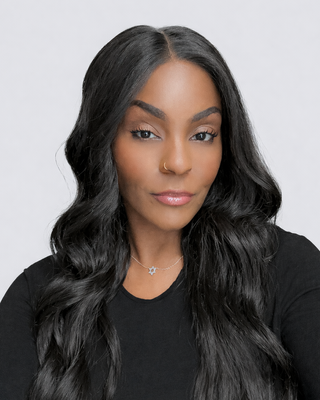
BALTIMORE, MARYLAND – Joy F. Johnson holds a Master of Education and a Master of Science in psychology with a specialization in applied behavior analysis. She is a Board Certified Behavior Analyst and a Licensed Behavior Analyst. She is the founder and clinical director of Spectrum Support, a Baltimore-area practice that provides in-center and in-home ABA services, social groups, and DORS-approved support services. She is also an adjunct professor teaching behavior analysis coursework to the next generation of practitioners.
What distinguishes Johnson from the majority of BCBAs in the field is her positionality: she is openly autistic. She identifies publicly as #ActuallyAutistic and has built her professional platform around the premise that the ABA field’s understanding of autism is fundamentally incomplete without the perspectives of autistic people themselves — including autistic practitioners.
Johnson’s identity as a Black, Autistic, and Jewish woman places her at the intersection of multiple marginalized communities, a positionality that informs both her clinical approach and her advocacy. She has spoken openly about her firsthand experience navigating ableism, racism, and the limitations of social validity frameworks in ABA, educational systems, and broader society.
Johnson occupies a position that the ABA field has historically struggled to accommodate: she is simultaneously a credentialed behavior analyst and a member of the autistic community the field serves. Her work challenges the assumption that these identities are separate — or that one must be subordinated to the other.
Spectrum Support and Clinical Philosophy
Spectrum Support, Johnson’s practice, is built around principles that reflect her advocacy positions: culturally responsive, strengths-based, and neurodivergent-affirming services. The practice’s stated mission emphasizes celebrating neurodiversity and honoring each individual’s unique identity — language that reflects a broader shift in the ABA field away from deficit-focused models and toward approaches that center client autonomy and quality of life.
Johnson has been a vocal proponent of assent-based ABA practice — the framework in which clients, including children and non-speaking individuals, have the right to communicate their consent or refusal to participate in therapeutic activities, and in which that communication is respected. This approach has gained significant traction in ABA discourse in recent years, though Johnson has noted publicly that affirming and assent-based ABA is not yet the standard across the field.
Clinical services: Spectrum Support provides in-center ABA therapy, in-home services, social skills groups, and support services approved by Maryland’s Division of Rehabilitation Services (DORS) — a state agency that supports individuals with disabilities in achieving employment and independence.
Published Research and Public Scholarship
Johnson’s influence extends beyond clinical practice and social media into academic publishing. In 2025, she published “From Harm to Healing: Building the Future of ABA with Autistic Voices” in MDPI’s Societies journal. The paper examines the historical context of ABA, critiques raised by the #ABAisAbuse movement, and the role of social media in shaping both awareness and misconceptions about behavioral interventions for autistic individuals.
The paper’s central argument is that ABA’s future depends on integrating autistic voices — particularly those with both lived experience and professional expertise — into every stage of clinical decision-making. Johnson calls for standardized, neurodivergent-affirming, and assent-based practices that prioritize the autonomy and individuality of autistic people through direct collaboration with the autistic community.
Johnson has also been a guest on multiple podcasts and interview platforms, including the Learn Play Thrive podcast, where she appeared in a 2020 episode titled “Lessons from a Black Autistic Behavioral Therapist,” and the Global Autism Project’s YouTube series, where she discussed the inclusion of autistic values in ABA practice.
When an autistic BCBA publishes peer-reviewed research arguing that the field must center autistic voices in clinical practice, it is not an abstract philosophical position. It is a professional with direct experience of both the therapeutic framework and the lived reality it is designed to address, calling for the integration of those two perspectives.
The Instagram Platform and Community Influence
Johnson’s Instagram account, @joyfjohnson, has more than 16,000 followers and serves as a platform for advocacy content that reaches both practitioners and autistic individuals. Her posts address topics including assent-based practice, the intersection of race and autism, sensory experience, and critiques of traditional ABA approaches that she views as misaligned with neurodivergent values.
In 2026, FeedSpot listed Johnson among the Top 100 Autistic Influencers, a ranking that reflects both the size of her audience and the engagement her content generates. Her Instagram bio identifies her as an advocate, behavior analyst, clinical director, and adjunct professor — a combination of roles that positions her as a bridge between the clinical establishment and the autistic self-advocacy community.
Johnson’s online presence is notable for its directness. She has engaged publicly with the #ABAisAbuse discourse, pushing back against both the blanket condemnation of ABA and the field’s resistance to self-examination. Her position — that ABA can be reformed through autistic leadership and affirming practices — represents a middle ground that a growing number of practitioners and autistic advocates are gravitating toward.
What Johnson’s Rise Means for ABA
Johnson’s growing visibility signals a shift in who holds influence within the ABA profession. The traditional influencer model in ABA has been dominated by doctoral-level academics, practice owners, and BCBA-D credentialed researchers. Johnson represents a different pathway: a clinician whose authority derives not only from her credentials and clinical experience but from her identity as a member of the community the field serves.
For the ABA industry, Johnson’s work raises questions that practice owners, insurance payers, and training programs will increasingly need to address: What does it mean to provide neurodivergent-affirming care? How should assent-based practices be standardized and measured? And what role should autistic practitioners play in shaping the clinical and ethical frameworks that govern the field?
AT A GLANCE
Name: Joy F. Johnson
Credentials: M.Ed., M.S., BCBA, LBA
Practice: Founder & Clinical Director, Spectrum Support (Baltimore, MD)
Type: Autistic BCBA / Advocate
Identity: Black, Autistic, Jewish — openly #ActuallyAutistic practitioner
Instagram: @joyfjohnson (16,000+ followers)
Website: joyfjohnson.com
Published work: Johnson, J.F. (2025). “From Harm to Healing: Building the Future of ABA with Autistic Voices.” MDPI Societies, 15(3), 72.
Advocacy focus: Neurodivergent-affirming ABA, assent-based practice, anti-ableism, intersection of race and autism
Recognition: FeedSpot Top 100 Autistic Influencers (2026)
Industry signal: Rising influence of autistic practitioners in reshaping ABA’s clinical and ethical frameworks from within the profession
SOURCES & REFERENCES
1. – Spectrum Support. Official website. https://joyfjohnson.com. Accessed March 2026.
2. – Johnson, J.F. (2025). From Harm to Healing: Building the Future of ABA with Autistic Voices. Societies, 15(3), 72. https://www.mdpi.com/2075-4698/15/3/72.
3. – Instagram. Joy F. Johnson, M.Ed., MS, BCBA (@joyfjohnson). https://www.instagram.com/joyfjohnson/. Accessed March 2026. 16,000+ followers.
4. – Learn Play Thrive. “Lessons from a Black Autistic Behavioral Therapist.” Podcast episode, July 29, 2020. https://learnplaythrive.com/podcast/.
5. – Global Autism Project. “Inclusion of Autistic Values, w/Joy Johnson.” YouTube. August 16, 2020. https://www.youtube.com/watch?v=globalautismproject.
6. – LinkedIn. Joy Johnson, M.Ed, M.S., BCBA, IBA — Spectrum Support LLC. https://www.linkedin.com/in/joy-johnson-m-ed-m-s-bcba-iba-1650aa1b3/.
7. – Autism in Black Inc. “Conversations with Joy: On Being an Actually Autistic Behavior Specialist.” Podcast. https://www.autisminblack.org/podcast/.
8. – FeedSpot. Top 100 Autistic Influencers in 2026. https://influencers.feedspot.com/autism_instagram_influencers/. Accessed March 2026.
9. – NPI Profile. Joy Johnson BCBA, NPI 1730690553. Behavior Analyst in Baltimore, MD. https://npiprofile.com/npi/1730690553.
10. – Autism Speaks. Provider Directory: Spectrum Support. https://www.autismspeaks.org/provider/spectrum-support-0.