

The Starting Point: $16 an Hour and a 1099
ARIZONA — the story of how Ryan Calloway got into the insurance industry is not the typical one. He did not start at a name-brand brokerage with a book of inherited clients, a structured training program, and a base salary that insulated him from the reality of building something from nothing. He started on a 1099, in the least forgiving entry point the industry offers: where your income is entirely contingent on your ability to find clients, earn their trust, and retain them in a market full of competitors who are also trying to do the same thing.
That starting point is not incidental to understanding Kelly & Calloway. It is the foundation of the firm’s operating philosophy. Calloway spent years in the industry before he and Steve Kelly founded their brokerage, and those years were not spent in comfortable institutional roles — they were spent doing the specific, unglamorous work that produces genuine expertise: growing a client base from scratch, solving problems that other advisors could not or would not address, and building a professional reputation through performance rather than positioning. The track record he accumulated doing that work is what ultimately gave him and Kelly the credibility to build something under their own names.
At 33, Calloway is one of the youngest brokerage owners in Arizona, and by the firm’s account, possibly the youngest in its specific market segment. That age relative to his ownership position is a data point about velocity — about how quickly he moved from entry-level to ownership by doing the work at each stage rather than waiting for institutional advancement. In an industry where brokerage ownership often follows decades of accumulation in larger firms, Calloway’s trajectory reflects a deliberate choice to build on his own terms and on his own timeline.
The 1099 entry: starting on a 1099 rather than as a W-2 employee is a specific structural choice with specific implications. A W-2 insurance professional has an employer who bears some of the income risk and provides institutional infrastructure. A 1099 professional bears all of that risk personally and must create their own infrastructure. The compensation structure that Calloway started under meant that every dollar he earned was the direct result of client work he had done, and every client he kept was a client he retained through service quality rather than contractual or institutional inertia. That structure, sustained over years, produces a specific kind of commercial discipline that is difficult to develop under more comfortable institutional arrangements.
I didn’t inherit a book of business. I earned the right to put my name on one. — Ryan Calloway, Co-Founder, Kelly & Calloway Insurance Group
Why ABA Organizations Need to Understand This Firm
Kelly & Calloway is not a household name in the ABA industry — not yet. But the problems it is specifically designed to solve are among the most pressing operational challenges that ABA practice owners face, and the frequency with which those challenges generate turnover, cost overruns, and organizational dysfunction in ABA practices suggests that the gap between what most ABA organizations have in their benefits and HR infrastructure and what they actually need is substantial.
ABA practices have a workforce retention problem that is both widely documented and structurally difficult to address. The BCBA shortage, documented extensively in the workforce coverage in this publication, means that credentialed behavior analysts have meaningful market leverage — they can, and regularly do, move between employers when working conditions, compensation, or benefits fall below what the market is offering elsewhere. RBT turnover is even more acute: the combination of demanding direct service work, relatively modest base compensation, and inconsistent organizational support produces turnover rates at the RBT level that impose significant recruiting, onboarding, and training costs on practices that are already operating on thin Medicaid margins.
Benefits quality is one of the most underutilized retention levers in the ABA industry. Most ABA practices offer some form of health insurance, but the quality, affordability, and design of the benefits package varies dramatically across the market. Practices that offer plans with high employee premium contributions, narrow provider networks, or poor prescription drug coverage are, in effect, offering compensation packages that are less competitive than their stated salaries suggest — because a $70,000 BCBA offer with a $600 monthly premium contribution for family coverage is a different compensation package than the same salary with a $150 monthly premium contribution. Benefits advisors who understand how to design and fund plans that reduce employee cost while managing employer expense are creating real retention value, not just administrative convenience.
ABA’s HR complexity compounds the benefits challenge. Most ABA practices — particularly those operating in the $5 million to $30 million revenue range where the market is most active — have HR functions that are understaffed relative to the complexity of the workforce they manage. Credentialing requirements, supervision ratios, compliance documentation, and the clinical governance infrastructure required by BACB standards and Medicaid billing rules create administrative demands that consume HR bandwidth that most practices have not staffed to handle. When benefits administration, open enrollment management, and plan renewal negotiations are added to that already stretched function, the result is an HR team that is perpetually behind and an employee population that experiences benefits administration as a source of frustration rather than a source of support.
The strategic case: for ABA practice owners who are thinking about benefits as a cost line item rather than a strategic asset, the reframe that Calloway’s model offers is worth taking seriously. Benefits quality affects BCBA and RBT recruitment, retention, and satisfaction in ways that flow directly into clinical quality and operational continuity. A practice that loses two BCBAs in a year because its benefits package is less competitive than the PE-backed platform across town is paying replacement costs that dwarf the cost of improving its benefits infrastructure. The math on benefits investment versus turnover cost is not complicated once the full picture is visible.
The Background That Makes Calloway Different: Logistics, Supply Chain, and Six Sigma
What distinguishes Ryan Calloway’s approach to employee benefits from that of most insurance advisors is not just his work history — it is his educational and analytical framework. Calloway holds a formal degree in logistics and supply chain management, and he brings a Six Sigma mindset to the design and management of employee benefits programs. For an industry that has historically operated on the basis of relationship selling and annual renewal conversations, that analytical framework is genuinely unusual.
Logistics and supply chain management is fundamentally about eliminating inefficiency, reducing variance, and creating reliable systems that deliver consistent outputs at predictable costs. The principles that define supply chain optimization — reducing unnecessary steps in a process, identifying and addressing bottlenecks, measuring performance against defined benchmarks, and continuously improving systems based on data rather than intuition — translate directly into the design and management of employee benefits programs in ways that most benefits advisors, whose professional backgrounds are in sales or financial services, do not naturally apply.
Six Sigma is a formal quality management methodology, originally developed in manufacturing and later applied broadly across service industries, that focuses on identifying and eliminating defects — defined as any outcome that deviates from a defined specification — through statistical analysis and systematic process improvement. A Six Sigma practitioner approaches a problem by first defining the desired outcome precisely, then measuring the current state against that outcome, then analyzing the root causes of the gap, then implementing targeted improvements, and then controlling the improved process to sustain the gains. Applied to employee benefits, that methodology produces a very different advisory practice than the standard insurance industry approach of presenting plan options at renewal and selecting the lowest-premium option that meets minimum coverage requirements.
For ABA organizations, where HR teams are stretched thin and benefits complexity is the norm rather than the exception, Calloway’s logistics and Six Sigma background produces a specific kind of advisor. He does not design a benefits program and hand it off for HR to administer; he manages it like a system — proactively, with defined performance metrics, with accountability at every stage of the process, and with a continuous improvement orientation that identifies problems before they surface as employee complaints or financial surprises at renewal. That approach requires more from the advisor than a standard brokerage model demands, which is why most advisors do not operate this way.
What proactive management looks like in practice: in a standard brokerage relationship, the advisor’s primary engagement with the client occurs at renewal — approximately 90 days before the plan year ends, when the advisor presents renewal rates and alternative plan options. The rest of the year, the advisor is largely reactive: responding to billing issues, coverage questions, and claims problems as they surface. In Calloway’s model, the engagement is structured around continuous performance monitoring, mid-year plan reviews, employee communication support, claims experience analysis, and proactive identification of cost and coverage optimization opportunities. The difference in the HR team’s experience of those two advisory models is significant.
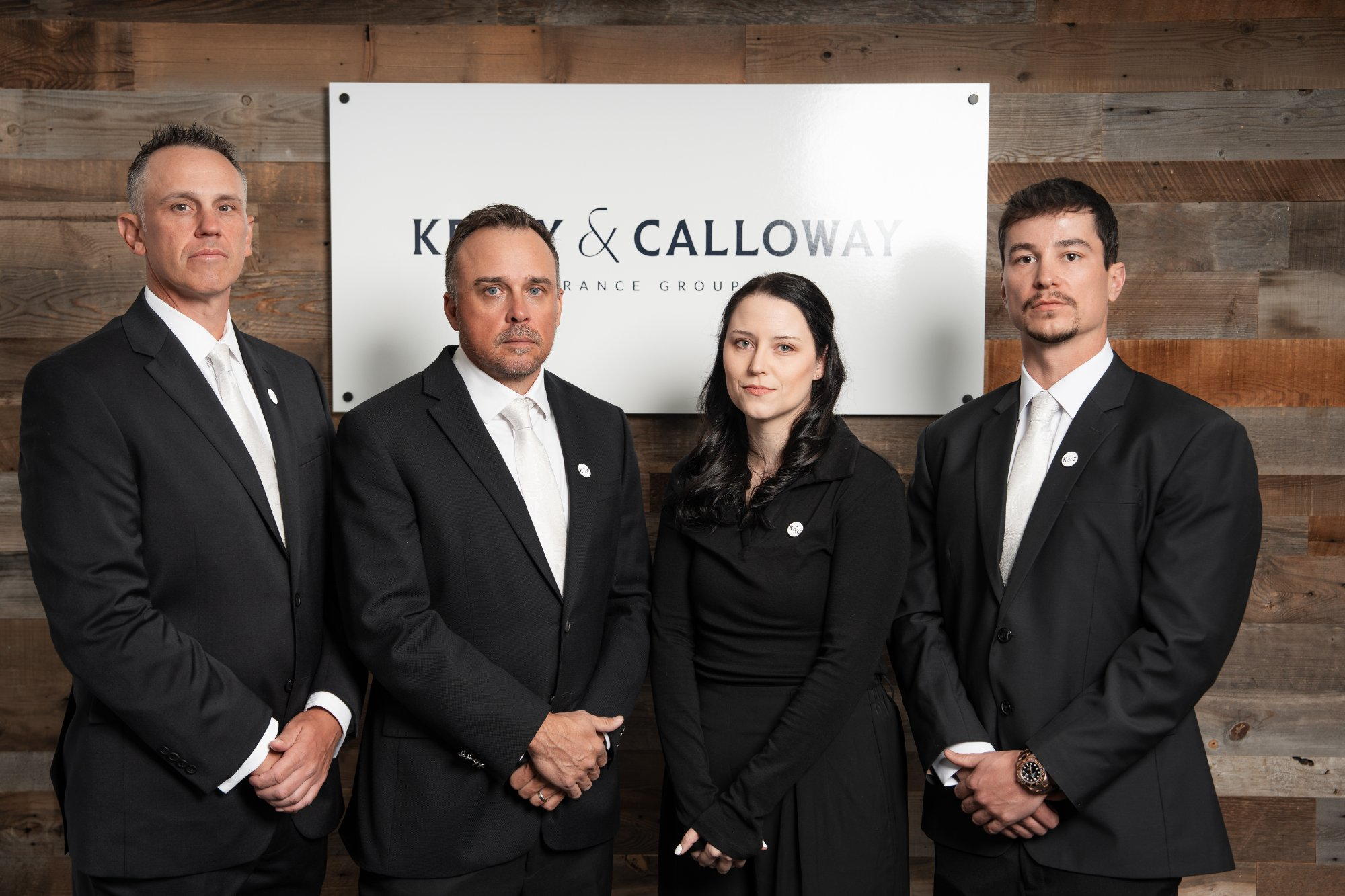
The Kelly & Calloway Model: Fiduciary, Integrated, and Holistic
The most important word in the Kelly & Calloway value proposition is one that most insurance brokerage relationships are not: fiduciary. A fiduciary advisor is legally obligated to act in the client’s best interest, not in the interest of the insurance carriers whose products the advisor recommends. The distinction is not semantic. Most insurance advisors are compensated through commissions paid by the carriers whose products they sell, which creates a structural incentive to recommend products that generate higher commissions rather than products that best serve the client’s needs. A fiduciary advisor operates under a different standard: the recommendation must be defensible as the best available option for the client, regardless of its commission structure.
In the employee benefits market, the fiduciary distinction is particularly consequential because of the range of funding strategies available — and the dramatically different financial implications of choosing among them. Fully insured plans, in which the employer pays premiums to a carrier that assumes all claims risk, are the most familiar and the most administratively straightforward. They are also typically the most expensive, particularly for employers with younger, healthier workforces whose actual claims experience is subsidizing the pooled risk of the broader carrier population. Level-funded plans, in which the employer pays a fixed monthly amount but is refunded a portion if actual claims fall below projected levels, offer the cost transparency of self-funding with the budget predictability of fully insured. Partial self-funded and captive arrangements offer progressively more employer control over the claims risk — and progressively more potential savings for employers whose claims experience justifies the structure.
Kelly & Calloway models the full spectrum of funding strategies — fully insured, level-funded, partial self-funded, and captive — for each client, selecting the funding approach that best matches the employer’s workforce demographics, claims history, financial capacity to absorb claims risk, and administrative infrastructure. For ABA practices, this modeling process is particularly important because the workforce characteristics of ABA organizations — a workforce that skews relatively young, with significant female representation and a meaningful proportion of employees with young families — affect claims patterns in ways that can make level-funded or self-funded arrangements significantly more advantageous than fully insured plans.
The firm serves employers ranging from 25 to 2,000 employees — a range that encompasses the full spectrum of ABA provider organizations, from single-site practices with a handful of clinical staff to regional platforms with multiple locations and hundreds of employees. The breadth of that client range reflects Kelly & Calloway’s capacity to adapt its advisory model to organizations at very different stages of scale and sophistication. A 25-person ABA practice and a 500-person platform have different HR infrastructure, different budget constraints, different workforce demographics, and different organizational cultures — and the benefits strategy that is optimal for each differs accordingly.
The integrated model in full: benefits design and funding strategy are the entry point of the Kelly & Calloway relationship, but they are not the endpoint. The firm embeds itself into the fabric of each client organization in ways that go substantially beyond plan selection and renewal management. That embedding includes evaluating company culture and identifying the specific workforce engagement and retention challenges that benefits and HR infrastructure can address, assessing payroll platforms and identifying integration opportunities that reduce administrative friction, rolling out HR solutions that lift administrative burden off internal HR teams, and building a coherent employee experience in which benefits, people operations, and company culture function as an integrated whole rather than as separate, disconnected administrative domains.
Full-Spectrum Coverage: Benefits, Medicare, and Property & Casualty
One of the structural advantages that Kelly & Calloway offers to ABA practice owners and operators is the depth of its coverage across multiple lines of insurance and risk management. Most benefits brokerages are specialists in group health and ancillary benefits — dental, vision, life, disability — and refer clients to separate advisors for Medicare, property and casualty, and other specialized coverage needs. The result is that an ABA practice owner who wants to manage their insurance relationships efficiently must maintain multiple advisor relationships, each with its own renewal cycle, its own communication cadence, and its own perspective on the organization’s risk profile.
Kelly & Calloway is one of the few boutique firms in the market with genuine depth across every line of coverage, including Medicare and property and casualty alongside core commercial employee benefits. For ABA practice owners, that breadth is operationally significant. The employee who is approaching Medicare eligibility and needs guidance on how to coordinate Medicare with the employer’s group health plan has a question that most benefits advisors are not equipped to answer in depth. The practice owner who needs property and casualty coverage for clinic locations, professional liability coverage for clinical staff, and employment practices liability coverage for HR risk has needs that a benefits-only advisor cannot address within a single relationship.
The consolidation of multiple insurance lines into a single trusted advisor relationship is a specific operational efficiency that resonates particularly strongly in ABA organizations where administrative bandwidth is scarce. An ABA practice owner who can direct all insurance questions — benefits, Medicare, property and casualty, professional liability — to a single advisor who understands the organization’s complete risk profile is eliminating the coordination friction that multiple specialized relationships impose. That elimination of friction is not a minor administrative convenience; it is a meaningful reduction in the cognitive and administrative load on leadership and HR teams that are already managing more complexity than they can comfortably handle.
The Medicare dimension for ABA workforce management: Medicare eligibility becomes relevant for ABA practice HR teams in specific contexts. Clinical supervisors and administrative staff who have been in the workforce for decades may be approaching Medicare eligibility and need guidance on coordinating Medicare with the employer’s group health plan. Dependents of employees who are already Medicare-eligible create coordination of benefits questions that affect how claims are processed and how premiums should be structured. For practices with a workforce that includes employees at a range of life stages, having an advisor with genuine Medicare expertise prevents the coverage gaps and premium errors that can emerge when Medicare coordination is handled by a benefits advisor whose expertise is limited to the group market.
Building a Name That Precedes You: The Kelly & Calloway Brand
The name “Kelly & Calloway” carries specific weight for anyone who has encountered the firm in the market. That weight is not the product of marketing spend or institutional legacy — it is the product of a track record that has been built one client relationship at a time, over years of sustained performance in a market where the distance between what advisors promise and what they deliver is wide enough to create significant differentiation for firms that actually close it.
The founding of Kelly & Calloway represented a specific moment in both partners’ careers: the point at which their individual track records were sufficient to sustain a firm built on their own names rather than on the institutional credibility of a larger employer. That threshold — the moment when a professional’s personal reputation is strong enough to be the primary business development asset rather than the institution they work for — is one that most insurance professionals never reach. Calloway reached it at 33, which is a data point about the quality and consistency of the work he had done in the years before the founding.
For ABA practice owners evaluating vendor and advisor relationships, the distinction between a firm whose reputation precedes it from a track record of performance and one whose reputation is primarily the product of its institutional affiliation is consequential. A large national brokerage firm brings institutional infrastructure, standardized processes, and brand recognition. It also brings the variability that comes with institutional size: the quality of the relationship is a function of the specific advisor assigned to the account rather than the firm’s overall capabilities. A boutique firm like Kelly & Calloway, where the founding partners are directly involved in client relationships, delivers a consistency of advisory quality that institutional size typically dilutes.
The firm’s positioning in the ABA market specifically reflects a strategic choice to serve organizations where the benefits and HR advisory challenge is genuinely complex and where the quality of the advisory relationship has direct consequences for organizational performance. ABA practices — with their credential-intensive workforce, their retention-sensitive clinical model, and their stretched HR infrastructure — are the kind of organizations where Kelly & Calloway’s integrated model produces the most differentiated value. A practice whose HR team is struggling under the weight of benefits administration, payroll complexity, and culture management simultaneously is the practice for which a fiduciary advisor who manages all of those dimensions proactively is not just a vendor but an operational asset.
What “building relationships that last” means operationally: one of the markers of a genuinely relationship-oriented advisory firm is client tenure — how long clients stay in the relationship, and whether that tenure is a function of inertia and switching friction or of sustained value delivery that makes the relationship worth maintaining. Kelly & Calloway’s emphasis on relationship durability reflects a business model that depends on long-term client retention rather than high-volume annual replacement of churned clients. That model produces a different operational orientation: every client interaction — every renewal conversation, every claims issue resolution, every mid-year review — is an investment in relationship durability rather than a transaction to be completed as efficiently as possible.
What ABA Practice Owners Should Ask Before Their Next Benefits Renewal
For ABA practice owners who are approaching their next benefits renewal with an advisor relationship that is delivering less than what Kelly & Calloway describes, the questions worth asking before signing another renewal are more specific than most owners typically pursue.
The funding strategy question is the most financially consequential. Most ABA practices that are on fully insured plans have never had an advisor conduct a formal analysis of whether a level-funded or partial self-funded structure would produce better financial outcomes given their specific workforce demographics and claims history. That analysis requires the advisor to have access to three years of claims experience data from the current carrier, the analytical framework to model alternative funding approaches against that data, and the relationships with alternative funding structures to provide realistic alternative quotes. An advisor who has never suggested exploring alternative funding strategies is either an advisor who lacks the expertise to model them or an advisor whose compensation structure discourages recommending them. Neither is serving the client’s interest.
The fiduciary question is the most structural. The simplest way to understand whether a current advisor is operating as a fiduciary is to ask them directly: do you act as a fiduciary in this relationship, and will you put that in writing? A genuine fiduciary advisor will confirm the obligation and document it. An advisor who is not operating as a fiduciary will either deflect the question or explain that their compensation structure as a carrier-commissioned broker does not permit a fiduciary obligation. Both answers are informative about the nature of the advisory relationship the practice currently has.
The integration question is the one that most practice owners have not thought to ask. Most benefits advisors provide benefits advisory services and nothing else — they do not evaluate payroll platforms, they do not support HR process design, they do not assess company culture or provide the HR infrastructure support that Kelly & Calloway describes as central to its model. ABA practice owners whose HR teams are struggling with administrative overload, inconsistent onboarding processes, and benefit administration errors should ask their current advisor what, beyond plan selection and renewal management, they provide to lift the operational burden on the HR function. If the answer is limited to a benefits administration portal and an 800 number for employee questions, the scope of what the practice is receiving from its advisor relationship is substantially narrower than what is available in the market.
The retention impact question is the one that connects benefits advisory to ABA’s core operational challenge. An ABA practice owner who asks their benefits advisor how the current benefits program compares to the market in terms of employee premium contributions, network breadth, out-of-pocket maximums, and ancillary benefit quality — and who asks what changes to the current program would produce the most meaningful improvement in the practice’s competitive position in the BCBA and RBT labor market — is asking the question that a genuinely strategic advisor should be able to answer with data. An advisor who responds with a general statement that the current plan is “competitive” without the benchmarking data to support that claim is providing an assurance without the evidence that would make it meaningful.
Connecting with Kelly & Calloway: ABA practice owners and operators who want to explore what the Kelly & Calloway model would produce for their specific organization can reach the firm at kellyandcalloway.com. The firm serves employers ranging from 25 to 2,000 employees across the country, and its experience with ABA organizations — where workforce retention, HR complexity, and benefits strategy intersect — positions it to evaluate the specific challenges that ABA practices face rather than applying a generic benefits advisory framework that was designed for simpler organizational contexts.
AT A GLANCE
| Firm: | Kelly & Calloway Insurance Group |
| Co-founders: | Ryan Calloway and Steve Kelly |
| Ryan Calloway, age: | 33 (one of the youngest brokerage owners in Arizona) |
| Entry point: | Started in the industry at $16/hour on a 1099; built client base and reputation through sustained performance |
| Educational background: | Formal degree in logistics and supply chain management; Six Sigma methodology |
| Fiduciary model: | True fiduciary — legally obligated to act in the client’s best interest, not in the interest of insurance carriers |
| Funding strategies modeled: | Fully insured, level-funded, partial self-funded, captive — full spectrum analysis for each client |
| Employer size range: | 25 to 2,000 employees; hundreds of employers served across the country |
| Coverage lines: | Commercial employee benefits (core); Medicare; Property & Casualty — full-spectrum, single-relationship coverage |
| Integration model: | Benefits + HR solutions + payroll platform assessment + company culture evaluation + people operations infrastructure |
| ABA relevance: | Specifically designed for organizations with stretched HR teams, credential-intensive workforces, and retention-sensitive operating models |
| Website: | kellyandcalloway.com |
SOURCES & REFERENCES
| 1. | Ryan Calloway, Co-Founder, Kelly & Calloway Insurance Group. Firm profile and background information provided directly. April 2026. |
| 2. | Kelly & Calloway Insurance Group. Firm overview and service model. kellyandcalloway.com |
| 3. | BACB / Lightcast. “2026 Behavior Analysis Job Market Report.” bacb.com (BCBA demand and compensation data; labor market context for ABA workforce retention) |
| 4. | U.S. Department of Labor, Employee Benefits Security Administration. Fiduciary responsibilities for plan advisors. dol.gov/agencies/ebsa (fiduciary standard definition and legal obligations) |