The Problem the Framework Solves
NATIONAL . Applied behavior analysis organizations face increasing pressure from clients, caregivers, clinicians, and payers to demonstrate meaningful and measurable outcomes of the care they provide. The tension at the center of this pressure is straightforward but operationally complex: individualized approaches that rely heavily on goal mastery are sensitive to short-term change and aligned with individualized treatment, but they fail to capture broader domains such as functional relevance, quality of life, or allow for comparison across clients and providers.
Conversely, standardized assessments provide the scalability and comparability that payers and investors demand, but they can be costly, administratively burdensome, or insufficiently tailored to individual client priorities. The result is that most ABA organizations have built outcomes measurement systems that lean heavily in one direction, either highly individualized but incomparable, or standardized but clinically incomplete.
The paper by D.J. Cox, J. Godwin, M.R. Filer, and colleagues, published in Behavior Analysis in Practice, addresses this tension directly by offering a first-principles framework for designing a balanced outcomes measurement portfolio that integrates both approaches. Drawing on lessons learned from a large multi-site ABA organization, the authors describe a structured five-step decision-making process that clinical leaders can follow to build measurement systems that serve multiple stakeholders without sacrificing clinical utility or accountability.
The five steps are: defining the purpose of outcomes measurement, identifying the outcome domains that matter to each stakeholder group, scanning candidate measures for each domain, aligning selected measures with organizational capacity and workflow, and implementing a portfolio that combines individualized and standardized measures in a way that maximizes value across stakeholders. Each step is described with sufficient specificity that clinical directors can operationalize the framework within their own organizations.
Individualistic approaches often rely heavily on goal mastery, which is sensitive to short-term change and aligned with individualized treatment, but fails to capture broader domains such as functional relevance, quality of life, or allow for comparison across clients and providers., Cox et al., Behavior Analysis in Practice (2026)
Why This Matters Now
The timing of this paper is not coincidental. The ABA industry is in the early stages of a transition from fee-for-service reimbursement, where providers are paid for hours delivered regardless of outcomes, to outcome-based models where reimbursement is tied to measurable clinical progress. Insurance companies, particularly large national plans, are exploring value-based payment models where reimbursement could be linked to patient outcomes such as improvements in functional skills or reduction in challenging behaviors rather than fee-for-service hours.
Private equity investors are simultaneously pushing ABA portfolio companies to demonstrate quantifiable outcomes that support investment thesis narratives about clinical quality and differentiation. PE-backed platforms that can document superior outcomes relative to competitors have stronger positioning for secondary buyouts, strategic exits, and payer contract negotiations. The outcomes measurement framework provides a structured approach to building the evidence infrastructure that supports these strategic objectives.
The Mutschler Collins meta-analysis published in 2025, which demonstrated large effect sizes for receptive language and dose-dependent adaptive behavior gains from ABA-based interventions, provides the evidentiary foundation that the outcomes measurement framework helps operationalize. Knowing that ABA works is necessary but insufficient, providers must also demonstrate that their specific organization’s implementation of ABA produces measurable results for the specific clients they serve. The Cox et al. framework provides the methodology for building this organizational evidence base.
The Five-Step Framework
The first step, defining purpose, requires organizations to clarify who the outcomes data is for and what decisions it will inform. Clinical teams need data that guides treatment modifications. Families need data that demonstrates their child’s progress. Payers need data that justifies continued authorization. Investors need data that validates the platform’s clinical quality narrative. A single measure rarely serves all four stakeholders equally, which is why a portfolio approach is necessary.
The second step, identifying outcome domains, requires mapping the specific dimensions of client functioning that each stakeholder cares about. Clinical teams may prioritize skill acquisition rates and behavior reduction. Families may prioritize functional independence, social participation, and quality of life. Payers may prioritize functional outcomes that reduce long-term healthcare costs. Investors may prioritize metrics that demonstrate clinical differentiation and scalability. The framework guides organizations through this mapping process to ensure that measurement portfolios reflect the full range of stakeholder priorities.
Steps three through five, scanning candidate measures, aligning with organizational capacity, and implementing the portfolio, translate the conceptual framework into operational reality. The authors provide guidance on evaluating potential measures against criteria including psychometric quality, administration burden, cost, sensitivity to change, and relevance to the ABA population. This practical orientation distinguishes the Cox et al. framework from purely theoretical discussions of outcomes measurement.
With payers and PE both demanding outcome-based reimbursement, this balanced measurement portfolio is the playbook clinical directors will be asked about in board meetings throughout the rest of 2026.
Goal Mastery vs. Standardized Assessment: The False Dichotomy
One of the paper’s most valuable contributions is its explicit rejection of the false dichotomy between individualized goal mastery tracking and standardized assessment. Many ABA organizations have treated these as competing approaches, either you measure individual goals or you administer standardized tests. The framework demonstrates that effective outcomes measurement requires both, deployed strategically to capture different dimensions of client progress.
Goal mastery tracking captures the granular, session-by-session progress that drives clinical decision-making. It tells clinicians whether a child is acquiring specific skills at the expected rate and flags when treatment modifications are needed. This data is essential for clinical management but cannot be meaningfully compared across clients, providers, or time periods because each client’s goals are unique.
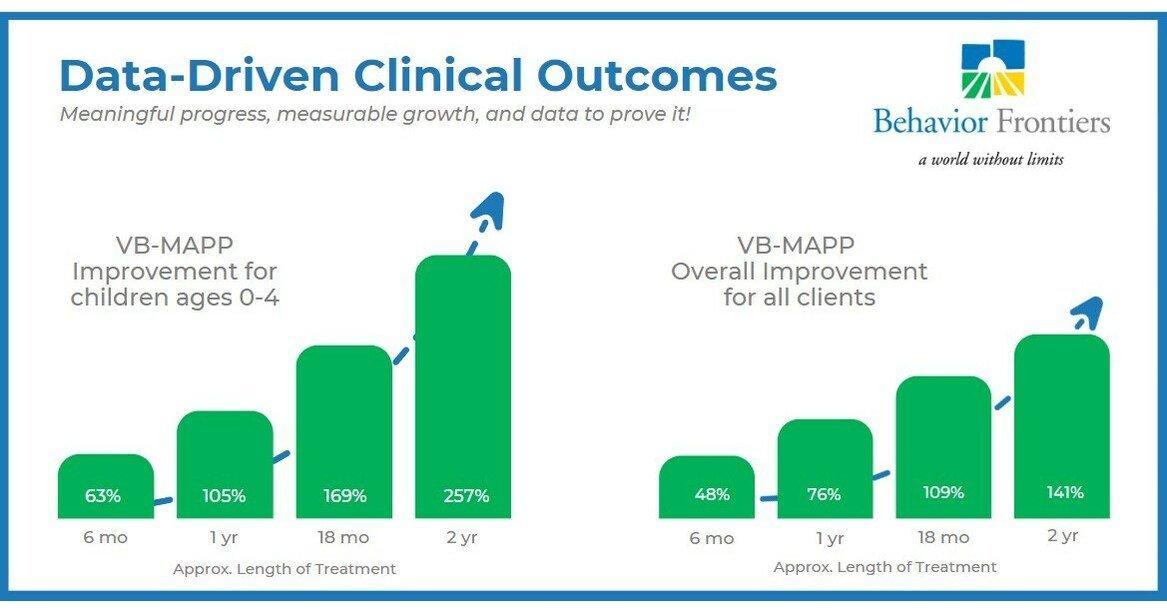
Standardized assessments, instruments like the Vineland Adaptive Behavior Scales, the VB-MAPP, or the ABLLS-R, provide comparable data across clients and providers. They capture broader developmental domains and enable organizations to benchmark their outcomes against published norms or competitor data. However, they are administered infrequently, may not capture the specific skills targeted in treatment, and impose administrative costs that scale with organizational size.
The balanced portfolio approach combines both: goal mastery data for real-time clinical management, standardized assessments for organizational accountability and external reporting. The framework provides guidance on how to weight and sequence these measures to maximize information value while minimizing clinician burden, a practical consideration that determines whether any measurement system actually gets implemented consistently across a multi-site organization.
Operational Implications for ABA Providers
For clinical directors, the framework provides a decision-making methodology that can be used to evaluate and improve existing measurement systems. Most organizations already collect some outcome data, the question is whether that data is structured to serve the full range of stakeholder needs. The five-step process provides a systematic approach to identifying gaps, redundancies, and misalignments in current measurement portfolios.
For PE-backed platforms, the framework addresses a persistent challenge in ABA due diligence: how to evaluate whether a target’s reported outcomes are meaningful, comparable, and sustainable. A platform that has implemented a balanced measurement portfolio based on the Cox et al. framework demonstrates institutional maturity in outcomes tracking that generic goal-mastery data alone cannot convey. This measurement infrastructure becomes a diligence asset that supports valuation narratives and payer negotiation strategies.
For payers, the framework provides a template for what they should expect from ABA providers in terms of outcomes reporting. Rather than accepting either pure goal-mastery data or requiring a single standardized instrument, payers can evaluate whether providers maintain balanced portfolios that demonstrate both individualized clinical responsiveness and standardized outcome accountability. This more sophisticated expectations framework could reshape utilization review processes and contract negotiations.
Technology platforms serving the ABA industry, CentralReach, Catalyst, Rethink, Hi Rasmus, and others, should evaluate how their data collection and reporting tools support balanced portfolio implementation. Platforms that facilitate both real-time goal mastery tracking and periodic standardized assessment administration within integrated workflows will be better positioned to serve providers implementing the framework.
Industry Context and Forward Implications
The Cox et al. paper is part of a broader maturation of the ABA industry’s approach to outcomes measurement. An earlier paper by Cox published in 2024 in the same journal addressed the concepts, analytics, and ethics of value-based care in ABA, establishing the theoretical foundation for the more operational framework published in 2026. Together, these papers provide a comprehensive roadmap for organizations preparing for the transition from volume-based to value-based reimbursement.
For the ABA industry as a whole, the balanced measurement portfolio framework represents a step toward the kind of standardized outcomes infrastructure that more mature healthcare specialties have developed over decades. Physical therapy, occupational therapy, and speech-language pathology all have established outcomes measurement systems that enable cross-provider comparisons and support value-based contracting. The ABA field’s relative youth means it is building this infrastructure in real time, and the Cox et al. framework provides a structured starting point.
The practical test will be whether ABA organizations actually implement balanced measurement portfolios or continue to rely on whichever approach is most convenient for their existing workflows. The history of healthcare quality measurement suggests that sustained implementation requires organizational commitment, technology infrastructure, clinician training, and, perhaps most importantly, external incentives from payers who condition reimbursement on outcomes reporting. The converging pressures from payers and PE sponsors may provide exactly the external incentive structure needed to drive adoption.
The implications for technology vendors are substantial. Practice management platforms that currently support only goal-mastery tracking may need to add standardized assessment administration, scoring, and reporting capabilities to meet the balanced portfolio requirements. Conversely, platforms that focus primarily on standardized assessments may need better integration with session-level goal tracking data. The framework creates a clear product development roadmap for technology companies serving the ABA market and suggests that integrated platforms offering both capabilities will have a competitive advantage.
The paper’s integration of lessons learned from a large multi-site organization provides practical credibility that purely theoretical frameworks lack. The authors’ experience implementing outcomes measurement across multiple locations means the framework has been tested against the real-world constraints of clinician compliance, technology limitations, and organizational inertia that determine whether measurement systems actually function in practice. This operational grounding distinguishes the Cox et al. framework from academic proposals that may be theoretically elegant but practically infeasible.
For ABA providers considering their first formal outcomes measurement initiative, the Cox et al. framework provides a starting point that avoids two common pitfalls. The first pitfall is over-engineering: attempting to measure everything and creating an administrative burden that collapses under its own weight. The second pitfall is under-engineering: selecting a single measure for convenience and generating data that is too narrow to serve multiple stakeholder needs. The balanced portfolio approach navigates between these extremes by explicitly prioritizing purpose, domain, and capacity alignment before measure selection.
The framework’s emphasis on multi-stakeholder design has particular relevance for the growing number of ABA providers pursuing BHCOE accreditation or similar third-party quality certifications. Accreditation bodies increasingly require documented outcomes measurement as a condition of certification, and the balanced portfolio approach provides a structured methodology for meeting these requirements while also generating data that serves clinical, operational, and strategic purposes.
The framework’s publication in Behavior Analysis in Practice, an official journal of the Association for Behavior Analysis International, positions it as a peer-reviewed reference point for the field. Clinical directors who implement the balanced portfolio approach can cite a published, field-endorsed methodology when explaining their measurement strategy to payers, accreditors, and PE sponsors. This institutional credibility matters in an industry where outcomes measurement has historically been ad hoc and provider-specific, and where the absence of standardized frameworks has made it difficult for payers to compare quality across providers. The Cox et al. framework does not mandate specific instruments, but it provides the structural logic that enables meaningful comparison of measurement approaches across organizations.
The relationship between outcomes measurement maturity and payer contract negotiations deserves particular attention from ABA executives. Organizations that can present balanced outcome portfolios in payer meetings, combining individualized goal mastery data with standardized assessment benchmarks, occupy a fundamentally different negotiating position than providers who can only report hours delivered or percentage of goals met. As value-based contracting models expand in ABA, the organizations that have invested in measurement infrastructure will be positioned to participate in performance-based reimbursement arrangements that reward clinical quality.
The workforce implications of balanced measurement implementation are also significant. BCBAs and RBTs who understand both individualized assessment and standardized measurement tools bring greater versatility to their clinical roles. Organizations that train their clinical teams in balanced measurement approaches create a more sophisticated workforce that can contribute to both individual treatment planning and organizational quality improvement initiatives. This training investment also supports clinician retention by providing professional development opportunities that enhance clinical competence beyond routine session delivery.
For technology vendors serving the ABA industry, the Cox et al. framework presents a clear product development roadmap. Platforms that currently support only session-level goal mastery tracking will need to integrate standardized assessment administration, automated scoring, and portfolio-level reporting capabilities. The competitive advantage will shift toward platforms that enable clinicians to manage balanced measurement portfolios without adding significant administrative burden, a design challenge that requires deep understanding of both clinical workflow and psychometric principles.
The framework’s emphasis on organizational capacity alignment in step four addresses a pragmatic reality that many measurement initiatives overlook. Even the most psychometrically sound assessment portfolio will fail if it exceeds the organization’s ability to administer, score, and analyze the data consistently across sites and clinicians. By building capacity evaluation into the framework itself, the authors provide a safeguard against the common failure mode of over-engineering measurement systems that collapse under their own administrative weight.
AT A GLANCE
| Lead authors: | D.J. Cox, J. Godwin, M.R. Filer, et al. |
| Publication: | Behavior Analysis in Practice (Springer) |
| Published: | February 2026 |
| DOI: | 10.1007/s40617-026-01164-2 |
| Framework: | Five-step decision-making process for balanced outcomes measurement |
| Step 1: | Define measurement purpose (clinical, family, payer, investor) |
| Step 2: | Identify outcome domains by stakeholder |
| Step 3: | Scan candidate measures (psychometric quality, burden, cost) |
| Step 4: | Align measures with organizational capacity and workflow |
| Step 5: | Implement balanced portfolio combining individualized + standardized |
| Industry context: | Transition from fee-for-service to outcome-based reimbursement |
SOURCES & REFERENCES
| 1. | Cox, D.J., Godwin, J., Filer, M.R., et al. (2026). A Guide to Choosing a Balanced Outcomes Measurement Portfolio for ABA Organizations. Behavior Analysis in Practice. Springer. https://link.springer.com/article/10.1007/s40617-026-01164-2 |
| 2. | Cox, D.J. (2024). The Challenges Ahead: Concepts, Analytics, and Ethics of Value-Based Care in ABA. Behavior Analysis in Practice. Springer. https://link.springer.com/article/10.1007/s40617-024-00937-x |
| 3. | Mutschler Collins, I., et al. (2025). A Meta-Analysis of ABA-Based Interventions for Children with ASD. Review J. Autism Dev. Disorders. Springer. https://link.springer.com/article/10.1007/s40489-025-00506-0 |
| 4. | ABA Matrix. “ABA Trends 2026: A Look at the Forces Set to Shape the Behavior Analysis Field.” March 2026. https://www.abamatrix.com/aba-trends-2026/ |
| 5. | The Fixed Interval (Substack). “ABA This Week.” Review of Cox et al. 2026. February 2026. https://fixedinterval.substack.com/p/aba-this-week-dbc |
| 6. | ABAI. “Behavior Analysis in Practice: Journal Home.” abainternational.org. Accessed April 2026. https://www.abainternational.org/journals/bap.aspx |
| 7. | Hyman, S.L., Levy, S.E., & Myers, S.M. (2020). Identification, Evaluation, and Management of Children with ASD. Pediatrics, 145(1). https://publications.aap.org/pediatrics/article/145/1/e20193447/36917/ |
| 8. | CDC. “Data and Statistics on Autism Spectrum Disorder.” ADDM Network. May 27, 2025. https://www.cdc.gov/autism/data-research/index.html |