The Bottleneck That Shaped an Industry
ACROSS THE UNITED STATES – the average family seeking an autism diagnosis for their child faces a wait measured not in weeks but in months and, in many regions, years. The American Academy of Pediatrics recommends universal developmental screening at 18 and 24 months, but the pathway from a flagged screen to a confirmed diagnosis requires specialist evaluation by developmental pediatricians, psychologists, or multidisciplinary teams whose availability has not kept pace with demand. According to CDC surveillance data published in 2023, approximately 1 in 36 children in the United States has been identified with autism spectrum disorder — up from 1 in 44 just two years prior and 1 in 150 when the CDC began tracking prevalence in 2000.
The specialist workforce has not scaled with that prevalence curve. A 2023 Health Resources and Services Administration analysis found significant shortages of developmental-behavioral pediatricians, with some states reporting fewer than five such specialists for populations exceeding one million children. Families in rural areas, families without commercial insurance, and Black and Hispanic families face the longest waits — research published in Pediatrics has documented that Black children receive an autism diagnosis an average of approximately 20 months later than white children, even after controlling for symptom severity.
For the ABA industry, the diagnostic bottleneck is not an abstract access problem. It is the rate-limiting step in the entire service pipeline. Children cannot begin ABA therapy without a diagnosis. Delayed diagnosis means delayed intervention, compressed treatment windows, and families who arrive at ABA providers having already lost years of early-intervention opportunity that the clinical literature identifies as the period of greatest neuroplasticity.
The diagnostic bottleneck is the rate-limiting step in the entire ABA service pipeline. Children cannot begin therapy without a diagnosis, and every month of delay compresses the early-intervention window that the clinical literature identifies as the period of greatest neuroplasticity.
It is this bottleneck — and the scale of the population behind it — that has drawn a new class of companies to the problem. Their shared premise: if artificial intelligence can reliably identify autism risk from behavioral data that parents and primary care providers can collect without a specialist, the diagnostic queue can be shortened or bypassed entirely.
Canvas Dx: The First FDA-Authorized AI Diagnostic for Autism
Cognoa, a Palo Alto-based digital therapeutics company, became the first to bring an AI-powered autism diagnostic tool through the FDA’s regulatory process. Canvas Dx received De Novo authorization from the FDA, establishing a new regulatory classification for software-based autism diagnostic aids. The product is indicated as a prescription diagnostic aid for autism spectrum disorder in children between 18 months and five years of age.
The system uses a three-component assessment model. Parents complete a standardized questionnaire about their child’s behavior and developmental milestones. They then upload short home videos of their child during everyday activities — mealtime, play, social interaction. A healthcare provider completes a brief clinical assessment. The AI algorithm integrates data from all three inputs and produces one of three outputs: a positive ASD result, a negative ASD result, or an indeterminate result requiring further specialist evaluation.
The clinical validation supporting the De Novo authorization was based on a multi-site study that enrolled children across pediatric primary care and specialist settings. The study evaluated the device’s performance against expert clinical diagnosis as the reference standard. Cognoa reported that the device demonstrated both sensitivity and specificity above 80 percent — performance thresholds that the FDA considered sufficient for a diagnostic aid intended to be used alongside, not in place of, clinical judgment.
The intended clinical pathway: Canvas Dx is designed to be deployed in primary care settings where developmental pediatricians are not available. A pediatrician orders the assessment, the family completes the parent-facing components at home, and the algorithm returns a result that either confirms the need for ABA and behavioral services or routes the child to specialist evaluation. The goal is to compress a process that currently takes months into a cycle measurable in weeks.
Cognoa has disclosed raising more than $100 million in venture funding across multiple rounds, with investors including Morningside Technology Ventures and Lux Capital. The company’s commercial trajectory — how many pediatric practices have adopted Canvas Dx, how payers are covering the assessment, and whether the diagnostic output is being accepted by ABA providers and insurers as sufficient to authorize services — will determine whether the FDA authorization translates into real-world diagnostic throughput.
EarliPoint: Eye-Tracking and the Biomarker Approach
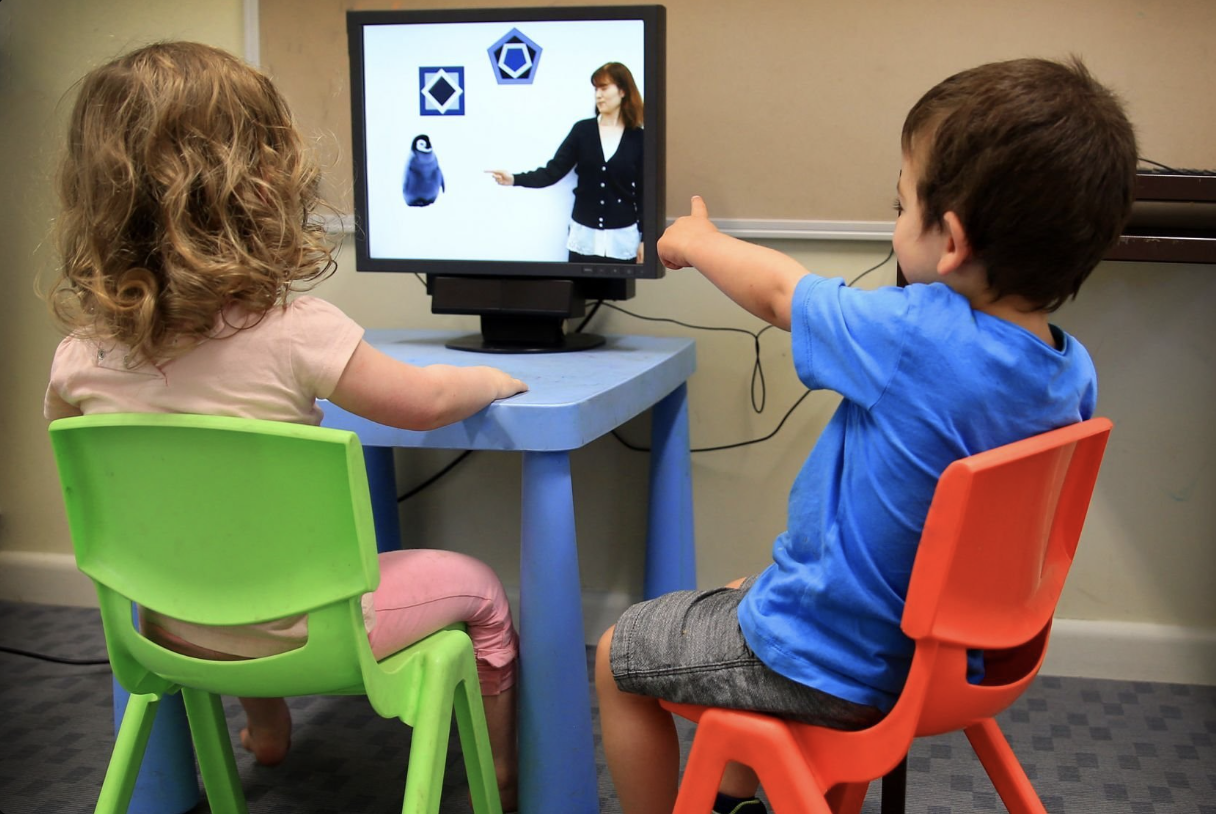
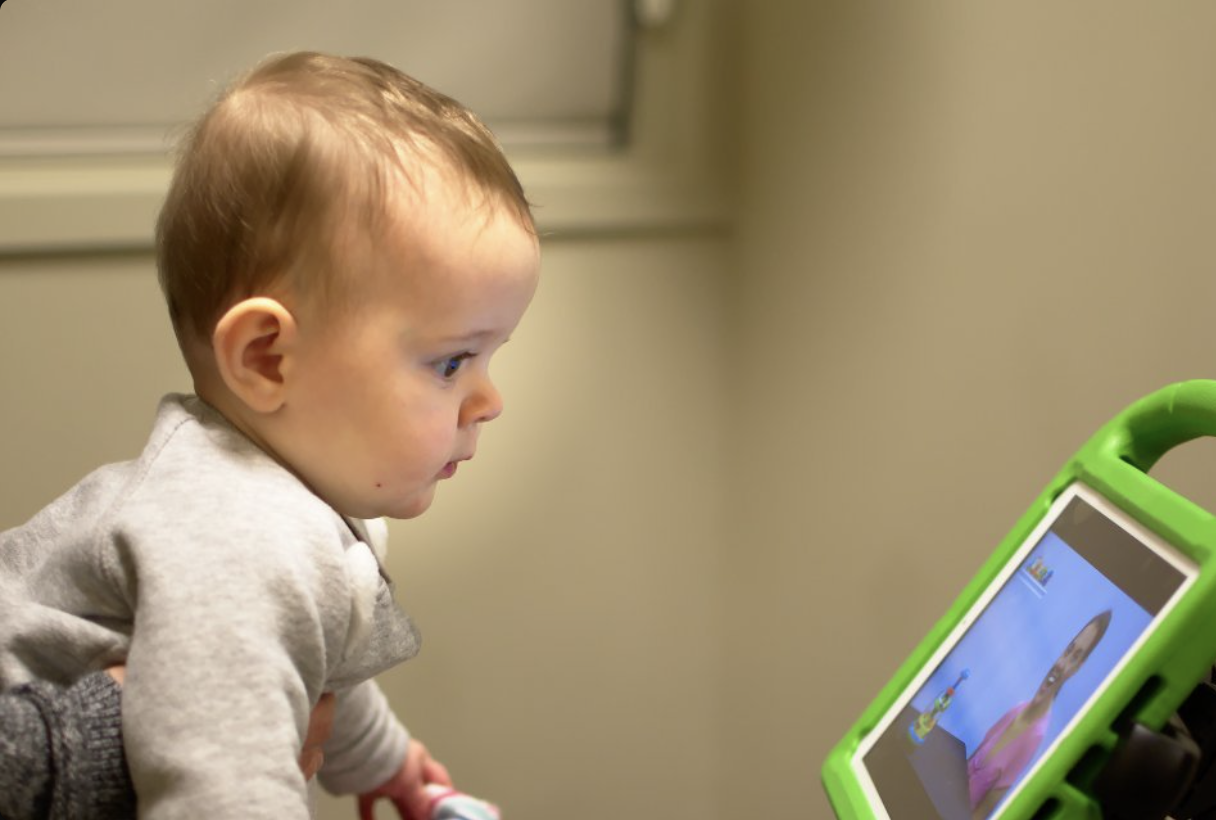
EarliTec Diagnostics took a different technological approach to the same problem. The company’s EarliPoint Evaluation system, developed from more than two decades of research at the Marcus Autism Center at Emory University, uses eye-tracking technology to measure social visual engagement in young children. The foundational research, led by Ami Klin and Warren Jones, demonstrated that children with autism show measurably different patterns of visual attention during social scenes — reduced attention to eyes, increased attention to mouths and non-social regions of the visual field — and that these differences can be detected as early as the first year of life.
EarliPoint received FDA De Novo authorization, establishing eye-tracking-based assessment as a recognized diagnostic pathway. The system presents short video sequences on a screen while a camera tracks the child’s eye movements. The resulting gaze data is analyzed against normative patterns, producing a quantitative measure of social visual engagement that correlates with autism spectrum diagnosis.
The eye-tracking approach has a potential advantage that the questionnaire-and-video model does not: it measures an involuntary biomarker rather than relying on reported behavior. A child’s gaze patterns during a social scene are not subject to the recall bias, cultural interpretation, or language barriers that can affect parent questionnaires. The Marcus Autism Center research team has published data in Nature showing that gaze patterns can identify autism risk in children as young as six months — well before the behavioral signs that parents and pediatricians typically notice.
“We’re measuring something the child does naturally. You don’t need the parent to answer questions, you don’t need the child to follow instructions. You just need them to watch.” — Ami Klin, Director, Marcus Autism Center, Emory University
The deployment model for EarliPoint differs from Canvas Dx. The eye-tracking hardware requires a clinical setting — it cannot be administered on a family’s smartphone at home. This limits its scalability to well-baby visits and pediatric offices equipped with the device but positions it as a tool for universal screening during routine checkups rather than a response to a parent’s existing concern.
SenseToKnow: The Smartphone-Only Play
Researchers at Duke University, led by Geraldine Dawson and Guillermo Sapiro, have pursued what may be the most scalable approach: an AI system that analyzes short smartphone videos of children to detect behavioral markers associated with autism. The research, published in Nature Medicine, demonstrated that a machine learning model trained on video data could identify autism-related behavioral features — including differences in social attention, facial expression, and motor patterns — with accuracy comparable to structured clinical observation tools.
The Duke system, known as SenseToKnow, requires only a standard smartphone. A caregiver records the child watching brief video stimuli on the phone’s screen, and the front-facing camera captures the child’s behavioral response. Computer vision algorithms then analyze the child’s facial expressions, head movements, and visual attention patterns. The entire assessment can be completed in under five minutes.
SenseToKnow has not yet received FDA authorization and remains in the research and development phase. But its potential implications for the ABA industry are significant precisely because of its deployment model. A screening tool that requires nothing more than a smartphone eliminates the hardware barrier, the clinic-visit barrier, and much of the geographic barrier that currently delays diagnosis in underserved communities. If validated and authorized, it could function as a first-line screening layer that identifies children needing diagnostic workup before they ever enter a specialist’s queue.
The Duke team has also published data on the equity implications of AI screening. One of the persistent criticisms of existing diagnostic tools is that they were developed and validated primarily on white, English-speaking populations, raising questions about whether AI models trained on similarly narrow datasets will perform equitably across racial, ethnic, and socioeconomic groups. Dawson and colleagues have explicitly addressed this in their study design, recruiting diverse cohorts and reporting performance metrics stratified by demographic subgroups.
The FDA Question: What Does Authorization Actually Mean?
The FDA’s De Novo pathway, used by both Cognoa and EarliTec, creates a new regulatory classification for devices that have no existing predicate. For AI-based autism screening and diagnostic tools, the De Novo process established that the FDA views these products as Class II medical devices — subject to special controls but not requiring the premarket approval process reserved for Class III devices.
What the FDA authorizations do not resolve is the downstream question that matters most to ABA providers and families: does an AI-generated diagnostic result carry the same weight as a specialist’s clinical diagnosis for the purpose of authorizing ABA services? Insurance coverage for ABA therapy requires a documented autism spectrum disorder diagnosis. Whether payers will accept a Canvas Dx positive result or an EarliPoint score as sufficient to authorize services — or whether they will require confirmatory specialist evaluation, potentially recreating the very bottleneck the technology aims to eliminate — remains an open and commercially consequential question.
The payer question is not theoretical. Commercial insurers and Medicaid managed care plans have existing prior authorization protocols that typically specify the credentials of the diagnosing clinician and the assessment instruments used. Integrating an FDA-authorized AI diagnostic into these protocols requires payer-by-payer policy changes. Early indications suggest that adoption is proceeding gradually, with some forward-leaning health plans incorporating Canvas Dx into covered diagnostic pathways while others await additional real-world evidence.
The FDA’s broader posture toward software as a medical device has also evolved. The agency’s Digital Health Center of Excellence, established in 2020, has published guidance on predetermined change control plans for AI and machine learning-based devices — a framework that allows manufacturers to update their algorithms based on new data without requiring a new regulatory submission for each change. This is relevant for autism screening tools whose performance may improve as training datasets grow and diversify.
What Clinicians Are Saying
The clinical community’s response to AI autism screening tools has been cautiously optimistic, with emphasis on the caution. Developmental pediatricians and behavioral psychologists who conduct diagnostic evaluations generally welcome tools that can accelerate identification, particularly in primary care settings where providers have limited training in autism-specific assessment. The concern is not that AI will replace specialists but that a positive AI screen could be misinterpreted as a definitive diagnosis, or that a negative result could provide false reassurance that delays a referral the child needs.
Among BCBAs, the conversation is more practical. Board Certified Behavior Analysts cannot diagnose autism — they treat it. Their interest in AI screening tools is primarily operational: if these tools increase the volume of diagnosed children entering the service pipeline, demand for ABA therapy will grow. If the tools reduce diagnostic delays from years to weeks, children will arrive at ABA providers younger, during the developmental window where intensive early intervention has the strongest evidence base. Both outcomes would be positive for families and for the ABA field.
The equity question, however, has generated the most substantive clinical debate. AI models are only as representative as the data on which they are trained. If training datasets overrepresent white, suburban, English-speaking families — the demographic that already has the shortest path to diagnosis — the technology risks automating existing disparities rather than correcting them. Researchers at Duke and Emory have acknowledged this concern explicitly, and recent publications have included diverse cohorts, but the question of whether AI screening performs equitably across the full demographic spectrum of American families is not yet fully resolved.
There is also an open question about what happens between the screen and the service. A screening tool that identifies a child at risk for autism in a rural community where no ABA provider operates within 100 miles has solved only half the problem. The diagnostic bottleneck feeds into a treatment access bottleneck that AI alone cannot address. Telehealth-delivered ABA services and remote supervision models may eventually close this gap, but the infrastructure for that delivery model remains uneven.
What This Means for the ABA Industry
For ABA practice owners and the investors behind them, AI-powered autism screening represents a structural demand variable. The current diagnostic bottleneck constrains the total addressable market by delaying or preventing entry into the service pipeline. Any technology that compresses diagnostic timelines will, at scale, increase the number of children diagnosed at younger ages — expanding the eligible population and shifting the age distribution of new patients toward the early-intervention window where treatment intensity, and corresponding revenue per case, is highest.
The private equity firms that have consolidated much of the ABA industry should be modeling this scenario. If AI screening tools achieve broad adoption in primary care over the next three to five years, the downstream effect on patient volume could be material. But the timeline is uncertain, the payer coverage question is unresolved, and the technology’s real-world performance outside of controlled clinical trials is still being established.
The more immediate opportunity may be operational rather than market-expanding. ABA providers who partner with primary care networks deploying AI screening tools could position themselves as the receiving end of a faster referral pipeline — the provider that families are connected to within days of a screening result, rather than months after a specialist wait. In a fragmented industry where patient acquisition costs are significant, a direct referral pathway from an AI screening tool to an ABA provider could represent a meaningful competitive advantage.
The technology is moving faster than the policy infrastructure around it. FDA authorization has been granted. Clinical validation data has been published. But the questions that will determine whether AI autism screening transforms the ABA industry — whether payers cover it, whether clinicians trust it, whether it performs equitably, and whether families act on the results — are still being answered, one pilot program and one policy decision at a time.
AT A GLANCE
ASD prevalence (CDC, 2023): Approximately 1 in 36 children identified with autism spectrum disorder in the U.S. (based on 2020 surveillance data)
Canvas Dx (Cognoa): First AI-powered autism diagnostic aid to receive FDA De Novo authorization; prescription use for children ages 18 months–5 years
EarliPoint (EarliTec): Eye-tracking-based autism assessment; FDA De Novo authorized; developed from Marcus Autism Center/Emory University research
SenseToKnow (Duke): Smartphone-based AI screening using computer vision; published in Nature Medicine; not yet FDA authorized
FDA pathway: De Novo classification (Class II medical device with special controls); no premarket approval required
Diagnostic wait times: Months to years for specialist evaluation in many U.S. regions; worse in rural areas and for minority families
Racial disparity: Black children diagnosed approximately 20 months later than white children on average (Pediatrics)
Key researchers: Ami Klin and Warren Jones (Emory/Marcus); Geraldine Dawson and Guillermo Sapiro (Duke)
Open payer question: Whether AI-generated diagnostic results will be accepted by insurers to authorize ABA services without specialist confirmation
ABA industry impact: Faster diagnosis could increase volume of young children entering ABA pipeline during peak early-intervention window
SOURCES & REFERENCES
1. – Maenner MJ, Warren Z, Williams AR, et al. Prevalence and Characteristics of Autism Spectrum Disorder Among Children Aged 8 Years. MMWR Surveillance Summaries. 2023;72(No. SS-2):1–14.
2. – Cognoa, Inc. Canvas Dx FDA De Novo Authorization. FDA De Novo Database. U.S. Food and Drug Administration.
3. – Klin A, Jones W. Social visual engagement as a biomarker for autism. Marcus Autism Center, Emory University. Published in Nature.
4. – EarliTec Diagnostics. EarliPoint Evaluation FDA De Novo Authorization. FDA De Novo Database. U.S. Food and Drug Administration.
5. – Dawson G, Sapiro G, et al. Automatic autism screening using smartphone video. Nature Medicine. Duke University.
6. – Health Resources and Services Administration (HRSA). Developmental-Behavioral Pediatrician Workforce Analysis. 2023.
7. – Mandell DS, Wiggins LD, Carpenter LA, et al. Racial/Ethnic Disparities in the Identification of Children With Autism Spectrum Disorders. American Journal of Public Health. 2009;99(3):493–498.
8. – American Academy of Pediatrics. Identification, Evaluation, and Management of Children With Autism Spectrum Disorder. Pediatrics. 2020;145(1):e20193447.
9. – U.S. Food and Drug Administration. Digital Health Center of Excellence. Artificial Intelligence and Machine Learning (AI/ML)-Based Software as a Medical Device (SaMD) Action Plan. 2021.
10. – Jones W, Klin A. Attention to eyes is present but in decline in 2–6-month-old infants later diagnosed with autism. Nature. 2013;504(7480):427–431.