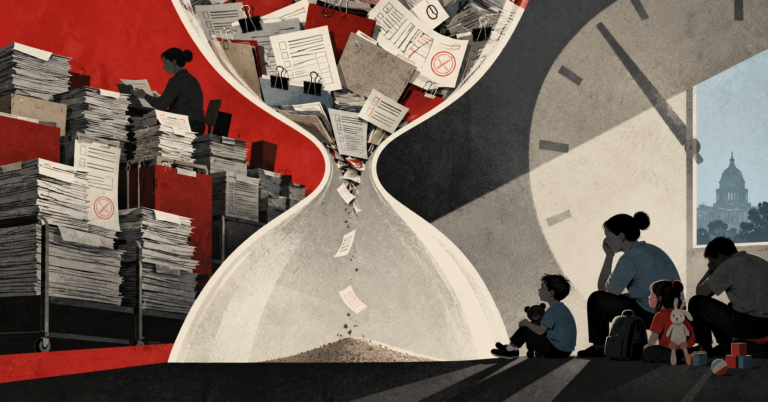
The Numbers Behind the Wait
WASHINGTON, D.C. – The Centers for Disease Control and Prevention now estimates that 1 in 31 eight-year-olds in the United States has autism spectrum disorder, up from 1 in 36 in its previous surveillance cycle. Every one of those children is, in principle, a candidate for applied behavior analysis — a therapy that all 50 state insurance mandates and every state Medicaid program now cover. The gap between that statutory entitlement and actual access to services is where the industry’s most persistent failure lives.
A national survey of autism centers found that 61% had wait times longer than four months and 15% reported waits over a year or closed intake lists entirely. One study published in the pediatric therapy literature put the average ABA wait time at 5.5 months nationally — a figure that masks wide regional variation. In rural markets and underserved urban areas, families routinely describe waits of 12 to 18 months, or longer. In Alabama in early 2026, the sudden shutdown of Key Autism Services’ statewide operations left families who had already waited months scrambling again from the beginning of a queue that had never fully opened.
The structural cause is not complicated. As of May 2025, approximately 75,600 active BCBAs practiced in the United States. BCBA-level job openings exceeded 103,000 by the end of 2024 — a figure representing more than one open position for every certified clinician in the country. A February 2026 workforce analysis by TYGES estimated that the U.S. would need nearly five times its current BCBA-level clinical workforce to adequately serve the estimated 2.9 million people aged 21 and under on the autism spectrum. BCBA demand rose 58% from 2023 to 2024 alone. The certification pipeline, which requires a master’s degree plus supervised fieldwork, cannot keep pace.
“My mental health has been on a constant decline since we have been on the waitlist for 3 years. The lack of supports for my child and myself have caused me to have suicidal thoughts.” — Anonymous parent respondent, Fong et al., Autism Research (2023)
The human cost of that structural gap is documented in the clinical literature. A 2023 study by Fong and colleagues in Autism Research, drawing on survey data from 1,810 primary caregivers of autistic children in Ontario, found that poor satisfaction with autism services was directly predictive of greater caregiver stress. Families on waitlists specifically reported an increasingly difficult time with their mental health. The study’s open-ended responses included accounts of suicidal ideation, depression, marital breakdown, and hospitalization — outcomes linked not to autism itself but to the experience of waiting, without support, for care that was theoretically available.
What Families Actually Do
Families navigating an ABA waitlist do not sit passively. They build ad hoc systems from whatever is available — a patchwork of Part C Early Intervention services, school-based supports, parent-implemented programs, telehealth coaching, and, for those with resources, private pay options. The quality and accessibility of each varies enormously by geography, family income, and whether parents have the time, education, and emotional bandwidth to navigate bureaucratic systems while simultaneously managing a child with significant support needs.
Part C Early Intervention: For children under three, the Individuals with Disabilities Education Act mandates free early intervention services through each state’s Part C program. These services — which can include speech therapy, occupational therapy, developmental instruction, and family training — do not require an ABA waitlist and are delivered in the home or natural environment. They represent the strongest federally guaranteed access point for newly diagnosed toddlers, but they expire at age three and are frequently insufficient in hours and clinical intensity. The transition from Part C to Part B school-based services at age three is itself a service cliff that many families report as a second crisis within the first.
School-based IEP services: Children with autism who are enrolled in public school are entitled under IDEA to an Individualized Education Program that can include behavioral supports and, in some districts, direct ABA services during the school day. The quality of school-based behavioral support varies dramatically by district. In well-resourced systems with knowledgeable special education staff, an IEP can provide meaningful structure and skill development during the waitlist period. In under-resourced districts — which are disproportionately found in rural and low-income areas — IEP services may be nominal, with goals that are vague, unmeasured, or inconsistent with evidence-based practice. Families often lack the expertise or legal representation to know when an IEP is inadequate or how to advocate for its improvement.
Parent-mediated home programs: A substantial body of research supports parent-implemented intervention as a clinically meaningful bridge during waitlist periods. A 2022 meta-analysis found moderate effect sizes for parent-mediated play-based intervention on social communication outcomes (d = 0.63) and language outcomes (d = 0.40) in preschool-aged children. A 2025 narrative review in PMC found that parent-coaching models at relatively low intensity — including a 1.5-hour per week P-ESDM coaching model — produced significant language gains versus control groups. The practical limitation is access to the coaching itself: most parent-mediated programs require an initial training from a qualified clinician, and that clinician is often the one the family is waiting for.

Telehealth parent training: Telehealth has emerged as the most scalable bridge between diagnosis and direct services. Multiple systematic reviews and a 2023 ScienceDirect meta-analysis confirm that telehealth-based parent-mediated interventions produce clinically meaningful improvements in child outcomes and caregiver stress relative to waitlist controls. The July 2025 New York State Medicaid evidence review of telehealth ABA found that parent-mediated telehealth was associated with reduced challenging behaviors and improved communication, with caregivers reporting high satisfaction. Companies including AnswersNow — which raised $40 million in January 2026 — have built explicit business models around the telehealth-during-waitlist market, offering 4 to 5 hours per week of virtual BCBA access and claiming 75% payer cost savings versus center-based care. The evidence base for telehealth coaching is real. The question for families is whether they can afford it, have reliable internet access, and have the time to implement it consistently.
Nothing: A meaningful fraction of families do nothing structured — not because they are indifferent, but because the options require resources they do not have. Parent-implemented programs require a parent with time, capacity, and access to training. School-based services require advocacy skills and a district with budget. Telehealth requires a device, stable broadband, and a subscription or insured service. A 2021 retrospective study of ABA access in a large Southern California integrated healthcare system found that 13% of children referred for ABA never received it at all after referral — not because they didn’t qualify, but because they fell through. In states with lower Medicaid reimbursement rates, limited provider networks, and high rurality, that figure is almost certainly higher. For families without English-language fluency, without familiarity with U.S. disability systems, or in communities with historically poor relationships with medical institutions, the navigation burden alone can be insurmountable.
What the Research Says About the Cost of Waiting
The evidence that earlier intervention produces better outcomes in autism is substantial and well-established. ABA and related early intensive interventions show a dose-response relationship with outcomes: more hours, delivered earlier, tend to produce larger gains in adaptive behavior, cognition, and communication. A 2024 JAMA Pediatrics study by Frazier and colleagues confirmed that intervention dosage was associated with better outcomes. A 2024 JAMA Pediatrics meta-analysis by Sandbank and colleagues (n = 645 children, 5 countries) found that earlier intervention start was associated with stronger language, cognitive, and autism severity outcomes regardless of intervention type.
What is less often discussed is the economic consequence of delay. A 2023 analysis in the Journal of Managed Care & Specialty Pharmacy, using Optum administrative claims data from over 4,000 children with ASD diagnosed between 2011 and 2020, found that longer time-to-diagnosis was associated with higher subsequent healthcare resource utilization and costs. Diagnostic delay — which averages nearly three years between first caregiver concern and ASD diagnosis in the U.S. — is associated with increased psychotropic drug use and broader therapeutic service utilization later. The same dynamics apply to treatment delay: a child who waits 12 months for ABA at age three is not in the same position at age four as a child who started at three.
For the ABA industry specifically, the waitlist problem has a secondary cost that rarely appears in financial models: attrition. The 2021 Southern California retrospective found that of children who did initiate ABA, only 66% remained in services for 12 months and fewer than half remained for 24 months — despite evidence that 12 to 24 months of ABA or more is typically needed to produce clinically meaningful adaptive behavior gains. Families who waited 12 months for a slot, burned through caregiver reserves, and then received services that felt fragmented or insufficient due to RBT turnover are not families who persist. The waitlist is not just a front-door problem. It shapes the entire trajectory of family engagement.
What the Industry Is — and Isn’t — Doing
The ABA industry has grown dramatically. The U.S. market was estimated at $7.97 billion in 2025, up from a fraction of that a decade earlier. PE-backed consolidation created national platforms with hundreds of centers. The BCBA workforce nearly doubled from 2020 to early 2025. By almost any industry metric, the sector has expanded aggressively. And yet the waitlist has not resolved — because growth has been driven by reimbursement opportunity and geographic concentration, not by strategic distribution of services to match need.
Five states — California, Massachusetts, Texas, Florida, and Georgia — account for approximately 40% of all BCBA demand nationally. California alone holds 19% of national demand. Meanwhile, large swaths of the rural Midwest and South remain near-deserts for behavioral services. The families who wait longest are disproportionately those in states with lower Medicaid reimbursement rates, lower BCBA-to-population ratios, and fewer large provider networks willing to accept Medicaid at all. The Autism CARES Act reauthorization in December 2024, which allocated more than $1.95 billion through fiscal year 2029 for research, prevalence tracking, and workforce development, is a meaningful federal investment — but workforce pipelines from graduation to full BCBA certification still take 6 to 12 months after a two-to-three-year master’s program, and training programs cannot expand fast enough to close a gap of this size in the near term.
Telehealth has the clearest near-term potential to serve families in the gap — both during the waitlist and as a longer-term access model in underserved markets. Multiple large providers have invested in hybrid models. AnswersNow’s $40 million Series B in January 2026, led by HealthQuest Capital with participation from Left Lane Capital and Owl Ventures, was explicitly framed around the virtual BCBA access market. But telehealth-only ABA remains insufficient for children with high support needs, who require in-person intervention that can be safely delivered with appropriate staffing ratios. The families who most need services are often the ones for whom a telehealth coaching model is least adequate.
“I just know it is an underserved market. [Service] interruptions impact the overall progress toward the child’s treatment goals, with any lapse in service.” — David Garofalo, CEO, Early Autism Services, Montgomery, Alabama (2026)
The harder systemic question is whether the industry’s incentive structure is compatible with waitlist reduction. Providers that accept Medicaid in rural markets frequently lose money on reimbursement rates that have not kept pace with clinical costs, RBT wages, or administrative burden. PE-backed platforms operating in markets with strong commercial payer mixes have little financial incentive to open centers where unit economics do not work. The result is a system where the most underserved families continue to wait not because ABA doesn’t exist as a service category in their state — it does, mandated by law — but because the reimbursement environment does not support building adequate clinical infrastructure where they live.
AT A GLANCE
CDC prevalence (2025): 1 in 31 eight-year-olds in the U.S. has ASD — up from 1 in 36 in the prior surveillance cycle
Waitlist data: 61% of autism centers report wait times over 4 months; 15% report waits exceeding 1 year or closed intake lists (national survey)
Average wait time: 5.5 months nationally (Westside Children’s Therapy, citing pediatric therapy literature) — with rural/underserved markets reporting 12–18+ months
BCBA shortage: ~75,600 active BCBAs (May 2025) vs. 103,150 open BCBA positions (2024); BCBA demand rose 58% from 2023 to 2024 (BACB employment demand report)
Workforce gap: TYGES analysis (Feb 2026): U.S. needs ~5x current BCBA-level workforce to serve estimated 2.9 million autistic people under 21
Caregiver cost: Families on waitlists report higher rates of depression, anxiety, and social isolation than families of children receiving services (Fong et al., Autism Research 2023)
What families do: Part C Early Intervention (under age 3), school IEP services, parent-mediated home programs, telehealth coaching, private pay, or nothing
Parent-mediated evidence: 2022 meta-analysis: social communication gains d=0.63, language gains d=0.40 from parent-mediated play-based interventions; telehealth delivery effective with high caregiver satisfaction
Waitlist attrition: 13% of children referred for ABA never initiated services; only 46% remained in services for 24 months (2021 Southern California retrospective, n=334)
Worst-served markets: Rural areas and states with low Medicaid reimbursement; 5 states (CA, MA, TX, FL, GA) hold 40% of all BCBA demand nationally
Federal investment: Autism CARES Act reauthorization (Dec 2024): $1.95B+ through FY 2029 for research, prevalence tracking, and workforce development
Industry size: U.S. ABA market $7.97 billion in 2025; projected $9.96 billion by 2030 (ABA Matrix, 2025)
SOURCES & REFERENCES
1. – Maenner MJ et al. Prevalence and Characteristics of Autism Spectrum Disorder Among Children Aged 8 Years. MMWR. April 2025. CDC ADDM Network.
2. – Total Care ABA. ABA Therapy Waitlist: How to Start Parent-Led Care Today. totalcareaba.com (2025). Cites national survey: 61% centers >4 month wait; 15% >1 year or closed.
3. – Westside Children’s Therapy. The Truth About Waitlists. westsidechildrenstherapy.com (April 2025). Cites average ABA wait time of 5.5 months.
4. – BACB / VG Soft Co. ABA News and Trends for May 2025. vgsoft.co (June 2025). Active BCBAs ~75,600; job openings >103,000 (end of 2024); demand +58% from 2023 to 2024.
5. – TYGES. Applied Behavior Analysis (ABA) Care Deserts in the U.S.: A State-by-State Look at BCBA Shortages. tyges.com (February 2026). ~5x BCBA workforce needed.
6. – ABA Resource Center. States with the Highest Demand for BCBAs. abaresourcecenter.com (August 2025). 103,150 U.S. BCBA job openings in 2024.
7. – Fong VC et al. “We are exhausted, worn out, and broken”: Understanding the impact of service satisfaction on caregiver well-being. Autism Research. 2023;16(10). doi:10.1002/aur.3024
8. – WSFA 12 News / Garofalo D. Autism therapy disruption leaves Alabama families scrambling. wsfa.com (March 20, 2026).
9. – Zhou B et al. Parent-mediated intervention delivered through telehealth for children with autism. Pediatr Clin North Am. 2022;69(4):645–656. PMC11017782
10. – Avula A et al. The Impact of Early Intensive Behavioral and Developmental Interventions on Key Developmental Outcomes in Young Children With ASD: A Narrative Review. PMC12514992. 2025.
11. – Sandbank M et al. Determining associations between intervention amount and outcomes for young autistic children: a meta-analysis. JAMA Pediatrics. 2024;178(8):763–773.
12. – Frazier TW, Chetcuti L, Uljarevic M. Evidence that intervention dosage is associated with better outcomes in autism. JAMA Pediatrics. 2024;179(1):101–102.
13. – Journal of Managed Care & Specialty Pharmacy. Increased delay from initial concern to ASD diagnosis and associated healthcare resource utilization. 2023;29(4):378. doi:10.18553/jmcp.2023.29.4.378
14. – Kadlac T et al. Patient Outcomes After Applied Behavior Analysis for Autism Spectrum Disorder. PMC8702444. 2021. (66% in services at 12 months; 46% at 24 months; 13% never initiated.)
15. – New York State Medicaid. Applied Behavior Analysis Provided Via Telehealth: Evidence Review. health.ny.gov (July 2025).
16. – ScienceDirect. Meta-analysis of effectiveness of parent-mediated telehealth interventions in children with ASD. 2023. doi:10.1016/j.rasd.2023.x
17. – ABA Matrix. ABA Trends 2026: A Look at the Forces Set to Shape the Behavior Analysis Field. abamatrix.com (December 2025). $7.97B market 2025; $9.96B by 2030.
18. – Autism CARES Act Reauthorization. Pub. L. No. 118-yyy. December 2024. $1.95B+ through FY 2029.
19. – BreakingNewsABA.com — March 2026