One Gate for Every ABA Case
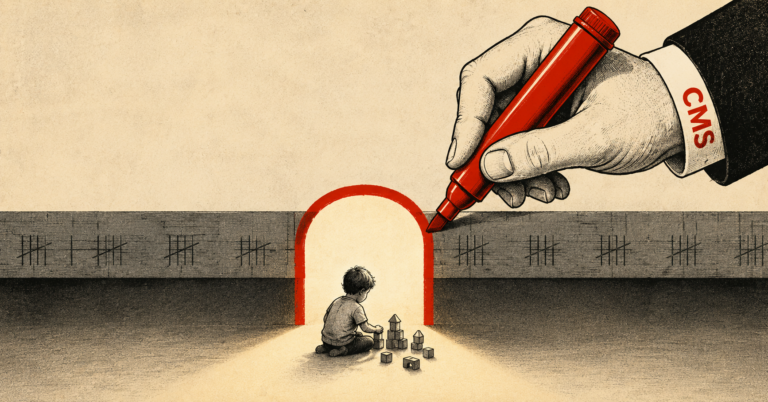
BALTIMORE – Every Maryland child on Medicaid who receives ABA therapy passes through the same gate. One company decides whether to authorize the therapy, and the same company decides whether the provider gets paid.
Since January 1, 2025, that company has been Carelon Behavioral Health. It replaced Optum, the contractor, Governor Wes Moore said, “has just failed to deliver.”
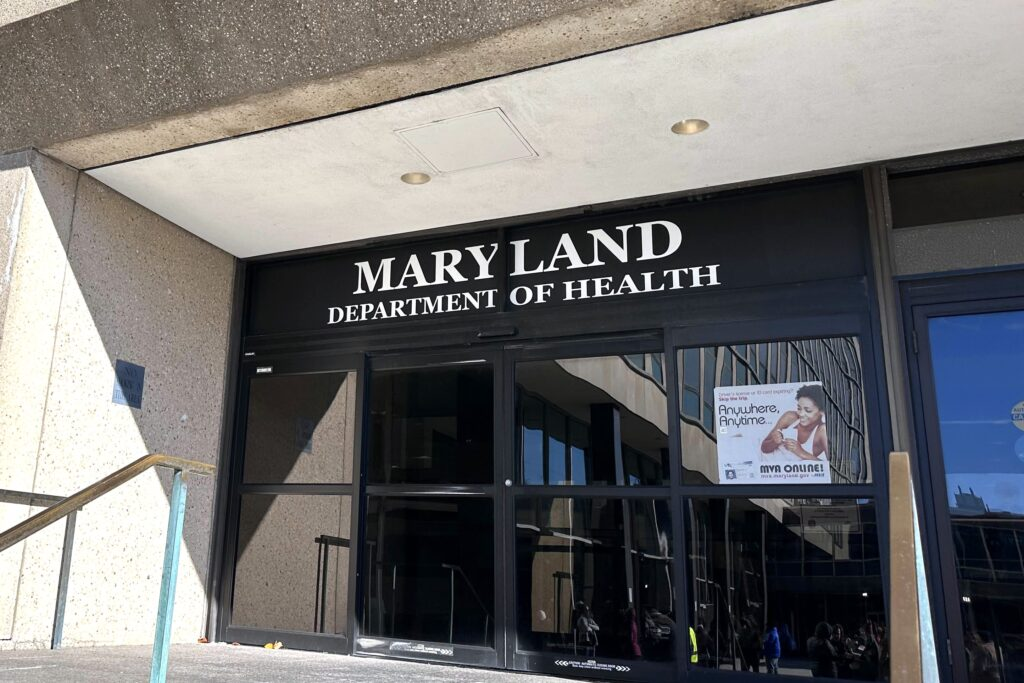
On January 29, 2026, health department officials sat before the Maryland Senate Finance Committee and laid out Carelon’s first year: a system-wide claims backlog that crested above 437,000, a call center where more than half of callers hung up before reaching anyone, and four major hospitals waiting months to be paid. The department said most of those problems had eased by December.
The episode is a live test of a design choice many state Medicaid programs share. Put all behavioral health, ABA included, into one administrative services organization, and that single vendor becomes the chokepoint for an entire category of care.
How the Carve-Out Works
Maryland added Medicaid coverage of ABA in 2017 for enrollees under 21 with an autism diagnosis, as part of the federal EPSDT child health benefit. Coverage is one thing; the plumbing is another. That structure shapes how the service moves through the system.
Behavioral health, including ABA, is carved out of the nine private plans that run HealthChoice, Maryland’s mandatory Medicaid managed-care program. Whether a child is on a managed-care plan or fee-for-service Medicaid, the ABA authorization and the ABA claim do not go to the plan. They go to the behavioral health administrative services organization, BHASO.
As the state’s ABA provider manual puts it, ABA “will be covered and reimbursed by the Medical Assistance fee-for-service program through its Behavioral Health Administrative Service Organization (BHASO), Carelon Behavioral Health.”
That routing puts Carelon on both ends of every case. Every ABA service requires prior authorization from the BHASO, which approves it only after a qualified health-care professional completes a comprehensive diagnostic evaluation and prescribes the therapy. Each authorization lasts no more than 180 days, and a reassessment and fresh authorization are required every 180 days for as long as treatment continues. The manual states that claims for all ABA services must be submitted to the BHASO for payment.
One contractor controls both authorization and payment. That is the chokepoint.
Coverage law determines whether Maryland Medicaid covers autism therapy. One contractor’s systems determine whether it actually does.
Why Maryland Moved On From Optum
Optum, the UnitedHealth Group subsidiary, held the BHASO contract from January 1, 2020, under a five-year, $198.2 million deal. It went wrong early. Providers could not file claims after the 2020 launch, and the state eventually ordered Optum to push out roughly $1 billion in estimated payments based on providers’ prior billing, Banner News reported, an improvised fix that created overpayments some providers were still repaying years later. (Baye & Wintrode, 2022)
A 2022 legislative audit put numbers to the wreckage. The Office of Legislative Audits found the state had overpaid mental-health and addiction-treatment providers by $223.5 million, underpaid others, and lost millions in federal matching funds, and that it had declined to pursue $20.5 million in damages it could have collected from Optum. (DePuyt, 2022) Auditors also found the health department never properly vetted Optum’s subcontractors and never tested the claims system before it went live.
On February 14, 2024, the Board of Public Works, with Moore among its three members, approved a new contractor. Optum did not bid to keep the work. The winner was Carelon Behavioral Health, the Elevance Health unit formerly known as Beacon Health Options, which was the same contractor Maryland had used before it ever hired Optum. Centene’s Magellan Healthcare also bid and lost. Carelon’s contract runs $233 million over five years, with a single two-year renewal option worth $99.7 million, for a total approaching $340 million. (Carelon Behavioral Health of Maryland, 2024)
A Rocky First Year
The handoff itself was abrupt. Claims processing moved to Carelon on December 22, 2024; Optum cut its final checks on December 29, and Carelon issued its first payments on January 6, 2025. At go-live, Carelon inherited about 93,000 pending claims and immediately had to keep processing Maryland’s roughly 1.1 million behavioral-health claims a month. (Carelon Behavioral Health of Maryland, 2026)
It fell behind. Open claims inventory climbed to a peak of 437,102 in March 2025 before the department and Carelon worked it down to 163,566 by December, a 63 percent reduction across the year. The oldest claims, those pending more than 30 days, peaked at 138,081 in April and fell to 4,573 by December. The call center told the same story in reverse: callers who abandoned the line before reaching anyone hit 55 percent in March, when the average wait stretched past half an hour; by December, abandonment was 0.3 percent and the average wait was about 10 seconds. Four large hospitals flagged payment delays and denials serious enough that Carelon reprocessed roughly 4,900 of their claims, worth about $7.4 million. (Health, n.d.)
Those figures cover the entire behavioral-health system Carelon runs, including mental health, addiction treatment, and ABA; the department did not break ABA out separately. Autism providers share that pipeline. Their authorizations and claims run through the same system as mental-health and addiction care, with no faster ABA lane. Across the system in 2025, Carelon processed 13.1 million claims, paid out $3.2 billion to providers, and logged about 1.18 million clinical authorizations, while completing 231 provider audits, roughly half its planned volume, because it spent the first half of the year on stabilization. (Maryland Medicaid Managed Care Program Annual Report 2025, n.d.)
The concern was on the record before Carelon ever started. When the Board of Public Works approved the deal, Shannon Hall, who leads the Community Behavioral Health Association of Maryland and represents about 100 provider organizations treating some 90,000 Medicaid patients, noted that Carelon had come in as the lower of two bidders and questioned the vendor’s capacity to do the job with the stakes so high.
The Risk Other States Inherit
Maryland’s design is not unusual, and neither is its turnover. The same national insurers cycle through these statewide behavioral contracts: UnitedHealth’s Optum, Elevance’s Carelon by way of Beacon, and Centene’s Magellan. Maryland’s own chain of contractors runs Beacon to Optum to Carelon, which is Beacon again under a new corporate parent.
A single-vendor carve-out concentrates the savings and the risk in the same place. When the one contractor stumbles, every provider in the category feels it at once. Maryland shows how quickly that shift reaches the ground.
The pattern repeats across state lines. In 2023, Idaho handed its statewide behavioral-health contract, four years and $1.2 billion, to Magellan, ending a decade of Optum running that system. (Idaho Behavioral Health Plan contract awarded to Magellan Healthcare, Inc., 2023) Different state, same structure: one vendor holds the keys to authorization and payment for a whole population, so a change at the top reverberates through every provider at once. For a state weighing whether to carve behavioral health, and ABA with it, out to a single ASO, Maryland’s first year under Carelon is the case study in what that concentration buys and what it costs.
The state is not done managing it. The health department listed a stronger BHASO among its 2026 priorities, pledging to keep improving Carelon’s payments and processes, and Carelon told legislators it plans 425 provider audits this year, nearly double its 2025 count. Carelon’s initial contract runs through the end of 2029. Whether Maryland exercises that two-year renewal will be its next verdict on whether to run an entire category of care through one set of doors.
AT A GLANCE
| Current BHASO: | Carelon Behavioral Health (Elevance Health), since January 1, 2025 |
| Prior BHASO: | Optum (UnitedHealth Group), January 1, 2020 to December 31, 2024 |
| Carelon contract: | $233 million over five years, plus a $99.7 million two-year renewal option; up to about $340 million (Baltimore Banner, 2024) |
| Optum contract: | $198.2 million over five years (Baltimore Banner, 2024) |
| Why Optum was replaced: | 2022 state audit found $223.5 million in overpayments, an untested claims system, and unvetted subcontractors (Office of Legislative Audits) |
| ABA eligibility: | Maryland Medicaid enrollees under 21 with an ASD diagnosis, under EPSDT (MDH ABA Provider Manual) |
| ABA gatekeeping: | All prior authorization and claims route through the BHASO; authorizations valid 180 days, reassessed every 180 days (MDH ABA Provider Manual) |
| Carved out to the ASO: | Behavioral health for HealthChoice managed care (1.28 million enrollees, 86% of Medicaid) plus fee-for-service |
| 2025 claims backlog (system-wide): | Peaked at 437,102 in March, down to 163,566 by December (MDH briefing, January 2026) |
| 2025 call abandonment (system-wide): | 55% in March, 0.3% in December (MDH briefing, January 2026) |
| CY2025 system totals: | 13.1 million claims processed, $3.2 billion paid to providers (MDH briefing, January 2026) |
SOURCES & REFERENCES
| 1. | Maryland Department of Health. Briefing on the Carelon Issue and Medicaid Update. Presentation to the Maryland Senate Finance Committee, January 29, 2026. mgaleg.maryland.gov |
| 2. | Cohn, Meredith, and Brenda Wintrode. “State replaces health system contractor auditors found cost the state millions.” The Baltimore Banner, February 14, 2024. thebanner.com |
| 3. | Emerson, Jakob. “Maryland drops Optum, awards $340M behavioral contract to Elevance.” Becker’s Behavioral Health, February 15, 2024. beckersbehavioralhealth.com |
| 4. | OPEN MINDS. “Maryland Selects Carelon Behavioral Health As Next ASO For Public Behavioral Health System.” February 27, 2024. openminds.com |
| 5. | Maryland Department of Health. Applied Behavior Analysis (ABA) Provider Manual. Effective February 1, 2026. health.maryland.gov |