
Market Gap in Premium Austin Suburbs
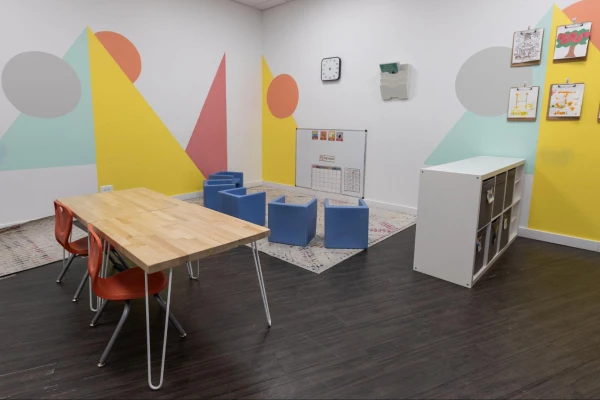
AUSTIN, TEXAS — Cielo Behavioral Health officially opened its Early Skills Center near Bee Cave on January 5, 2026, positioning itself as an alternative to the high-intensity, diagnosis-required models that dominate the Austin ABA market. Founded by Jennifer Abdullah, a Board Certified Behavior Analyst with over a decade of industry experience, and her husband Omar Abdullah, the boutique practice offers play-based ABA therapy in a simulated school environment designed to develop pre-academic and social skills.
The Lake Travis-Westlake area represents one of Austin’s most affluent family markets. Per a February 2026 market analysis from Neuhaus Realty Group, median home prices in Westlake Hills exceed $1.5 million and Bee Cave medians range from $700,000 to $800,000, and the area attracts families drawn to top-ranked school districts including Eanes ISD and Lake Travis ISD. Despite this demographic concentration, the region has been notably underserved by specialized behavioral health providers, with most major ABA chains concentrated in central Austin and the northern suburbs.
The Abdullahs identified this gap while Jennifer worked her way up through the Austin ABA establishment. Her career trajectory, per public listings, includes positions at Cultivate Behavioral Health and Education, Topaz ABA, and other established ABA providers. At Cultivate, she helped build programs and clinical protocols that served hundreds of families, gaining firsthand knowledge of the pain points in the traditional model, long wait times for diagnosis, rigid hour requirements, age caps that exclude older children, and geographic concentration that leaves suburban families underserved.
The tools of ABA are simply too valuable not to share with the greater community.— Jennifer Abdullah, Founder, Cielo Behavioral Health
Differentiated, Lower-Intensity Service Model
Cielo’s approach diverges from the high-hour intensive model that defines much of the ABA market without abandoning insurance reimbursement. The Early Skills Center accepts in-network coverage from BCBS, Aetna, and Magellan, enabling families to access services through their employer-sponsored health plans rather than paying out of pocket. This insurance positioning distinguishes Cielo from the growing number of concierge behavioral health practices that have emerged in affluent markets but operate outside the insurance system.
The center offers what Cielo calls parent training-based services, with BCBA-led consultation, group coaching, and telehealth options alongside its center-based programming. This multi-modal delivery approach provides families with flexibility that the traditional clinic-only model does not accommodate. The parent training emphasis reflects research evidence that family involvement in behavioral intervention improves treatment generalization and long-term outcomes.
This model addresses several pain points in the traditional ABA market. Wait times for autism evaluations across Texas often stretch into months, creating a gap between when families first observe developmental concerns and when they can access treatment. Cielo’s non-diagnosis-required model removes this bottleneck, allowing families to begin services while pursuing formal evaluation through other channels. For children who present with behavioral or developmental challenges but do not meet full autism diagnostic criteria, Cielo provides an entry point to ABA-based services that would otherwise be unavailable.


Competitive Landscape Analysis
Austin’s ABA market reflects the broader industry’s fragmentation. According to Stax advisory analysis published in February 2026, the top 10 U.S. ABA providers hold only 10 to 15 percent combined market share nationally. In Austin, the competitive field includes BlueSprig, which operates as a major scaled player in Texas with 160-plus centers nationwide and emphasizes center-based services with broad insurance acceptance. Behavioral Innovations represents the established local alternative, with over 20 years of market presence and multiple Austin-area locations.
Behavioral Perspective Inc. and Trumpet Behavioral Health round out the visible competitive set, both offering home-based and clinic-based services in the Austin metropolitan area. None of these competitors specifically targets the Lake Travis-Westlake corridor, and none markets services for families without a formal autism diagnosis. Cielo’s positioning, boutique, flexible-intensity, non-diagnosis-required, and geographically focused on premium western suburbs, occupies a white space in the Austin market that the larger competitors have not addressed.
The competitive dynamics also reflect a broader trend in the ABA industry toward service model diversification. As PE-backed platforms have scaled the traditional high-hour intensive model, a counter-movement has emerged among clinician-entrepreneurs who see opportunities to serve families that the dominant model leaves behind. Cielo represents this clinician-led innovation, founded by practitioners who understand the market’s limitations from the inside and designed a service model specifically to address them.
Demographic Targeting Strategy
The Lake Travis-Westlake corridor represents an ideal demographic match for Cielo’s positioning. Per U.S. Census data summarized by Community Impact, the area’s population grew 27 percent between 2017 and 2022, with median household incomes significantly above the Austin metro average. Educational attainment in the area is high, and proximity to top-ranked districts, Eanes ISD and Lake Travis ISD, attracts families who are likely to seek early intervention services at the first sign of developmental concerns.
This demographic typically seeks early intervention services for children who may not meet autism diagnostic criteria but could benefit from behavioral skill development. The intersection of high household income, educational attainment, and proximity to high-performing schools creates a market where families are both informed about developmental milestones and willing to invest in services that support their children’s school readiness. Cielo’s positioning at this intersection, offering ABA-based services to families who may not have considered traditional ABA therapy an option, effectively expands the addressable market beyond the autism-diagnosed population.
We know that traditional ABA doesn’t always fit every family.— Cielo Behavioral Health
Founder Background and Growth Trajectory
Jennifer Abdullah brings over a decade of ABA experience to Cielo’s founding. She holds board certification as a BCBA and earned a Master of Education from Arizona State University. Her career progression through major Austin-area ABA providers gave her insider knowledge of the market’s pain points, the wait times, the rigidity, the geographic gaps, and the diagnostic gatekeeping that excludes families who could benefit from behavioral intervention.
Omar Abdullah serves as co-owner and helps lead center operations and program development. The couple’s joint approach combines Jennifer’s clinical expertise with Omar’s operational focus, creating a founding team that can address both the clinical design and the business execution required to build a sustainable practice.
The Early Skills Center represents Cielo’s first test of a brick-and-mortar format after launching consultation services in 2023. Success in the Lake Travis market could support expansion to similar underserved suburban markets across Texas. The company’s flexible service delivery, combining in-center, in-home, and telehealth options, positions it for geographic expansion without requiring the heavy capital investment that center-based-only models demand.
The CDC’s most recent ADDM Network surveillance, released April 2025, identified ASD in approximately 1 in 31 children, continuing a decades-long upward trend that expands the population of families seeking behavioral health services. Cielo’s model, which extends ABA-based services beyond the formally diagnosed population, effectively positions the company to serve a broader addressable market than traditional providers.
Industry Implications
Cielo’s model challenges several assumptions underlying the traditional ABA market. The diagnosis requirement that defines most providers may exclude a substantial population of children who could benefit from behavioral intervention, particularly those with developmental delays, social skill deficits, or behavioral challenges that do not meet full autism diagnostic criteria. By removing this barrier, Cielo tests whether the ABA service market is larger than the diagnosed autism population alone.
The company’s success could validate consultation-based ABA as a scalable alternative to traditional intensive intervention. This would support industry trends toward more flexible, family-centered service delivery models that reduce the all-or-nothing dynamic of the current market. For investors and acquirers active in the ABA space, Cielo represents a differentiated positioning that could complement traditional autism-focused platforms by serving adjacent populations and geographies.
For Austin families previously excluded from ABA services by diagnostic requirements or age caps, Cielo represents a new option. The company’s success or failure in the competitive Austin market will provide a meaningful data point on whether boutique, flexible-intensity ABA models can achieve sustainable economics outside the traditional high-hour framework that has defined the industry’s growth.
Cielo’s telehealth capabilities provide an additional dimension of flexibility that supports geographic expansion without requiring proportional investment in physical locations. For families in the Lake Travis corridor who may not be able to commit to regular in-center visits, telehealth consultation provides a viable alternative that maintains clinical continuity. This multi-channel delivery model positions Cielo to serve families across a broader geographic area than its single physical location would otherwise support.
For the ABA industry more broadly, Cielo represents a case study in clinician entrepreneurship, the phenomenon of experienced BCBAs leaving established practices to build their own models designed around the limitations they observed in the traditional system. This trend mirrors patterns in other healthcare specialties where clinician-entrepreneurs have disrupted established service delivery models by focusing on specific patient populations, service gaps, or delivery innovations that larger organizations have been slow to address.
The Lake Travis-Westlake market’s demographic characteristics create a natural testing ground for Cielo’s premium positioning. Families in this corridor have the financial resources, health insurance coverage, and educational awareness to seek out boutique behavioral health services, and the relative absence of established ABA competitors in the western suburbs means Cielo faces less direct competition than it would in central Austin. If the company can establish a loyal client base in this market, it creates a foundation for expansion to similar affluent suburban corridors across the Austin metro and beyond.
The parent training emphasis in Cielo’s model also addresses a growing body of research evidence supporting family-mediated intervention for children with developmental concerns. Studies have consistently shown that parent-implemented behavioral strategies improve treatment generalization and long-term outcomes compared to clinic-only intervention models. By centering parent training as a core service rather than an add-on, Cielo aligns its clinical model with best-practice recommendations from both the ABA research literature and the American Academy of Pediatrics.
The broader implications of Cielo’s model extend beyond the Austin market. If the non-diagnosis-required approach proves commercially viable, it could influence how other ABA providers think about their addressable market. The traditional ABA industry has defined itself primarily around autism diagnosis, but developmental delays, social skill deficits, and behavioral challenges affect a substantially larger population of children. By demonstrating that ABA-based services can serve this broader population through insurance-reimbursed channels, Cielo could expand the perceived boundaries of the ABA market.
The insurance positioning of Cielo’s model is particularly worth noting. By accepting in-network coverage from major payers including BCBS, Aetna, and Magellan, the practice ensures that its services are accessible to families through their existing employer-sponsored health plans. This insurance-based revenue model provides a more sustainable financial foundation than the out-of-pocket cash-pay models that some boutique behavioral health practices have adopted. For families, insurance coverage reduces the financial barrier to accessing services and enables ongoing treatment without the budget constraints that cash-pay arrangements impose. For Cielo, insurance-based revenue provides predictable reimbursement that supports operational planning and growth.
Market timing also favors Cielo’s entry. The Austin metro area continues its rapid population growth, with the Lake Travis corridor specifically experiencing among the highest growth rates in the region. This population influx brings new families who are unfamiliar with the existing provider landscape and more open to considering alternative service models. Cielo’s positioning as a local, founder-led boutique practice may resonate with families seeking a personalized alternative to the national chains.
The broader ABA industry has traditionally defined its addressable market around the autism-diagnosed population, but Cielo’s non-diagnosis-required model tests whether that definition is unnecessarily narrow. Developmental delays, social skill deficits, and behavioral challenges affect a substantially larger population of children than those who meet full autism diagnostic criteria. By demonstrating that ABA-based services can serve this broader population through insurance-reimbursed channels, Cielo could help expand the perceived boundaries of the ABA market and create a template for other clinician-entrepreneurs considering similar models.
The parent training component of Cielo’s approach also addresses a persistent criticism of traditional ABA: that high-hour clinic-based therapy can create dependency rather than equipping families with the tools to support their children’s development independently. Research published in the Journal of Autism and Developmental Disorders has consistently demonstrated that parent-mediated interventions improve treatment generalization, meaning skills learned in therapy are more likely to transfer to home, school, and community settings when parents are actively involved in the therapeutic process. Cielo’s model, which makes parent participation mandatory rather than optional, aligns with this evidence base.
For the Austin market specifically, Cielo’s timing coincides with a period of rapid demographic change in the Lake Travis corridor. The area’s population growth, high educational attainment, and proximity to top-ranked school districts create a natural demand for early intervention services. Families relocating from California, the Northeast, and other high-cost markets often arrive with established expectations about the availability and quality of pediatric behavioral health services. Cielo’s boutique positioning, local ownership, and flexible service model may resonate with this transplant demographic in ways that national chains cannot easily replicate.
Whether Cielo’s model achieves sustainable economics will depend on several factors: the practice’s ability to maintain adequate caseloads at lower intensity levels, the willingness of payers to reimburse for parent training and consultation services at rates that support a boutique cost structure, and the company’s capacity to differentiate itself in a market where consumer awareness of ABA alternatives remains limited. The answers to these questions will have implications beyond Austin, as the broader ABA industry watches whether clinician-led boutique models can carve out viable market positions alongside the PE-backed platforms that have defined the sector’s growth trajectory.
AT A GLANCE
| Founded: | 2023 (consultation services); brick-and-mortar January 5, 2026 |
| Founders: | Jennifer Abdullah (BCBA, M.Ed.) and Omar Abdullah |
| Location: | Near Bee Cave, TX (7500 Rialto Blvd, Suite 1-250, Austin, TX 78735) |
| Service model: | Boutique, flexible-intensity ABA — with or without diagnosis |
| Age range: | Children through teens and adults (broader than traditional) |
| Insurance: | In-network with BCBS, Aetna, and Magellan |
| Target market: | Lake Travis-Westlake families seeking flexible behavioral support |
| Key differentiator: | Non-diagnosis-required, parent-training emphasis, broader age range |
| Competitive landscape: | BlueSprig, Behavioral Innovations, BPI, Trumpet Behavioral Health |
| Growth strategy: | Premium suburban market expansion across Texas |
SOURCES & REFERENCES
| 1. | Community Impact. “Cielo Behavioral Health Early Skills Center now open near Bee Cave.” April 22, 2026. https://communityimpact.com/austin/na/business/2026/04/22/cielo-behavioral-health-early-skills-center-now-open-near-bee-cave/ |
| 2. | Community Impact. “Cielo Behavioral Health to open Early Skills Center in Bee Cave.” December 3, 2025. https://communityimpact.com/austin/lake-travis-westlake/business/2025/12/03/cielo-behavioral-health-to-open-early-skills-center-in-bee-cave/ |
| 3. | Cielo Behavioral Health. Company website, Services and Early Skills Center pages. Accessed April 2026. https://cielobehavior.com/ |
| 4. | Behavioral Innovations. “ABA Therapy for Autism in Texas.” Company website. Accessed April 2026. https://www.behavioralinnovations.com/ |
| 5. | BlueSprig. Company information and center directory. Accessed April 2026. https://www.bluesprigautism.com/ |
| 6. | Stax. “Autism & Applied Behavioral Analysis (ABA) Therapy Market Overview.” February 2026. https://www.stax.com/insights/autism-applied-behavioral-analysis-aba-therapy-overview |
| 7. | Neuhaus Realty Group. “Bee Cave vs West Lake Hills: Which Austin Suburb Is Right for You?” February 2026. https://neuhausre.com/bee-cave-vs-west-lake-hills/ |
| 8. | Community Impact. “New data shows population, median income growing in Lake Travis-Westlake.” January 2024. https://communityimpact.com/austin/lake-travis-westlake/business/2024/01/16/new-data-shows-population-median-income-growing-in-lake-travis-westlake/ |
| 9. | CDC. “Data and Statistics on Autism Spectrum Disorder.” ADDM Network, May 27, 2025. https://www.cdc.gov/autism/data-research/index.html |
| 10. | Jennifer Abdullah professional listings (LinkedIn, ZoomInfo, RocketReach). Accessed April 2026. https://www.zoominfo.com/p/Jennifer-Abdullah/3190436545 |