The Convention
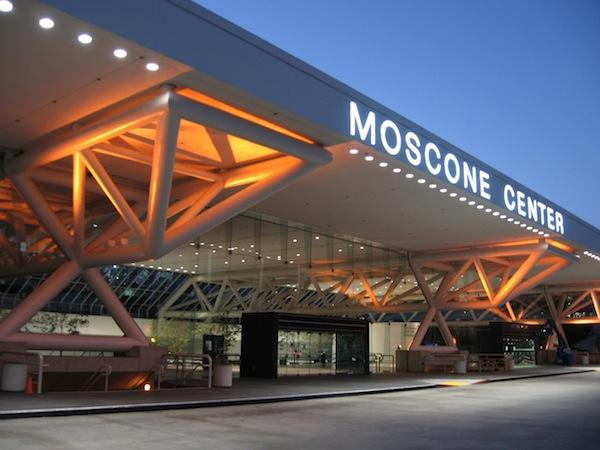
SAN FRANCISCO — the Association for Behavior Analysis International (ABAI) opens its 52nd Annual Convention on May 21 at Moscone Center West, bringing together thousands of behavior analysts, researchers, educators, students, and practitioners for five days of programming. Preconvention workshops run May 21 through 22, and the main convention runs May 23 through 25. Both in-person and virtual attendance options are available, with continuing education units approved by the BACB, APA, NASP, QABA, and IBAO. All registrants receive six months of on-demand access to recorded sessions after the event.
ABAI is the world’s largest professional organization dedicated to behavior analysis, with more than 9,000 members and 28,000 affiliate members worldwide. Founded in 1974 as the MidWestern Association for Behavior Analysis by a group of researchers who had difficulty presenting their work at psychology conferences, the organization added “International” to its name in 2008. It is headquartered in Portage, Michigan, and supports three pillars of the discipline: the experimental analysis of behavior (basic research), applied behavior analysis (clinical and educational applications), and the philosophical and conceptual foundations of the science.
The annual convention is ABAI’s flagship event and the single largest gathering in the behavior analysis field globally. Previous conventions have drawn attendees to Chicago, San Diego, Denver, Boston, Philadelphia, Louisville, and Washington, D.C. (the 51st convention was held at the Walter E. Washington Convention Center in May 2025). The event draws attendees from across the ABA ecosystem: BCBAs, BCBA-Ds, BCaBAs, RBTs, doctoral researchers, university faculty, ABA company executives, clinical directors, school psychologists, speech-language pathologists, and parents. International delegations attend from Europe, Asia, Latin America, and other regions, reflecting behavior analysis’s global footprint.
The exhibitor hall features universities with graduate programs in behavior analysis, publishers of research journals and clinical manuals, clinical software companies including CentralReach (Booth 417), practice management and data collection platforms, and service providers. The career fair serves as one of the field’s primary recruiting venues, connecting students and early-career professionals with ABA employers. For multi-state ABA providers, the convention floor is the most concentrated pool of BCBA talent outside of university campuses.
Registration is tiered by membership status: ABAI members receive discounted rates, with additional tiers for non-members and students. The registration fee includes on-site access to all three days of convention sessions, exhibits, a bookstore, reunions, business meetings, and special events, plus full virtual and recorded session access. All workshops require a separate fee. Early registration discounts were available through May 1, and cancellation policies vary by date, with full refunds unavailable after May 1. The convention’s accessibility policy covers disability accommodations and dietary restrictions.
ABAI’s annual convention is not an operator conference or an investor event. It is where the science of behavior analysis presents its latest work, and where the research pipeline that informs clinical practice, payer policy, and regulatory standards convenes.
What the Program Covers
The convention program spans basic research, translational science, applied practice, and conceptual analysis. Presentation formats include invited keynote addresses from leading behavior analysts and researchers, symposia, panel discussions, paper sessions, poster presentations, and preconvention workshops. The preconvention workshops offer intensive, skills-focused training on topics ranging from functional analysis to organizational leadership, and require a separate fee from the main convention registration.
Topics consistently featured at the annual convention include evidence-based interventions for autism spectrum disorder, verbal behavior research and practice, functional analysis and assessment methodology, ethics and professional conduct under the BACB Ethics Code, organizational behavior management, technology and artificial intelligence applications in ABA, diversity, equity, and inclusion in clinical practice, behavioral pharmacology, and the intersection of ABA with allied health disciplines including speech-language pathology, occupational therapy, and school psychology. The program is not organized around industry verticals or business tracks; it is organized around the science of behavior change and its applications across settings.
There are no panels on payer negotiation, no sessions titled “Scaling Up” or “Protecting Margin,” and no sponsor-presented workshops on revenue cycle management. The conversation is about the science: whether a particular assessment methodology produces valid results, whether a treatment protocol achieves the outcomes it claims, and whether the profession’s ethical standards are keeping pace with the commercial growth of the field. That distinction is precisely what makes ABAI valuable for operators who want to understand where the science is heading, not just where the market is heading.
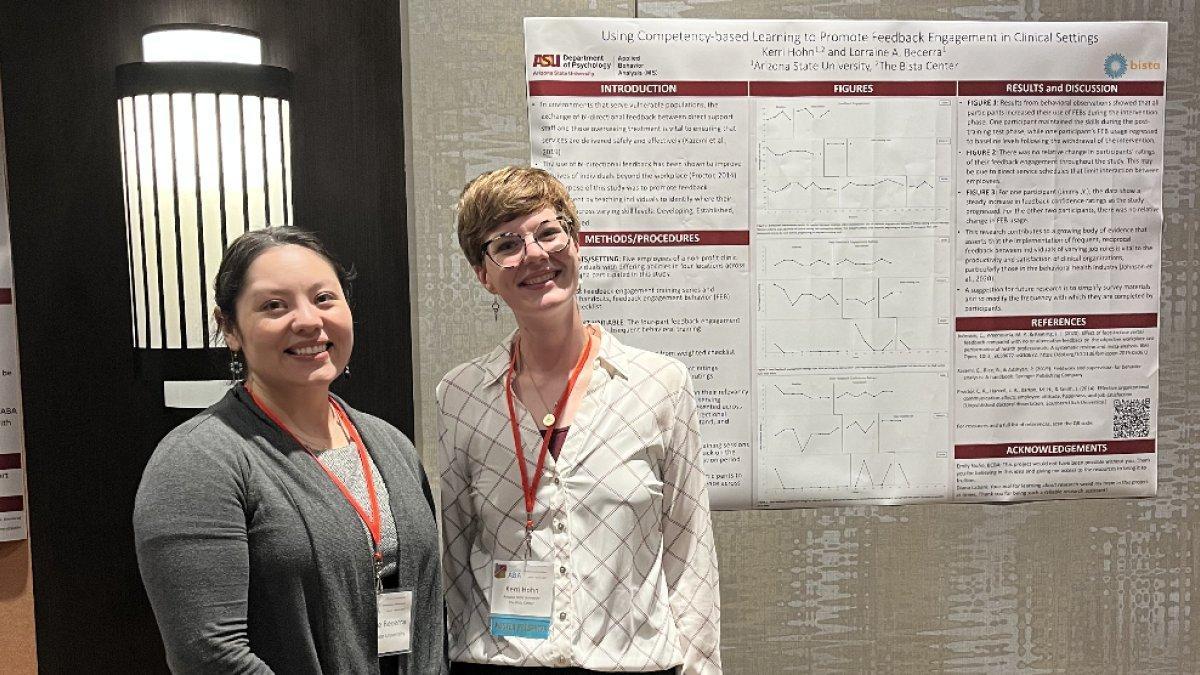
Poster sessions at ABAI are the primary venue where graduate students and early-career researchers present their work, receive peer feedback, and connect with established investigators. For ABA therapy companies, the poster sessions offer a preview of the research pipeline: the studies being presented by doctoral candidates today will shape clinical protocols, assessment tools, and treatment models in the coming years. Companies like LEARN Behavioral, Hopebridge, BlueSprig, and other multi-state operators regularly send clinical teams and leadership to engage with the latest research and identify emerging talent for recruitment.
The San Francisco venue adds logistical significance. California has the largest concentration of ABA providers in the nation, accounting for approximately 16% to 17% of weekly NPI registry additions in behavioral health throughout 2026. The state’s strong commercial insurance mandates and deep Medicaid coverage have attracted both independent providers and PE-backed platforms, making California the largest single-state market for ABA services. Holding the convention in San Francisco places it in the center of the field’s densest provider market, which may drive higher in-person attendance from California-based organizations and create networking opportunities that a convention in a smaller market would not generate.
The Moscone Center West is a premier convention facility in the heart of San Francisco, situated near Union Square and Yerba Buena Gardens. Three partner hotels are available near the convention site, with the San Francisco Marriott Marquis serving as the primary accommodations venue. The convention’s location in a major urban center with direct flight access from every major U.S. hub makes it accessible to the geographically dispersed ABA workforce, though the high cost of San Francisco hotels and travel may create barriers for smaller practices and individual clinicians operating on tighter budgets.
ABAI in the Conference Calendar
The 52nd convention arrives at the end of the ABA industry’s densest conference period. CASP’s 2026 conference (April 26 to 28, Las Vegas) served operator and clinical leadership teams with approximately 100 breakout sessions on administration, clinical quality, and workforce strategy. The Autism Investor Summit West (May 13 to 15, Scottsdale) convened PE firms, investment bankers, and provider executives for panels on margin pressure, payer strategy, and deal structure. ABAI’s convention occupies the third position in this sequence, and it serves a fundamentally different audience.
The research presented at ABAI has downstream effects on every other layer of the industry. Treatment protocols that originate in ABAI poster sessions become the clinical models that CASP member organizations implement. Outcomes data generated from ABAI-published methodology becomes the evidence base that providers present to payers. Studies on treatment intensity, assessment validity, and intervention efficacy that debut at ABAI eventually inform the coverage decisions that payers make and the regulations that state licensing boards adopt.
For ABA practice owners and clinical directors, ABAI is the closest thing the field has to a primary literature conference. The findings presented here are not pre-digested summaries or operator case studies; they are the raw scientific output of the behavior analysis research community. Attending ABAI, or at minimum monitoring its proceedings, is how operators stay ahead of the research curve rather than learning about new findings after payers and accreditation bodies have already incorporated them into their requirements.
The convention also functions as a barometer of the tension between the field’s academic roots and its commercial present. ABAI was founded by researchers who struggled to present at psychology conferences; today, its annual convention includes exhibit booths from PE-backed ABA companies, EHR vendors, and recruiting firms alongside university programs and research publishers. The question of whether commercialization is strengthening or distorting the science of behavior analysis runs through the conference implicitly, even when it is not the subject of a formal session. How the 2026 convention navigates that tension, the extent to which commercial interests shape the program versus the extent to which the research program holds its independence, will be visible in the balance between sponsored content and peer-reviewed presentations.
The Workforce Dimension
ABAI’s convention also functions as the field’s largest talent marketplace. The career fair connects students completing graduate programs in behavior analysis with employers recruiting BCBAs, and the convention floor is where clinical directors from major ABA providers identify and court top candidates. With 83,586 active BCBAs in the United States and 132,307 job postings requesting BCBA certification in 2025, the recruitment dimension of ABAI is not secondary to the academic program; for many provider organizations, it is the primary reason to attend.
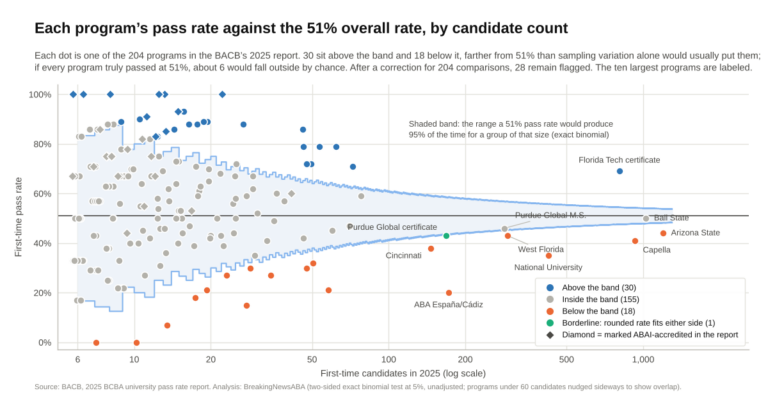
The convention’s student events and mentoring programs create a pipeline from academic training to clinical employment. Graduate students who present at ABAI gain visibility with potential employers and build professional networks that shape their career trajectories. For ABA companies facing 77% to 103% annual turnover and a BCBA supply gap that 46% of U.S. counties still cannot fill, the investment in sending clinical leaders to ABAI to recruit is a workforce strategy as much as a continuing education expense. The first-time BCBA exam pass rate has dropped from 66% in 2020 to 51% in 2025, meaning that fewer than half of first-time exam takers earn certification. This pipeline constraint makes direct engagement with graduate programs, the kind that happens at ABAI, an increasingly important recruitment channel.
The incoming ABAI Council members, who will assume their positions on May 27, 2026, include President-Elect Mark Reilly of Central Michigan University, Experimental Representative Karen Lionello-DeNolf of Assumption University, International Representative Dermot Barnes-Holmes of Ulster University, and Student Representative-Elect Agness Sheilla Aneno of Tennessee Technological University. The leadership transition reflects the organization’s global reach and its dual identity as both a scientific society and a professional membership organization serving a rapidly commercializing field. The incoming international representative, Barnes-Holmes, is one of the most cited researchers in relational frame theory, signaling that the organization’s academic mission continues to anchor its leadership despite the field’s commercial growth.
For ABA practice owners, ABAI is the research pipeline that feeds clinical protocols, payer evidence, and accreditation standards. Monitoring its proceedings is how operators stay ahead of the curve rather than responding to changes others have already incorporated.
What to Watch
The 2026 convention convenes during a period of heightened scrutiny for the ABA field. The autism-ADHD dimensional research published in Molecular Psychiatry, the CASP 2025 white paper on treatment intensity, the Yale convergent gene pathways study in Nature Neuroscience, and the ongoing federal and state audit activity all raise questions that the ABAI research community is positioned to address. Whether the convention program includes presentations that directly engage the treatment intensity debate, the dimensional versus categorical diagnosis question, or the evidence base for ABA outcomes reporting will indicate how closely the academic side of the field is tracking the operational and payer pressures that providers face daily.
The treatment intensity question is particularly urgent. Payers are tightening authorization for high-intensity ABA (26 to 40 weekly hours) while CASP’s white paper demonstrates that outcomes improve with intensity. ABAI is the venue where the underlying research on treatment dosage and response curves is most likely to be presented and debated. If the 2026 convention includes new data on optimal treatment hours, dosage-response relationships, or the comparative effectiveness of comprehensive versus focused ABA models, that data will directly affect the evidence base that providers use to negotiate with payers and defend medical necessity determinations.
The convention’s hybrid format, with both in-person and virtual access, reflects the post-pandemic norm for large academic conferences. Virtual attendees can participate in sessions and earn CEUs remotely, expanding the convention’s reach beyond those who can travel to San Francisco. For people who cannot attend in person, the six-month on-demand recording access provides a mechanism for reviewing the proceedings after the event. The convention runs through May 25; coverage of key presentations and their implications for the ABA industry will follow.
AT A GLANCE
| Event: | ABAI 52nd Annual Convention |
| Dates: | May 21 to 25, 2026 (workshops May 21-22, main May 23-25) |
| Location: | Moscone Center West, San Francisco, California |
| Organizer: | Association for Behavior Analysis International (est. 1974) |
| Membership: | 9,000+ members, 28,000+ affiliates worldwide |
| Attendance: | Thousands of behavior analysts, researchers, students, and practitioners |
| CEUs: | Approved by BACB, APA, NASP, QABA, IBAO |
| Format: | In-person and virtual; 6 months on-demand access included |
| Exhibitors: | Universities, software platforms (CentralReach Booth 417), publishers, providers |
| Program: | Keynotes, symposia, panels, paper sessions, posters, workshops, career fair |
| Prior conference: | AIS West (May 13-15, Scottsdale); next: ABAI fall event Oct 30-Nov 1 |