The Filing
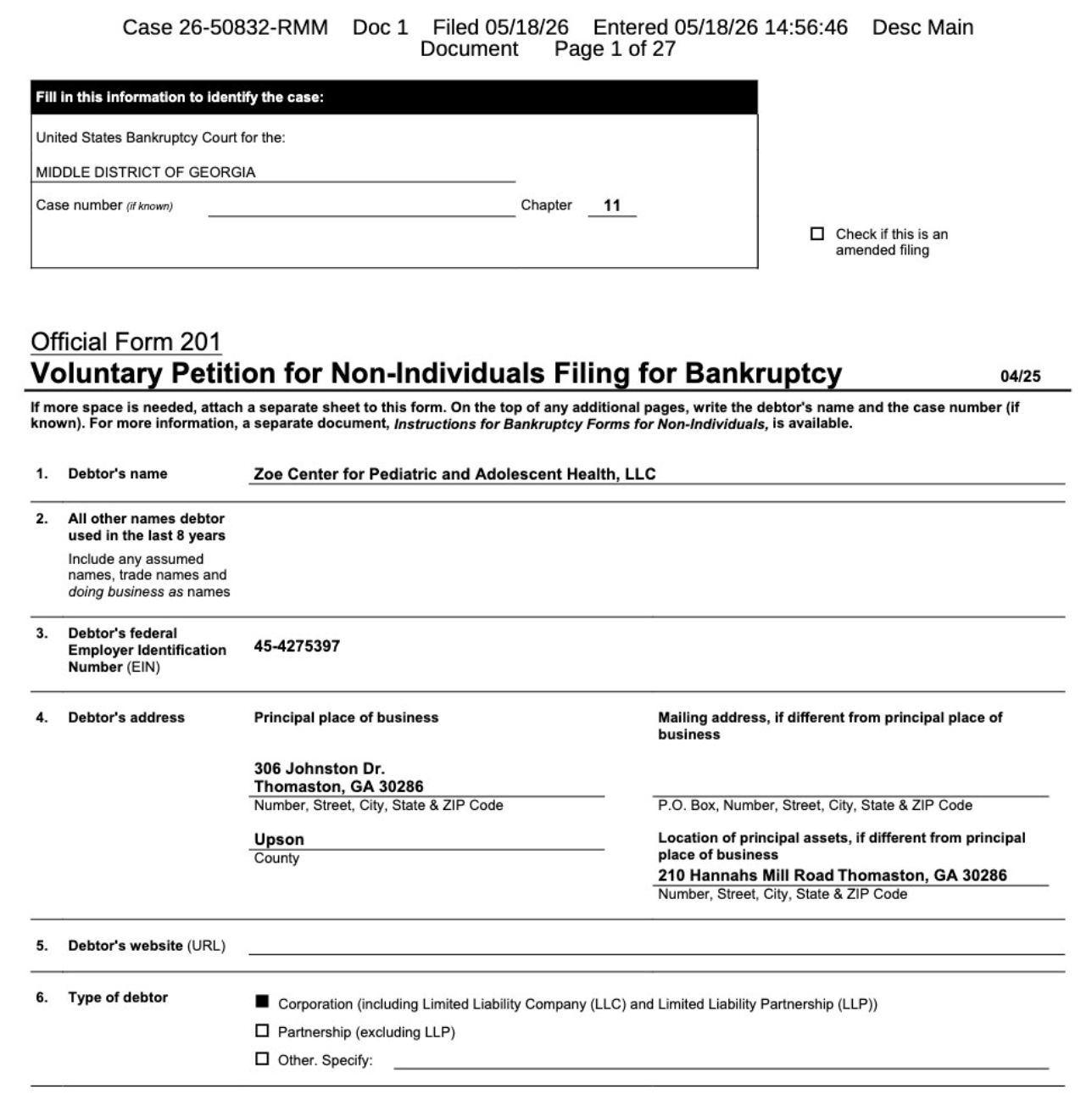
COLUMBUS, GEORGIA — Zoe Center for ABA and Development Services, LLC, a multi-state ABA provider headquartered in Columbus, Georgia, has filed for Chapter 11 bankruptcy protection. The voluntary petition, which surfaced in ABA industry channels in May 2026, disclosed estimated assets of $500,000 to $1 million against estimated liabilities of $1 million to $10 million, with between 100 and 199 creditors listed. The filing places Zoe Center among a growing number of ABA providers seeking court-supervised reorganization as the financial environment for autism therapy companies deteriorates across multiple fronts simultaneously.
Chapter 11 allows a debtor to continue operating while restructuring its debts under court supervision, rather than liquidating assets as in Chapter 7. The filing triggers an automatic stay that halts creditor collection actions, giving the company time to propose a reorganization plan. For the families whose children receive therapy through Zoe Center, the immediate question is whether services will continue during the restructuring process. Chapter 11 filings do not necessarily mean closure, but they signal financial distress significant enough that the company could not meet its obligations under existing terms.
The Company
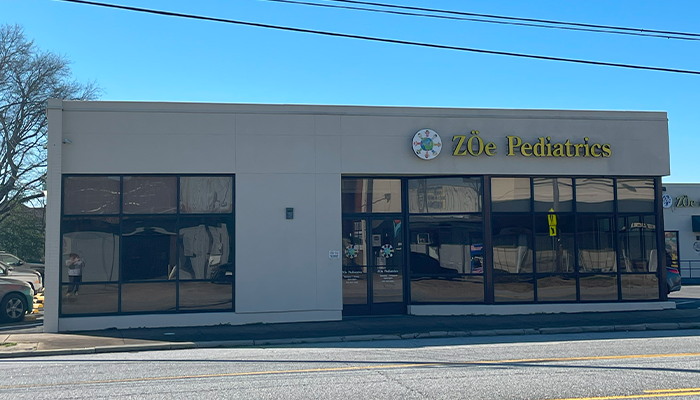
Zoe Center for ABA and Development Services provides Applied Behavior Analysis therapy to children and adolescents diagnosed with autism spectrum disorder and related conditions. The company operates from its headquarters at 1110 13th Street in Columbus, Georgia, with services delivered across five states: Alabama, Colorado, Florida, Georgia, and Tennessee. Therapy is provided in homes, community settings, schools, and at center-based locations in Columbus and Thomaston, Georgia. The company’s clinical model emphasizes person-centered approaches, comprehensive assessments conducted by Board Certified Behavior Analysts, and detailed caregiver education designed to reinforce ABA strategies across daily routines. The range of service delivery settings, home, school, community, and center, reflects the operational complexity that multi-modal ABA providers face: each setting carries different staffing requirements, travel costs, and documentation standards.
The company’s payer mix is notable for its breadth and its Medicaid exposure. Zoe Center accepts Georgia, Alabama, Florida, and Illinois Medicaid plans, Tricare, and commercial insurance from Humana, Cigna, Anthem/BCBS, Aetna, and United Healthcare, along with grants and self-pay. A payer mix that spans four state Medicaid programs, a federal military health program, and five commercial carriers across five service states creates significant administrative complexity. Each payer has its own credentialing requirements, prior-authorization processes, documentation standards, and reimbursement rates. For a company with approximately 59 employees and $5.9 million in annual revenue, managing that administrative burden while maintaining clinical quality is a challenge that many independent ABA providers have struggled to sustain.
Zoe Center held accreditation from the Behavioral Health Center of Excellence (BHCOE), the primary third-party accrediting body for ABA therapy providers. The company’s website states that it “was accredited from the one and only accreditation company for Applied Behavior Analysis for 6 years and maintain our the standards based on those findings moving forward,” language that suggests the formal accreditation may have lapsed while the company continues to operate under its historical standards. BHCOE accreditation requires providers to demonstrate compliance with clinical quality metrics, client satisfaction benchmarks, and operational standards.
Zoe Center is not the first ABA provider to seek bankruptcy protection in 2026, and it is unlikely to be the last. The financial environment that sustained the ABA sector’s growth is reversing, and the providers most exposed are the independent, multi-state operators running on Medicaid-heavy payer mixes.
A Pattern, Not an Anomaly
Zoe Center’s filing is part of a broader pattern of financial distress across the ABA industry. ABA Therapy Solutions, LLC, a Florida-based provider that had operated for 14 years, filed for Chapter 11 on April 12, 2026, in the U.S. Bankruptcy Court for the Southern District of Florida (Case No. 26-14524), listing estimated assets of $100,001 to $500,000 and liabilities of $1 million to $10 million, with Florida Healthcare Connections holding the largest unsecured claim of more than $1 million. Commercial Chapter 11 filings nationally increased 76% in January 2026 compared to January 2025, according to Epiq AACER, which tracks U.S. bankruptcy data.
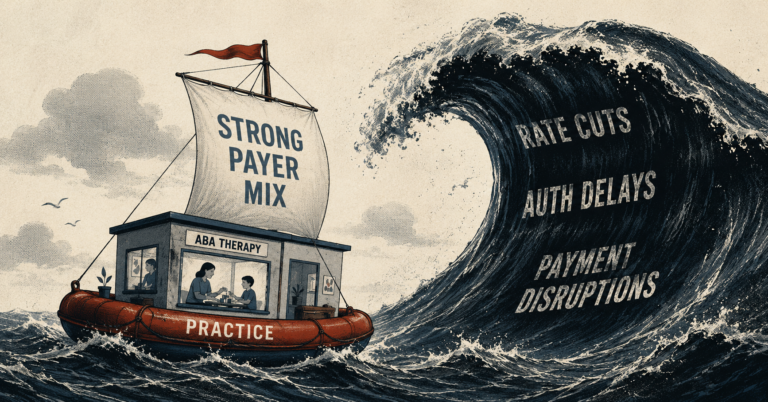
The financial pressures driving these filings are structural, not idiosyncratic. Medicaid reimbursement rates, which represent the primary revenue source for many ABA providers, are being cut in multiple states. Nebraska reduced rates for technician-level ABA therapy by 48%, dropping the hourly rate from approximately $144 to $74.80. North Carolina attempted a 10% rate cut before families sued and the governor reversed the reductions. Indiana established a flat rate of approximately $68 per hour, down from a system that had allowed some providers to bill at 40% of whatever they charged. Vermont ABA providers experienced a drastic drop in revenue after Medicaid payment changes in late 2025, with some warning that the changes threatened their ability to continue operations. For providers like Zoe Center that operate across multiple states, these rate changes do not arrive one at a time. They arrive simultaneously, compressing revenue from multiple directions while fixed costs, rent, salaries, insurance, and compliance infrastructure, remain constant.
The workforce dimension compounds the financial pressure. ABA providers compete for a limited pool of BCBAs and RBTs in a labor market where demand has consistently outstripped supply. Turnover rates for RBTs, the frontline staff who deliver the majority of direct therapy hours, have been a persistent challenge across the industry. Recruiting, training, and credentialing a new RBT costs time and money; losing one costs both the investment in training and the continuity of the therapeutic relationships they maintained. For a company with approximately 59 employees spread across five states, each staff departure creates a ripple effect: unfilled sessions, lost billable hours, and families who must wait for a replacement therapist or find a new provider altogether.
The Independent Provider Squeeze
The providers most vulnerable to this environment are not the PE-backed platforms with diversified payer mixes and access to capital markets. They are the independent, regional operators like Zoe Center: companies with $5 million to $15 million in revenue, heavy Medicaid exposure, limited administrative infrastructure, and no private equity sponsor to absorb short-term losses. These companies built their operations during the post-2014 mandate expansion, when Medicaid ABA spending was growing at double-digit annual rates and the demand for therapy far exceeded supply. The reimbursement environment once clearly rewarded growth. That environment has changed.
The irony is that private equity’s involvement in ABA, which has drawn significant criticism for prioritizing financial returns over clinical quality, also provides the capital reserves that allow PE-backed providers to absorb rate cuts and audit costs that independent operators cannot. When CARD collapsed under Blackstone’s ownership, the narrative was that PE had destroyed a provider. When independent providers like Zoe Center file for bankruptcy, the narrative is quieter, but the impact on families is the same. The children lose access to therapy. The BCBAs and RBTs lose their jobs. The community loses a provider. Whether the owner is a private equity fund or a local clinician who built the company from scratch, the financial dynamics of Medicaid-dependent ABA in 2026 are pushing providers toward the same outcome.
For an independent ABA provider operating across five states, each with its own Medicaid rate structure, prior-authorization requirements, and audit standards, the compliance burden alone can strain a small organization’s capacity. Add falling reimbursement rates, rising labor costs for RBTs and BCBAs, and the credentialing and documentation requirements that the OIG audits have made non-negotiable, and the financial model that sustained a $5.9 million company begins to break. The 100 to 199 creditors listed in Zoe Center’s petition suggest a company whose obligations extended across a wide range of vendors, landlords, clinicians, and possibly payers seeking clawbacks or recoupments.
The providers most vulnerable to this environment are not the PE-backed platforms. They are the independent, regional operators: companies with $5M to $15M in revenue, heavy Medicaid exposure, and no private equity sponsor to absorb short-term losses.
What This Means for Families
For the families receiving ABA services through Zoe Center in Alabama, Colorado, Florida, Georgia, and Tennessee, the bankruptcy filing creates uncertainty at a moment when the broader service landscape is already contracting. Chapter 11 does not automatically mean services will stop. The company can continue to operate as a debtor-in-possession while it develops a reorganization plan. But families who have experienced the disruption of a provider closure, whether through CARD’s contraction, Piece by Piece’s shutdown, or the revenue-driven pullbacks in Vermont and elsewhere, know that a filing is a warning signal. Continuity of care in ABA therapy is clinically significant: children who lose their provider and must restart with a new therapist experience regression, lost treatment time, and the emotional toll of breaking a therapeutic relationship that, for many children with autism, took months to build.
The Council of Autism Service Providers, the ABA industry’s trade body, has acknowledged the systemic challenges facing the field. In the context of the Indiana billing investigations, CASP stated publicly that “fraud, waste, and abuse occur in ABA, and it has to stop.” But the organization has also advocated for preserving access to services and opposing blunt rate cuts that reduce access without improving quality. For providers like Zoe Center, the tension between cost containment and access preservation is not an abstract policy question. It is the operating environment in which the company must either reorganize successfully or close.
The ABA industry’s financial reckoning is still in its early stages. National Medicaid spending on ABA grew 279% from 2018 to 2024, reaching $14.49 billion. That growth attracted capital, created jobs, and expanded access. It also created an industry built on reimbursement assumptions that are now being revised downward in state after state. Zoe Center for ABA and Development Services is one company, in one city, with one filing. But the structural pressures it faced, Medicaid rate compression, audit exposure, workforce costs, and the administrative burden of multi-state compliance, are shared by hundreds of ABA providers across the country. The question is how many of them will follow the same path.
AT A GLANCE
| Company: | Zoe Center for ABA and Development Services, LLC |
| Headquarters: | Columbus, Georgia (1110 13th Street) |
| Filing: | Chapter 11 bankruptcy protection; voluntary petition filed May 2026 |
| Financials: | Assets $500K-$1M; liabilities $1M-$10M; 100-199 creditors |
| Revenue/employees: | ~$5.9 million annual revenue; ~59 employees |
| Service states: | Alabama, Colorado, Florida, Georgia, Tennessee |
| Insurance: | GA/AL/FL/IL Medicaid, Tricare, Humana, Cigna, Anthem/BCBS, Aetna, UHC |
| Accreditation: | BHCOE accredited (6 years); current status unclear per website language |
| Industry context: | ABA Therapy Solutions (FL) filed Ch. 11 April 2026; CARD filed Ch. 11 June 2023; Piece by Piece shut down May 2026 |
| Rate pressure: | NE cut rates 48%; NC attempted 10% cut; IN set $68/hr flat rate; VT providers losing revenue |
| OIG audits: | 7 states targeted; ~$200M improper payments in 4 states; CO audit: $285.2M |
| Ch. 11 trend: | Commercial filings up 76% in Jan 2026 vs Jan 2025 |
SOURCES & REFERENCES