A Different Kind of Investment
While much of the autism therapy industry has spent the past several years being bought and rolled up by private equity, Bierman Autism Centers has spent its energy on something less typical for the sector: a research laboratory built directly into its clinics. In May 2026 the company marked the completion of the first year of PEBBL, short for Progress through Evidence-Based Behavior Lab, a program designed to test whether a new approach to its applied behavior analysis curriculum can help children make measurable gains faster. The wager underneath it is strategic as much as clinical. In a market increasingly defined by who owns whom, Bierman is betting that proprietary evidence, generated in the rooms where therapy actually happens, is the asset that sets an independent provider apart.
The framing matters because of what Bierman is not. The company describes itself as privately held and clinically owned and operated, founded in 2006 by Courtney Bierman, a board certified behavior analyst who started the practice out of her apartment, working in families’ homes, and opened her first center in Indiana in 2010. Two decades later it operates more than 30 centers across seven states and is headquartered in Westfield, Indiana. That ownership structure is now unusual. According to a Brown University study published in JAMA Pediatrics in January 2026, private equity firms acquired more than 500 autism therapy centers over the past decade, with nearly 80 percent of those deals concentrated between 2018 and 2022; the researchers counted 574 private equity-owned centers across 42 states as of 2024. Against that backdrop, a founder-led company investing in a research lab rather than an acquisition pipeline is making a deliberate statement about where it thinks value comes from.
The thesis is that better clinical outcomes, demonstrated with data, will matter more over time than scale alone. It is a contrarian position in a sector where growth has usually been measured in clinic count and deal volume. Bierman’s leadership is arguing that the next phase of competition in autism care will reward providers who can show, rather than merely assert, that their methods produce faster and more durable progress for children.
There is a through-line from the company’s origin to its current strategy. Courtney Bierman has described starting the practice as a team of one, working directly in families’ homes, and building from there into a multi-state network. A founder who began at the bedside, rather than in a boardroom, tends to anchor a company’s identity in the quality of the work itself, and PEBBL can be read as the institutional expression of that orientation. It is the mechanism by which a now-sizable organization tries to keep proving, with evidence, that its core promise still holds as it grows.
What PEBBL Actually Does
PEBBL is what the company calls a practice-embedded research program, and the distinction from conventional research is the point. Most ABA research is conducted in academic settings, separated from the clinics where therapy is delivered, and the translation from a published study to a change in everyday practice can take years. Bierman built PEBBL to compress that gap by running studies inside its own therapy sessions, so that findings flow back into clinical practice in weeks rather than after a long academic cycle. The program draws on the company’s accumulated clinical record, which it describes as nearly two decades of data including more than three million therapy hours and more than one million individual goals mastered across its network.
In its first full year, the lab produced a tangible body of output. Bierman reported that PEBBL presented findings through 17 poster presentations at regional and national conferences, opened five active research areas grounded in real clinical questions, and built partnerships with universities, program alumni, and external clinicians. The central question is one of instructional design: whether teaching skills in a deliberate sequence, the right order rather than an arbitrary one, drives faster overall progress. A developmental curriculum built between September 2025 and April 2026 by Dr. Lauren D’Amato, the lab’s vice president, is now in use across 10 Bierman centers in Indiana, Massachusetts, New Jersey, and Rhode Island, where more than 300 children are learning under the new sequencing framework.
Chrissy Barosky, a doctoral-level board certified behavior analyst who serves as Bierman’s chief clinical officer, has framed the lab as a commitment to transparency as much as to discovery. The implication is that Bierman intends PEBBL to do two things at once: refine its own care, and position the company as a standard-setter in a field that often lacks shared, evidence-based benchmarks.
“What we learn in PEBBL doesn’t sit in a journal. It flows back into how we practice the next week, and into the standards we believe the field should be holding itself to.” – Dr. Chrissy Barosky, Chief Clinical Officer, Bierman Autism Centers (2026)
The research orientation is not new to Bierman so much as newly formalized. The company’s clinical leaders have a track record of conference presentations and published work in areas such as precision teaching and behavioral fluency, the practice of building skills to the point of speed and accuracy rather than accuracy alone. PEBBL gives that existing scholarly instinct an organized home, with defined research areas, a pipeline of poster presentations, and external partnerships that lend academic credibility. For a clinical provider, turning scattered individual research interest into a standing program is a meaningful operational step, because it requires dedicating staff time, data infrastructure, and review processes to work that does not bill an insurer directly.
The Teaching Hospital Model
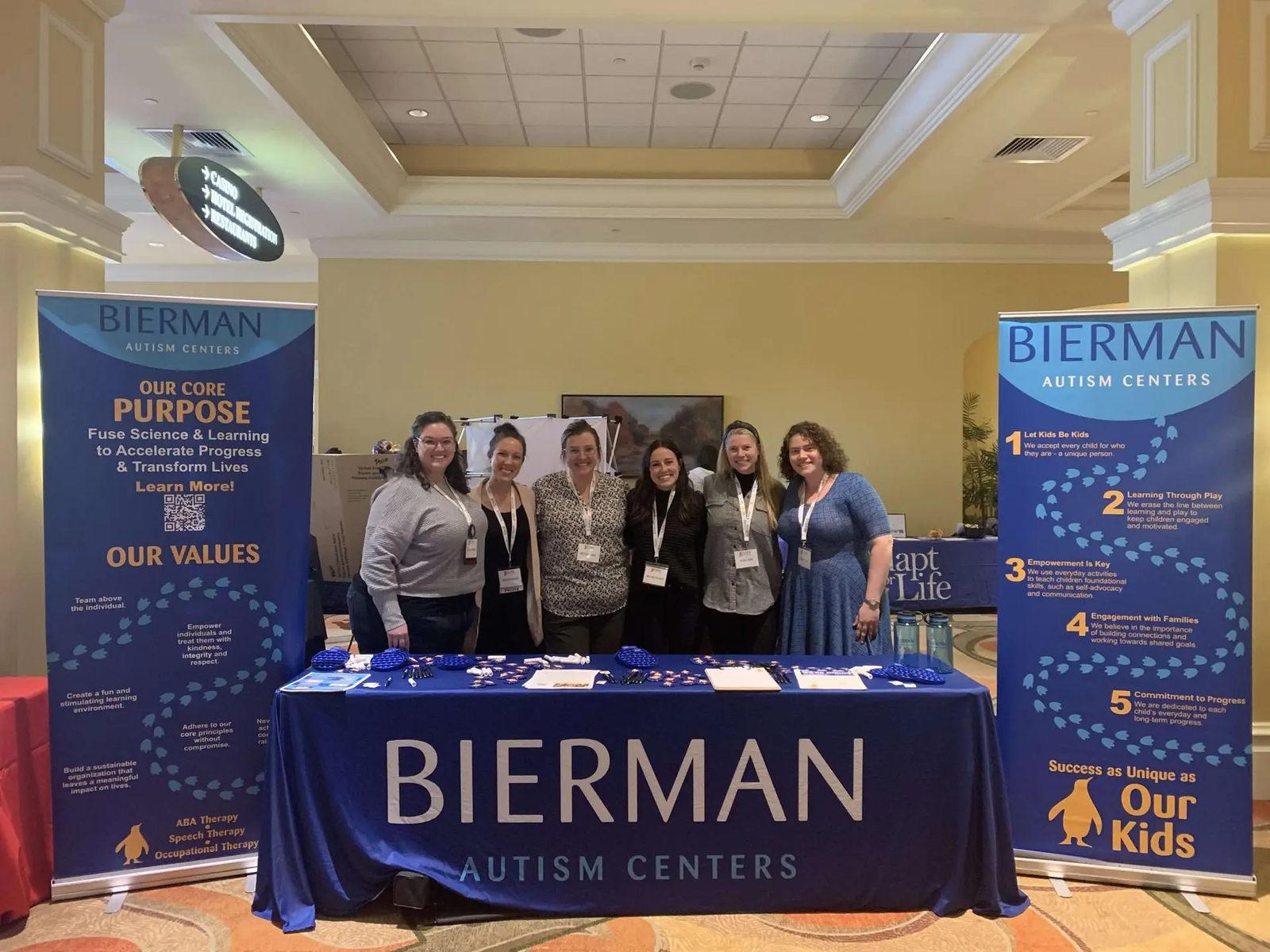
PEBBL sits inside a broader identity that Bierman has cultivated for years: the company positions itself as a teaching hospital for pediatric therapy, a phrase it uses deliberately to signal a dual mission of treating children and developing clinicians. The analogy is more than branding. Teaching hospitals are defined by the integration of care, training, and research under one roof, and a research lab embedded in clinical operations is exactly the piece that makes the comparison coherent rather than aspirational.
The clinician-development side of that model shows up in the company’s reported workforce metrics. Bierman says its trainees pass the Registered Behavior Technician (RBT) exam at rates well above the national published average, and it reports a high pass rate on the board certified behavior analyst exam for clinicians it trains. The company also reports 150 internal promotions in 2025 and says 90 percent of its clinical directors were promoted from within, a sign of the talent pipeline that a teaching-hospital structure is meant to produce. In a sector where workforce shortages and burnout are persistent constraints on growth, the ability to develop and retain clinicians is itself a competitive asset.
That training infrastructure connects directly to the research mission. A workforce trained in a common curriculum and a consistent set of methods is the precondition for running embedded research at all, because studies require standardized practice to produce interpretable results. The teaching hospital and the research lab are two halves of the same system: one creates consistency, the other tests and improves it.
The company has built out its operational leadership in a way consistent with that ambition. Its chief operating officer, Dr. Bryan Davey, a doctoral-level behavior analyst, came to the role after serving as senior vice president of operations at a national behavioral health organization and, before that, as chief executive of a Medicaid-focused integrated health company. For payers and referral sources evaluating providers, the combination of credentialed leadership and a documented research program forms a coherent story about quality, which is precisely the story Bierman is trying to tell.
Why It Matters for the Business of ABA
For practice owners and operators watching the autism therapy market, Bierman’s approach is a useful counterpoint to the prevailing consolidation narrative. The dominant story of the past several years has been capital: who raised it, who deployed it, and how many clinics changed hands. Bierman is advancing a different proposition, that a defensible position can be built on clinical differentiation and demonstrated outcomes rather than on balance-sheet scale. Whether that proves durable is an open question, but it reframes what a competitive moat in ABA can look like.
The outcomes orientation speaks directly to payers, who are increasingly the arbiters of which providers thrive. Bierman has built a payer-facing network model around standardization across markets and transparent, de-identified outcomes reporting designed to support utilization review, network adequacy, and value-based contracting. Evidence that a provider helps children reach goals faster is precisely the kind of data those arrangements are built to reward.
A research program that can show how its curriculum speeds up progress is a clinical asset and, in a market shifting from paying for therapy hours toward paying for results, a negotiating one.
There is also a reputational dimension the broader sector cannot ignore. The same Brown University research that documented private equity’s rapid entry into autism care also gave voice to concerns that financial incentives could push providers toward delivering more service hours than are clinically appropriate. A provider that publishes research aimed at helping children progress faster, and by implication graduate sooner, is staking out the opposite position. Bierman reports that it has celebrated more than 375 graduations, with over 60 percent of graduates transitioning to general education settings in roughly 18 to 20 months. In a climate of scrutiny over whether the industry optimizes for children or for revenue, faster graduation is a claim with both clinical and reputational weight.
None of this guarantees commercial success. An independent provider competing against well-capitalized national platforms faces real disadvantages in access to growth capital, purchasing power, and geographic reach. Bierman’s bet is that those disadvantages can be offset by a credible, evidence-based claim to better outcomes, and by the clinician loyalty that a teaching-hospital culture is designed to build. The next several years, as value-based contracting matures and payers demand more outcomes data, will test whether clinical differentiation can hold its own against capital.
The Larger Signal
Bierman’s year-one PEBBL report is, in the end, a significant data point in a large and turbulent market. And it is a meaningful one, because it represents a coherent alternative theory of how to compete in autism care. Instead of growing primarily by acquisition, the company is trying to grow by being demonstrably better, and by making the evidence for that claim public. For a field that has spent years absorbing capital faster than it has generated rigorous outcomes research, an operator treating clinical evidence as its core product is a development worth watching.
AT A GLANCE
| Company: | Bierman Autism Centers (BAC); founded 2006 by Courtney Bierman, BCBA; headquartered in Westfield, Indiana |
| Ownership: | Privately held, clinically owned and operated (not private equity-backed, per the company) |
| Footprint: | More than 30 centers across seven states: Arizona, Indiana, Massachusetts, North Carolina, New Jersey, Ohio, Rhode Island |
| Program: | PEBBL (Progress through Evidence-Based Behavior Lab), a practice-embedded research program; completed year one in May 2026 |
| Core question: | Whether teaching ABA skills in a deliberate sequence (scope and sequence) drives faster client progress |
| Year-one output: | 17 poster presentations; 5 active research areas; partnerships with universities, alumni, and external clinicians |
| Clinical data base: | Nearly two decades of data; more than 3 million therapy hours; more than 1 million goals mastered (company-reported) |
| Leadership: | Dr. Chrissy Barosky, BCBA-D, chief clinical officer; Dr. Lauren D’Amato, BCBA-D, VP of PEBBL; Dr. Bryan Davey, BCBA-D, COO |
| Credentials: | Holds Behavioral Health Center of Excellence (BHCOE) accreditation, the only ABA-specific accreditation |
| Outcomes (company): | 375+ graduations; over 60% transition to general education in about 18 to 20 months; 150 internal promotions in 2025 |
| Industry backdrop: | Brown University study (JAMA Pediatrics, Jan. 5, 2026): private equity acquired 500+ autism centers in a decade, ~80% in 2018 to 2022 |
| Next milestone: | Initial curriculum-validation findings at the NJABA annual conference, June 25 to 26, 2026 |
SOURCES & REFERENCES
| 1. | Bierman Autism Centers. “Bierman Autism Centers Tests New ABA Curriculum Built to Help Children Make Faster Progress” (PEBBL year one; 17 posters; 5 research areas; 3M+ hours; 1M+ goals; Barosky and D’Amato quotes; NJABA June 25 to 26). EIN Presswire, via The National Law Review. May 21, 2026. https://natlawreview.com/press-releases/bierman-autism-centers-tests-new-aba-curriculum-built-help-children-make |
| 2. | Bierman Autism Centers. “PEBBL Research Update Q2 2026: Year One Recap” (17 posters; 9 monthly webinars; 6 external associates; 5 research areas). Accessed June 2026. https://www.biermanautism.com/pebbl/research-updates/q2-2026/ |
| 3. | Bierman Autism Centers. “ABA Therapy Outcomes” (RBT and BCBA exam pass rates; 150 internal promotions in 2025; 90% of clinical directors promoted internally; PEBBL). Accessed June 2026. https://www.biermanautism.com/outcomes/ |
| 4. | Bierman Autism Centers. “About Us” (founded 2006 by Courtney Bierman; started in an apartment; teaching hospital model; seven states). Accessed June 2026. https://www.biermanautism.com/about-us/ |
| 5. | Bierman Autism Centers. “ABA Therapy Outcomes for Payers” (375+ graduations; 60%+ transition to general education in ~18 to 20 months; de-identified outcomes reporting; four-wave parent survey). Accessed June 2026. https://www.biermanautism.com/outcomes/for-payers-providers/ |
| 6. | Brown University. “Private equity firms acquired more than 500 autism centers in the past decade, study shows” (Yashaswini Singh; JAMA Pediatrics, Jan. 5, 2026; 574 centers, 42 states as of 2024). January 7, 2026. https://www.brown.edu/news/2026-01-07/private-equity-autism-centers |
| 7. | Becker’s Behavioral Health. “Rapid private equity growth in autism care sparks scrutiny” (574 centers, 42 states, 142 deals; top states CA 97, TX 81, CO 38, IL 36, FL 36). January 5, 2026. https://www.beckersbehavioralhealth.com/behavioral-health-capital-investment/rapid-private-equity-growth-in-autism-care-sparks-scrutiny/ |
| 8. | Bierman Autism Centers. “Bierman Autism Centers Names Dr. Bryan Davey, BCBA-D, LBA, Chief Operating Officer.” PR Newswire. September 2022. https://www.prnewswire.com/news-releases/bierman-autism-centers-names-dr-bryan-davey-bcba-d-lba-chief-operating-officer-301602673.html |
| 9. | Behavioral Health Center of Excellence. “Bierman ABA Earns 2-Year BHCOE Accreditation” (ABA-specific accreditation; clinical quality, staff qualifications, consumer satisfaction). https://www.bhcoe.org/2019/09/bierman-aba-earns-2-year-bhcoe-accreditation-receiving-national-recognition-for-commitment-to-quality-improvement/ |
| 10. | Bierman Autism Centers. “PEBBL Progress Lab” (practice-embedded research lab; research areas including Scope and Sequence in ABA, Early Outcome Patterns, and Fluency-Based Instruction). Accessed June 2026. https://www.biermanautism.com/pebbl/ |