A New Tier for Older Children
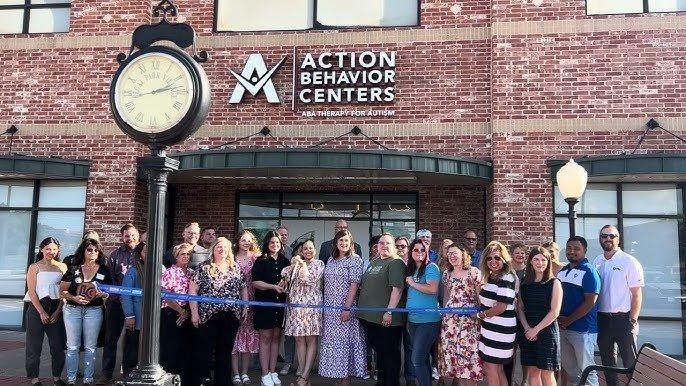
Action Behavior Centers, one of the largest center-based providers of autism therapy in the country, is reaching up the age range. Its ABC Academy program treats children ages 5 to 12, the school-age band that sits just past the early-intervention years where center-based applied behavior analysis has built its business.
ABC describes the Academy as a continuation of care for children who are in school part-time or full-time but still need extra support, delivered as 1:1 therapy. It is one of 3 age-banded service lines the company runs: a center-based program for children 18 months to 8 years, the Academy for 5 to 12, and a Texas-only home program reaching 18 months to 13 years. The Academy is the piece that points past the toddlers and preschoolers who have always been the center model’s core.
Read together, the lines let a single operator follow a child from a toddler diagnosis through the elementary-school years without handing the case to another provider. The Academy is the segment that did not exist in the early center model and the one that most clearly reframes ABC from an early-intervention specialist into a longer-horizon autism-care provider.
Extending the Age Band
The move is a modest clinical step and a meaningful business one. Center-based ABA is built around early intervention, the intensive programming, often 25 to 40 hours a week, that providers deliver to children diagnosed young. Those children eventually start school, and many step down or out of full-day center care. A school-age program gives ABC a way to keep treating them, at lower intensity, after the early-intervention window closes.
For a provider that grows by adding clinics, the school-age years are a rare place to expand without building one. ABC, founded in Austin in 2016 and owned since 2022 by the private equity firm Charlesbank Capital Partners, which bought it at about $840 million, runs more than 400 centers across 9 states by its own count, and it is still building. It opened its first 3 Pennsylvania centers in April 2026, its ninth state, the largest single-state launch in a 2026 wave that several private-equity-backed operators are running at once. Stretching the served age band lengthens the time each of those centers can keep a child enrolled.
“For a center-based operator, the school-age years are the next place to grow without building a single new clinic.”
ABC has been building the Academy line deliberately. The company opened its first ABC Academy in Allen, Texas, then extended the model into Arizona with a Gilbert location and added further academies in Round Rock, Katy, and Austin. By early 2026 the company listed more than a dozen academies for school-age children alongside its early-intervention centers, a small share of a network that now spans more than 400 locations. The footprint signals that the Academy is being treated as a repeatable service line rather than a one-off pilot.
The expansion arrives during a coordinated build cycle among private-equity-backed ABA operators. Through the first half of 2026, ABC and rivals such as Lighthouse Autism Center and Caravel Autism Health announced more than a dozen new center openings, including ABC’s first three Pennsylvania clinics, its ninth state. The sponsors sit at different points in their hold periods: Charlesbank has owned ABC since September 2022, placing it toward the back end of a typical three-to-five-year private-equity window, while GTCR’s Caravel and Cerberus’s Lighthouse are earlier and later in their cycles respectively. For a sponsor weighing an eventual exit, a service line that lengthens patient tenure and adds billable volume without new construction is precisely the kind of organic-growth story that supports a sale narrative.
The clinical content of the Academy differs from early intervention in emphasis rather than method. ABC describes the curriculum as targeting problem-solving, self-control, social flexibility, organization, and time management, delivered in a multisensory environment that pairs one-on-one instruction with structured small-group learning. The company frames the program as bridging the gap between intensive early therapy and full-time classroom attendance, and it accommodates children who attend school part-time by offering daytime hours as well as after-school sessions. That scheduling flexibility is the practical hinge that lets the Academy coexist with a school day.
Where the Payers Come In

The clinical case for school-age ABA is real. There is no medical age cap on the therapy, and for older children the work shifts from foundational skills to targeted goals: peer relationships, classroom behavior, emotional regulation, and independence, usually at a lower weekly intensity than early intervention. ABC’s own framing, a program for children who are in school but still need support, fits that model.
The harder questions are about who pays. Medicaid covers medically necessary ABA for children under 21 through the EPSDT (Early and Periodic Screening, Diagnostic, and Treatment) benefit, and many private mandates cover school-age children, though some cap coverage by age. As children get older, payers tend to scrutinize medical necessity more closely. School-age ABA also runs into the line between medical treatment and education: public schools already provide special education and related services under the Individuals with Disabilities Education Act (IDEA), and a 1:1 clinical program that overlaps the school day invites questions about duplication and which system should pay.
“ABA for a 5-year-old is early intervention. ABA for an 11-year-old is a coverage argument.”
The federal coverage rules are more favorable to school-age ABA than the coverage-argument framing suggests. Under the EPSDT benefit, states must cover any medically necessary service for Medicaid-enrolled children under 21 in any amount needed to correct or ameliorate a condition, regardless of whether the service appears in the state plan. ABA has been treated as a covered EPSDT service nationwide since the federal government clarified the requirement, and as of 2022 all 50 states had implemented a Medicaid autism benefit. The constraint for older children is therefore not categorical exclusion but the individualized medical-necessity determination, which payers tend to scrutinize more closely as a child ages and as goals shift from foundational skills to narrower targets.
Intensity is part of what makes the older-child case different. Early-intervention ABA is typically delivered at high weekly volume, often in the range of 25 to 40 hours, while school-age and adolescent programming is usually lighter and more targeted, with some providers describing 10 to 20 hours a week as more typical for older children. Lower intensity can ease the medical-necessity conversation, since the ask is smaller, but it also changes the unit economics: fewer billable hours per child means the Academy’s value to the operator comes from the length of enrollment rather than the daily intensity that drives early-intervention revenue.
The overlap with school services is also less of a payment trap than it first appears. Federal regulations under IDEA provide that when a service in a child’s special education plan is also medically necessary, Medicaid is obligated to pay before the school district, and that billing a service to Medicaid through a student’s education plan cannot preclude coverage of the same category of service delivered outside of school. In practice, that gives a clinical ABA program room to operate alongside, rather than in place of, the special education a district must provide. The line ABC has to manage is documentation: showing that Academy hours treat a diagnosed condition rather than duplicate classroom instruction.
How Children Enter the Academy
Entry into the Academy runs through a clinical gate. For children already receiving ABA at an Action Behavior center, a move to the Academy must be recommended by the child’s existing care team, which collaborates with the Academy’s clinical staff on placement; families meet with the care team before any transition and sign an Academy enrollment agreement. Children who are not current ABC patients can enroll directly, subject to the same diagnostic and medical-necessity requirements that govern center-based care. ABC defines the readiness target as a child’s ability to participate in a general-education classroom with some independence, following routines and joining activities with less support.
The payment plumbing is built to reduce friction for families already in the system. ABC says a current patient’s insurance authorization transfers to the Academy without additional paperwork, and that clinical authorizations are reevaluated every six months. That reauthorization cadence is where the medical-necessity scrutiny becomes concrete: each cycle is an opportunity for a payer to question continued intensity, narrow approved hours, or press for a step-down. For a private-equity-backed operator counting on the Academy to extend the care lifecycle, the durability of those six-month renewals across hundreds of older children is the variable that determines whether the tier scales.
What the Move Signals
ABC Academy is one answer to a question the whole sector is starting to ask: what happens to a center-based ABA business as its founding cohort of young patients grows up. Reaching into the school-age years holds onto patients, smooths the drop-off that comes when children enter school, and adds billable volume without the cost of a new building. The Academy label, with its school connotation, also positions the service for families weighing therapy against, or alongside, the classroom.
The open questions are commercial. There is no clinical barrier to treating school-age children, but whether payers will fund school-age, school-adjacent ABA at the intensity ABC’s model assumes, and how cleanly the Academy can coexist with the special education schools must already provide, will decide whether it becomes a standard tier across ABC’s 9 states or stays a feature of a few. That is the figure worth watching: how many of ABC’s centers carry an Academy program a year from now.
The downside risk is symmetrical. Because the Academy depends on recurring medical-necessity approvals for older children, a tightening in payer posture, whether through stricter utilization review, age-based caps in private mandates, or pressure to defer to school-based services, would erode the model faster than it would a toddler-focused center, where medical necessity is rarely contested. ABC has not disclosed how many of its centers now carry an Academy program or what share of Academy hours are funded by Medicaid versus commercial plans. Until it does, the tier’s contribution to the company’s economics, and its resilience to a coverage squeeze, remains an estimate rather than a reported figure.
AT A GLANCE
| The program: | ABC Academy, a school-age ABA program for children ages 5 to 12 with autism, delivered as 1:1 therapy and framed as a “continuation of care” |
| Who it is for: | Children already attending school part-time or full-time who still need additional support |
| ABC service lines: | Center-based ABA for children ages 18 months to 8 years; ABC Academy for ages 5 to 12; and ABC at Home, available only in Texas, for ages 18 months to 13 years |
| Operator: | Action Behavior Centers, founded in 2016 in Austin; more than 400 centers across 9 states (AZ, CO, IL, IN, MN, NC, PA, SC, and TX), according to the company |
| Ownership: | Charlesbank Capital Partners, which acquired ABC in 2022 at approximately $840 million in enterprise value on roughly $60 million in adjusted EBITDA; no recapitalization has been reported since |
| 2026 expansion: | Entered Pennsylvania in April 2026 with its first 3 centers, making Pennsylvania its ninth state, amid a multi-operator de novo expansion cycle |
| Clinical context: | There is no medical age cap on ABA. School-age programming is typically lower-intensity and more targeted than early intervention, which often involves 25 to 40 hours per week |
| Payer context: | Medicaid covers medically necessary ABA for children under age 21 through EPSDT; private coverage varies by age; school-age ABA may overlap with IDEA school services |
| The business angle: | Extending services into school age lengthens the care lifecycle and retains children beyond the early-intervention window without requiring new construction |
| Academy curriculum: | Targets problem-solving, self-control, social flexibility, organization, and time management; delivered in a multisensory environment with after-school and daytime scheduling |
| Coverage mechanics: | EPSDT covers medically necessary ABA for Medicaid-enrolled children under age 21 regardless of the state plan. Under IDEA, Medicaid pays before the school district when a service is also medically necessary. ABC reevaluates clinical authorizations every 6 months |
SOURCES & REFERENCES
| 1. | Action Behavior Centers. “ABC Academy: ABA therapy for school-age children.” Describes the program for children ages 5 to 12, its continuation-of-care model, 1:1 therapy, service lines, and states served. https://www.actionbehavior.com/services/academy |
| 2. | Action Behavior Centers. “Center-Based ABA.” Describes the center-based program for children ages 18 months to 8 years. https://www.actionbehavior.com/services/center-based-aba |
| 3. | Mergr. “Action Behavior Centers – Ownership and Business Overview.” Reports that Charlesbank acquired ABC on Aug. 17, 2022, and identifies the company as founded in Austin in 2016. https://mergr.com/company/action-behavior-centers |
| 4. | Charlesbank Capital Partners. “Action Behavior Centers.” Portfolio page confirming current ownership. https://www.charlesbank.com/investments/action-behavior-centers/ |
| 5. | TripleTree. “Action Behavior Centers on its Growth Investment from Charlesbank Capital Partners.” Describes ABC as founded in 2016, with approximately 400 clinicians and more than 100 centers at the time of the 2022 deal, serving children ages 2 to 14. https://www.triple-tree.com/experience/action-behavior-centers-charlesbank/ |
| 6. | BreakingNewsABA. “Action Behavior Centers Enters Pennsylvania as PE-Backed ABA Operators Push De Novo Growth.” Published May 27, 2026. Covers the Pennsylvania entry in April 2026, Charlesbank ownership since 2022, the approximately $840 million enterprise value on roughly $60 million in EBITDA, and the absence of a reported recapitalization. https://breakingnewsaba.com/industry-analysis/action-behavior-centers-enters-pennsylvania-as-pe-backed-aba |
| 7. | Cultivate Behavioral Health & Education. “What Is the Age Limit for ABA Therapy?” Explains that ABA has no clinical age cap, outlines school-age treatment priorities, notes Medicaid EPSDT coverage through age 20, discusses varying private-insurance age limits, and references IDEA services through age 21 or 22. https://cultivatebhe.com/what-is-the-age-limit-for-aba-therapy/ |
| 8. | United Care ABA. “ABA Therapy Age Range: When to Start and What to Expect.” Discusses school-age and teen programs, which typically involve 10 to 20 hours per week, compared with 25 to 40 hours for younger children, and notes Medicaid EPSDT coverage for children under 21. https://unitedcareaba.com/age-range-for-aba-therapy/ |
| 9. | Action Behavior Centers. “Find an ABA Therapy Center Near You.” Company locations page listing more than 400 locations across Arizona, Colorado, Illinois, Indiana, Minnesota, North Carolina, Pennsylvania, South Carolina, and Texas, along with school-readiness programs among its services. https://www.actionbehavior.com/location |
| 10. | KFF. “5 Key Facts About Children with Special Health Care Needs and Medicaid.” Published 2025. Explains that EPSDT covers services needed to correct or ameliorate a child’s condition for Medicaid enrollees under age 21. When an IDEA special-education service is also medically necessary, Medicaid pays before the school district. https://www.kff.org/medicaid/5-key-facts-about-children-with-special-health-care-needs-and-medicaid/ |
| 11. | MACPAC. “School-Based Services for Students Enrolled in Medicaid.” Published 2024. Explains that services billed to Medicaid through a student’s IEP cannot preclude coverage of eligible services delivered outside school, referencing 34 CFR 300.154. https://www.macpac.gov/wp-content/uploads/2024/04/School-Based-Services-for-Students-Enrolled-in-Medicaid.pdf |
| 12. | Autism Speaks. “Medicaid EPSDT.” Describes federal clarification that medically necessary autism services must be covered under EPSDT and notes that all 50 states had implemented a Medicaid autism benefit as of February 2022. https://www.autismspeaks.org/medicaid-epsdt |
| 13. | Action Behavior Centers. “ABC Academy.” Explains how the program bridges early intervention and full-time school, describes insurance-authorization transfers for existing families, states that clinical authorizations are reevaluated every 6 months, and defines school-readiness goals. https://www.actionbehavior.com/services/academy |
| 14. | Action Behavior Centers. “Learn About Action Behavior Centers.” Describes the company’s history and notes that the first ABC Academy opened in Allen, Texas, followed by the first Arizona Academy in Gilbert and additional academies in Round Rock, Katy, and Austin. https://www.actionbehavior.com/about |