
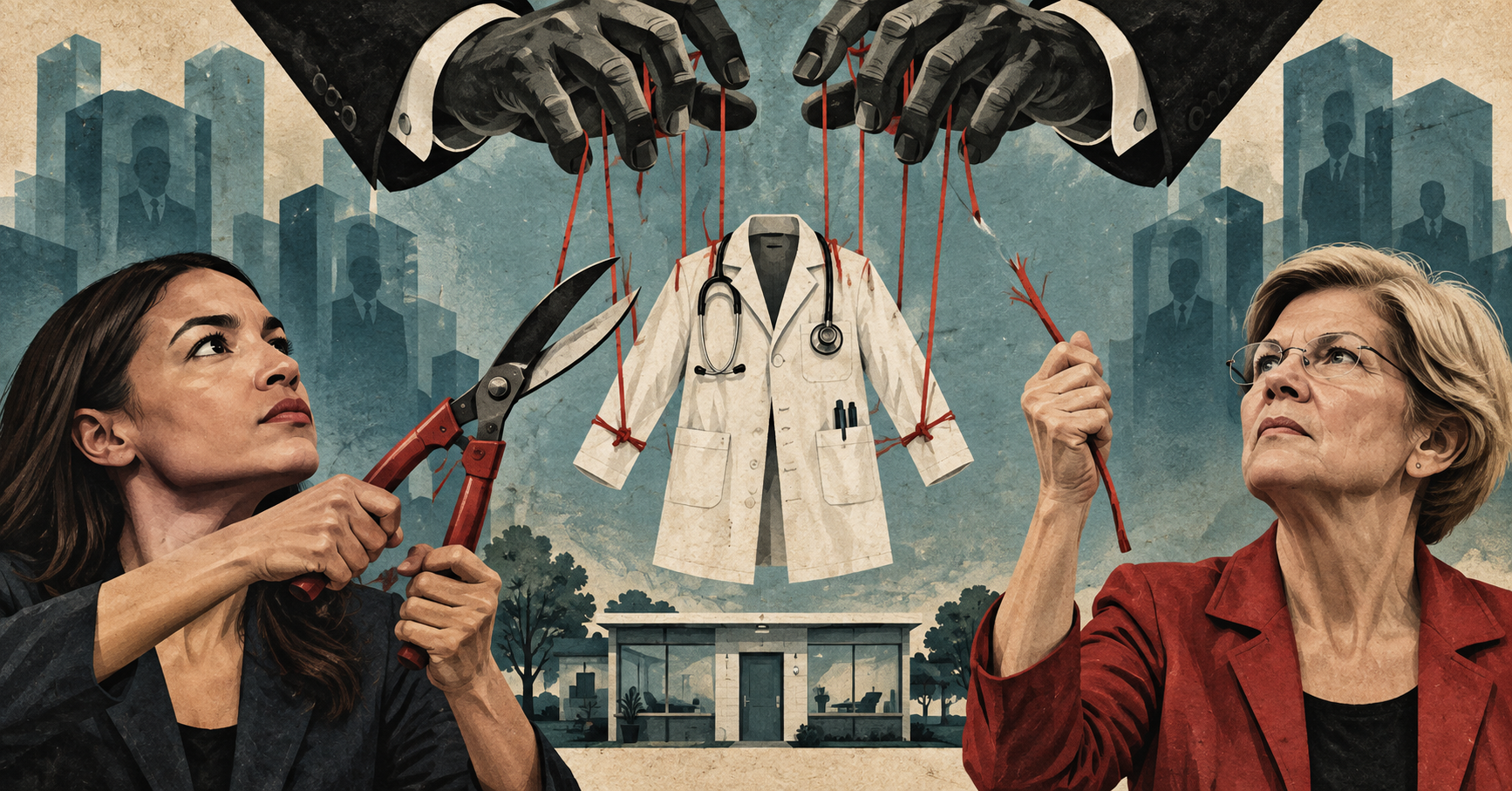
WASHINGTON – Six Democrats introduced a bill on September 16 that would make it a federal violation for a company whose clinicians do not control it to own a medical practice, employ a doctor, or run a practice through a management contract. Under the Stop Corporate Takeovers of Physicians Act, the owners would have to be the licensed clinicians themselves: physicians, nurse practitioners, or physician assistants holding a majority of the equity and a majority of the board seats. The bill does not name behavior analysts, psychologists, or therapists.
That is the short answer for ABA owners, and it is not the whole one. The bill takes an idea Oregon wrote into law in 2025: that the people who hold the license own the practice and a management company cannot run it, and adds a shorter clock: existing arrangements would get one year, whereas Oregon gave them until 2029. Two states, New York and Illinois, already apply the ownership part of that idea to ABA, and Illinois has set a January 2027 compliance deadline for existing businesses with non-licensed owners. Investor-backed ABA typically runs on the arrangement the bill would outlaw for doctors: an investor-owned company, rather than clinicians, owns the clinics and employs the clinicians.
The sponsors lead with one number. According to Physicians Advocacy Institute research cited by the sponsors, more than 80% of U.S. physicians are employed by hospitals or other corporate entities, up from about 62% in 2019. The American Medical Association reported that 6.5% of physicians described their practices as private-equity-owned in 2024, compared with about 4.5% in both 2020 and 2022. “Patients want to know that decisions about their health are being made by their doctors, not by Wall Street investors,” Warren said. Two of the three Senate sponsors, Ron Wyden and Jeff Merkley, and one of the three House sponsors, Val Hoyle, are from Oregon, whose law is the template. The bill has no number and no committee assignment yet.
What the Bill Would Do
A corporation or partnership could not own any part of a medical practice, employ a “licensee,” or contract for a licensee’s services unless licensees hold a majority of its equity and a majority of its board seats. Those owners would have to be licensed and present in a state where the practice sees patients and “substantially engaged in delivering medical care,” which rules out the physician who holds the shares in name only.
Then the bill goes after the workaround. More than 30 states already bar the corporate practice of medicine, CPOM in industry shorthand. In those states, the sponsors say, investors have installed a “friendly” physician as the owner on paper and run the practice through a management services organization, or MSO. The bill would bar an MSO from owning shares in a practice, financing anyone’s purchase of them, or controlling their transfer. It would also bar an MSO from controlling a practice’s operations in ways that affect the nature or quality of care, a standard the bill illustrates with hiring and firing, clinician pay and schedules, staffing levels, revenue targets, billing policies, prices, and payer contracts. Management contracts would have to be negotiated at arm’s length by advisers the practice chose without the MSO’s involvement, at a fair market value the FTC would determine, and any agreement that let an MSO do the forbidden things would be void.
Non-compete clauses, non-disclosure agreements, and non-disparagement agreements would be unlawful and unenforceable. The one exception is a non-compete between a practice and a licensee who holds a 25% or greater ownership stake.
Enforcement runs three ways. The FTC would treat a violation as a breach of an unfair-practices rule, anyone injured could sue for three times their damages plus attorney’s fees, and state attorneys general could sue on behalf of their residents. On a finding of violation, a court “shall” order the violator to stop, to divest where applicable, and to hand back the revenue it received from the divested entity for the period of the violation. A separate section adds a violation to the grounds on which HHS may exclude an entity from Medicare and Medicaid. “That layered enforcement, paired with mandatory divestment, is what gives this bill teeth that earlier CPOM laws have often lacked,” said Dr. Marco Fernandez, president of the Association for Independent Medicine, one of 13 groups endorsing the bill.
The requirements would take effect one year after enactment. The bill includes no grandfather clause and no buyout mechanism for displaced investors. Nonprofit and public providers, hospitals, hospital-affiliated clinics, critical access hospitals, and rural emergency hospitals are exempt from the ownership ban, and the hospital exemption is not limited to nonprofits.
Who Is Covered, and Who Is Not
The bill covers two kinds of “licensee.” The first is a physician as Medicare defines one, an MD or DO. The second is an “other advanced practice provider such as a physician assistant or nurse practitioner” whom state law allows to diagnose and treat patients. The Medicare paragraphs that add dentists, podiatrists, optometrists, and chiropractors are not cited.
Behavior analysts are not named, and nothing in the definition appears to reach them: they do not diagnose, and a clinic staffed by behavior analysts and technicians is not “organized for the purpose of practicing medicine,” the bill’s test for a medical practice. A clinic that also employs physicians is a different case, taken up below. Psychologists, speech-language pathologists, and occupational therapists are not named either. The short title, the one-pager, and the release focus on doctors, though the bill’s formal title covers “physicians and other licensed health professionals,” and Rep. Alexandria Ocasio-Cortez said it would “ban predatory noncompete agreements for healthcare workers.”

So a PE-owned ABA platform that employs BCBAs and technicians and bills insurers is outside the ownership ban as drafted. Taking commercial insurance or holding a Medicaid contract triggers nothing. The trigger is who the clinicians are and who owns the entity that employs them.
Where ABA Touches the Text
Two provisions reach past physician practices.
The first bans non-competes and non-disclosure agreements. It binds licensees, management companies, and any “health care provider,” a term the bill defines as “any entity that delivers health care services.” An ABA company fits that phrase. The bill’s non-compete definition protects “a worker,” not a licensee, so reading the clause literally would bar an ABA company from putting a non-compete in front of anyone it employs. The clarifying language beside the non-disclosure ban refers only to statements by licensees, which suggests the drafters had doctors in mind, so whether the broader reading holds is a question for any committee that takes up the bill. The stake is real either way. In a 2020 survey by Kristopher J. Brown, Stephen R. Flora, and Mary K. Brown, 33.1% of 610 practicing behavior analysts reported that their employment contract contained a noncompete clause.
The second is the physicians and nurse practitioners that some autism companies employ. A small number of ABA companies built around a medical model staff developmental pediatricians, pediatric neurologists, and pediatric nurse practitioners alongside BCBAs. Several of the largest ABA chains, including private-equity-backed ones, have brought autism diagnosis in-house to get children into treatment faster. In the cases BreakingNewsABA has reported, those evaluations are run by licensed psychologists and other diagnosticians, professions the bill does not name; a chain that hires a developmental pediatrician or a nurse practitioner to run them would be employing a licensee. The bill is not law and names no company. For any company that employs a physician, nurse practitioner, or physician assistant, the text asks three questions: which entity employs them, who owns that entity, and who controls its operations.
Illinois And New York Already Require Licensee Ownership
New York and Illinois already require ABA businesses to be owned by licensed behavior analysts, the only two states that do. Illinois’s licensing law gives existing businesses until January 15, 2027, to comply, according to the law firm Holland & Knight, and the Illinois Department of Financial and Professional Regulation enforces it. Bills filed in February 2026 would have repealed the ownership rule outright. Lawmakers amended it instead. Public Act 104-0618 passed the Senate 57 to 0 and the House 107 to 2 and was signed July 24. It creates an ownership exemption for public schools, school districts, charter schools, and nonprofits exempt or qualified for exemption under Section 501(c)(3), and lets behavior analysts share ownership with certain other licensed professionals, including occupational, speech, and physical therapists. It keeps the core rule: for-profit ABA practices with non-licensed owners must divest or restructure by the deadline.
Here the two laws diverge, and the divergence is why the federal bill matters for ABA without naming it. Illinois leaves the workaround open: an owner who has to divest can set up a management company and contract with a licensee-owned practice, the “friendly PC” model, in which a professional corporation is owned on paper by a licensed clinician. The Warren bill is written to close that route, its sponsors say. Pair an Illinois-style ownership rule for behavior analysts with Oregon-style limits on management companies, and an investor could neither own the ABA practice nor run it from an MSO.
One endorser is already asking for the same rule for a profession the bill leaves out. The Alliance of Independent Dentists backed the bill even though dentists sit outside the licensee definition, as they do under Oregon’s law. “The threats posed by corporate consolidation are not unique to medicine; dentists and their patients deserve these same protections,” said Dr. Jill Tanzi, the alliance’s president.
If Behavior Analysts Were Ever Written In
As of June 2026, 40 states and the District of Columbia license or otherwise regulate behavior analysts, by the Behavior Analyst Certification Board’s count, so a future draft would not lack a licensing hook. Nothing in the bill or the sponsors’ materials proposes adding them. But the text as written shows what such a version would do to investor-owned ABA.
Under such a version, a company not majority-owned and majority-governed by behavior analysts could not own an ABA practice “in whole or in part” or employ a behavior analyst, so a minority investor stake would not be safe either. Existing platforms would have one year from enactment to restructure or sell. The MSO route Illinois offers would be closed, because a management company could not hold equity, finance an acquisition, control a transfer, or have final say over the hiring, pay, billing, and payer-contract decisions platform operators make today. An MSO, or anyone who owns or works for one, could not finance the purchase of practice equity, the mechanism behind the acquisitions that built private equity’s autism-therapy footprint. The buyers left standing would be practices majority-owned by behavior analysts themselves, along with nonprofits, public providers, and hospital systems, including for-profit hospitals. A court that found a violation would have to order divestiture where applicable and the return of revenue taken from the divested entity during the violation, with three times damages available to private plaintiffs.
Prospects and Dates to Watch
The version Warren’s office posted is a draft from the Senate’s bill-drafting office with the bill number and committee left blank. All 13 lawmakers backing it are Democrats. Holland & Knight wrote in a client alert the day after introduction that the bill would, “for the first time,” put federal restrictions on physician-practice ownership, and that “given the limited legislative calendar remaining in 2026, near-term enactment would require significant additional congressional action.” An earlier Warren bill aimed at private equity in health care, the Corporate Crimes Against Health Care Act, went to the Finance Committee in June 2024 and never moved; she reintroduced it in February 2026.
“With big bipartisan majorities, Oregon passed the strongest ban on the corporate practice of medicine in the country. Oregon has shown that it’s possible to stand up to corporate profiteering in healthcare and win. Now it’s time to take that fight nationwide.” – Ben Bowman, Oregon House Majority Leader and chief sponsor of the state’s 2025 law (2026)
The state calendar is the one to watch. Oregon’s law applies to new arrangements now and to management companies that predate it on January 1, 2029. The federal bill’s non-preemption clause leaves room for more: it expressly preserves any state law that is “equal or more stringent,” including one that applies the ownership rule to entities the federal bill exempts.
The nearest deadline is not in Washington. Illinois’s non-licensee ABA owners have until January 15, 2027, to sell or restructure.
AT A GLANCE
| Bill: | Stop Corporate Takeovers of Physicians Act; introduced Sept. 16, 2026, by Sens. Warren, Wyden, and Merkley and Reps. Hoyle, Ocasio-Cortez, and Subramanyam; no bill number in the posted draft (Warren press release; bill text) |
| Who is a “licensee”: | MDs and DOs (Social Security Act §1861(r)(1)); PAs, NPs, and other advanced practice providers authorized under state law to diagnose and treat (bill draft, p. 12) |
| Not named: | Behavior analysts, psychologists, speech-language pathologists, occupational and physical therapists, and dentists (bill draft, pp. 12–13; Social Security Act §1861(r)) |
| Exempt from the ownership ban: | Nonprofit and public providers; hospitals, including for-profit hospitals; hospital-affiliated clinics; critical access and rural emergency hospitals (bill draft, p. 3) |
| MSO limits: | No equity in a practice, no financing of acquisitions, no control of transfers, and no de facto control that affects care, illustrated by hiring, pay, staffing, coding, billing, prices, and payer contracts (bill draft, pp. 7–11) |
| Enforcement: | FTC; private suits with treble damages; state attorneys general; court-ordered divestiture where applicable and disgorgement; permissive Medicare and Medicaid exclusion (bill draft, pp. 14–18) |
| Effective date: | One year after enactment; no grandfather clause (bill draft, p. 18) |
| Provision that could reach ABA (read literally): | Non-compete and non-disclosure ban applies to any “health care provider,” defined as any entity that delivers health care services (bill draft, pp. 3, 11–12) |
| Oregon SB 951: | Signed June 9, 2025; new MSOs Jan. 1, 2026; pre-existing MSOs Jan. 1, 2029 (Nixon Peabody; Davis Wright Tremaine) |
| Illinois ABA ownership rule: | Behavior Analyst Licensing Act §150 establishes the ownership restriction; Public Act 104-0618 (signed July 24, 2026) adds exemptions in §150.1 and makes related changes; existing non-licensee owners must comply by Jan. 15, 2027; MSO route permitted (Holland & Knight; Nixon Peabody; LegiScan; BreakingNewsABA) |
| PE footprint in ABA: | 574 autism therapy centers in 42 states acquired through 2024, in 142 deals (Brown University; JAMA Pediatrics, Jan. 2026) |
| Prospects: | “Near-term enactment would require significant additional congressional action” (Holland & Knight, Sept. 17, 2026) |
SOURCES & REFERENCES
| 1. | Office of Sen. Elizabeth Warren. “Warren, Hoyle, Wyden, Merkley, Ocasio-Cortez, Subramanyam Introduce Bill to Ban the Corporate Practice of Medicine.” Press release. September 16, 2026. https://www.warren.senate.gov/newsroom/press-releases/warren-hoyle-wyden-merkley-ocasio-cortez-subramanyam-introduce-bill-to-ban-the-corporate-practice-of-medicine/ |
| 2. | U.S. Senate. Stop Corporate Takeovers of Physicians Act of 2026 (Senate Legislative Counsel draft RIL26861, “for circ.” version posted by Sen. Warren’s office; page references are to this draft). September 2026. https://www.warren.senate.gov/wp-content/uploads/2026/09/Stop-Corporate-Takeovers-of-Physicians-Act-for-circ.-2026.pdf |
| 3. | Franco MA, Saran JC, Brossi JK. “Congressional Democrats Introduce National Corporate Practice of Medicine Bill.” Holland & Knight. September 17, 2026. https://www.hklaw.com/en/insights/publications/2026/09/congressional-democrats-introduce-national-corporate-practice |
| 4. | Nixon Peabody LLP. “Oregon SB 951: Corporate practice of medicine law explained.” July 11, 2025. https://www.nixonpeabody.com/insights/alerts/2025/07/11/oregon-sb-951-corporate-practice-of-medicine-law-explained |
| 5. | Davis Wright Tremaine LLP. “Oregon SB 951: New Restrictions on the Corporate Practice of Medicine in Oregon.” June 2025. https://www.dwt.com/insights/2025/06/oregon-sb-951-restricts-corporate-medical-practice |
| 6. | BreakingNewsABA. “Illinois Keeps ABA Ownership Doctrine, Adds Key Exemptions.” July 6, 2026. https://breakingnewsaba.com/policy/illinois-keeps-aba-ownership-doctrine-adds |
| 7. | Holland & Knight. “Proposed Illinois Bills Could Unwind Restructuring Deadline for ABA Businesses.” March 5, 2026. https://www.hklaw.com/en/insights/publications/2026/03/proposed-illinois-bills-could-unwind-restructuring-deadline-for-aba |
| 8. | Brown University. “Private equity firms acquired more than 500 autism centers in past decade, study shows.” News release on Singh Y. et al., JAMA Pediatrics. January 7, 2026. https://www.brown.edu/news/2026-01-07/private-equity-autism-centers |
| 9. | American Medical Association. Press release on the 2024 Physician Practice Benchmark Survey. May 29, 2025. https://www.ama-assn.org/press-center/ama-press-releases/more-physicians-move-practices-owned-hospitals-private-equity ; and Physicians Advocacy Institute and Avalere Health. “PAI-Avalere Health Report on Physician Employment Trends and Practice Acquisitions: 2018-2026.” https://www.physiciansadvocacyinstitute.org/PAI-Research/PAI-Avalere-Health-Report-on-Physician-Employment-Trends-and-Practice-Acquisitions-2018-2026 |
| 10. | Office of Sen. Elizabeth Warren. “Stop Corporate Takeovers of Physicians Act.” One-pager. September 14, 2026. https://www.warren.senate.gov/wp-content/uploads/2026/09/FC-Stop-Corporate-Takeovers-of-Physicians-Act-One-Pager-09.14.2026.pdf |
| 11. | Social Security Administration. Social Security Act §1861(r) (definition of “physician”). https://www.ssa.gov/OP_Home/ssact/title18/1861.htm |
| 12. | Brown KJ, Flora SR, Brown MK. “Noncompete Clauses in Applied Behavior Analysis: A Prevalence and Practice Impact Survey.” Behavior Analysis in Practice. 2020;13(4). https://link.springer.com/article/10.1007/s40617-020-00469-0 ; and BreakingNewsABA. “ABA Non-Competes Now Turn on State Law, Not the FTC.” June 23, 2026. https://breakingnewsaba.com/careers/aba-non-competes-now-turn-state |
| 13. | BreakingNewsABA. “Two Rhodes Scholars, One Conviction: Cortica Is Building the Autism Care Model That the Rest of the Industry Hasn’t Figured Out How to Pay For Yet.” March 17, 2026. https://breakingnewsaba.com/industry-profile/two-rhodes-scholars-one-conviction-cortica-is-building-the-autism-care-model-that-the-rest-of-the-industry-hasnt-figured-out-how-to-pay-for-yet |
| 14. | BreakingNewsABA. “ABA Clinics Are Bringing Autism Diagnosis In-House to Get Kids Into Therapy Faster.” August 27, 2026. https://breakingnewsaba.com/industry-analysis/aba-clinics-bringing-autism-diagnosis-house |
| 15. | LegiScan. Illinois SB0712, 104th General Assembly (Public Act 104-0618; approved July 24, 2026). https://legiscan.com/IL/bill/SB0712/2025 |
| 16. | Nixon Peabody LLP. “Illinois healthcare bills target private equity deals and applied behavior analysis rules.” June 29, 2026 (updated for signing). https://www.nixonpeabody.com/insights/alerts/2026/06/29/illinois-healthcare-bills-target-private-equity-deals-and-applied-behavior-analysis-rules |
| 17. | BreakingNewsABA. “Where Behavior Analysts Are Licensed, and Where They Aren’t.” August 7, 2026. https://breakingnewsaba.com/industry-analysis/behavior-analysts-licensed-they-aren-t |
| 18. | Office of Sen. Elizabeth Warren. “Senators Warren, Markey Introduce the Corporate Crimes Against Health Care Act of 2024.” June 11, 2024; and U.S. Government Publishing Office, bill status for S. 4503 (118th Congress). https://www.warren.senate.gov/newsroom/press-releases/senators-warren-markey-introduce-the-corporate-crimes-against-health-care-act-of-2024 |
| 19. | Office of Sen. Elizabeth Warren. “Senator Warren, Rep. Goodlander, Lawmakers Renew Push to Root Out Private Equity Abuse in Health Care Amid Genesis Nursing Home Bankruptcies.” Press release. February 11, 2026. https://www.warren.senate.gov/newsroom/press-releases/senator-warren-rep-goodlander-lawmakers-renew-push-to-root-out-private-equity-abuse-in-health-care-amid-genesis-nursing-home-bankruptcies/ |









Join the discussion ▾