


Behavior analysis is built on a simple idea: behavior does not happen in a vacuum. People learn through their environments, feedback, reinforcement, and consequences. So why are we training future behavior analysts in formats that remove so many of those things?
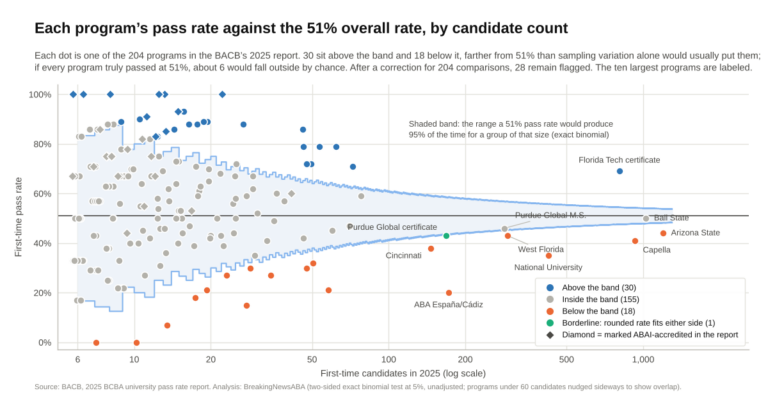
As demand for BCBAs grows, online master’s programs have made the field accessible to more people. That matters. However, particularly when those programs are fully asynchronous, I think they can leave students less prepared to pass the BCBA exam and practice well. The problem is not the screen itself. It is what can disappear behind it: face-to-face feedback, community and mentorship, and the forced concentration of a live classroom.
One veteran BCBA, who asked not to be identified by name, attended graduate school in person more than fifteen years ago, long before online programs became as widespread as they are now, and today sits in on BCBA candidate interviews. She remembers a very different testing experience from that of her classmates.
“In my cohort, it was a rarity for people not to be passing the test on their first try,” she said. Her cohort attended class, often at night, while completing internships and working during the day.
Her question gets at the bigger picture: “Are you able to actually learn this material effectively if you’re kind of on an island by yourself?”
The first missing piece is immediate, face-to-face feedback. In a live classroom, students know they may be asked to explain what they read. That possibility changes their behavior before class even starts.
“Knowing that I’m going to have a teacher call on me made me read that article,” she said.
That may sound simple, but it is also a form of behavior analysis. A student reads because the environment creates a reason to read. If the student answers incorrectly, the professor can correct the error immediately. Peers hear the discussion, compare their understanding, and learn from it too.
We would never design a client’s behavior plan around feedback that is delayed, optional, and mostly self-administered. Why are we comfortable building clinician training that way?
The second missing piece is community. A cohort gives students people to learn beside and people they want to keep up with. It also gives them professors who can become mentors, not just names attached to recorded lectures. She still talks about the professors who guided her, remained available after graduate school, and helped her understand the different paths within ABA.
Synchronous online programs can create some of that connection. A live conversation on a screen is still a live conversation. Fully asynchronous programs have a much harder time doing so. As she put it, “you’re not going to build that relationship or figure out what part of the ABA field you want to go into.”
Those relationships affect more than the student experience. They can shape who becomes an adjunct professor, who pursues a Ph.D., and who eventually teaches the next generation of behavior analysts. Without that community, students may earn the degree without building the professional identity that should accompany it.
The third missing piece may be the most ordinary, which is exactly why it matters: concentration.
“Are you doing the dishes as you’re listening to a lecture versus sitting and attending?” she asked.
At home, a lecture competes with chores, notifications, family responsibilities, and everything else in the environment. I am not saying online students do not work hard. I am saying the environment matters, and behavior analysts should know that better than anyone. A classroom makes attending the clearest available response. An asynchronous lecture often asks students to create that condition entirely through willpower.
Online testing can create similar problems. When notes, another screen, or outside resources are easy to reach, shortcuts become easier to take. That does not mean everyone cheats. It means the contingencies make it more likely that some people will. The bill eventually comes due on the BCBA exam, where students have to demonstrate what they know, and again in practice, where a client needs a clinician who can apply that knowledge.
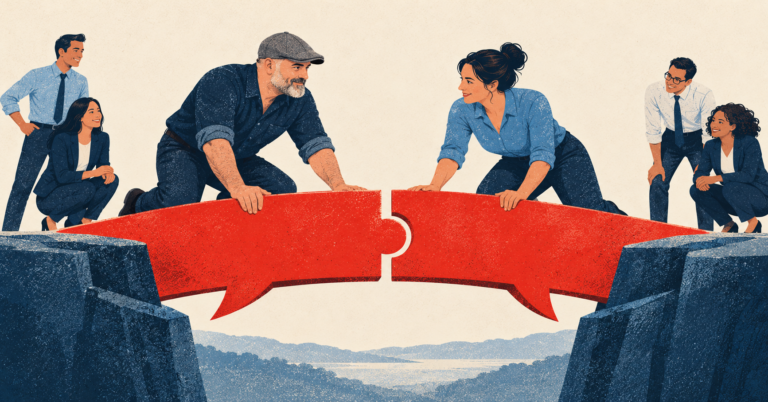
There is a fair counterargument, and I do not think it should be brushed aside. Depending on where someone lives, an in-person program may not exist nearby. Online education allows parents, career changers, working adults, and students far from a university to enter a field that desperately needs more qualified professionals.
Along with that, plenty of online graduates are excellent. “There are definitely people that have gone through online programs, and they’re brilliant,” she said. She does not automatically judge applicants by where or how they studied. She asks candidates the same questions.
So my argument is not that an online degree is illegitimate. It is that online programs must deliberately rebuild what a classroom provides naturally. That means required live discussion, real cohorts, immediate feedback, strong mentorship, secure assessment, and close integration with supervised fieldwork. Some programs already do parts of this very well. We should be asking what they understand that weaker programs do not.
Behavior analysts believe environments and contingencies shape behavior. Suppose we believe that for clients, we have to believe it for students too. Online education can expand access without lowering preparation, but only if programs design the learning environment as carefully as they expect future BCBAs to design one for everyone else.


Join the discussion ▾