

Three Stops, One Message
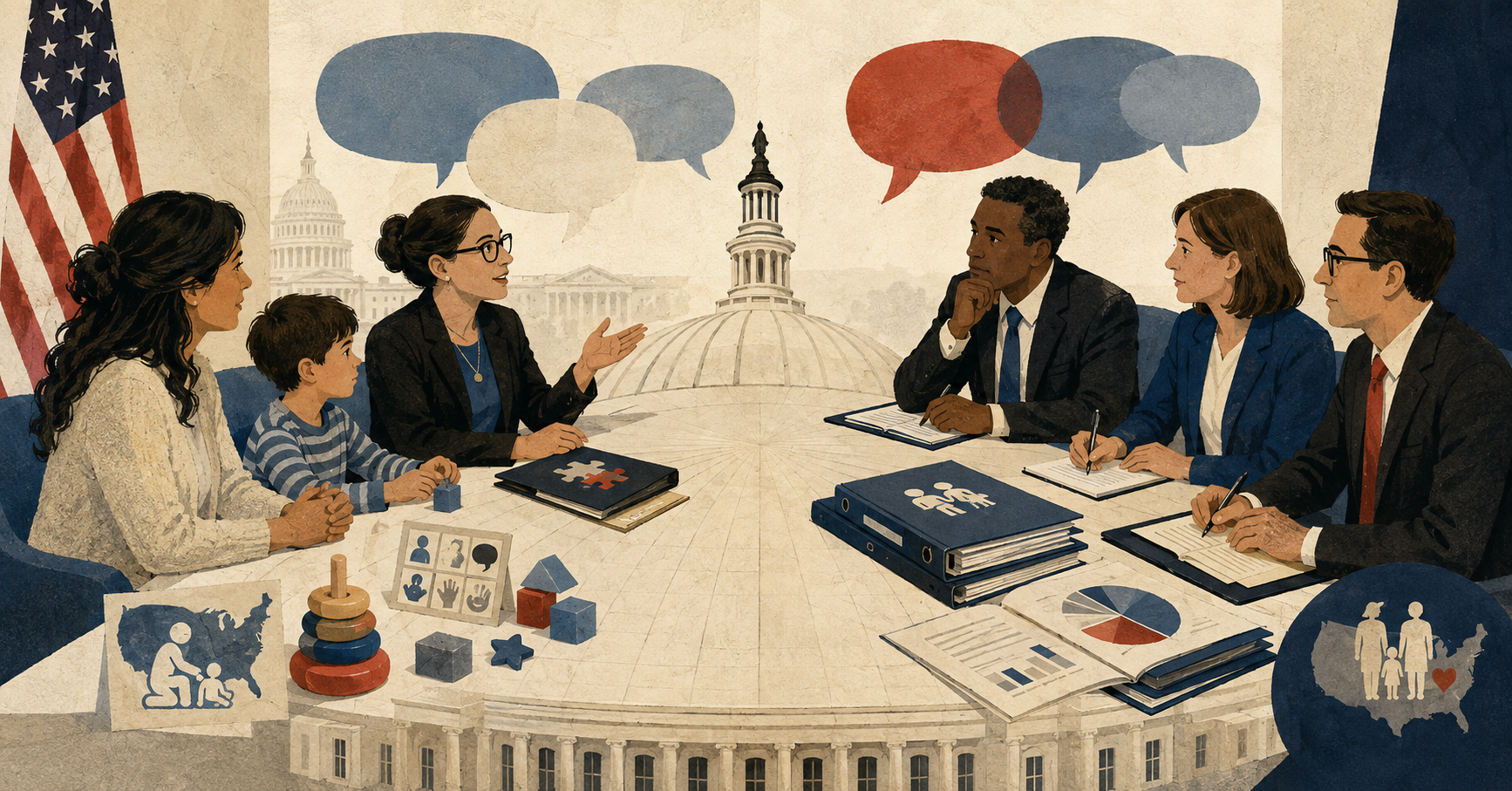
WASHINGTON, D.C. — Seven congressional offices spanning both parties and both chambers heard from Action Behavior Centers (ABC) this year on what happens to a child’s therapy when a state cuts what Medicaid pays for it. In a press release distributed September 1, ABC detailed a June visit to Capitol Hill in which Bryan Davey, Ph.D., BCBA-D, the company’s Vice President of Public Policy & Advocacy, and Jonna Lang, its Family Advocacy Manager, met with staff for Reps. Diana DeGette (D-CO), Morgan Griffith (R-VA), Richard Hudson (R-NC), Erin Houchin (R-IN), Diana Harshbarger (R-TN), Lori Trahan (D-MA), and Sen. Mark Kelly (D-AZ).
The delegation walked staffers through the Council of Autism Service Providers’ (CASP) generally accepted standard of 30 to 40 hours per week of early intensive behavioral intervention for two or more years, and asked each office to weigh continuity of ABA access and Medicaid support for families against the budget pressures now working through statehouses nationally.
“Autism advocacy is such an important part of our mission at ABC. Every conversation with a legislative office is a chance to share what families are experiencing and help shape decisions that support the care they need.” — Jonna Lang, Family Advocacy Manager, Action Behavior Centers (2026)
The Washington trip was the opening stop, not the whole tour. ABC has built the Family Advocacy team into a standing operation: a dedicated vice president, a Family Advocacy Manager, and regional advocates across Texas, Arizona, Colorado, Illinois, and the Carolinas, whose stated job is to turn individual family experiences into testimony that lawmakers and regulators actually hear.
From the Hill to Home Turf: North Carolina
CLAYTON, NORTH CAROLINA — Two months after the D.C. meetings, ABC brought the advocacy tour to one of its own therapy centers. On an August visit reported September 2, regional staff for U.S. Sens. Thom Tillis and Ted Budd (Trey Lewis, the Tillis office’s Northeast Regional Representative, and Blake Belch, the Budd office’s Southeastern Regional Director) toured the Clayton center alongside Michael Liby, M.A., BCBA, and Dr. Davey.
The stop carried particular weight in North Carolina, where the state has moved to cut ABA Medicaid reimbursement by 10 percent, a reduction ABC and other providers have publicly opposed. ABC now operates more than 35 centers across the Raleigh-Durham and Charlotte regions, giving the company a direct stake in how the state resolves the rate dispute.
“Conversations like these help strengthen partnerships and raise awareness of the growing need for accessible, compassionate autism services.” — Michael Liby, M.A., BCBA, Action Behavior Centers (2026)
Then Austin
AUSTIN, TEXAS — the tour’s third and most recent stop brought the advocacy team back to ABC’s home state. On September 3, Dr. Davey and Dr. Linda LeBlanc, Executive Director of the company’s Action Institute for Outcomes Research, met budget analysts from the Texas House Appropriations Committee and Senate Finance Committee, along with policy staff from the Speaker’s office and state Sen. Charles Schwertner’s office, at ABC’s Mueller center in Austin.
The Texas meeting leaned on the company’s own outcomes data rather than national averages. ABC’s Action Institute for Outcomes Research reports that a 2021 internal study of 20 clients ages 2 to 6 found an 86 percent decrease in challenging behaviors after at least one year of ABA therapy, with those gains holding over time. Separate cohort data published on the company’s research page found that 89 percent of children who completed ABA services before starting school were placed in general education for at least half the school day, compared with 45 percent of children whose families chose school without additional ABA support. Those figures come from ABC’s own outcomes research rather than independent peer-reviewed publication, and the company presents them as internal findings.
“The families we support are resilient, but they can’t bear the weight of policy instability. When funding is cut, care becomes harder to reach for many families.” — Bryan Davey, Ph.D., BCBA-D, Vice President of Public Policy & Advocacy, Action Behavior Centers (2026)
The Backdrop: A Year of State Medicaid Rate Fights
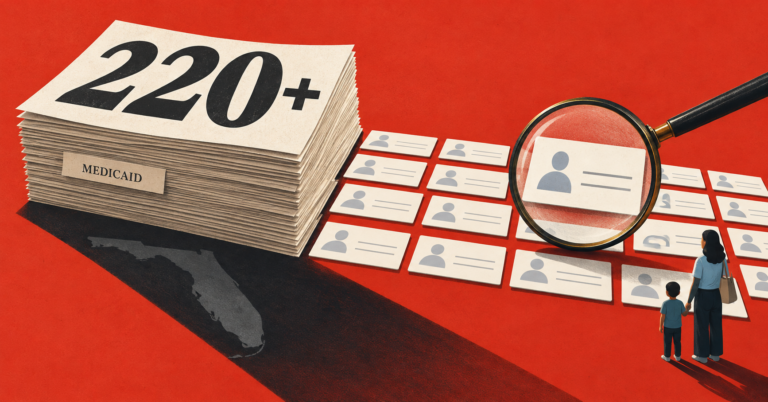
The timing explains the urgency. Nationally, ABA is one of the fastest-growing lines in state Medicaid budgets, and several states have responded by cutting reimbursement rather than absorbing the increase. North Carolina’s Medicaid spending on ABA services rose from roughly $122 million in fiscal year 2022 to a projected $639 million in fiscal year 2026, a 423 percent increase, before the state’s 10 percent rate cut attempt drew a legal challenge and North Carolina’s governor ordered rates restored in December 2025.
Nebraska cut ABA Medicaid reimbursement between 28 and 79 percent depending on service type and imposed a 30-hour weekly service cap, after the state’s ABA Medicaid spending grew roughly 1,700 percent in recent years. Indiana, where ABA Medicaid spending has climbed an estimated 2,800 percent over a similar period, and Colorado have both discussed reimbursement reductions. New York implemented 12.5 percent cuts to the primary direct-service ABA billing code in October 2025 and again in April 2026, according to CASP, and California is reviewing rate sustainability and network adequacy.
None of this touches the federal Autism CARES Act, which President Biden signed into law in late 2024 and which commits roughly $2 billion over five years to autism research, surveillance, and services infrastructure: money that does not flow through Medicaid reimbursement and does not affect the rates states pay ABA providers. That distinction is part of why CASP’s current federal priorities run elsewhere: converting TRICARE’s ABA coverage from a demonstration program to a permanent benefit, keeping adaptive behavior treatment codes on the permanent Medicare/Medicaid telehealth list, and winning federal workforce classification for behavior analysts and technicians. The Medicaid rate fights are being fought state by state, which is why ABC’s advocacy tour ran through a state legislature and a senator’s regional office rather than only Washington.
Analysis: What a For-Profit Chain’s Lobbying Tour Signals
ABC’s three-stop advocacy swing is notable less for any single meeting than for what it says about how the ABA industry is organizing to defend its Medicaid funding base. With more than 450 centers across nine states, roughly 10,000 employees, and backing from Charlesbank Capital Partners since a 2022 recapitalization, ABC has the scale to staff a standing public-policy function (a vice president, a family advocacy manager, and regional advocates) that most independent and regional ABA practices cannot replicate. That infrastructure lets the company put a named family or a named clinical outcome in front of a budget committee instead of leaving the argument to a rate memo.
The bipartisan, bicameral guest list from the Washington meetings is itself a data point worth watching: Democratic and Republican offices in the House and Senate, from Colorado to Tennessee to Massachusetts, all took the meeting. That suggests autism service access still commands cross-party attention even as state Medicaid budgets tighten broadly and even as some of those same states move to cut the rates that fund the care ABC and its peers deliver.
It is also fair to note that ABC’s advocacy interest and its business interest point in the same direction: a company whose revenue depends on ABA reimbursement has an obvious stake in opposing rate cuts. That does not make the underlying access concern manufactured. North Carolina’s spending trajectory, Nebraska’s double-digit-to-high-double-digit cuts, and New York’s successive rate reductions are documented independently of any single provider’s advocacy, and CASP (the field’s standards body, not a single company) is running a parallel campaign on many of the same issues. What ABC’s tour adds is scale and visibility: a coordinated, multi-state push that puts family stories and outcomes data directly in front of the people writing the next budget. With state Medicaid rate reviews still open in New York, California, Indiana, and Tennessee, expect more of this kind of organized, provider-led advocacy through the rest of 2026 as the industry tests whether presence in the room can slow a cost-cutting trend that shows no sign of leveling off on its own.
AT A GLANCE
| Advocacy tour: | Three meetings in roughly 90 days — Washington, D.C. (June 2026, reported Sept. 1); Clayton, N.C. (August 2026, reported Sept. 2); Austin, Texas (Sept. 3, 2026) |
| Company snapshot: | Action Behavior Centers operates 450+ ABA centers across 9 states with roughly 10,000 employees, including 1,200+ BCBAs (company materials, 2026) |
| D.C. meeting, offices met: | Reps. Diana DeGette (D-CO), Morgan Griffith (R-VA), Richard Hudson (R-NC), Erin Houchin (R-IN), Diana Harshbarger (R-TN), Lori Trahan (D-MA); Sen. Mark Kelly (D-AZ) |
| N.C. meeting, offices met: | Regional staff for Sens. Thom Tillis and Ted Budd, at ABC’s Clayton center (35+ N.C. centers) |
| Texas meeting, offices met: | Texas House Appropriations Committee and Senate Finance Committee budget staff; Speaker’s office; Sen. Charles Schwertner’s office |
| Clinical standard cited: | CASP-recommended 30–40 hours/week of early intensive behavioral intervention for 2+ years (Council of Autism Service Providers) |
| North Carolina Medicaid ABA spending: | $122 million (FY2022) to a projected $639 million (FY2026), a 423% increase, before a 10% rate cut was challenged and rates were restored in December 2025 |
| Nebraska Medicaid ABA cuts: | 28%–79% by service type, plus a new 30-hour weekly cap, after roughly 1,700% spending growth |
| New York Medicaid ABA cuts: | 12.5% reductions to CPT code 97153 (direct 1:1 service), effective October 2025 and April 2026 (CASP) |
| Federal context: | Autism CARES Act of 2024, signed into law late 2024, commits ~$2 billion over five years to autism research and services — separate from state Medicaid reimbursement |
| ABC ownership: | Charlesbank Capital Partners since a September 2022 recapitalization (~$840 million deal); founded 2016 in Austin by Ryan and Holly Lambert |
| Company outcomes data cited in Texas: | 86% decrease in challenging behaviors after 1+ year of ABA (20 clients, ages 2–6, 2021 internal study); 89% of ABA graduates in general education ≥half-day vs. 45% without ABA (company research, not peer-reviewed) |
SOURCES & REFERENCES





Join the discussion ▾