The Federal Rule Is Dead
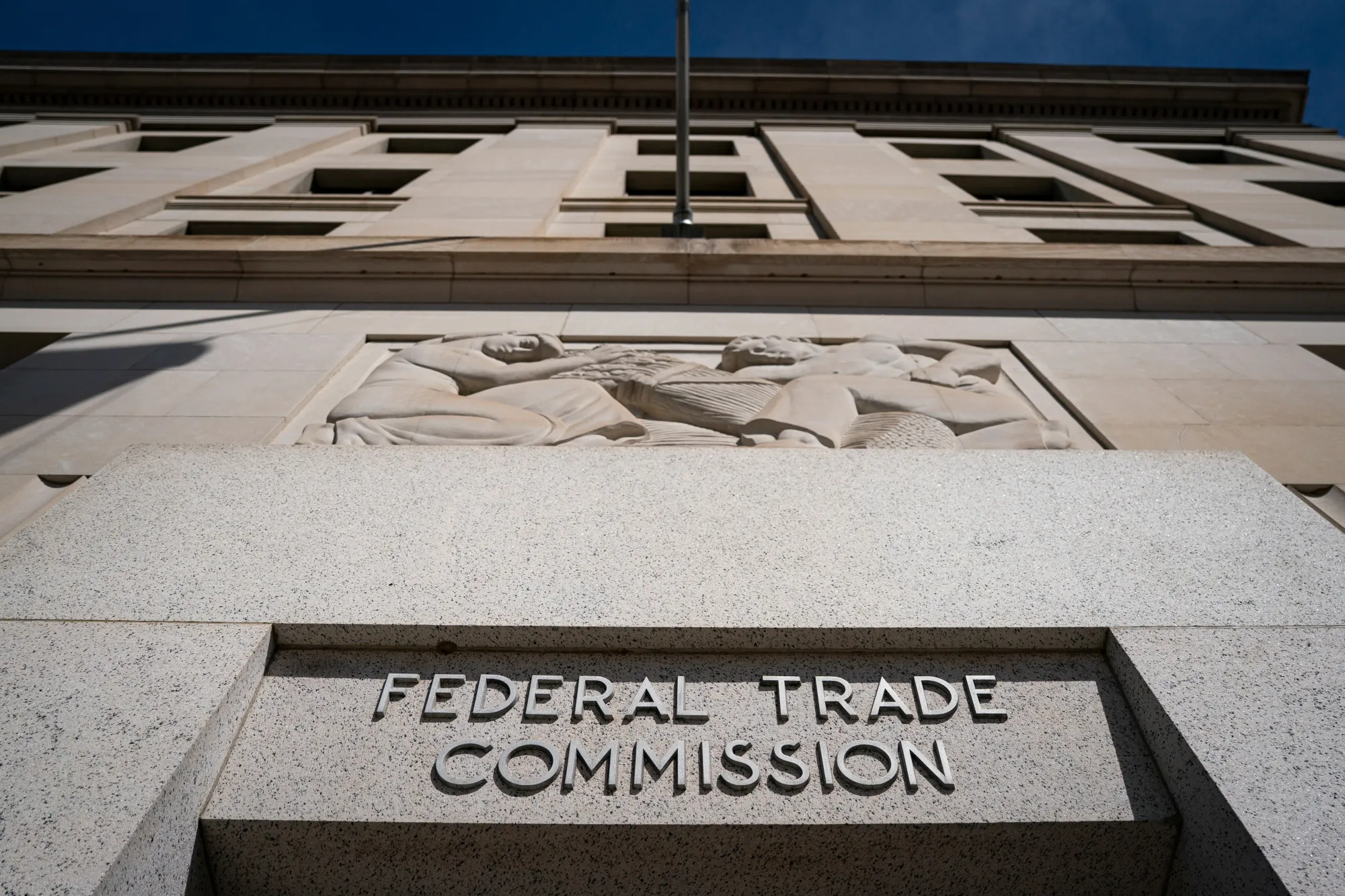
When the Federal Trade Commission abandoned its appeal on September 5, 2025, it ended any near-term prospect of a national rule that would wipe out non-compete agreements. The rule was already gone. A federal judge in Texas had set it aside in August 2024, before it ever took effect, finding the agency lacked the authority to ban non-competes by regulation. The September filing made the defeat final and signaled that the FTC would police non-competes on a case-by-case basis, not with a blanket ban.
For applied behavior analysis, the practical question is no longer what Washington will do. It is what each state legislature does, and which workers the new laws actually cover.
How Many BCBAs Are Bound
The most-cited measure of how common these clauses are in the field comes from a 2020 survey of 610 behavior analysts, published in Behavior Analysis in Practice. Of those surveyed, 33.1% said their employment contract contained a non-compete clause. Among BCBAs, the figure was 34.3%; among board-certified assistant behavior analysts (BCaBAs), it was 40%.
Respondents did not regard the clauses kindly. A majority told the survey’s authors, Brown and Brodhead, that non-competes were not in employees’ interest, were not necessary to protect a business, and worked against the growth of ABA. Some reported turning away clients, stopping work in the field, or facing litigation over where they could work next. A 2023 follow-up by the same authors documented the same pattern of constrained job moves and lost access for families.
The field’s accreditor takes the same view. The Behavioral Health Center of Excellence (BHCOE), now owned by the Council of Autism Service Providers (CASP), holds a standing position against restrictive non-competes, arguing they thin an already scarce workforce and cut families off from specialized care.
“The increasing competitiveness of acquiring staff is causing employers to use agreements that are more and more restrictive… Oftentimes, this results in patients and clients not having access to specialized care because of the small number of qualified workers in our practice areas.” – Behavioral Health Center of Excellence, position statement on non-compete agreements
A Patchwork That Skips Behavior Analysts
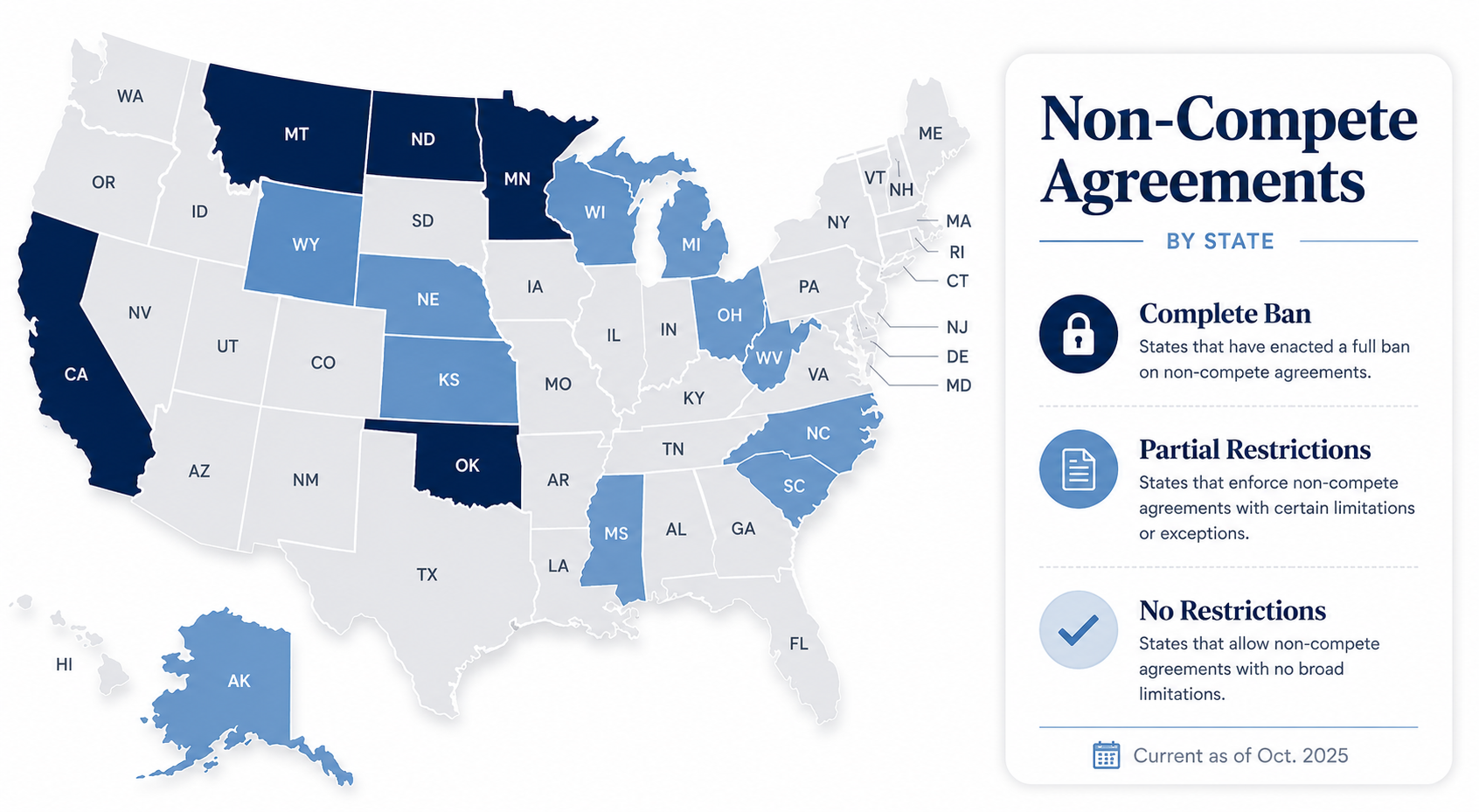
State activity on non-competes is heavy, but it largely predates the FTC and mostly bypasses behavior analysts. According to Russell Beck, a Boston attorney who has tracked the bills for close to a decade, 101 non-compete bills were filed across 34 states in the 2026 sessions, with 6 enacted by late March. The volume is not new. There were 98 such bills in 2022, the year before the FTC even proposed its rule.
The problem for ABA is in the targeting. Of the 2026 bills, 45 addressed healthcare workers and 20 addressed low-wage workers. The healthcare bills, and most of the laws already on the books, name physicians, nurses, physician assistants, and dentists. Behavior analysts are none of these. Montana widened its healthcare non-compete ban in 2025 and again on January 1, 2026, but the workers it added were physicians, nurses, and physician assistants, not BCBAs.
Wage thresholds reach the lower-paid rungs of a practice. Tennessee’s new law, signed in May 2026 and effective July 1, voids non-competes for anyone earning under $70,000 a year. That covers registered behavior technicians and many assistant analysts, while a salaried BCBA is more likely to sit above the cutoff.
That leaves one category that clearly reaches behavior analysts: the handful of states that void nearly all employment non-competes regardless of job or pay. Four do so now: California, Minnesota, North Dakota, and Oklahoma. Washington became the fifth state in March 2026, though its ban does not take effect until June 30, 2027. A BCBA in those states can change employers freely. A BCBA in the other 45 is bound by whatever the contract says.
For clinic owners, the same map cuts both ways. A covenant that is void in Minnesota may be valid across the state line, so a multistate provider cannot assume that one template works everywhere. Enforceability now depends almost entirely on which state’s law governs the contract.
Ohio’s Senate Bill 11, which would make it the fifth state to void nearly all non-competes, remains in committee. Washington’s ban takes effect June 30, 2027. Behavior analysts everywhere else wait on a legislature, or on the contract they already signed.
AT A GLANCE
| FTC non-compete rule: | Vacated by a federal court in August 2024; FTC dropped its appeal September 5, 2025 (Federal Trade Commission) |
| BCBAs reporting a non-compete: | 34.3% (Brown and Brodhead, Behavior Analysis in Practice, 2020) |
| All behavior analysts surveyed: | 33.1% of 610 reported a non-compete; 40% of BCaBAs (2020) |
| BHCOE position: | Opposes restrictive non-competes as thinning the workforce and limiting patient access |
| 2026 state bills: | 101 non-compete bills in 34 states; 6 passed, 5 died as of March 30 (Fair Competition Law) |
| Most common targets: | Healthcare workers (45 bills) and low-wage workers (20); rarely behavior analysts |
| Void nearly all non-competes: | California, Minnesota, North Dakota, Oklahoma; Washington effective June 30, 2027 |
| Montana: | Healthcare ban widened to all physicians effective January 1, 2026 (not behavior analysts) |
| Tennessee: | Voids non-competes under $70,000 a year, effective July 1, 2026 |
SOURCES & REFERENCES
| 1. | Federal Trade Commission. “Federal Trade Commission Files to Accede to Vacatur of Non-Compete Clause Rule.” Press release. September 5, 2025. ftc.gov |
| 2. | Federal Trade Commission. “FTC Announces Rule Banning Noncompetes.” Press release. April 23, 2024. ftc.gov |
| 3. | Sullivan & Cromwell LLP. “FTC Moves to Dismiss Its Appeal of Non-Compete Rule.” September 2025. sullcrom.com (Ryan LLC v. FTC, N.D. Tex., vacatur timeline) |
| 4. | Brown KJ, Brodhead MT. “Noncompete Clauses in Applied Behavior Analysis: A Prevalence and Practice Impact Survey.” Behavior Analysis in Practice. 2020. doi:10.1007/s40617-020-00469-0 |
| 5. | Brown KJ, Brodhead MT. “Reported Effects of Noncompete Clauses on Practitioners in Applied Behavior Analysis.” Behavior Analysis in Practice. 2023. doi:10.1007/s40617-022-00718-4 |
| 6. | Behavioral Health Center of Excellence. “Position Statement on the Use of Non-Compete Agreements with Applied Behavior Analysis Workers.” bhcoe.org |
| 7. | Beck R. “101 Noncompete Bills in 34 States, with Six New Laws (March 2026).” Fair Competition Law. March 30, 2026. faircompetitionlaw.com |
| 8. | Beck R. “Colorado, Indiana, Montana, Oregon, Utah Pass New Restrictive Covenant Laws.” Fair Competition Law. June 16, 2025. faircompetitionlaw.com |
| 9. | Ogletree Deakins. “Washington Becomes Latest State to Ban Noncompete Agreements.” 2026. ogletree.com |
| 10. | Ogletree Deakins. “Tennessee Bans Noncompetes for Workers Making Less Than $70,000 Annually.” 2026. ogletree.com |