
FORT LAUDERDALE, FLA. — The statistic that explains why AI is eating session notes first: 80% of ABA session notes fail at least one payer requirement. That number, drawn from CentralReach’s internal data across its platform of over 200,000 professionals, represents the gap between what clinicians write and what payers demand — a gap that generates claim denials, triggers retroactive audits, produces recoupment demands in the six figures, and consumes the administrative hours that BCBAs would rather spend on clinical work.
The administrative burden is not a side effect of ABA practice. It is a defining feature. BCBAs report spending 20 or more hours per week on non-billable administrative tasks, with session note documentation, treatment plan writing, and authorization paperwork consuming the majority of that time. In a field where 72% of professionals report moderate-to-high burnout, the documentation burden is not just an efficiency problem. It is a retention problem, a revenue problem, and increasingly — with payer audit intensity rising across BCBS affiliates, Medicaid programs, and commercial plans — a survival problem.
Into that gap, generative AI has arrived. Not as a speculative future capability but as a shipping product, integrated into the major ABA practice management platforms and adopted by a growing majority of the industry. CentralReach’s semi-annual 2025 market report found that approximately 75% of ABA organizations have purchased AI-enabled tools in the past year. The primary use case is not clinical decision-making or treatment planning. It is the mundane, high-volume, error-prone task of turning session data into compliant documentation. AI is eating session notes first because session notes are where the pain is greatest and the risk tolerance for automation is highest.
The Documentation Crisis: Why 80% Fail
The 80% failure rate is not a reflection of clinical incompetence. It is a reflection of structural complexity. Each payer has different documentation requirements. BCBS affiliates differ from each other. Medicaid MCOs differ by state. Commercial plans differ by employer group. A session note that satisfies Anthem in Virginia may lack a required element for BCBS of Illinois. An RBT who writes clear, clinically accurate notes may omit a start time, a credential number, a signature, or a link to a specific treatment plan goal — any of which can render the note deficient in an audit.
The variability in writing quality compounds the problem. RBTs, who produce the vast majority of session notes, have varying degrees of writing ability and documentation training. The BACB’s 40-hour RBT training does not include extensive instruction on payer-specific documentation requirements. Organizations that invest in documentation training see measurable improvements, but the training must be repeated with each new hire — and with RBT turnover exceeding 65% annually at median, the training investment depreciates faster than the organization can sustain it.
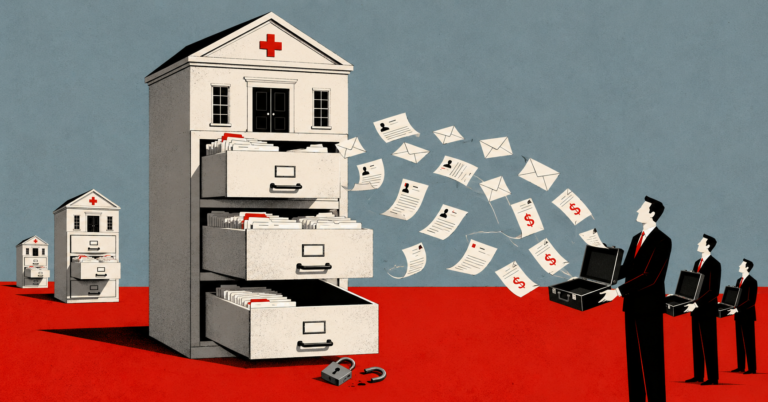
Most organizations lack the capacity to audit their documentation manually. A practice with 100 RBTs generating 5 notes per day produces 500 session notes daily, 2,500 per week, 10,000 per month. A manual audit of even 5% of those notes requires a dedicated compliance staff member reviewing 500 notes per month. Most practices audit less than 5%. Many audit nothing at all — and discover the documentation deficiencies only when a payer audit letter arrives.
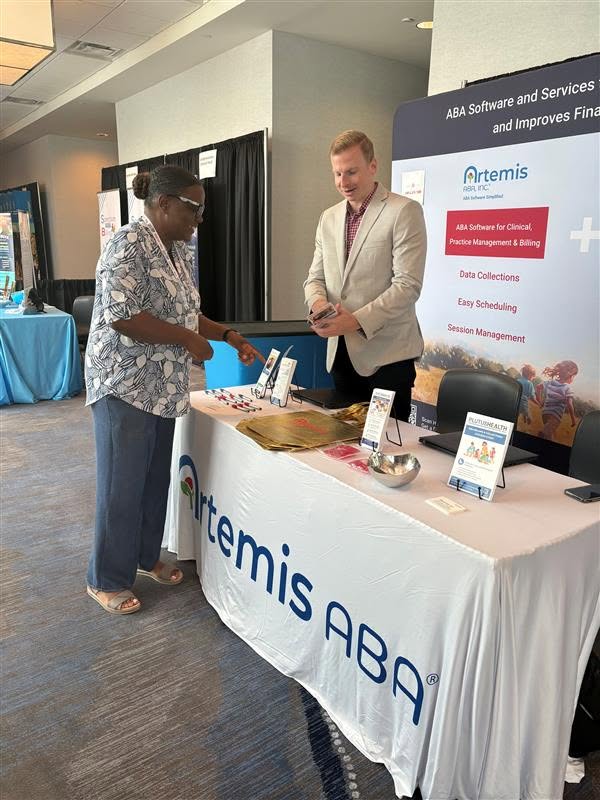
![RBTs produce the vast majority of session notes but receive limited training on payer-specific documentation requirements. With turnover exceeding 65% annually, the training investment depreciates faster than organizations can sustain it — making AI-assisted documentation a workforce stability tool, not just an efficiency tool. | Photo courtesy: [attribution]](https://breakingnewsaba.com/wp-content/uploads/2026/04/ai-session-notes-article-image-2.jpg)
The Tools: Who’s Shipping What
The AI session note landscape in ABA has matured rapidly from experimental features to core platform capabilities. The tools fall into two categories: generation (AI that writes or drafts session notes from session data) and auditing (AI that reviews completed notes for compliance deficiencies). Some platforms do both. The distinction matters because the liability profile differs significantly between a tool that creates clinical documentation and a tool that checks it.
CentralReach has integrated AI across its Care 360 clinical tools, including AI-powered session note generation that drafts narrative summaries from collected session data. The platform serves over 200,000 professionals and its CanaryBI dataset encompasses more than 5 billion data points, giving its AI models a training corpus of ABA-specific documentation that general-purpose tools cannot match. CentralReach’s approach positions AI as an embedded capability within the practice management workflow, not a standalone product.
RethinkBH’s Session Note AI generates session summaries from actual session data, with real-time alerts when summaries fall out of sync with underlying data. The tool is built on Azure OpenAI infrastructure with HIPAA compliance and a human-in-the-loop design: every AI-generated summary requires clinician review and approval before finalization. RethinkBH frames the tool as “proactive documentation intelligence” rather than automated note-writing — a framing that reflects the industry’s sensitivity to clinical accountability.
Brellium occupies the auditing side of the market. Trusted by over 250,000 providers, Brellium audits 100% of session notes against payer-specific, regulatory, and clinical quality requirements in real time. The platform flags issues such as note copy-pasting, missing signatures, mismatched session details, and compliance gaps that manual auditing cannot catch at scale. Full Spectrum ABA, a Brellium client, reported achieving 100% audit coverage after implementing the platform, compared to the fraction of notes they could review manually. Compass ABA reported over 70% time savings in auditing after adopting Brellium.
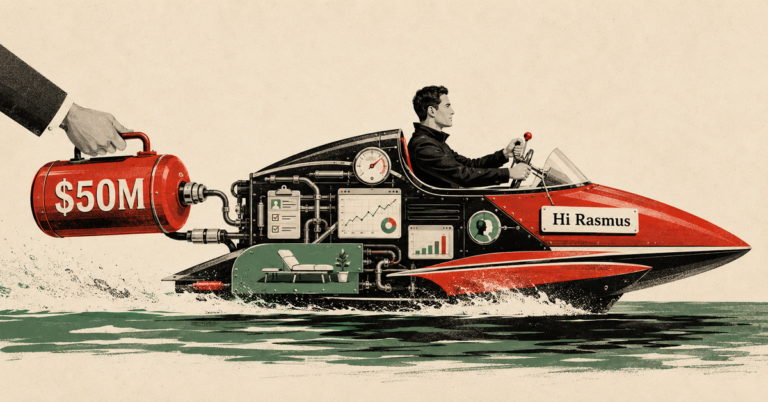
Theralytics, Hi Rasmus, ABA Matrix, Praxis Notes, and a growing number of specialized platforms offer AI-powered note generation with varying approaches. Hi Rasmus operates on a zero-day retention principle — client data is never absorbed into the AI model. ABA Matrix uses guided prompts rather than free-form generation, maintaining the clinician’s voice while reducing writing time. Praxis Notes claims 75% documentation time savings and has built a user base of over 1,000 BCBAs and RBTs. The market is fragmenting into niches: some tools optimize for speed, others for compliance, others for clinical specificity.
The Accuracy Question: Good Enough for What?
The accuracy of AI-generated session notes depends on what “accuracy” means in context. If the question is whether the AI can produce a grammatically correct, structured narrative that includes the required elements of a session note — date, time, provider, goals addressed, interventions used, patient response, data summary — the answer, across the major platforms, is yes. The tools consistently produce notes that are structurally complete and readable.
If the question is whether the AI can accurately represent what happened in a specific session with a specific child — the nuance of a behavioral response, the clinical significance of a plateau, the contextual factors that affected performance — the answer is more conditional. AI generates from data inputs. If the data inputs are detailed (structured data collection fields, trial-by-trial records, prompt-level coding), the generated narrative can be clinically precise. If the inputs are sparse (a few checkboxes and a free-text field), the AI fills gaps with template language that may be generically correct but clinically thin.
This is where the liability question sharpens. A session note is a clinical and legal document. The rendering provider — the RBT or BCBA whose name is on the note — is responsible for its accuracy regardless of whether a human or an AI drafted it. Every major AI session note tool in the ABA market requires human review and approval before the note is finalized. But the practical question is whether a busy RBT, at the end of a six-hour therapy day, reviews an AI-generated note with the same rigor they would apply to a note they wrote themselves. The risk is not that the AI produces an inaccurate note. The risk is that the human approves one without reading it carefully.
The BACB Position and the Ethics Framework
The Behavior Analyst Certification Board has addressed AI use directly, and its position is clear: AI tools may be used to support documentation, but the certificant remains responsible for the accuracy and integrity of all clinical records. The BACB has specifically warned that general-purpose AI tools like ChatGPT, Gemini, or Copilot should not be used with protected health information, noting that data entered into these systems may become training material for the software and could be exported to other users.
The distinction between general-purpose AI and purpose-built, HIPAA-compliant ABA documentation tools is the regulatory fault line in this market. A BCBA who pastes patient data into ChatGPT to generate a session note is violating HIPAA, BACB ethics requirements, and potentially state privacy laws. A BCBA who uses a HIPAA-compliant, ABA-specific platform like CentralReach or RethinkBH to generate a note from structured session data within a secured environment is using AI within the current ethical and regulatory framework — provided they review and approve the output.
The ethical framework is evolving in real time. As AI-generated documentation becomes standard practice, the field will need to address questions the current guidelines do not fully resolve: What constitutes adequate human review of an AI-generated note? Should AI-generated notes be identified as such in the clinical record? Who bears liability when an AI-generated note contains a factual error that a human reviewer approved? These questions do not yet have definitive answers — but the tools are shipping, the adoption is happening, and the regulatory framework is playing catch-up.
What This Means for Practices
The documentation burden is not going away — but the tools to manage it have arrived. AI session note generation and auditing are no longer experimental. They are production features in the platforms that most ABA organizations already use. If your practice is not evaluating these tools, you are accepting a documentation risk that your competitors are actively mitigating.
Do not use general-purpose AI with patient data. This cannot be stated too emphatically. ChatGPT, Claude, Gemini, and other consumer AI tools are not HIPAA-compliant. Using them with protected health information violates federal law, BACB ethics codes, and most state privacy statutes. Use only purpose-built, HIPAA-compliant tools designed for healthcare documentation.
AI-generated notes still require human review. Build review into the workflow, not as an afterthought but as a required step with accountability. Some organizations require BCBAs to co-sign AI-generated RBT notes. Others use Brellium-style auditing tools to verify AI-generated notes against payer requirements before billing. The approach matters less than the principle: a human must read and approve every note before it becomes a clinical record.
AI auditing may be more valuable than AI generation. Generating a note saves time. Auditing a note prevents revenue loss. For practices facing payer audit exposure, the ability to audit 100% of notes against payer-specific requirements — catching the missing signature, the mismatched credential, the vague language that would trigger a recoupment demand — may deliver more financial value than the time savings from automated generation.
![Seventy-five percent of ABA organizations have purchased AI-enabled tools in the past year. The organizations that are implementing both generation and auditing — using AI to draft notes and then using AI to verify them — are building the documentation infrastructure that payer audits and value-based contracting will increasingly require. | Photo courtesy: [attribution]](https://breakingnewsaba.com/wp-content/uploads/2026/04/ai-session-notes-article-image-4.jpg)
The Bigger Picture: Documentation as Infrastructure
Session note automation is the first AI use case achieving real adoption in ABA because it sits at the intersection of the industry’s most acute pain points: clinician burnout, payer audit exposure, documentation variability, and the gap between authorized hours and billable claims. But it is not the last. The same AI infrastructure that generates and audits session notes will, within the next two to three years, extend to treatment plan generation, progress report automation, authorization request preparation, and outcomes measurement — each of which carries its own accuracy, liability, and ethical questions.
The organizations that are building AI-literate teams now — training their BCBAs and RBTs to work effectively with AI tools, establishing review protocols, investing in purpose-built platforms rather than consumer shortcuts — are building the operational foundation for a field where documentation quality is not just a compliance requirement but a competitive advantage. In an industry facing $1 trillion in Medicaid cuts, intensifying payer audits, and a workforce that turns over faster than it can be trained, the ability to produce compliant, accurate, defensible documentation at scale is no longer a nice-to-have. It is the difference between surviving the next audit and not.
At a Glance
AI Adoption: 75% of ABA organizations purchased AI-enabled tools in the past year (CentralReach 2025)
Note Failure Rate: 80% of session notes fail at least one payer requirement (CentralReach internal data)
Admin Burden: BCBAs report 20+ hours/week on non-billable admin tasks; documentation is the largest component
Key Platforms: CentralReach (Care 360 AI), RethinkBH (Session Note AI), Brellium (100% audit), Theralytics, Hi Rasmus, ABA Matrix, Praxis Notes
Generation Tools: Draft narrative summaries from session data; require human review; HIPAA-compliant infrastructure
Auditing Tools: Review 100% of notes against payer/regulatory requirements; flag deficiencies in real time; 70%+ time savings reported
BACB Position: AI may support documentation; certificant remains responsible for accuracy; general-purpose AI (ChatGPT etc.) prohibited with PHI
Privacy: Purpose-built tools use HIPAA-compliant infrastructure (Azure OpenAI, zero-day retention, military-grade encryption)
Liability: Human-in-the-loop required; rendering provider responsible regardless of who/what drafted the note
Time Savings: 75% documentation time reduction (Praxis Notes); 70%+ auditing time savings (Brellium/Compass ABA)
Sources & References
1. CentralReach. 2025 Autism and IDD Care Market Report (March and November editions). AI adoption and session note data
2. CentralReach. “Leveraging AI for Note Generation to Manage ABA Session Notes Compliance & Audits.” December 2024
3. RethinkBH. Session Note AI product documentation. November 2025
4. Brellium. ABA Therapy Compliance Platform. Case studies: Full Spectrum ABA, Compass ABA. 2025
5. Brellium. “ABA Audits Are Intensifying Nationwide.” March 2026
6. Hi Rasmus. “AI-Powered Session Notes: How Hi Rasmus Is Transforming ABA Documentation.” November 2025
7. ABA Matrix. “AI in Behavior Analysis and the Safe Solutions for ABA Practices.” June 2025
8. Praxis Notes. AI-Powered ABA Session Notes platform. praxisnotes.com (accessed March 2026)
9. Theralytics. Generative AI session note feature. theralytics.net (accessed March 2026)
10. ABA Resource Center. “Session Notes in ABA: How to Get Them Right.” February 2026
11. BACB. Ethics Code for Behavior Analysts (2020, updated 2024). Guidance on AI and PHI
12. Behavioral Health Business. “AI, Multidisciplinary Care Top Trends Fueling Growth.” November 2025
13. ABA Matrix. “Hiring and Retaining Talent: Reducing Turnover in ABA Therapy.” August 2025 (burnout data)