
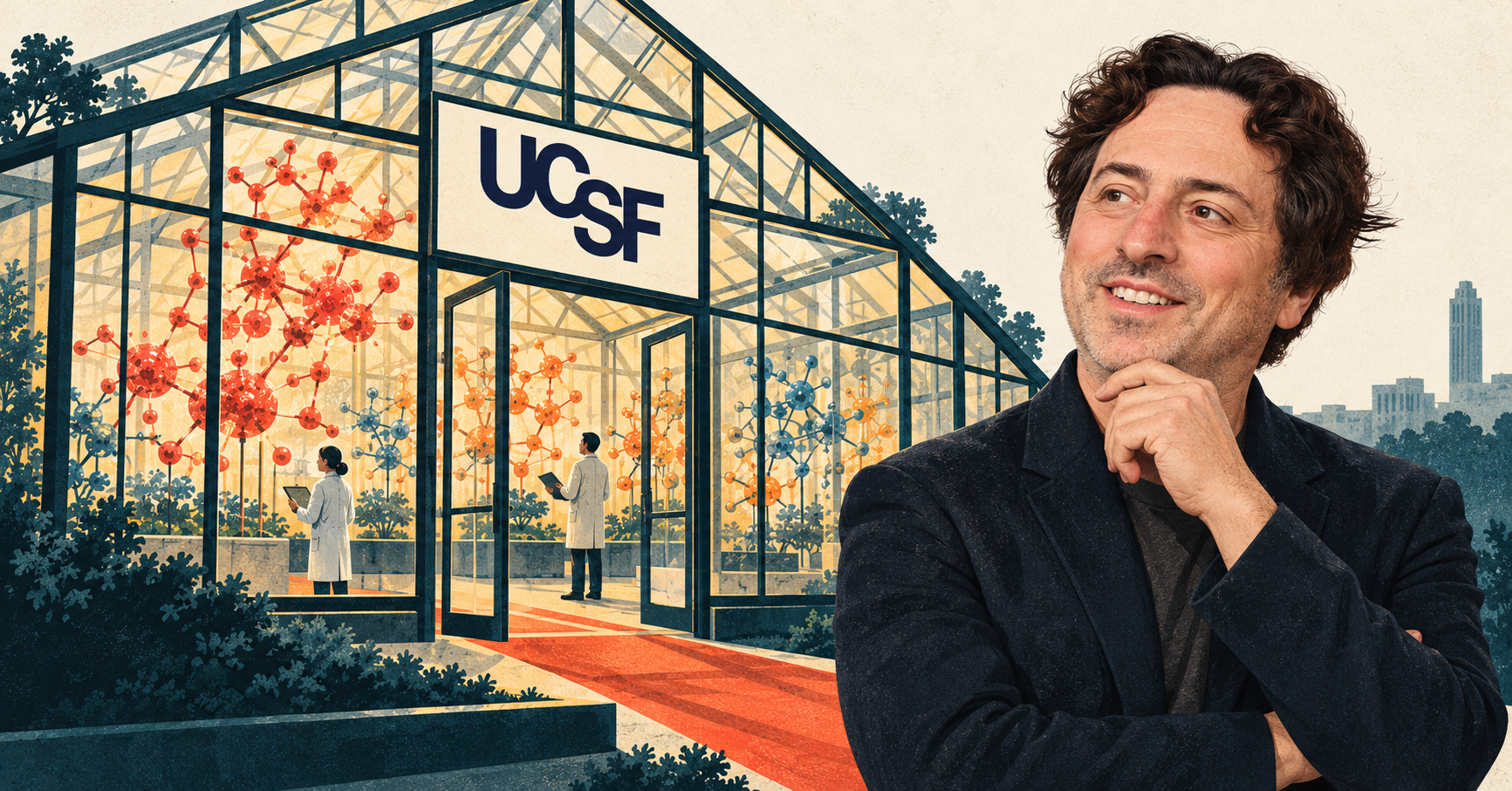
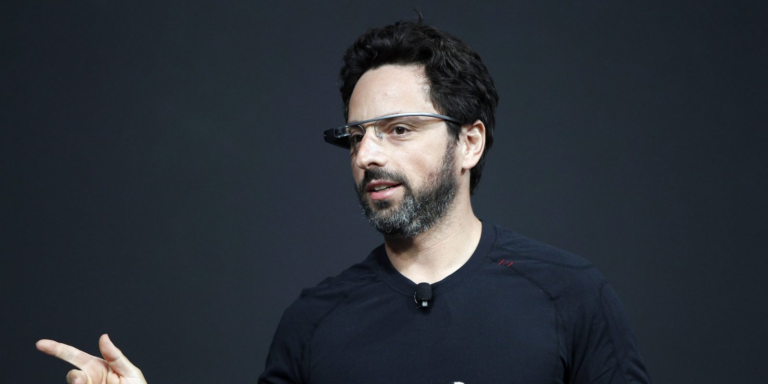
SAN FRANCISCO – The University of California, San Francisco, has received $46 million from Google co-founder Sergey Brin’s autism research initiative to take what UCSF calls the largest molecular map of autism yet built and turn it into candidates for small-molecule drugs, the ordinary chemical compounds most pills are made of. The San Francisco Chronicle called it one of the largest single grants the university has received for basic research.
The award, announced August 27, 2026, targets profound autism, which the funder’s clinical study defines as using few or no words to communicate and needing substantial, often round-the-clock support. That funder, Aligning Research to Impact Autism (ARIA), is also funding a clinical research network whose first 12 sites include Atlanta’s Marcus Autism Center. The network’s first study, a five-year project that tests no treatment, will enroll children with profound autism and children with specific autism-linked gene variants to build the measurements future drug trials would use.
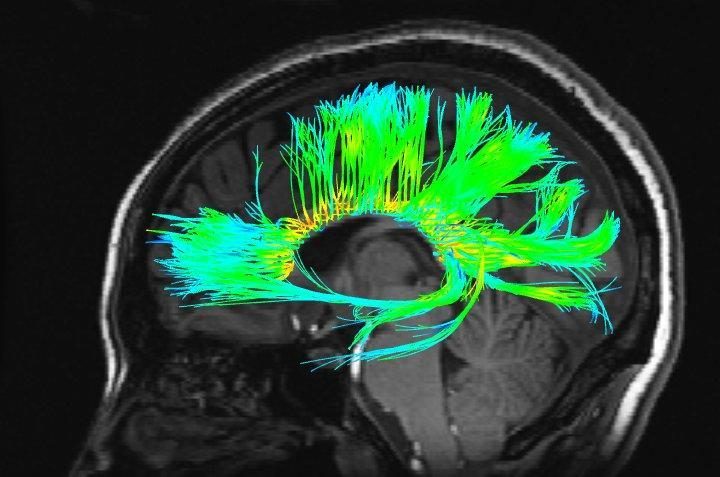
The grant came the same day a UCSF-led team published the map in Science. The study charted which proteins the products of 100 autism risk genes interact with, and found that proteins from different risk genes tend to gather in the same few protein complexes, groups of proteins that work together. When the team introduced 54 mutations taken from patients, different mutations often rewired those interactions in the same way. That convergence is the premise of the grant: if many genetic forms of autism break the same protein complexes, one medicine might reach several of them at once.
From Protein Map to Drug Candidates
The UCSF money funds the role of its Quantitative Biosciences Institute (QBI) in ARIA’s Protein-Protein Interactions Hub. QBI director Nevan Krogan co-leads the hub with UCSF colleague John Young, and it draws in teams from New York, Germany, and Switzerland. ARIA’s page for the hub sets a three-year goal: validated small-molecule hits ready for medicinal chemists to refine “by the end of the third year,” a shortlist of lab compounds, not a drug.
Krogan told the Chronicle the approach gives researchers “more shots on goal” at small-molecule drugs, and that the idea is to find the most important proteins to target. His institute has done this before. During the pandemic, QBI mapped how SARS-CoV-2 proteins interact with human ones; UCSF says the work identified 69 drug candidates, 27 of which advanced into clinical trials.

The study is most directly relevant to profound autism, which UCSF says accounts for about 30% of diagnoses; a 2023 analysis of CDC surveillance data put it at 26.7% of autistic 8-year-olds across 15 U.S. sites from 2000 to 2016. Many of those individuals carry rare, high-impact mutations in known autism genes. In one example from the paper, distinct mutations in two genes, FOXP1 and FOXP2, disrupted the same partnership between the FOXP1 and FOXP4 proteins, pushing neurons in lab-grown brain tissue to mature too early.
Matthew State, who chairs UCSF’s Department of Psychiatry and Behavioral Sciences and was a senior author of the study, is also ARIA’s chief scientific advisor. “After the initial excitement of discovering rare mutations that cause common forms of autism, the reality of how hard it would be to develop medicines to target the most severe end of the autism spectrum became abundantly clear,” he said in UCSF’s announcement, adding that the new work “promises a generation of novel drugs.” Alison Singer, president of the Autism Science Foundation and a member of ARIA’s scientific advisory board, told NPR that for families like hers the map was the kind of advance they had been “waiting for and praying for.”
“Translating fundamental science into medicines that help patients requires not just the right ideas, but the sustained investment to follow those ideas all the way through.” – Nevan Krogan, PhD, Director, Quantitative Biosciences Institute, UCSF (2026)
Who Pays for ARIA
ARIA soft-launched in October 2024 as the autism arm of the CNS Quest, Brin’s program for central nervous system conditions, through which the Sergey Brin Family Foundation and Catalyst4, a Brin nonprofit that also holds investments, fund research on Parkinson’s disease, bipolar disorder, and autism. Its mission is to “accelerate scientific discovery to create more therapeutic opportunities for people with profound autism and people on the spectrum who seek additional support.” Managing Director Ekemini Riley runs it. Riley told Forbes in 2025 that the lesson from Brin’s other disease programs was to fund basic science and treatment development at the same time.
Forbes’s 2026 ranking of philanthropists estimates Brin’s lifetime giving at $5.1 billion, including $2.2 billion for Parkinson’s research. In February 2025, Forbes reported he had already put nearly $50 million into autism research. Since then, ARIA has announced $27.7 million to Yale, awards of up to $17.25 million to individual clinical trial sites, $46 million to UCSF, and a separate three-year, $46 million grant shared by Harvard and Yale to study how autism emerges in the developing brain.
Catalyst4 was also the largest shareholder in MapLight Therapeutics at the drug developer’s October 2025 stock market debut, Bloomberg reported. On June 22, 2026, MapLight said its autism candidate, ML-004, failed to meet the primary social communication outcome in a mid-stage (Phase 2) trial of 161 adolescents and adults, while pointing to a prespecified analysis showing less irritability among adolescents who started the trial with moderate or worse irritability. In an August 13 update, the company said it would decide the drug’s path forward after its planned End-of-Phase 2 discussion with the FDA, including possible partnerships or alternative funding.
Where ABA Caseloads Overlap
ARIA’s FAQ says 20% to 30% of autistic people “require lifelong, 24/7 care.” A 2021 Lancet Commission led by Catherine Lord and Tony Charman formally recommended the term “profound autism” for autistic people with severe intellectual disability, limited communication, or both; Kelly Israel, then a policy analyst at the Autistic Self Advocacy Network, told Spectrum at the time that it “seems like it’s trying to put people in a box.”
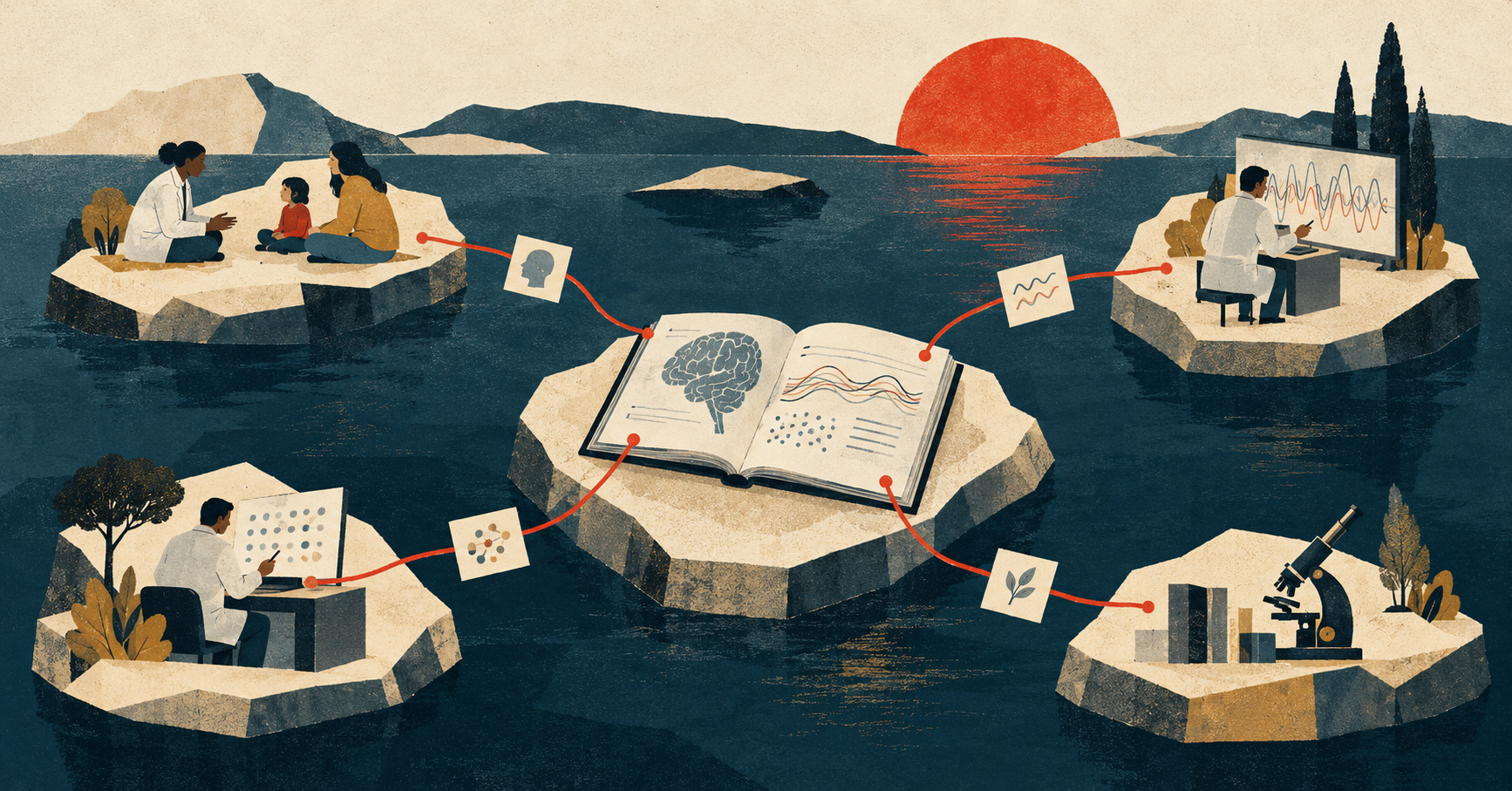
ARIA’s 6 research hubs cover genetic medicines, protein interactions (the UCSF work), human brain development, brain sensing and stimulation, clinical trial readiness, and functional communication. None is organized around behavioral treatment, though ARIA’s FAQ says a trial run through its network could study “a drug or behavioral intervention.” The Functional Communication hub develops “validated measures and interventions” for minimally verbal and nonverbal people; its Project MAPLE, led by the University of Minnesota and Northeastern University, tracks brain and behavioral development to learn which children will develop communication skills and when, so clinicians can match each child to the right care at the right time.
ARIA lists 12 initial IMPACT sites in the United States, United Kingdom, and Canada, plus 8 second-wave sites, including sites in San Francisco and at Stanford, selected to join; several have announced awards of up to $17.25 million. The network’s first study, IMPACT-Ready, runs five years, with each participant taking part for up to about two years. One cohort covers children from birth through 18 with qualifying variants in a short list of autism-linked genes, whether or not they have a profound autism diagnosis; the other covers ages 2 to 18 with profound or likely profound autism and no definitive genetic cause. ARIA says what it learns “will help inform the development of future interventions, services, and improvements to clinical care.”
Marcus Autism Center, part of Children’s Healthcare of Atlanta, treats more than 5,000 children a year and offers “intensive behavior treatments.” Eric Marsh, a neurologist at Children’s Hospital of Philadelphia, said its proposal “resonated” because the team could include “nonverbal individuals, those with intellectual disability, epilepsy, and rare genetic conditions,” groups he said are frequently excluded from trials.
Ami Klin, Marcus’s director, told Atlanta News First in September 2026, speaking about his center’s two new grants rather than the UCSF project, “There is a belief that within the next five years, there are going to be treatments that change the course of life for these children.” ARIA’s published goal for the UCSF hub is narrower: by the end of the third year, compounds ready for medicinal chemists, not for patients. The hub page does not say when that period began, and UCSF’s announcement does not state how many years the $46 million covers.
AT A GLANCE
| Award: | $46 million from ARIA to UCSF’s Quantitative Biosciences Institute, announced Aug. 27, 2026; duration not specified in UCSF’s announcement (UCSF; San Francisco Chronicle) |
| Funder: | Aligning Research to Impact Autism, part of the CNS Quest, a program of the Sergey Brin Family Foundation and Catalyst4 (ARIA FAQ) |
| Hub: | Protein-Protein Interactions Hub, co-led by Nevan Krogan and John Young of UCSF, with teams in New York, Germany, and Switzerland (UCSF; ARIA) |
| Year-three aim: | “Validated small molecule hits ready for medicinal chemistry optimization” (ARIA hub page; no start date given) |
| The science: | 100 autism risk genes; 1,800+ protein interactions, 87% previously unreported; 54 patient-derived mutations (Science, Aug. 27, 2026) |
| Population: | Profound autism: about 30% of diagnoses (UCSF); 26.7% of autistic 8-year-olds in a 15-site U.S. surveillance study, 2000–2016 (Hughes et al., Public Health Reports, 2023). Separately, ARIA estimates 20% to 30% of autistic people need lifelong, 24/7 care. |
| Clinical network: | 12 initial IMPACT sites in the U.S., U.K., and Canada, plus 8 second-wave sites selected by ARIA; several have announced awards of up to $17.25 million. IMPACT-Ready is a five-year observational study with no study treatments (ARIA; CHOP; Boston Children’s; Children’s Healthcare of Atlanta) |
SOURCES & REFERENCES
| 1. | Ho C. “UCSF gets $46 million autism research grant from Sergey Brin-backed foundation.” San Francisco Chronicle. August 27, 2026. https://www.sfchronicle.com/health/article/sergey-brin-ucsf-autism-grant-22403684.php |
| 2. | University of California, San Francisco. “UCSF QBI Is Awarded $46 Million to Advance Autism Research.” News release. August 27, 2026. https://www.ucsf.edu/news/2026/08/432451/ucsf-qbi-awarded-46-million-advance-autism-research |
| 3. | University of California, San Francisco. “Largest Molecular Map of Autism Opens Path to Precision Therapies.” News release. August 27, 2026. https://pharmacy.ucsf.edu/news/2026/08/largest-molecular-map-of-autism-opens-path-to-precision-therapies |
| 4. | Aligning Research to Impact Autism. “FAQ.” Accessed October 5, 2026. https://ariaroadmap.org/faq/ |
| 5. | Aligning Research to Impact Autism. “IMPACT Network.” Accessed October 5, 2026. https://ariaroadmap.org/research-hubs/impact-network/ |
| 6. | Children’s Hospital of Philadelphia. “CHOP-Penn Team Among Initial Sites in Aligning Research to Impact Autism (ARIA) IMPACT Network.” News release. June 17, 2026. https://www.chop.edu/news/chop-penn-team-among-initial-sites-aligning-research-impact-autism-aria-impact-network |
| 7. | Children’s Healthcare of Atlanta. “Marcus Autism Center and Emory University Awarded Up to $17.25 Million to Join International Autism Clinical Trials Network.” News release. September 8, 2026. https://www.choa.org/about-us/newsroom/marcus-autism-center-to-join-international-autism-clinical-trials-network |
| 8. | Wang B, Vartak R, Hennick KM, et al. Autism mutations rewire protein interaction networks to drive neurodevelopmental pathology. Science. 2026;393(6814):eady4523. doi:10.1126/science.ady4523 |
| 9. | Aligning Research to Impact Autism. “Protein-Protein Interactions.” Accessed October 3, 2026. https://ariaroadmap.org/research-hubs/protein-protein-interactions/ |
| 10. | Hughes MM, Shaw KA, DiRienzo M, et al. The Prevalence and Characteristics of Children With Profound Autism, 15 Sites, United States, 2000–2016. Public Health Reports. 2023;138(6):971–980. https://stacks.cdc.gov/view/cdc/169954 |
| 11. | Aligning Research to Impact Autism. “About.” Accessed October 3, 2026. https://ariaroadmap.org/about/ |
| 12. | Huang P. “Scientists map the interactions of key proteins linked with profound autism.” NPR. August 27, 2026. https://www.npr.org/2026/08/27/nx-s1-5944507/scientists-map-the-interactions-of-key-proteins-linked-with-profound-autism |
| 13. | Aligning Research to Impact Autism. “Alison Singer.” Scientific Advisory Board profile. Accessed October 5, 2026. https://ariaroadmap.org/team/alison-singer/ |
| 14. | Liu P. “Sergey Brin’s $2 Billion Quest To Tackle Parkinson’s, Bipolar Disorder And Now Autism.” Forbes. February 6, 2025. https://www.forbes.com/sites/phoebeliu/2025/02/06/sergey-brins-2-billion-quest-to-tackle-parkinsons-bipolar-disorder-and-now-autism/ |
| 15. | Carson B. “Sergey Brin Nonprofit Gets $261 Million Lift in MapLight IPO.” Bloomberg. October 27, 2025. https://www.bloomberg.com/news/articles/2025-10-27/sergey-brin-nonprofit-gets-a-242-million-lift-from-maplight-ipo |
| 16. | Forbes Wealth Team. “America’s Top 25 Philanthropists – And Why Musk, Page And Ellison Aren’t On The List.” Forbes. February 9, 2026 (updated August 18, 2026). https://www.forbes.com/sites/forbeswealthteam/2026/02/09/americas-top-25-philanthropists—and-why-musk-page-and-ellison-arent-on-the-list |
| 17. | Yale School of Medicine. “Yale School of Medicine Receives $27.7 Million Grant Toward Autism Research.” News release. July 7, 2025. https://medicine.yale.edu/news-article/yale-school-of-medicine-receives-dollar277-million-grant-toward-autism-research/ |
| 18. | Andersen T. “Harvard, Yale researchers score $46 million to study autism, brain development.” Boston Globe. September 15, 2026. https://www.bostonglobe.com/2026/09/15/metro/harvard-med-school-yale-autism/ |
| 19. | Harvard Faculty of Arts and Sciences. “Paola Arlotta awarded ARIA grant for autism research.” August 31, 2026. https://current.fas.harvard.edu/stories/paola-arlotta-awarded-aria-grant-autism-research |
| 20. | MapLight Therapeutics. “MapLight Announces Topline Results from Phase 2 IRIS Study for ML-004 in Autism Spectrum Disorder.” Press release. June 22, 2026. https://ir.maplightrx.com/news-releases/news-release-details/maplight-announces-topline-results-phase-2-iris-study-ml-004 |
| 21. | MapLight Therapeutics. “MapLight Therapeutics Reports Second Quarter 2026 Financial Results and Provides Business Update.” Press release. August 13, 2026. https://ir.maplightrx.com/news-releases/news-release-details/maplight-therapeutics-reports-second-quarter-2026-financial |
| 22. | Dattaro L. “First-of-its-kind commission defines ‘profound autism,’ issues recommendations.” Spectrum (The Transmitter). December 6, 2021. https://www.thetransmitter.org/spectrum/first-of-its-kind-commission-defines-profound-autism-issues-recommendations/ |
| 23. | Aligning Research to Impact Autism. “Research Hubs.” Accessed October 3, 2026. https://ariaroadmap.org/research-hubs/ |
| 24. | Aligning Research to Impact Autism. “Functional Communication.” Accessed October 5, 2026. https://ariaroadmap.org/research-hubs/functional-communication/ |
| 25. | Boston Children’s Hospital. “Boston Children’s Hospital awarded up to $17.25 million to join new autism research network.” News release via EurekAlert. June 11, 2026. https://www.eurekalert.org/news-releases/1131799 |
| 26. | NewYork-Presbyterian. “Columbia and Weill Cornell Medicine Researchers Awarded $17.25 Million to Study Profound Autism.” News release. July 2, 2026. https://www.nyp.org/news/columbia-and-weill-cornell-medicine-researchers-awarded-17-point-25-million-to-study-profound-autism |
| 27. | Skinner J. “Marcus Autism Center believes $40 million in grants could ‘change course’ of children’s lives.” Atlanta News First. September 10, 2026. https://www.atlantanewsfirst.com/2026/09/10/marcus-autism-center-believes-40-million-grants-could-change-course-childrens-lives/ |


Join the discussion ▾