What the Study Found
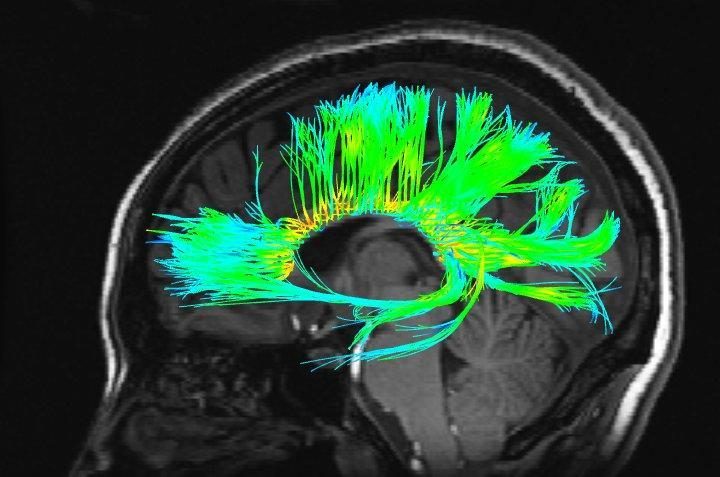
Researchers have pulled two biologically distinct subtypes out of autism’s long-noted heterogeneity. In a study published in Nature Neuroscience, an international team used brain scans to sort autistic individuals into a hypoconnectivity group, whose brain regions communicate less than usual, and a hyperconnectivity group, where they communicate more, then tied each pattern to a different underlying biology. It is the most direct evidence yet that autism’s variability reflects distinct biological mechanisms rather than noise.
The work was led by Alessandro Gozzi of the Istituto Italiano di Tecnologia in Rovereto, Italy, and Adriana Di Martino of the Child Mind Institute in New York. Its central move is cross-species. The team first mapped functional MRI connectivity in 20 genetic mouse models of autism, which sorted into hypoconnectivity- and hyperconnectivity-dominant groups, then searched for the same architecture in people. The human data came from ABIDE, a multicenter imaging dataset Di Martino helped found, and covered 940 individuals with idiopathic autism against 1,036 neurotypical individuals. The same two subtypes appeared, and held up across independent research sites.
“Brain-based biological markers reveal distinctions that current behavioral assessments don’t fully capture.” – Adriana Di Martino, MD, Child Mind Institute (2026)
Synapses and Immunity
What lifts the finding above a sorting exercise is what sits beneath each pattern. In the mouse models, hypoconnectivity traced to synaptic dysfunction, the machinery that lets neurons signal one another. Hyperconnectivity traced to transcriptional and immune-related processes. When the team ran gene-expression analyses on the corresponding human brain regions, the split held: hypoconnected regions were enriched for synaptic genes, hyperconnected regions for immune genes, mirroring the biology seen in mice.
Gozzi has described the result as a concrete biological handle on a word the field uses constantly, heterogeneity. Rather than a loose sense that some autistic brains are more connected and some less, the study points to two distinct directions of circuit biology, each with its own molecular signature. The reproducibility across dozens of sites, the authors argue, is what separates this from earlier, smaller subtyping attempts that failed to replicate.
How Much It Explains
The reach is narrower than the headlines suggest. The two subtypes together accounted for only about 25% of the autistic individuals in the study, leaving most unclassified. The behavioral gap between the groups was modest: those in the hyperconnectivity subtype scored somewhat higher on standard autism severity measures, but the subtypes did not map cleanly onto the assessments clinicians actually use. The analysis covered idiopathic autism, and the authors expect more subtypes to surface as datasets grow.
A biological map of autism is taking shape. A clinical test that uses it is not.
For now this is a research result, not a clinical tool. There is no fMRI test a family or a BCBA can order, and nothing here changes how autism is diagnosed or how applied behavior analysis is delivered. What it offers the field is a direction: evidence that biological subtyping is possible, and a reminder that biology and behavior do not line up as neatly as either side tends to assume. Whether brain-based subtypes ever reach the clinic depends on far larger datasets and a link, still unproven, between a connectivity pattern and what actually helps a given child.
AT A GLANCE
| Study: | “Autism subtypes identified using cross-species functional connectivity analyses,” Nature Neuroscience, 2026 (Pagani et al.) |
| Lead researchers: | Alessandro Gozzi (Istituto Italiano di Tecnologia); Adriana Di Martino (Child Mind Institute) |
| Method: | Cross-species fMRI: 20 genetic mouse models plus the human ABIDE imaging dataset |
| Human sample: | 940 individuals with idiopathic autism; 1,036 neurotypical individuals |
| Hypoconnectivity subtype: | Reduced brain connectivity, linked to synaptic dysfunction |
| Hyperconnectivity subtype: | Increased brain connectivity, linked to immune and transcriptional pathways |
| Coverage: | The two subtypes accounted for about 25% of the autistic sample |
| Behavioral difference: | Modest; the hyperconnectivity group scored somewhat higher on autism severity measures |
| Status: | Research finding via fMRI, not a clinical diagnostic test; more subtypes expected |
| DOI: | 10.1038/s41593-026-02287-z |
SOURCES & REFERENCES
| 1. | Pagani M, et al. (Di Martino A, Gozzi A, senior authors). “Autism subtypes identified using cross-species functional connectivity analyses.” Nature Neuroscience. Published online May 15, 2026. doi:10.1038/s41593-026-02287-z. https://www.nature.com/articles/s41593-026-02287-z |
| 2. | Istituto Italiano di Tecnologia / Child Mind Institute. “Brain scans reveal two distinct subtypes of autism with different underlying biology.” EurekAlert! May 29, 2026. https://www.eurekalert.org/news-releases/1130160 |
| 3. | ScienceDaily. “Brain scans reveal two distinct types of autism.” June 3, 2026. https://www.sciencedaily.com/releases/2026/06/260602021634.htm |
| 4. | Brain & Behavior Research Foundation. “fMRI Imaging Revealed 2 Distinct Autism Subtypes Involving Under- and Over-Connectivity Patterns.” 2026. https://bbrfoundation.org/content/fmri-imaging-revealed-2-distinct-autism-subtypes-involving-under-and-over-connectivity |
| 5. | Medical Xpress. “Brain scans reveal two distinct autism subtypes with different underlying biology.” May 2026. https://medicalxpress.com/news/2026-05-brain-scans-reveal-distinct-autism.html |
| 6. | Technology Networks. “Two Brain-Based Autism Subtypes Identified.” 2026. https://www.technologynetworks.com/neuroscience/news/autism-may-not-be-one-condition-study-identifies-two-distinct-brain-signatures-413113 |