
The Origin
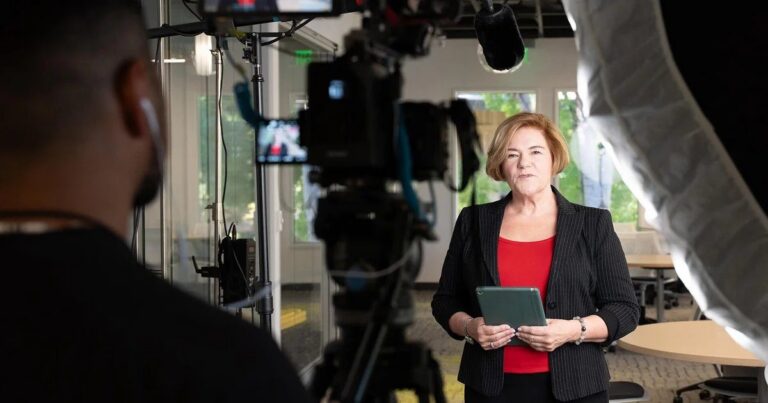
WINFIELD, WEST VIRGINIA — Jill Scarbro-McLaury’s path to building West Virginia’s most recognized ABA practice began with her own diagnosis. Growing up in Athens, in the southern part of the state, Scarbro-McLaury was identified as a child with dyslexia and ADHD. An observant first-grade teacher recognized the learning disability. Her family got her the support she needed. That experience, the difference between being identified and being overlooked, became the foundation of her career.
She enrolled at Marshall University in Huntington to study special education. While there, she met a family that was building an in-home applied behavior analysis program for their son, a young boy named Mike who had multiple challenges associated with autism. “I fell in love with Mike,” Scarbro-McLaury told the West Virginia Small Business Development Center. “Mike’s intensive ABA program helped him make dramatic progress, gaining skills that would allow him to read, play and communicate.” The experience convinced her that ABA worked, and that West Virginia had almost none of it.
She went on to earn a master’s degree from the University of North Texas. Jill then returned to West Virginia as a Board Certified Behavior Analyst and, in 2007, founded Bright Futures Learning Services. The first teaching sessions were held in her grandmother’s kitchen, working with a single family. Access to ABA therapy was, as the WV Gazette-Mail reported, “nearly non-existent” in the state before Bright Futures opened.
“I fell in love with Mike, a young boy with multiple challenges. Mike’s intensive ABA program helped him make dramatic progress, gaining skills that would allow him to read, play and communicate.” — Jill Scarbro-McLaury
Building the Practice
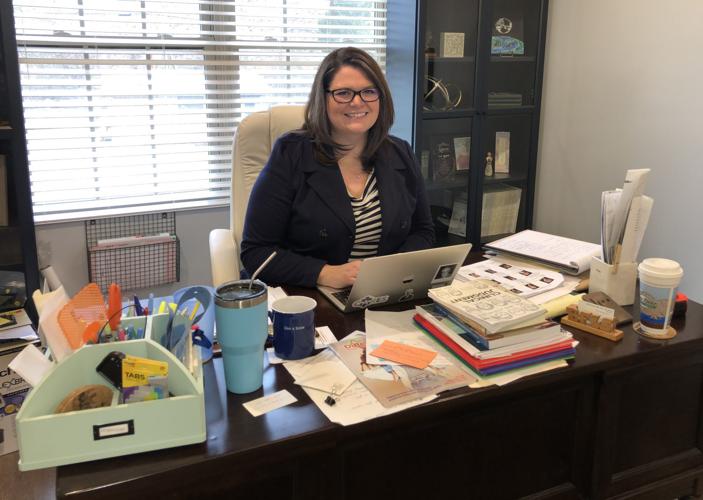
Bright Futures grew from the kitchen to a series of locations before finding a permanent home in Winfield, in Putnam County. The growth was deliberate and, for years, intentionally quiet. “We tried to stay under the radar on purpose,” Scarbro-McLaury told the Herald-Dispatch in 2019. With limited ABA resources anywhere in the state and a waiting list she described as “miles long,” publicizing the clinic would only have increased demand the practice could not meet. The calculus was stark: every family that learned about Bright Futures and joined the waitlist was a family whose expectations the practice could not fulfill. Bright Futures needed more staff, and more staff required more training, which required more time, without that more families would be waiting.
The workforce constraint is the defining challenge of ABA in West Virginia. Unlike states with established ABA master’s programs and large populations of certified professionals, West Virginia has had to build its pipeline from scratch. Bright Futures’ staff, as of the WV SBDC’s 2021 profile, included three BCBAs with master’s degrees, three Board Certified Assistant Behavior Analysts with bachelor’s degrees, an office manager, a supply administrator, and a team of paraprofessional Registered Behavior Technicians. The practice had trained all but one of its own technicians. Training instead of recruiting slows growth and creates a backlog of demand, but it also builds something that did not previously exist: a homegrown cohort of ABA professionals who know West Virginia’s families, its culture, its geography, and its constraints.
By 2022, Bright Futures had grown from a one-woman business to a million-dollar company with 25 employees, operating clinics in Winfield and Hurricane. The practice serves as a training facility for the next generation of ABA professionals in a state where training, rather than recruiting from an existing certified workforce, has been the only viable path to growth. According to Bright Futures, in 2011, West Virginia had just 17 BCBAs, by 2022, that number had grown to 65. Bright Futures says it had trained nearly all of its own technicians. The company survived the COVID-19 pandemic with help from the SBA’s Paycheck Protection Program and Economic Injury Disaster Loan, keeping staff paid through a seven-week complete shutdown beginning in March 2020.
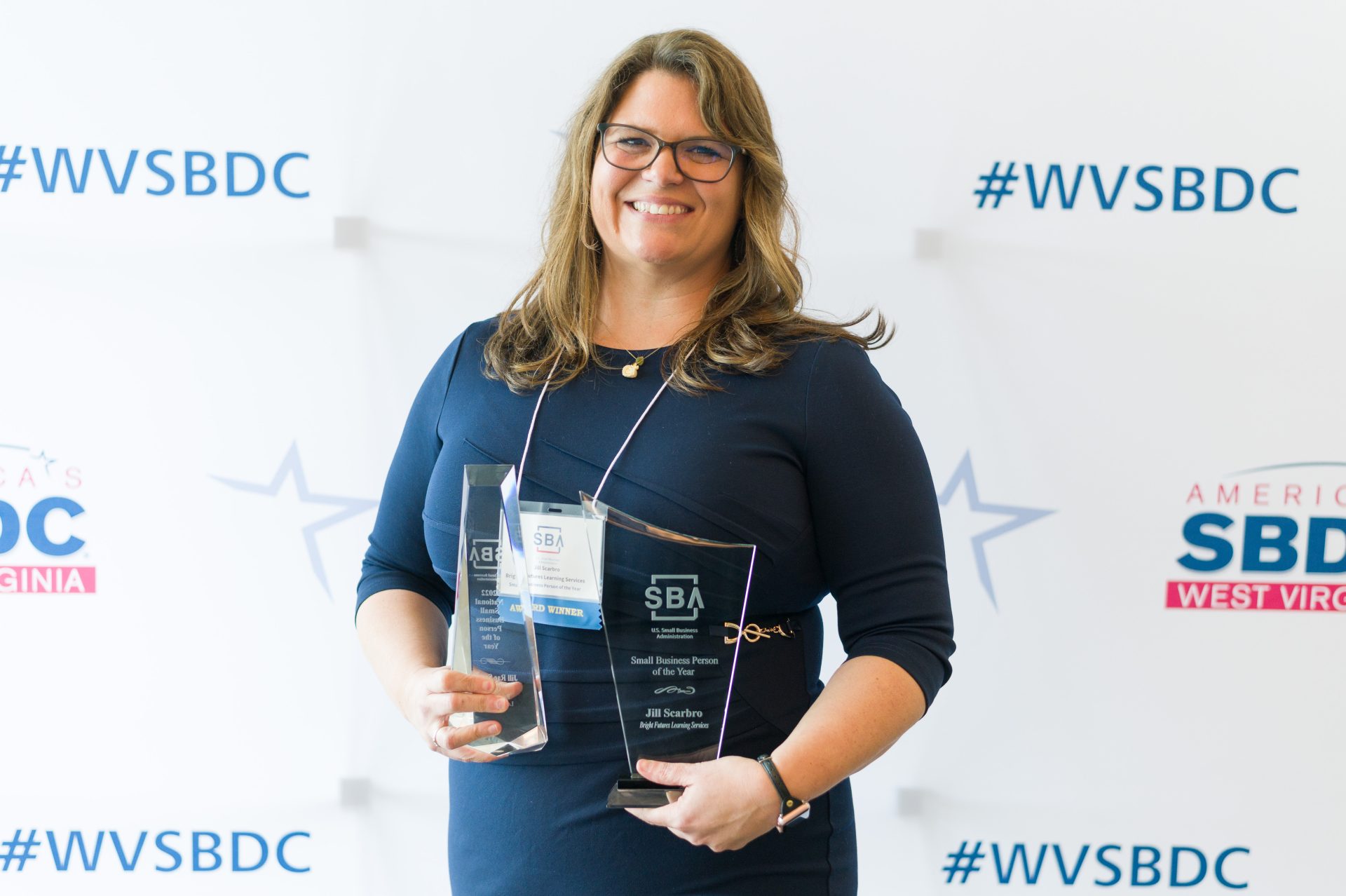
The recognition came in waves. In 2019, the U.S. Small Business Administration named Scarbro-McLaury the West Virginia Woman-Owned Small Business of the Year. In April 2022, she was named the SBA’s West Virginia Small Business Person of the Year. Then, in May 2022, the SBA awarded her the national Small Business Person of the Year, making her the first person from West Virginia ever to receive the agency’s highest honor. Governor Jim Justice praised her as “a shining example” of the “Mountaineer spirit.” The West Virginia Small Business Development Center submitted her nomination.
Beyond the Clinic
Scarbro-McLaury’s work extends well beyond Bright Futures’ clinical operations. In 2017, she founded Community Autism Resources and Education Systems (CARES), a nonprofit created in direct response to a tragedy that struck a West Virginia family that could not access autism services. CARES operates alongside Bright Futures, serving families the clinic cannot reach and providing a community network for parents navigating autism in a state with limited infrastructure. As Scarbro-McLaury told WV Executive Magazine, “Knowing that it would take decades to fill the services gap,” the CARES team built an avenue for families to connect with each other while the clinical capacity caught up. She is also a founding member of the Mountaineer Autism Project, a Huntington-based advocacy nonprofit founded in 2010 that led the 2011 campaign making West Virginia the 25th state to mandate autism insurance coverage and later secured Medicaid expansion for autism services in 2020. MAP now coordinates statewide ABA workforce development.
The coalition work has now reached a new scale. We Develop ABA, formally the Workforce and Development for Applied Behavior Analysis initiative, is a statewide coalition spearheaded by three organizations: Augusta Levy Learning Center, the Mountaineer Autism Project, and Bright Futures Learning Services. The Appalachian Regional Commission awarded the coalition $50,000, matched by $68,000 in private commitments from Augusta Levy, Bright Futures, CARES, the Disabilities Opportunity Fund, and the Larch Foundation. The total campaign budget is $118,000. Augusta Levy Learning Center provides administrative oversight.
The coalition’s work has been methodical. In 2023, We Develop ABA surveyed ABA treatment centers, BCBAs, families, and non-BCBA human service professionals to assess the current state of behavioral services in West Virginia. The results informed a statewide strategic plan. The coalition’s mapping identified at least 17 ABA provider locations operating across the entire state and a statewide waitlist of more than 2,000 families seeking autism services. In March 2023, the kickoff planning meeting convened treatment centers, higher education programs, and regional and national ABA experts to discuss the environment, opportunities, and challenges for creating an ABA ecosystem in West Virginia. Town halls and stakeholder meetings followed through the spring and summer.
The We Develop ABA coalition has identified 17 ABA provider locations across all of West Virginia and a statewide waitlist of more than 2,000 families. The coalition’s total budget is $118,000. A $118,000 budget against a 2,000-family waitlist is the right unit of measurement for a state-level pipeline project that has to compound over years to matter.
The West Virginia Context
West Virginia’s ABA landscape is defined by scarcity. The state sits in the bottom tier nationally for BCBA density per capita. Half of all U.S. counties have no BCBA; in West Virginia, the concentration is even thinner, with providers clustered in a handful of locations: Wheeling, Huntington, the Kanawha Valley, and the Putnam County corridor where Bright Futures operates. Families in the state’s southern coalfields, eastern panhandle, and rural interior face hours-long drives to reach a provider, if they can find one with openings at all. The WVNS television station reported as recently as May 2026 that the state faces “a critical lack of licensed behavioral health workers.”
Augusta Levy Learning Center, the other anchor institution in the state, was founded in Wheeling in 2005 by Kathy Shapell and is the first and largest autism treatment program in West Virginia, serving families from West Virginia, Ohio, and Pennsylvania. Under current executive director Angie Wood, the organization rebranded as Augusta Levy Behavioral Services in September 2025, marking its 20th anniversary and expanding into broader behavioral health. Together, Augusta Levy and Bright Futures represent the two poles of West Virginia’s ABA infrastructure, one in the northern panhandle and one in the central Kanawha-Putnam corridor, with vast stretches of the state between them that have no center-based ABA services at all.
Scarbro-McLaury’s trajectory, from a grandmother’s kitchen to the SBA’s national stage, is a story about what it takes to build something from nothing in a state where the infrastructure does not exist. She did not enter a market; she created one. She did not recruit a workforce; she trained one. She did not wait for the state to mandate coverage; she helped lead the campaign that made it happen. And now, through We Develop ABA, she is trying to build the system that will outlast her own practice: a statewide pipeline of ABA professionals, informed by data, funded by a coalition, and designed to serve the 2,000 families still waiting.
AT A GLANCE
| Founder: | Jill Scarbro-McLaury, BCBA; grew up in Athens, WV; diagnosed with dyslexia and ADHD as a child |
| Education: | BA in Special Education, Marshall University; MS from University of North Texas (ABA) |
| Company: | Bright Futures Learning Services; founded 2007; clinics in Winfield and Hurricane, WV (Putnam County) |
| Origin: | Started in grandmother’s kitchen with one client; grew to 25 employees and $1M+ revenue by 2022 |
| Training impact: | WV certified ABA providers grew from 17 (2011) to 65 (2022); BFLS trained nearly all its own technicians |
| Awards: | SBA WV Woman-Owned SB of Year (2019); SBA WV SB Person of Year (2022); SBA National SB Person of Year (2022, first West Virginian) |
| CARES: | Community Autism Resources and Education Systems; nonprofit founded 2017 by Scarbro-McLaury |
| MAP: | Mountaineer Autism Project; Huntington-based; Scarbro-McLaury is founding member; led 2011 insurance mandate campaign |
| We Develop ABA: | Statewide coalition (Augusta Levy + MAP + BFLS); ARC $50K + $68K private match = $118K total budget |
| WV waitlist: | 2,000+ families seeking ABA; 17 provider locations statewide; bottom tier nationally for BCBA density |
| Augusta Levy: | Founded 2005, Wheeling; first/largest WV autism program; rebranded as Augusta Levy Behavioral Services Sept 2025 |
| COVID survival: | PPP + EIDL loans; staff paid through 7-week shutdown (March 2020) |

Join the discussion ▾