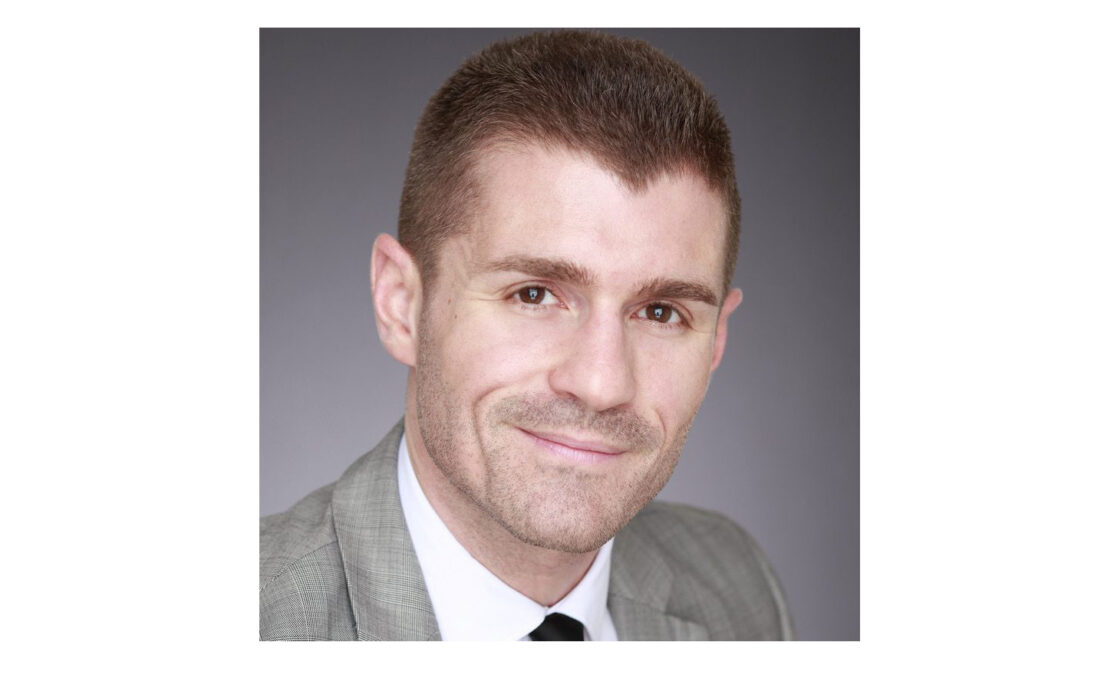

The Origin
WALNUT CREEK, CALIFORNIA – Susan Armiger did not set out to reshape autism care in America. She grew up in New Zealand, studied psychology at the University of Waikato, and built a career across multiple states and service lines inside the Easterseals system. When she joined Easterseals Bay Area in 2011, it was a small, local nonprofit serving roughly 500 people with developmental disabilities. Fifteen years later, the organization she leads, now known as Catalight, is one of the largest nonprofit behavioral health networks in the country, supporting more than 24,000 individuals and families a year through a network of about 16,000 practitioners. The throughline from that small Bay Area nonprofit to a national platform is a single, stubborn idea: that the way the field measures success is wrong, and that fixing it is the key to expanding access.
Armiger’s rise tracked the organization’s. She most recently served as chief executive of Easterseals Bay Area, growing it from a small nonprofit into a health care provider delivering more than a million hours of service a year in Northern California, before the launch of the Catalight Foundation in 2019 reorganized the family of companies under a new banner. Catalight today comprises several affiliated nonprofits, including Easterseals Northern California and Easterseals Hawaii, and roughly 900 employees coordinate a far larger contracted clinical network. The structure is unusual, and deliberately so, because Armiger has spent more than a decade arguing that the conventional way of organizing and paying for autism care does not serve families well.
“We believe everyone has the right to timely access to the care they need, regardless of geography, gender, race, orientation, or condition.” – Susan Armiger, President and CEO, Catalight
That conviction has earned outside recognition. In 2023, Armiger was named to the Forbes 50 Over 50 list in its Impact category, which honors women whose work has reshaped fields such as education, philanthropy, government, and nonprofits. She is completing a doctoral program in leadership for change at Fielding Graduate University, and in recent years has carried Catalight’s argument to international stages, including the World Economic Forum in Davos. But the accolades sit on top of an operating philosophy that is far more concrete than any award, and that begins with how the organization gets paid.
Building Catalight

What distinguishes Catalight from a conventional provider is the architecture Armiger assembled around the clinical work. The organization is not only a care network. It also operates a research arm, the Catalight Research Institute, which Armiger founded in 2019 to harness more than a decade of real-world clinical data, and it is the largest shareholder in Xolv Technology Solutions, a technology company that grew out of the platforms Catalight built to support autism and developmental-disability treatment. Care, research, and technology are treated as one system rather than three separate functions, an integration most provider organizations of comparable size do not attempt.
Coordinating that contracted network is Catalight Care Services, Catalight’s service delivery and benefits management arm. It serves as the connective tissue between families seeking treatment, the roughly 16,000 practitioners in the network, and the payers funding the care. It also handles the authorization, care navigation and benefits administration. The role puts Catalight Care Services at the center of the company’s operating philosophy. The shift from paying for hours to paying for outcomes requires managing the relationship between what is authorized, what is delivered and effective care.
That structure reflects a deliberate strategic bet on value-based care, the payment and delivery model in which a provider is rewarded for outcomes and wellbeing rather than for the sheer volume of billable service hours. Value-based arrangements remain rare in behavioral health, where many providers still operate under high-hour models rooted in treatment standards set decades ago. Catalight is among the few behavioral health organizations in the United States operating under a value-based contract, and Armiger frames the choice as both a clinical and an economic argument. If quality of care rises and is delivered in an individualized way, she contends, the cost of care falls, a proposition she has put directly to payers as well as to families.
Trent Iden, Catalight’s executive vice president of operations, has described the rationale in similar terms, arguing that value-based care is the future of the field and, more importantly, that it benefits families. The model has practical consequences for how the organization grows. Rather than maximizing authorized hours per client, Catalight invests in parent-mediated programs that train caregivers to weave behavioral strategies into daily routines, in diagnostic capacity that shortens the path to a treatment plan, and in technology that tracks whether a given approach is actually working. Each of those investments is justified by outcomes and access rather than by units of service billed.
Armiger’s investment in people extends inside the organization as well. She built a leadership development program to cultivate the adaptive skills the company believes its managers need, and Catalight has continued to expand its training infrastructure for the broader field. In early 2026 it launched Catalight Academy, a digital learning platform that grew out of its earlier Catalight Classroom program and offers certificate programs, specialized courses, and webinars to clinicians in the United States and abroad. The aim is explicitly tied to the access problem: by training more practitioners in efficient, outcome-driven methods, the organization hopes to widen the pipeline of clinicians able to serve a growing population of families.
A Contemporary View of Treatment
Catalight’s clinical positioning is as distinctive as its corporate structure. In 2024, the organization released a set of practice guidelines that challenged one of the most entrenched assumptions in autism care, the so-called dosage effect, the long-held premise that more hours of applied behavior analysis necessarily produce better outcomes. Compiled over roughly a year and a half by leaders of the Catalight Research Institute together with a review committee, the guidelines argued that high hours of ABA are not required for good outcomes, and that the field had too often equated the quantity of therapy with its quality. The review committee deliberately reached beyond clinicians to include adult autistic self-advocates, parents of autistic children, and a marriage and family therapist.
The guidelines also elevated parent-mediated intervention, in which caregivers are trained to deliver behavioral strategies themselves, citing research that its effectiveness can be comparable to practitioner-delivered care. That emphasis aligns with the broader strategy: a model that empowers parents extends the reach of a constrained clinical workforce while keeping treatment embedded in a child’s everyday environment. To reinforce its multimodal approach, Catalight also recruited senior clinical talent, including the psychologist Karen Bearss, a recognized authority on caregiver-mediated intervention, who joined in 2024 to expand her RUBI parent-training program within the network.
Nowhere is the access mission more concrete than in diagnosis. Amid a national shortage of qualified autism evaluators that has pushed diagnostic wait times to a year or more in many communities, Catalight created a yearlong Postdoctoral Diagnostic Assessor Training Program that trains doctoral-level psychologists to conduct autism evaluations under supervision until they can practice independently, expanding the supply of evaluators rather than simply competing for the existing pool. The organization reports that, with that added capacity, it provides a diagnostic assessment and a path to treatment within 10 days of referral in 93 percent of its cases, against the months-long or year-long waits common elsewhere. In early 2026 it went a step further toward families directly, launching an online screening tool, ChooseYourPath.org, intended to give caregivers an early, navigable route from first concern to diagnosis and care.
Catalight has put its outcomes orientation in front of families as well as funders. The organization has invested in measuring wellbeing, parental stress, and quality of life, not just symptom counts, and has used research to question whether families themselves define success the way the billing system assumes. That reframing, from hours delivered to lives improved, is the connective tissue between the company’s clinical guidelines, its technology, and its payment model.
Armiger’s thesis was that the field did not simply need more capacity. It needed a different operating model, one organized around measurable outcomes, real-world data, and access, rather than around volume.
The Latest Chapter: A New Professional Association

Catalight’s most ambitious move yet reaches beyond its own network. On May 8, 2026, the organization helped launch the National Society of Autism Professionals, or NSAP, a new cross-disciplinary association intended to unify a historically fragmented field. Where most existing autism organizations are organized around a single discipline, around provider companies, or around a credential, NSAP is designed to bring clinicians, educators, researchers, policy leaders, advocates, and other specialists under one professional home, with the stated goals of strengthening standards, improving transparency, and forging a unified voice capable of shaping policy and practice. Catalight provided founding support for the launch, framing it as a response to the costs of fragmentation it had observed firsthand in access, outcomes measurement, and advocacy.
To lead NSAP, the organization named Robin McLeod, Ph.D., a Minnesota-based licensed psychologist who built a solo practice into a multidisciplinary behavioral health organization with clinic sites across the Twin Cities, and who has since led professional practice guidelines development and behavioral health workforce strategy at the American Psychological Association. McLeod has been explicit that the new body is meant to draw its authority from its members rather than from the top down, describing the job as building the infrastructure that allows autism professionals themselves to lead. The framing is consistent with how Catalight talks about its own role, as an organization trying to build shared infrastructure for a field that has grown rapidly without it.
For Catalight, the NSAP launch is a logical extension of the operating philosophy Armiger has pursued since 2011. A value-based model depends on agreed standards, credible outcome measures, and a workforce trained to a common bar, none of which a single provider can establish alone. By helping stand up a professional society, Catalight is attempting to move the conditions of the entire field toward the model it has bet its own future on. Whether the rest of the industry follows is an open question, but the organization’s trajectory, from 500 clients to a national network advancing a new professional association, suggests it intends to keep pressing the argument that quality, not quantity, is what autism care should be built to reward.
AT A GLANCE
| Profile: | Susan Armiger, president and CEO of Catalight; based in Walnut Creek, California |
| Background: | New Zealand native; B.A. in psychology, University of Waikato; completing a doctorate in leadership for change at Fielding Graduate University |
| The arc: | Joined Easterseals Bay Area (Catalight’s precursor) in 2011 when it served about 500 people; now leads a network supporting 24,000+ families a year |
| Catalight today: | One of the largest nonprofit behavioral health networks in the U.S.; ~16,000-practitioner network; ~900 employees; family of companies includes Easterseals Northern California and Easterseals Hawaii |
| Core bet: | Value-based care, paying for outcomes and wellbeing rather than volume of service hours; among the few behavioral health organizations operating under a value-based contract |
| Infrastructure: | Catalight Research Institute (founded 2019), Catalight Care Services, Catalight Foundation (fundraising arm), Catalight Academy clinician-training platform (launched early 2026), Elevate (Catalight’s yearly teleconference), Easterseals Northern California, Easterseals Hawaii, NSAP; largest shareholder in Xolv Technology Solutions |
| 2024 practice guidelines: | Challenged the ABA “dosage effect” (more hours = better outcomes); elevated parent-mediated intervention; compiled over ~1.5 years with self-advocates and parents on the review committee |
| Access metric: | Reports a diagnostic assessment and path to treatment within 10 days of referral in 93% of cases, against year-long waits common elsewhere |
| Diagnosis pipeline: | Yearlong Postdoctoral Diagnostic Assessor Training Program; ChooseYourPath.org online screener launched early 2026 |
| Key hire: | Psychologist Karen Bearss, Ph.D. (RUBI parent-training program), joined 2024 |
| Latest move: | Helped launch the National Society of Autism Professionals (NSAP) on May 8, 2026, led by CEO Robin McLeod, Ph.D. |
| Recognition: | Forbes 50 Over 50 (Impact category), 2023 |
SOURCES & REFERENCES
| 1. | Catalight. “Susan Armiger” (leadership bio; joined 2011; transformed Easterseals Bay Area; 24,000+ served annually; 16,000-practitioner network; ~900 employees; Forbes 50 Over 50). Accessed June 2026. https://www.catalight.org/team/susan-armiger |
| 2. | Catalight. “Catalight CEO Named to Forbes 50 Over 50” (2023 Forbes 50 Over 50, Impact category; joined in 2011 serving 500 people). October 7, 2024. https://www.catalight.org/article/catalight-ceo-named-to-forbes-50-over-50 |
| 3. | Catalight. “Catalight’s Journey Cuts a Clear Path to Sustainable Access to Healthcare” (Armiger quote on the right to timely access; value-based care; telehealth adoption). 2025. https://www.catalight.org/article/catalights-journey-cuts-a-clear-path-to-sustainable-access-to-healthcare |
| 4. | CBS News Brand Studio. “Catalight’s Proven Value-Based Care Model Succeeds in Improving Access and Cost Sustainability in the Behavioral Health Industry” (10-day/93% access figure; Trent Iden; 1987-era standards; 100,000-worker shortage by 2028). November 2025. https://www.cbsnews.com/brandstudio/catalight/ |
| 5. | Catalight. “Catalight Practice Guidelines Reflect a Contemporary Research View of the Dosage Effect and Outcome Measures in Autism Care” (challenges dosage effect; ~1.5-year review; parent-mediated intervention; self-advocates and parents on committee). GlobeNewswire, April 23, 2024. https://www.globenewswire.com/news-release/2024/04/23/2868204/0/en/Catalight-Practice-Guidelines-Reflect-a-Contemporary-Research-View-of-the-Dosage-Effect-and-Outcome-Measures-in-Autism-Care.html |
| 6. | Catalight. “Dr. Bearss Joins Catalight to Expand Reach of RUBI Program and Enhance Autism Care Access” (Karen Bearss, Ph.D., joins 2024; RUBI parent-training program). GlobeNewswire, September 16, 2024. https://www.globenewswire.com/news-release/2024/09/16/2946954/0/en/Dr-Bearss-Joins-Catalight-to-Expand-Reach-of-RUBI-Program-and-Enhance-Autism-Care-Access.html |
| 7. | Catalight. “National Society of Autism Professionals (NSAP) Launches to Create a Unified Voice to Move the Field Forward” (NSAP launched May 8, 2026; Robin McLeod, Ph.D., named CEO; Catalight founding support). PR Newswire, May 12, 2026. https://www.prnewswire.com/news-releases/national-society-of-autism-professionals-nsap-launches-to-create-a-unified-voice-to-move-the-field-forward-302769969.html |
| 8. | Fielding Graduate University. “Fielding Doctoral Student Susan Armiger Named to Forbes 50 Over 50” (doctoral program in leadership for change; joined precursor in 2011 serving 500; Catalight Research Institute founded 2019). December 5, 2025. https://www.fielding.edu/fielding-doctoral-student-susan-armiger-named-to-forbes-50-over-50/ |
| 9. | Xolv. “Xolv Creates a New Venture to Embark on New Era of Innovation in Behavioral Health” (Xolv Technology Solutions; Catalight as largest shareholder; Armiger as Xolv CEO). December 21, 2023. https://xolv.com/press-release/new-era-ofinnovation-in-behavioral-health/ |
| 10. | Catalight. “Catalight Academy Grows Leading Nonprofit’s Autism and I/DD Clinical Training Capability” (Catalight Academy launched 2026; built on Catalight Classroom; certificate programs). PR Newswire, March 6, 2026. https://www.prnewswire.com/news-releases/catalight-academy-grows-leading-nonprofits-autism-and-idd-clinical-training-capability-302707081.html |
| 11. | Catalight. “New Online Screener Offers Path to Autism Diagnosis and Care” (ChooseYourPath.org online screener; eliminate-the-wait promise; Trent Iden). February 11, 2026. https://www.catalight.org/press-release/new-online-screener-offers-path-to-autism-diagnosis-and-care |
| 12. | BreakingNewsABA. “Study Reveals Shift in How Families Define Success in Autism Treatment” (research on family-defined outcomes; parent-led care). 2025. https://breakingnewsaba.com/press-release/study-reveals-shift-in-how-families-define-success-in-autism-treatment |
| 13. | Catalight. “Behavioral Health Provider Network” (Catalight Care Services; case management, care coordination, and payments support across families, practitioners, and payers). Accessed June 2026. https://www.catalight.org/care-services/providers/ |