
Finding the Hard Science at Temple
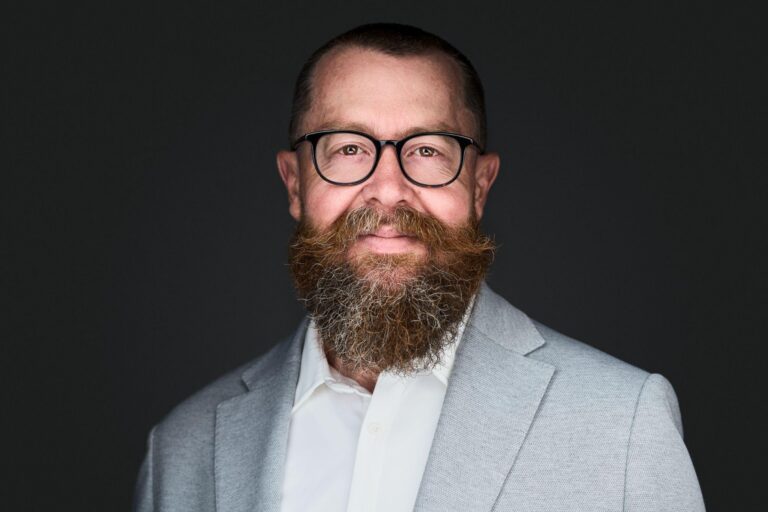
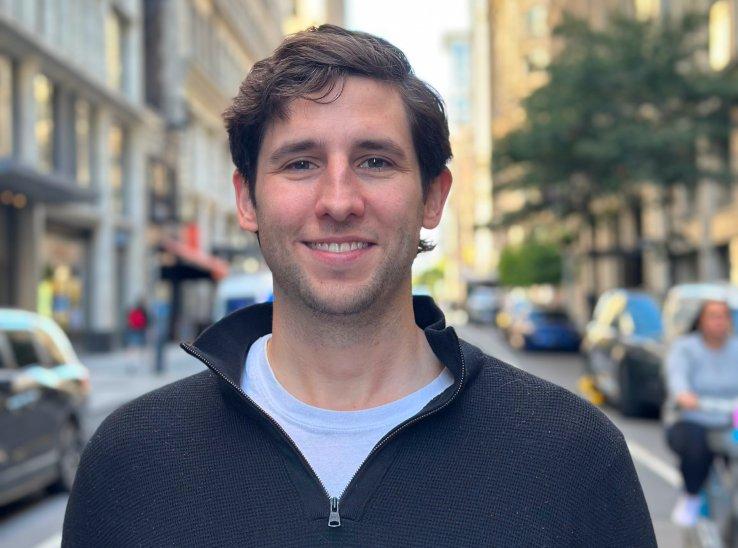
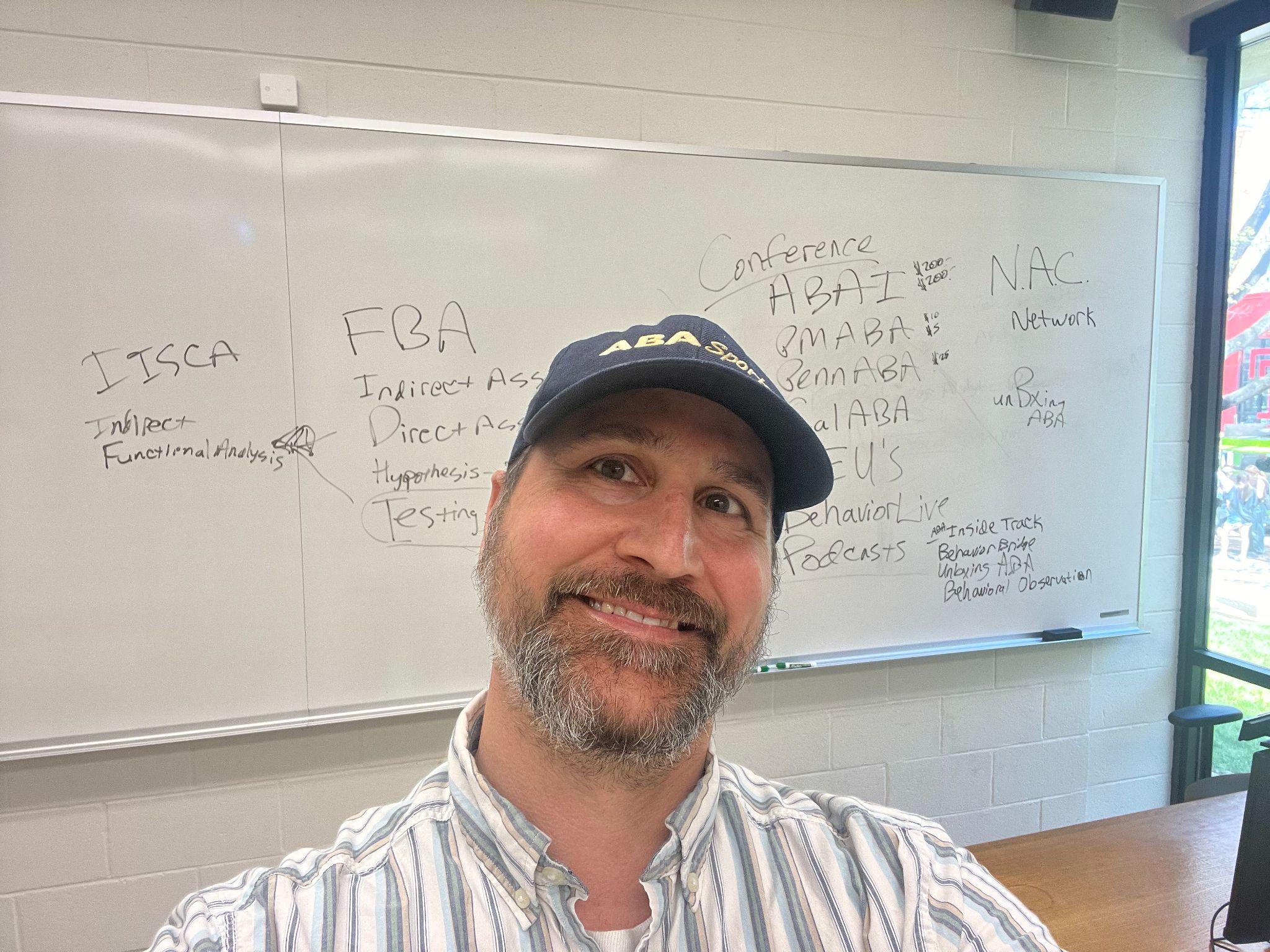
PHILADELPHIA – Scott O’Donnell teaches applied behavior analysis at Temple University, the same campus where he first found the science as an undergraduate around 2000. In between came warehouse floors, counseling clinics, nine years of one-to-one work with autistic adults, and a promise made at his father’s deathbed that sent him back to school.
O’Donnell arrived at Temple as a pre-med student and switched to psychology, where the coursework left him wanting more. “These are a lot of good theories, but where’s the hard science? Where’s the hard evidence?” he remembered thinking. A class with Dr. Philip Hineline, the Temple professor emeritus who co-founded the university’s applied behavior analysis master’s program, gave him his answer. “And I was sold,” he said.
The moment that brought it to life came later in a course, watching a rat in an operant chamber. Seeing the animal’s behavior change with its consequences showed him, he said, how behavior actually works and how it is controlled.
Using the Science Everywhere but the Field
What O’Donnell did next is the unusual part. Until 2013, he did not work in behavior analysis at all; he simply took it with him. “I just use behavior analysis to do it [his work],” he said, referring to the years between Temple and his formal entry into the field.
The clearest example comes from a supervisor job loading trucks. Other supervisors sent him employees they believed could not hack it, according to O’Donnell, and one kept misloading packages, sending boxes bound for New Jersey to Ohio. His bosses told him to yell at her. He praised her for reading the labels instead, because reading was the behavior he needed to increase, and punishment is an inefficient way to increase anything. “She got better. She started reading the packages more. She didn’t get yelled at. My boss was happy, and I was happy, and she was happy,” he said.
His department became the top performer in the building. O’Donnell later steered him toward adults with mental disabilities. When he met the parents of a child with autism, he built an autism department for them at the counseling company where he worked.
The formal résumé filled in from there. He founded his consulting practice, SAOBA, LLC, in September 2014, and spent nine years, from 2014 to 2023, providing one-to-one services to autistic adults through Kaleidoscope Family Solutions. He worked as a behavior technician and directed autism services at Aspire Child & Family Services in Huntingdon Valley, Pennsylvania.
A Promise at His Father’s Deathbed
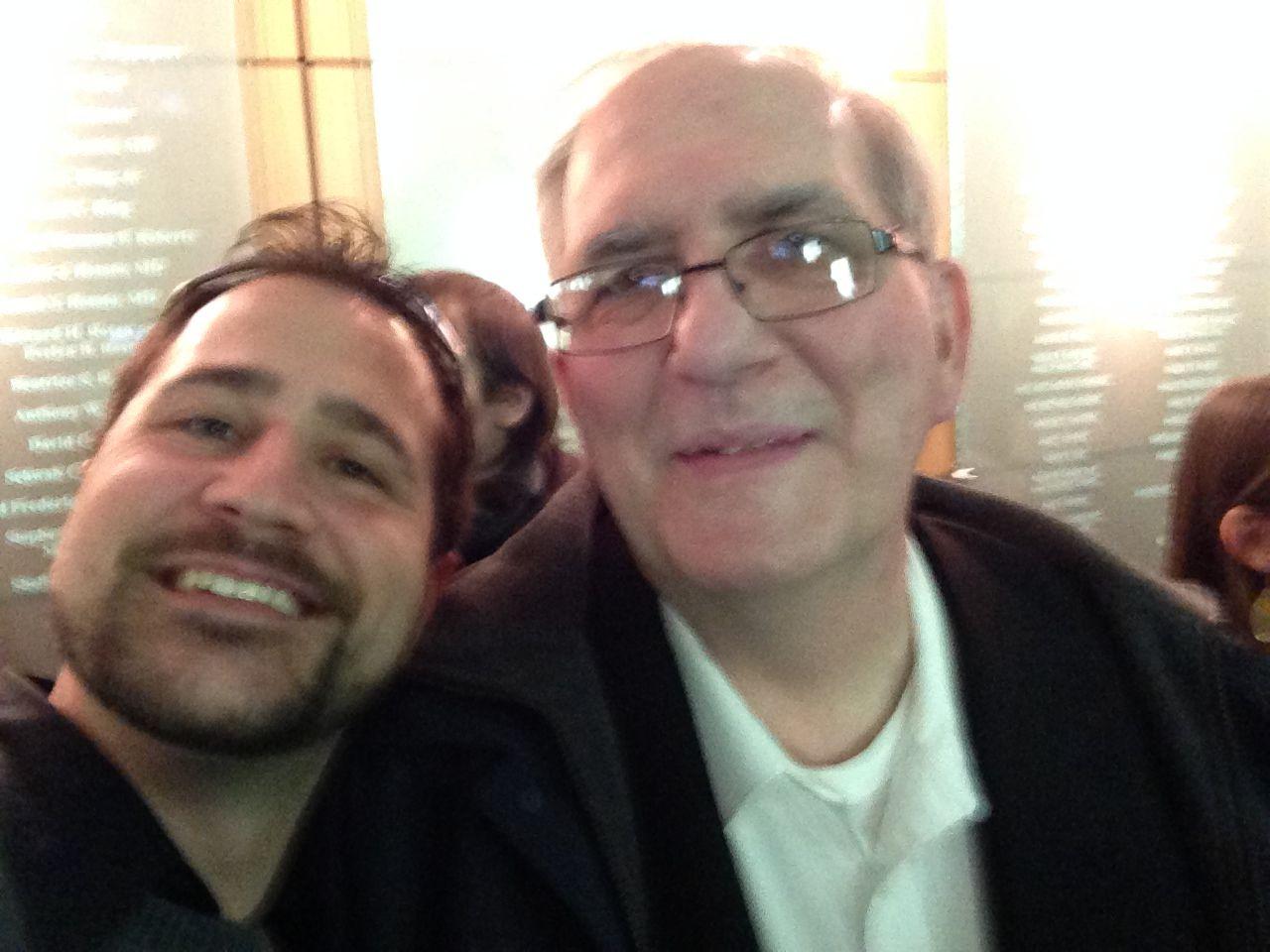
Doctorates run in O’Donnell’s family. His father and brothers all earned them; one brother holds a PhD and his younger brother an MD, according to O’Donnell. The lesson his father taught him, though, was never about being smart.
O’Donnell once told his father he was smart. “I’m not smart. I just read textbooks,” his father answered. The elder O’Donnell did not get good grades, he explained; he just spent hours at the dining room table preparing for classes, teaching himself calculus, statistics, and physics. “It wasn’t that he was smart, it was just that he worked hard and that’s what made everybody think he was smart,” O’Donnell said.
That work ethic became the inheritance. On his father’s deathbed, O’Donnell promised he would go back to school and earn his master’s and his doctorate. He returned to school in 2015.
“His death, because I made that promise, changed my life. And it changed the lives of a lot of other people.” – Scott O’Donnell, PhD, co-founder, Society for the Expansion of Behavior Analysis (2026)
He is direct about what the promise cost and what it gave in return. “I can miss him, but only in a way in which… I miss you, Dad. Thank you for giving me this,” he said.
Becoming Dr. O’Donnell
O’Donnell spent four years as a full-time doctoral student at The Chicago School of Professional Psychology, from August 2018 to August 2022, while keeping up his one-to-one work with autistic adults through Kaleidoscope, which continued until 2023.
COVID redirected his research from autism to sports, a question he had carried since his Temple days. Back then, he would leave Hineline’s behavioral psychology lab, get in his car, and hear the frustration on Philadelphia sports talk radio. “I wonder if behavior analysis could help here. And that would be a real test for that science,” he remembered thinking. He later studied under Dr. Antonio Harrison, a behavior analyst who published research on teaching high school football players to tackle and coached the sport for 16 years.
His dissertation applied behavior analysis to golf. He also applied it to the writing itself, timing his focus with a stopwatch and charting every session on a standard celeration chart. His research has since been published in the fields of sports performance and behavior change.
Today he works as a psychotherapist at Citywide Community Counseling Services, blending ACT, CBT, and ABA in mental and behavioral health care. In December 2024, Temple hired him as an adjunct assistant professor, where he teaches undergraduate and graduate behavior analysis, including ethics, methods, and experimental classes.
A Science for More Than 1.5 Percent
Ask O’Donnell about the field’s biggest problem, and he does not hesitate. “One of the biggest issues in the field is that we are pigeonholed,” he said. “We have this science of behavior that’s a science of everyone’s behavior, animals and people, and yet we’re only using it on one and a half percent of the population.” Problems like crime and war, he argues, are problems of human behavior, so people trained in human behavior should help solve them.
His critique extends inside autism services, too. The tiered service model, he said, has never been tested or proven superior to direct one-to-one care, and it means clients spend 95 percent of their time with the least experienced clinicians, people with 40 hours of training and a high school diploma, while the supervising analyst checks in for the remaining 5 percent. He would flip that model upside down, with the most experienced clinicians working directly with clients 95 percent of the time and technicians supporting them. “I think my clients deserve 100% of me,” he said.
“This is a science of behavior, not a science of autism, and a science is for all of us.” – Scott O’Donnell, PhD, “Living a Behavioral Life,” ABA Reimagined Conference (2025)
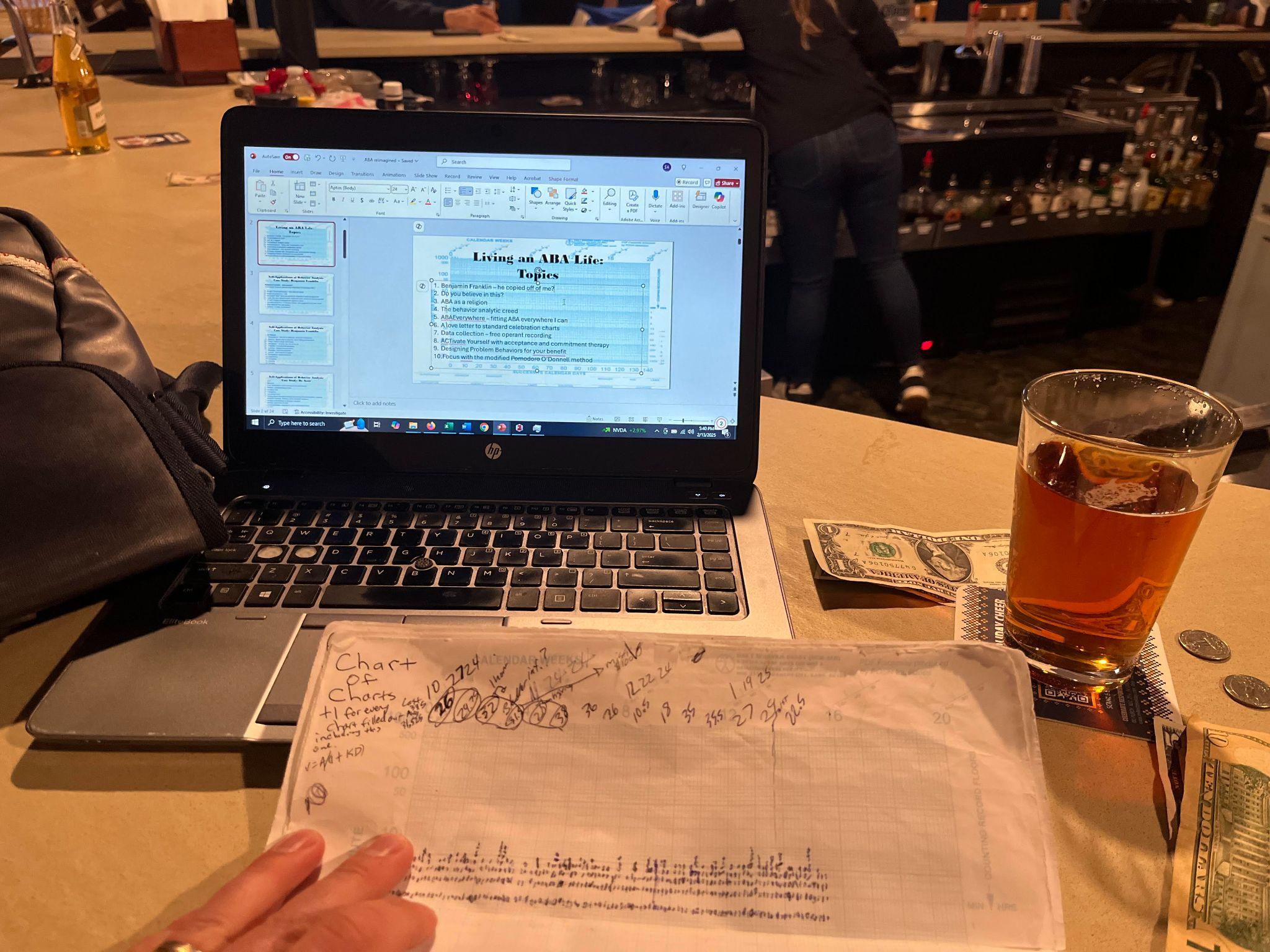
He also practices the expansion he preaches. He tracks his push-ups, his running, and his focused work time on standard celeration charts, and he presented the approach, called “Living a Behavioral Life,” at the ABA Reimagined Conference in February 2025. When critics in the anti-ABA movement push back, O’Donnell asks them one question: Is it OK if he applies the science to himself? They always say yes, he said, which tells him the objection is less about the science and more about a bad experience with a practitioner.
Building the Rebel Alliance
The advocacy now has an organization behind it, and it started with a complaint. “I was on LinkedIn. I was complaining about something in our field,” O’Donnell said. As he tells it, Shouberte Abreu, now the group’s president, answered him: “Hey, I hear you complaining about this. I back you. Why don’t we stop talking about it and do something about it?” O’Donnell’s response: “OK, challenge accepted.”
The result is the Society for the Expansion of Behavior Analysis, or SEBA, a nonprofit founded in 2025, O’Donnell said, whose mission is to push behavior analysis into settings and populations where it is rarely used. In SEBA’s official titling, O’Donnell is a founder and its Master Sergeant at Arms, and he leads partnership and outreach. He describes his own role as the dirty work: running the early meetings, writing the bylaws, and getting the IRS paperwork through cleanly. “It’s like a rebel alliance,” he said of the group. “We’re full of practitioners who want to move beyond autism and expand the science into all different other kinds of areas.”
SEBA now runs free CEU events, has begun recording a podcast, The Evolving Behavior Analyst, with SEBA executive vice president Jacob Papazian and communications director Di-Anne Elise, and is planning a conference for early 2027.
O’Donnell’s next publication, a paper he has been writing for years, is slated to appear in a scientific journal soon, he said. Eleven years after returning to school, he has the title he promised his father he would earn, and he is not shy about enjoying it. “Happy to be Dr. Scott,” he said.
AT A GLANCE
| Full name: | Scott A. O’Donnell, PhD (Greater Philadelphia) |
| Current roles: | Adjunct assistant professor, Temple University (Dec 2024–present); therapist, North City Congress (2023–2025); contract psychotherapist, Citywide Community Counseling Services (2025–present) (LinkedIn) |
| Consulting practice: | Owner, SAOBA, LLC, since September 2014 (LinkedIn) |
| Education: | Psychology undergraduate, Temple University; PhD, The Chicago School of Professional Psychology, full-time 2018–2022 (LinkedIn) |
| Dissertation: | Behavior analysis applied to golf performance; 267 pages (O’Donnell interview, 2026) |
| Published research areas: | Sports performance and behavior change (ABA on Tap contributor bio) |
| SEBA: | Society for the Expansion of Behavior Analysis, 501(c)(6) nonprofit founded in 2025; O’Donnell is a founder and Master Sergeant at Arms (sebaimpact.org; interview) |
| SEBA president: | Shouberte Abreu, founder (sebaimpact.org) |
| Key claim: | Behavior analysis currently reaches about 1.5% of the population, mainly through autism services (O’Donnell interview, 2026) |
| Next: | SEBA conference planned for early 2027; O’Donnell paper pending journal publication (O’Donnell interview, 2026) |
SOURCES & REFERENCES
| 1. | O’Donnell, Scott. Interview with Lucy Thomas, BreakingNewsABA. July 2026. Interview transcript and background notes. |
| 2. | Scott O’Donnell, PhD. LinkedIn profile and experience history. linkedin.com/in/scott-o-donnell-phd-16030939. Accessed July 9, 2026. |
| 3. | O’Donnell, Scott A. “Living a Behavioral Life.” Presentation slides, ABA Reimagined Conference. February 21–22, 2025. |
| 4. | Society for the Expansion of Behavior Analysis. Home and Leadership pages. sebaimpact.org. Accessed July 9, 2026. |
| 5. | ABA on Tap. Contributor biography: “Scott O’Donnell, PhD.” abaontap.buzzsprout.com. Accessed July 9, 2026. |
| 6. | Association for Behavior Analysis International. Constituent biography: Philip Hineline. abainternational.org. Accessed July 9, 2026. |
| 7. | Association for Behavior Analysis International; Behavior University. Biographies: Antonio Harrison, PhD, BCBA-D. Accessed July 9, 2026. |