Selma, California
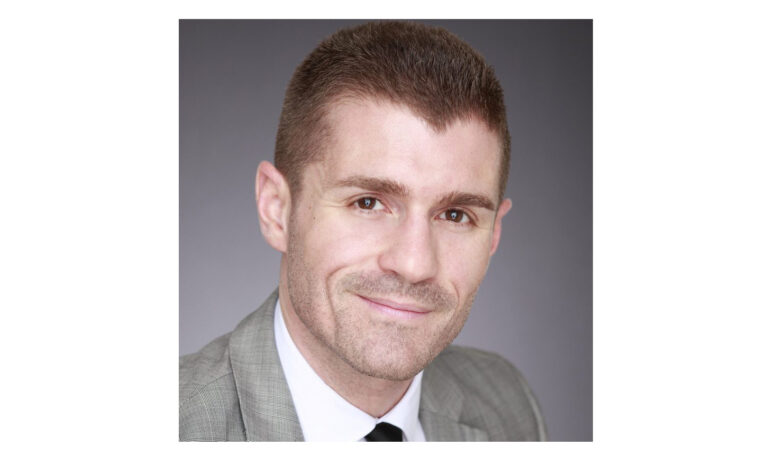
FRESNO, CALIFORNIA – Timothy Yeager graduated from Selma High School in 1998. Selma is a farming town of roughly 24,000 people in California’s Central Valley, surrounded by vineyards, orchards, and the flat agricultural expanse of the San Joaquin Valley. Nobody in his family had gone to college. Twelve years later, in 2010, he graduated from Fresno State with a bachelor’s degree in psychology and a minor in mathematics. What happened in those 12 years is the kind of story a career profile typically skips: the years of working, figuring things out, and arriving at higher education on a timeline that did not follow the four-year conveyor belt.
What Yeager did next was leave. He packed his bags, moved to New York City, and enrolled at Teachers College, Columbia University to pursue a PhD in Applied Behavior Analysis. His goal, as he later wrote, was “to obtain an education to help train practitioners on the best practices for including individuals with disabilities in a general education classroom, and in society as a whole.” From a farming town where no one in his family had a degree to an Ivy League graduate program in the most expensive city in America, the distance was more than geographic.
Over the next several years at Columbia, Yeager earned three master’s degrees from Teachers College, including one in applied behavior analysis. He also obtained four teaching certificates from the New York State Education Department, covering early childhood education from birth through second grade, multiple subjects for grades one through six, and students with disabilities across both age ranges. He completed all of his doctoral coursework in applied behavior analysis at Columbia. The first-generation college student from the Central Valley had become one of the most credentialed clinician-educators in the field.
The Keller School and the Classroom Floor
Yeager’s entry into autism services came on the floor of the Fred S. Keller School, a preschool for children with autism in Yonkers, New York, affiliated with Columbia’s graduate programs. The school, named after the behavioral psychologist who pioneered personalized systems of instruction, is one of the few settings in the country where a clinician-in-training can simultaneously teach in a general and special education classroom, deliver ABA programming, and receive mentorship from researchers working at the frontier of the science. Yeager served as both a credentialed teacher and a BCBA at Keller.
He has described the experience with a directness that distinguishes his public voice from the typical C-suite talking points. “I had a great privilege to work with many incredible children, remarkable mentors, and school districts which promoted inclusive practices,” he wrote in a 2015 post upon returning to California. It was at Keller that Yeager developed his foundational conviction: that the science of behavior analysis should serve inclusion, not operate as a parallel system that segregates children with disabilities from their peers.
“From day 1, it was my goal to obtain an education to help train practitioners on the best practices for including individuals with disabilities in a general education classroom, and in society as a whole.” – Timothy Yeager (2015)
Coming Home to the Central Valley
In 2014, Yeager returned to Fresno. He took on a dual role at Fresno State as Executive Director and Clinical Director of the Behavioral Sciences Institute (BSI), the university’s applied behavior analysis research and training center, and as a professor of special education and early childhood education. The BSI role put him in charge of the Autism Center, a clinical facility serving families in the Central Valley. In his first month, he walked the halls and watched the children. “Seeing so many smiling faces has been a joy,” he wrote. “I look forward to continuing and hopefully adding to this positive environment.”
The homecoming mattered to him. “On a personal note, it is great to be back home with my family and friends, in the Central Valley, assisting the community in which I was born and raised,” he wrote. Yeager brought to Fresno State a teaching technology he had studied at Columbia for four years, one designed to expand how children with autism learn, minimizing their need for direct instruction over time. He planned to bring this approach to the BSI staff and the families they served. The Central Valley, underserved and often overlooked in California’s coastal-focused healthcare infrastructure, was exactly the kind of community where the gap between research and practice was widest.
From 2017 to 2018, Yeager served as Deputy Director and Director of Client Services and Programs at Easterseals Central California, one of the region’s leading disability services organizations. Easterseals, which has operated in the Central Valley since 1948, provides education, outreach, and advocacy for children and adults with disabilities. The role expanded Yeager’s operational scope beyond university-based clinical work to include community-based service delivery at a scale that touched hundreds of families. He then briefly served as Director of Student Services at Kepler Neighborhood School in 2018 before the opportunity at Centria arrived.
Building Clinical Quality at Centria
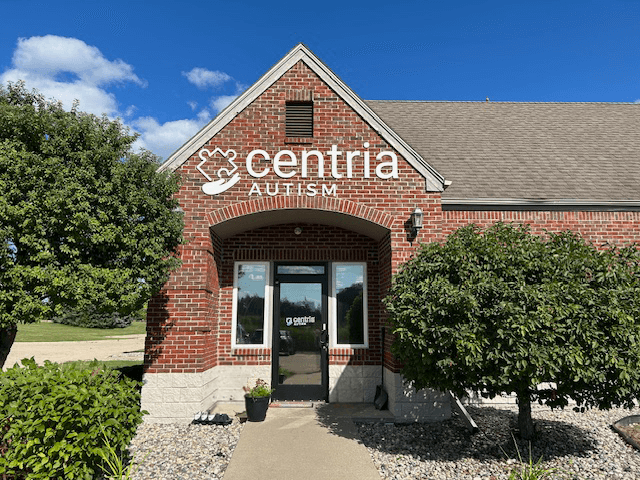
Centria’s autism division, founded in 2010, had grown into one of the largest ABA providers in the country by the time Yeager arrived in 2020, serving thousands of children and families. The company’s roots run even deeper: Centria Healthcare was founded in 2009 by Scott Barry near Detroit, and much of its growth occurred well before private equity entered the picture. Like many healthcare organizations that scale quickly, Centria had drawn its share of public scrutiny and growing pains along the way. It had also, by the time Yeager arrived, made the decision that would define his mandate: to invest in clinical quality at scale.
Yeager joined as vice president of clinical quality and curriculum in 2020, shortly after the change in ownership. His mandate was to build the clinical infrastructure to match the company’s scale: assessment standards, treatment planning, BCBA mentorship, and a values-driven framework spanning the full arc of care. He was elevated to chief clinical officer the following year, overseeing the client and staff experience from intake to discharge across what is now a 12-state operation serving thousands of children and families.
The clinical system Yeager built at Centria is called the “Do Wonders” Framework, a values-based outcomes model that defines what high-quality ABA looks like at every stage of the care continuum. The framework provides an outcomes structure that Centria describes as “both big picture meaningful and sensitive to the therapeutic changes that occur daily.” Aligned to the framework is “Foundations of Care,” an assent-driven therapy model developed by Yeager and Hillary Laney, Centria’s senior vice president of clinical services. The model centers on treating interfering behavior through practical functional assessment and skills-based treatment, with the child’s consent and comfort as a clinical priority, not an afterthought.
The framework runs on Centria’s proprietary software, CareConnect, which Yeager has designed to apply artificial intelligence and machine learning across the hundreds of millions of clinical data points the company captures annually. When Yeager analyzed Centria’s outcomes data after taking the CCO role, he found that the company’s impact did not meet his standards. Change was needed. “As an evidence-based practice, we must integrate research findings with other critical factors,” he wrote publicly. “Research is an important factor but not the only one when deciding what is best to implement.” The willingness to look at his own organization’s data and publicly acknowledge that the numbers demanded change is rare in an industry where clinical leaders often default to defending existing practices.
“We now have a clearly defined framework outlining our expectations for high-quality ABA, from assessment to discharge. The thing that is differentiating us at Centria is that aligned to our system and standards, we have a support infrastructure to help implement this best-in-class therapy…and do it well.” – Timothy Yeager, Chief Clinical Officer, Centria Autism (2022)
Yeager has described being asked to train all of the company’s clinicians, roughly 245 at the time, on the Foundations of Care model within six months, a timeline that seemed impossible. He and his team created what they called a clinical leadership residency, identifying clinicians who had already demonstrated both leadership and competence, reducing their caseloads by at least 50%, and giving them responsibility to mentor their peers. Directors of functional assessment and treatment mentored a new cohort, who in turn trained their local teams. The clinicians were trained on time. The company also launched a 25-week BCBA mentorship program, a practicum and development team, and the HRE Podcast, co-hosted by Yeager and Laney, which features conversations on clinical ethics, mentorship, and compassionate practice.
The Way He Leads
Yeager’s LinkedIn presence is unusual for a C-suite executive in ABA. Where most clinical leaders post about conference appearances and company milestones, Yeager writes about his own failures. In one post, he described presenting a new payment model to his company and noticing the chat filling with questions. Instead of responding with curiosity, he got defensive. His tone went flat. People noticed. He wrote about it publicly, not to perform vulnerability but to model what he asks of his clinicians: self-awareness, accountability, and the willingness to be changed by feedback.
“In his book, The Obstacle is the Way, Ryan Holiday writes: Never forget that within every obstacle is an opportunity to improve our condition,” Yeager wrote in another post. “Looking back, it’s clear I was the obstacle.” He has talked openly about going to therapy, hiring an executive coach, and asking his boss and team for direct feedback. In an industry where leadership often defaults to clinical authority, Yeager’s public self-examination reads differently. It reads like someone who learned the science of behavior change and decided to apply it to himself first.
Colleagues have taken notice. One LinkedIn recommendation reads: “Timothy is one of the most compassionate and innovative advocates for children and all of their educational needs that I have ever had the pleasure of being under supervision. He demonstrated a resilience…” Another noted: “It’s been a pleasure working with Tim and his team as he’s pursued accreditation and worked on raising the bar for clinical quality across the organization.” The consistency of praise from subordinates, peers, and external partners points to a leader whose public vulnerability is matched by operational follow-through.
Off the Clock
Yeager lives in Fresno with his wife, Tiffany, and their four children. When he is not running clinical operations across 12 states, Yeager can be found cheering his daughter on the soccer pitch, chasing his three boys around the park, or cooking a meal from scratch for friends and family. He is a dedicated podcast listener whose tastes range from pop culture to whiskey tasting. His CEO, David Harbour, reportedly sends him TikToks as a learning tool, a detail Yeager shared publicly and without irony. The range, from Columbia University doctoral work to TikTok-as-professional-development, captures something essential about how Yeager operates: he takes science seriously without taking himself too seriously.
AT A GLANCE
| Subject: | Timothy Yeager, M.S., BCBA |
| Title: | Chief Clinical Officer, Centria Autism |
| Education: | BA, Psychology and Mathematics, Fresno State (2010); three master’s degrees from Columbia Teachers College, including ABA; completed doctoral coursework in ABA at Columbia (ABD) |
| Teaching credentials: | Four NY State certificates: Early Childhood Ed (Birth-Gr. 2), Multiple Subjects (Gr. 1-6), Students with Disabilities (Birth-Gr. 2 and Gr. 1-6) |
| Career arc: | Fred S. Keller School (NYC) > BSI/Fresno State (Exec. Dir.) > Easterseals Central CA (Deputy Dir.) > Kepler School > Centria Autism (VP, then CCO) |
| Centria scale: | 12 states; thousands of children served; among the largest ABA providers in the U.S. |
| Clinical frameworks: | “Do Wonders” values-based outcomes model; “Foundations of Care” assent-driven therapy model |
| Training programs: | Clinical leadership residency (peer-mentorship model); 25-week BCBA mentorship; HRE Podcast |
| Ownership: | Founded 2009 by Scott Barry (autism division 2010); backed by Capricorn/Martis Capital and Lorient Capital (2016); sold to Thomas H. Lee Partners (2019, ~$415M) |
| Personal: | First-gen college grad from Selma, CA; father of four (a daughter and three sons); lives in Fresno with his wife, Tiffany |
| Interests: | Cooking from scratch, soccer sidelines, podcasts (pop culture to whiskey tasting), Ryan Holiday reader |
| Key quote: | “I was the obstacle.” – Timothy Yeager, on self-awareness in leadership |
SOURCES & REFERENCES
| 1. | Centria Autism. “Clinical Leadership.” Company website. Accessed May 2026. https://centriahealthcare.com/clinical-leadership/ |
| 2. | Centria Autism. “Centria Autism Bolsters Clinical Leadership, Focused on Leading Clinical Excellence.” June 2022. https://centriahealthcare.com/resources/centria-autism-bolsters-clinical-leadership-focused-on-leading-clinical-excellence/ |
| 3. | Do Better Collective. “Building a Foundation for Effective and Ethical Treatment of Interfering Behavior.” Course page. https://dobettercollective.com/course/building-a-foundation-for-effective-and-ethical-treatment-of-interfering-behavior/ |
| 4. | Behavioral Sciences Institute at Fresno State. Timothy Yeager bio. May 2015. https://bsifresnostate.wordpress.com/2015/05/26/summer-hours/ |
| 5. | The Org. Timothy Yeager, Chief Clinical Officer, Centria Healthcare. Accessed May 2026. https://theorg.com/org/centria-healthcare/org-chart/timothy-yeager |
| 6. | OPEN MINDS. “Centria Autism Opened 12 New Locations in 2024.” March 2025. https://openminds.com/market-intelligence/bulletins/centria-autism-opened-new-12-locations-in-2024/ |
| 7. | Moelis & Company. Centria Healthcare (Lorient Capital and Martis Capital) sale to Thomas H. Lee Partners. December 2019. https://www.moelis.com/transactions/centria-healthcare-a-portfolio-company-of-lorient-capital-and-martis-capital-sale-to-thomas-h-lee-partners-l-p/ |
| 8. | Detroit Free Press / Associated Press. Coverage of Centria Healthcare; the Michigan attorney general closed its main investigation without charging the company. March 2019. https://www.freep.com/story/news/investigations/2019/03/21/investigation-centria-healthcare-closed/3212293002/ |
| 9. | LinkedIn. Timothy Yeager posts and profile. Accessed May 2026. https://www.linkedin.com/in/tmyeager/ |
| 10. | PE Hub. Thomas H. Lee Partners buys Centria in $400 mln-plus deal. December 2019. https://www.pehub.com/thomas-h-lee-partners-buys-centria-in-400-mln-plus-deal/ |
| 11. | Centria Autism LinkedIn company page. Accessed May 2026. https://www.linkedin.com/company/centria-healthcare |
| 12. | Timothy Yeager LinkedIn post. “BCBA Clinical Summit.” November 2022. https://ba.linkedin.com/posts/tmyeager_bcba-clinical-summit-with-dr-adithyan-rajaraman-activity-7003721940188217344-j7nQ |