Ontario’s Transitional Window Closes
LITTLETON, COLORADO – Residents of Ontario can no longer apply for BCBA or BCBA-D certification or take the board’s exam. The province’s transitional registration window closed on June 30, 2026, and the board’s cutoff began July 1. Those already certified can continue to renew with the board, but Ontario law requires them to register with the province’s College to practice. No new credentials will be issued in Ontario.
Ontario, not the board, started this process. The province’s Psychology and Applied Behavior Analysis Act, 2021, which took effect on July 1, 2024, made “behavior analyst” a restricted title and assigned the profession to the College of Psychologists and Behavior Analysts of Ontario. The BACB stated in a September 2023 notice that Ontario’s final requirements are not based on BACB standards, certifications, or certification tiers.
The College’s Transitional Route 1 gave certified behavior analysts a two-year path to register for independent practice. That route and Transitional Route 2 both closed on June 30, 2026. Now new applicants must register through the College’s Entry Level Route or Labor Mobility Route. Entry Level applicants must pass the OEPPABA, an exam created by the College for regulation instead of the board’s exam.
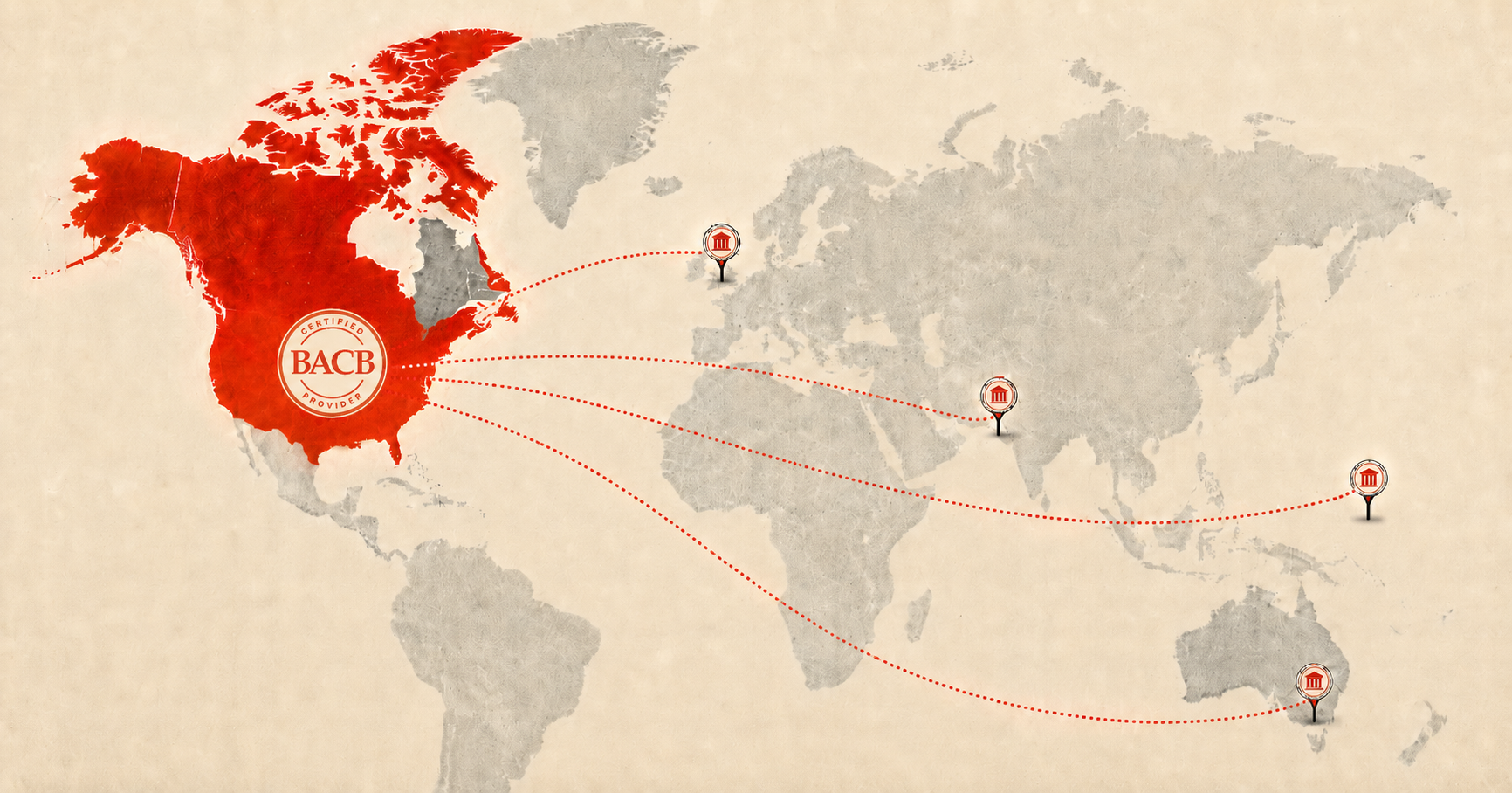
Ontario is the second region to close this year. The United Kingdom closed on January 1, 2026. Australia will follow on January 1, 2027. After that, the board will only accept new applications from the United States and Canada, except Ontario.
“Regulators may be disinclined to recognize standards that are not necessarily specific to their country and its practices. This is perhaps the greatest barrier to the globalization of a profession.” – Behavior Analyst Certification Board, Recent Changes to the BACB’s International Focus (2019)
A Retreat Announced in 2019
The end of international applications has been known since December 30, 2019. After a board vote in August 2019, the BACB announced it would stop accepting initial certification applications from people outside the US and Canada starting January 1, 2023. Anyone certified before that date can keep their credential in perpetuity. The board said Canada remained because of the similarities between the Canadian and U.S. educational, regulatory, and economic environments.
The board gave several reasons for this change. No major profession uses one set of global requirements. Translated exams were not in high demand and ended in 2022. Security, privacy, and trademark rules differ by country. Accreditation by the National Commission for Certifying Agencies requires uniform standards, so the board could not adjust requirements for each country.
The board said only a small number of people were affected. As of January 2020, 3.7% of all BACB certificants lived outside the US and Canada. For the main credential, 1,803 out of 37,859 BCBAs worldwide were outside these countries.
Two exceptions made the change less abrupt. The UK got a three-year extension through 2025, and Australia subsequently rejoined the BACB’s jurisdiction. Both exceptions were temporary.
What Replaces the Board Abroad
In the UK, the board refers people to the UK Society for Behavior Analysis, which has its own credentialing system and a register of behavior analysts accredited by the Professional Standards Authority. The society’s postgraduate credential, the UKBA(cert), requires a master’s degree with approved study in behavior analysis or positive behavior support, plus proof of supervised practice. UK residents certified before January 1, 2026 can keep recertifying with the BACB.
Australia’s exit happened because the new organization asked for it. The Association for Behavior Analysis Australia, approved in 2023 as a member of the National Alliance of Self Regulating Health Professions, created its own certification system and asked the BACB to withdraw. According to the board’s July 2024 newsletter, it “agreed to discontinue offering new BACB certifications in Australia effective January 1, 2027.”
Ontario took more steps than the other countries. It is the only one of the three to make the profession part of its laws, set up a health regulatory college, restrict the title, require registration, and create its own exam. The BACB staff met with the College over several years as the rules were developed and ended its Ontario notice on a positive note.
“Although we wish that the BACB had a different future in Ontario, we are pleased to see the province’s initiative in establishing regulatory requirements that meet its unique needs.” – Behavior Analyst Certification Board, Upcoming Changes to BACB Certification in Ontario (2023)
For new credentials, the board now supports rather than certifies abroad. The BACB says it has worked with colleagues in over 70 countries since 2019, offering advice, resources, and small grants to national groups creating their own credentialing programs. Its February 2026 newsletter lists these grants as part of what certificant fees pay for. Its July 2024 update mentions a three-tier certification program in France and India’s parliament recognizing Behavioral Analyst as a behavioral health sciences profession.
A Credential Concentrated at Home
The board’s numbers have continued to grow during this change. As of July 1, 2026, there are more than 85,000 BCBAs, about 5,200 BCaBAs, and just over 260,000 RBTs (registered behavior technicians). Since January 2020, the number of BCBAs has more than doubled, and the number of RBTs has nearly quadrupled.
The assistant level shows a different trend. BCaBA (board-certified assistant behavior analyst) certification has grown about 30% in the past six and a half years, from 4,044 to 5,246, about one BCaBA for every sixteen BCBAs. Ontario’s law did not include this tier: the province only regulates postgraduate-level practitioners, and the BACB put Ontario’s BCaBAs and RBTs on voluntary inactive status in July 2024.
For those practicing abroad, the board’s guidance has been the same since 2019. They can keep their credential wherever they live, but must clearly state that the BACB does not currently issue certification in that country.
Two important dates are left. Australian residents must submit an approvable application by December 1, 2026, and those with exam authorizations must pass by December 31, 2026. On January 1, 2027, the withdrawal announced in December 2019 will be finished.
AT A GLANCE
| Ontario BCBA/BCBA-D applications: | Closed July 1, 2026; CPBAO Transitional Routes 1 and 2 closed June 30, 2026 (BACB; CPBAO) |
| UK applications: | Closed January 1, 2026; existing certificants may continue to recertify (BACB) |
| Australia applications: | Close January 1, 2027; approvable application due December 1, 2026; examinations passed by December 31, 2026 (BACB, July 2024) |
| Jurisdiction after January 1, 2027: | New applications accepted only from the US and Canada outside Ontario (BACB) |
| Certificants as of July 1, 2026: | 85,587 BCBAs; 5,246 BCaBAs; 260,174 RBTs (BACB Certificant Data) |
| Outside US and Canada, January 2020: | 3.7% of all certificants; 1,803 of 37,859 BCBAs (BACB, December 2019) |
| Ontario regulator: | College of Psychologists and Behaviour Analysts of Ontario; own examination (OEPPABA); “Behaviour Analyst” title restricted since July 1, 2024 (CPBAO) |
| UK successor credential: | UKBA(cert), postgraduate level, from the UK Society for Behaviour Analysis; register accredited by the Professional Standards Authority (UK-SBA) |
| Australia successor: | Association for Behaviour Analysis Australia certification, via the National Alliance of Self Regulating Health Professions (BACB, July 2024) |
| BACB international role now: | Consultation, resource development, and small grants to national associations; contact with more than 70 countries since 2019 (BACB) |
SOURCES & REFERENCES
| 1. | Behavior Analyst Certification Board. “Upcoming Changes to BACB Certification in Ontario.” September 2023. https://www.bacb.com/wp-content/uploads/2023/09/Upcoming-Changes-to-BACB-Certification-in-Ontario_230918.pdf |
| 2. | Behavior Analyst Certification Board. BACB Newsletter, February 2026: “Recent & Upcoming Changes to BACB Requirements” and “FAQs about BACB Fees.” https://www.bacb.com/wp-content/uploads/2026/02/BACB_February2026_Newsletter-260126-a.pdf |
| 3. | College of Psychologists and Behaviour Analysts of Ontario. “Applied Behaviour Analysis: General Information.” Accessed July 2026. https://cpbao.ca/aba/aba-information-and-updates/ |
| 4. | Behavior Analyst Certification Board. “International Development & Support.” Updated June 2026. https://www.bacb.com/international-development/ |
| 5. | Behavior Analyst Certification Board. BACB Newsletter, July 2024: “International Development Update” and “Changes to BACB Certification in Australia.” https://www.bacb.com/wp-content/uploads/2024/07/BACB_July2024_Newsletter-241021-a.pdf |
| 6. | Behavior Analyst Certification Board. “Recent Changes to the BACB’s International Focus.” December 30, 2019; updated February 2023. https://www.bacb.com/recent-changes-to-international-focus/ |
| 7. | UK Society for Behaviour Analysis. “UKBA(cert).” Accessed July 2026. https://uk-sba.org/ukbacert/ |
| 8. | Behavior Analyst Certification Board. “BACB Certificant Data.” As of July 1, 2026. https://www.bacb.com/bacb-certificant-data/ |