
An AI-First Rebuild
ARTEMIS — the company did not start as an AI story. Founded about five years ago, Artemis began by providing back-office billing and revenue-cycle services for ABA providers, according to the company. The insight that reshaped it was that most back-end billing problems actually begin on the front end — in prior authorization, credentialing, and documentation.
That realization pushed Artemis to build a full practice-management platform that ties the clinical tools to billing, scheduling, and the back office. Over the past year, it went a step further and rebuilt the software with an AI-first approach, threading automation through nearly every stage of a provider’s workflow.
Founder Thomas John frames the company as a modern alternative to the incumbent. Artemis aims at the same end-to-end coverage as market leaders, but with current technology and a simpler interface, targeting middle-market providers with high session volumes that want to automate repetitive manual work. AI now appears across the product line: an intelligent scheduler, AI-generated treatment plans, session notes, prior-authorization checks, and denial management.
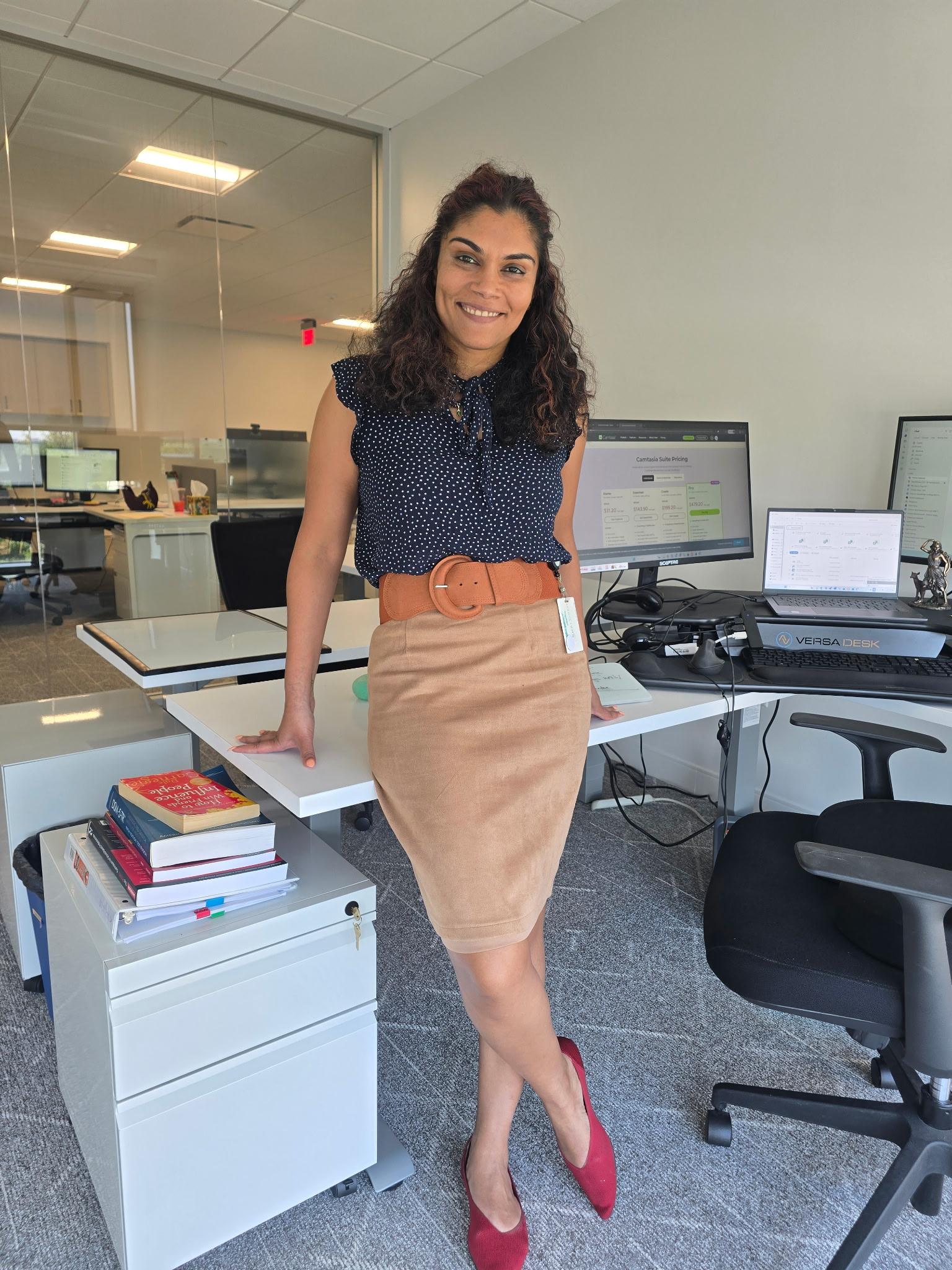
The push toward AI came from the technology side, and it met resistance from the clinical side — including from the company’s own board-certified behavior analyst. Shridhevi Veerappan, who was hired to demonstrate the product and lend clinical expertise in conversations with other analysts and practice owners, was skeptical. A year and a half ago, she had never used ChatGPT. She worried the technology would not understand ABA, would not be empathetic, and would not weigh the context and variables a clinician considers before making a decision. She agreed to try it and give feedback.
Treatment Plans, Shaped Like a Learner
The first real test was treatment plan generation, which Veerappan called a big-ticket item. Early results were rough: the AI hallucinated and produced made-up content, the kind of output that confirms a skeptic’s fears. The fix was less a technical patch than a change in method.
Veerappan decided to treat the AI the way she would treat a learner and to apply shaping. She broke tasks into small steps, wrote extremely literal instructions, and refined her prompts around a hundred times until the output matched what she wanted. The clinical framework she already knew turned out to be the one that worked on the software.
“It’s like shaping behavior. I approached it as a learner. These are the skills it has. I’m going to teach it and instruct it. A very smart learner, though; it learns really fast.” — Shridhevi Veerappan, BCBA, Artemis (2026)
The payoff was time. Veerappan says a treatment plan that used to take roughly eight hours now takes three to four, conservatively, with the clinician’s review and sign-off. The tool builds individualized plans from assessment data and structured inputs while leaving the BCBA in full clinical control. Veerappan now uses AI across her work, including the BCBA reports she signs.
The Design Rule: Assistant, Not Partner
The speed only matters to Veerappan because the guardrails hold, and that principle is built into how Artemis constructs the clinical tools. Every AI step has guardrails, compliance checks, and human review. The clinician keeps the final say on everything the software produces.
“It’s my assistant, not my partner. I am the decision maker.” — Shridhevi Veerappan, BCBA, Artemis (2026)
The prior-authorization feature shows the pattern. An AI agent checks a provider’s package against a repository of payer requirements and flags the gaps — but it does not make the changes itself. “This is where we want AI to stop and the clinician to get in,” Veerappan said. The clinician fixes the gaps and resends.
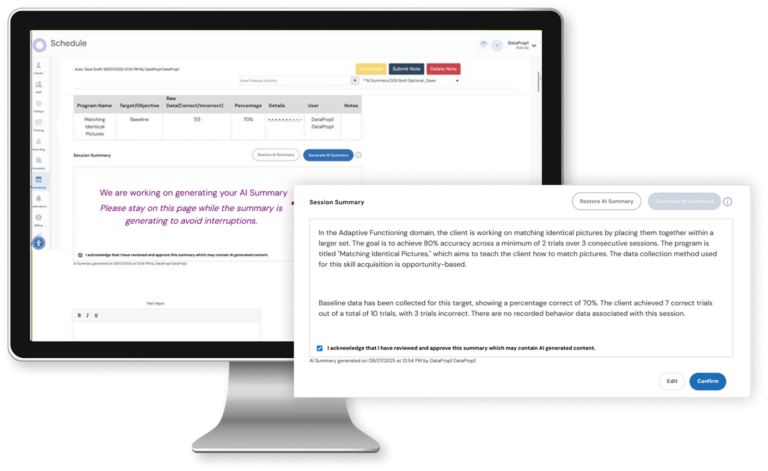
The session-note tool follows the same logic. It generates a tailored summary for each session from the data collected and the clinician’s anecdotal notes, then runs the note through an audit against payer requirements and clinical tone before it is marked ready to bill. The aim, Veerappan said, is to avoid the identical, duplicative notes that trigger claim denials, while keeping a person in the loop at the end.
Compliance as a Feature
Artemis is also pitching its platform against a risk that already exists in many practices. Veerappan’s argument to clinicians who distrust AI starts with a reality check: many of them are already using open tools like ChatGPT, Gemini, and Claude informally, and that is the actual compliance exposure. Even with names masked, putting client information into a public forum raises confidentiality and ethical problems.
The Artemis alternative is a controlled, HIPAA-compliant environment in which protected health information is masked, so that only the content reaches the language model and no client data is stored or backed up. The company’s framing is that a governed tool is safer than the shadow use already happening. Beyond compliance, Veerappan’s advice is to treat AI as a choice rather than a mandate, the same way behavior analysts give learners choices. “Try it, like tasting food for tolerance,” she said. Clinicians keep the final say, and if they do not like what the tool does, they can decline to use it or teach it to do better.
The Scheduler and the RBT Coach
Automation extends into operations. Artemis’s intelligent scheduler matches learners and providers on fit as well as availability and credentials, rather than simply filling open slots. “It’s not just the filling, it’s the fitting,” Veerappan said.
The next piece is aimed at the people who deliver most of the treatment. Artemis is testing an RBT Coach, an AI tool that observes for treatment integrity, such as whether reinforcers are delivered on time and the treatment plan is followed, and gives registered behavior technicians real-time feedback. BCBAs are required to provide only a small share of direct supervision, Veerappan noted, while RBTs are with learners every day. The coach is meant to make coaching more frequent and supervision more efficient, while watching for the burnout that drives technicians out of the field.
Artemis released Clinical 2.0 the week of the interview. Most of its AI features are live now; the RBT Coach remains in testing.
AT A GLANCE
| Company: | Artemis, ABA practice-management and clinical software (artemisaba.com) |
| Founded: | About 5 years ago; began as back-office billing and RCM for ABA providers (company, interview, 2026) |
| Founder: | Thomas John |
| Strategic shift: | Rebuilt platform with an AI-first approach over the past year |
| Market position: | Middle-market alternative to CentralReach |
| AI treatment plans: | Roughly 8 hours reduced to 3–4, with clinician review and sign-off (Veerappan, interview, 2026) |
| Core design rule: | Clinician keeps final sign-off; AI is “assistant, not partner” |
| Prior authorization AI: | Validates a package against payer requirements and flags gaps; does not make the changes |
| Session-note AI: | Drafts a tailored note, then audits it against payer rules and clinical tone before billing |
| Compliance model: | HIPAA-compliant environment; PHI masked, no client data stored or backed up |
| In testing: | RBT Coach — real-time treatment-integrity feedback for RBTs |
| Latest release: | Clinical 2.0, released the week of the interview |
SOURCES & REFERENCES
| 1. | Shridhevi Veerappan, board-certified behavior analyst, Artemis. Interview with BreakingNewsABA, July 2026. |
| 2. | Thomas John, founder, Artemis. Interview with BreakingNewsABA, July 2026. |
| 3. | Artemis. “AI Treatment Plans for ABA.” Product page. Accessed July 2026. https://www.artemisaba.com/ai-treatment-plan |
| 4. | Artemis. “ABA Practice Management Software.” Product page. Accessed July 2026. https://www.artemisaba.com/products-and-services/practice-management |