
The Development
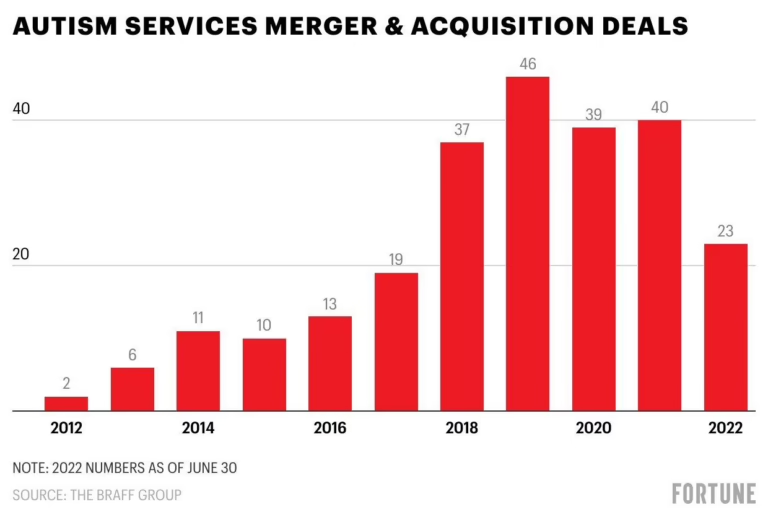
The mental and behavioral health sector has emerged as a significant magnet for private equity (PE) investment, driven by robust long-term growth rates and a post-pandemic surge in demand. According to Andy Parker, a corporate finance partner at Cooper Parry, the sector is experiencing continuous deal flow, with its tightly defined services often overlapping with other attractive investment areas like occupational health and education. Jim Weight, managing partner at Weight Partners Capital, further emphasized that while healthcare generally attracts investment, the mental health subsector stands out for its “even greater long-term growth rates.”
This momentum is fueled by several factors: a higher incidence and improved diagnosis of mental health conditions, increased reimbursement from both public and private insurance payers, and a growing willingness among individuals to self-fund treatment when public options are limited. Mainstream investors are particularly drawn to “asset-lite” segments, such as care delivery technology providers and employer-funded mental health businesses that support staff well-being, as these often avoid direct exposure to government funding or complex regulations. Specialist healthcare investors, however, continue to engage with more intricate, government-reimbursed mental healthcare segments. PE Hub anticipates sustained strong activity in these diverse areas through 2026.
Six Key Deals Shaping the Landscape
Over the past four months, the mental and behavioral health sector has seen a flurry of private equity activity, with six notable deals highlighting the diverse investment strategies at play.
1. Sheridan Capital Partners Acquires ICANotes: In January, Sheridan Capital Partners made its inaugural investment in electronic healthcare record (EHR) software by acquiring ICANotes. Based in Baltimore, ICANotes provides cloud-based software designed to streamline clinical workflows for a wide range of behavioral healthcare professionals, including psychiatrists, therapists, counselors, social workers, and nurse practitioners. The software primarily supports psychotherapy but is also utilized in the treatment of substance-use disorder, post-traumatic stress disorder, couples counseling, group therapy, and rehabilitation programs. The acquisition underscores a growing PE interest in the technological infrastructure supporting behavioral health services.
2. Renovus-Backed Behavioral Framework Acquires Autism ETC: This deal, also announced in January, represents a direct expansion within the Applied Behavior Analysis (ABA) therapy market. Behavioral Framework, a prominent ABA therapy provider operating across Maryland, Virginia, and Washington, D.C., acquired Autism ETC. Autism ETC, founded in 2007 and based in Nashville, specializes in center-based ABA therapy and autism diagnostic services, with five clinics spanning Tennessee and Arizona. This acquisition signifies continued consolidation and growth within the ABA therapy provider space, driven by PE backing from Renovus Capital Partners.
3. LDC Invests in myHappymind: LDC made a minority investment in myHappymind in January, a Cheshire, UK-based company founded in 2017. myHappymind delivers digital mental health and well-being programs to over 1,900 schools across the UK. Its offerings include comprehensive libraries of ready-made lesson guides and resources, aimed at fostering a culture of positive mental well-being for children and young people in educational and family settings. This investment highlights the increasing focus on preventative and early intervention mental health solutions, particularly within the education sector.
4. Thurston Group-Backed Arc Health Acquires Clarity Counseling Center: In November, Arc Health, a community of mental healthcare providers based in Ohio and backed by Thurston Group, expanded its footprint by acquiring Clarity Counseling Center. Clarity is an outpatient therapy-based practice located in Wilmington, North Carolina. This acquisition brought Arc Health’s network to 23 partner practices operating across 92 locations nationwide, demonstrating a strategy of aggregating and scaling outpatient mental health services.
5. Carlyle Group Completes Buyout of Tarrytown Expocare Pharmacy: Carlyle Group finalized its acquisition of Tarrytown Expocare Pharmacy from Sheridan Capital Partners in November, with Sheridan retaining a minority stake. Tarrytown, an Austin-based long-term care pharmacy, is uniquely focused on serving the intellectual and developmental disability (IDD) and behavioral health communities. This deal underscores the value placed on specialized ancillary services that cater to specific, high-needs populations within the broader behavioral health landscape.
6. Baum-Backed Level Education Group Acquires Triad: In October, Level Education Group (LEG), supported by Baum Capital Partners, acquired Triad. Triad, based in Idaho, is a significant provider of exam preparation, continuing education, and career resources for behavioral and mental health professionals. LEG, headquartered in South Jordan, Utah, also specializes in continuing education for mental health and nursing professionals. Triad’s portfolio includes well-known brands such as AATBS, Academic Review, Gerry Grossman Seminars, Taylor Study Method, and the Wellness Institute. The inclusion of AATBS, a prominent resource for Applied Behavior Analysis certification exam preparation, makes this acquisition particularly relevant to the ABA community, signaling PE interest in the professional development infrastructure supporting behavior analysts.
Market Impact
These transactions collectively illustrate a robust and diversifying private equity interest in the behavioral health market. For ABA providers, the acquisition of Autism ETC by Behavioral Framework signals continued consolidation and growth opportunities, potentially leading to increased access to capital for expansion and service enhancement. The investment in ICANotes highlights the growing importance of specialized EHR systems for efficient clinic operations, while the acquisition of Triad, with its AATBS brand, underscores the value of professional development and credentialing resources for behavior analysts. Overall, the influx of PE capital is reshaping the competitive landscape, fostering innovation in service delivery, and expanding the reach of behavioral health interventions, including ABA.
What’s Next
The trend of private equity investment in mental and behavioral health is projected to continue its strong trajectory through 2026. This sustained activity is expected to drive further consolidation, technological integration, and diversification of services across the sector. ABA professionals and clinic owners should anticipate ongoing shifts in market dynamics, including potential for partnerships, acquisitions, and increased competition, alongside opportunities for leveraging new technologies and expanded professional resources.
Fast Facts
| Key Point | Why It Matters for ABA |
|---|---|
| Six significant PE deals in mental/behavioral health over four months | Highlights strong investor confidence and market activity |
| “Long-term growth rates” cited as primary PE attraction | Indicates sustained investment interest in the sector |
| Behavioral Framework (ABA provider) acquired Autism ETC (ABA provider) | Direct consolidation and expansion within the ABA therapy market |
| Level Education Group acquired Triad, including AATBS brand | PE investment in professional development and credentialing for behavior analysts |
| ICANotes acquisition signals focus on behavioral health EHR technology | Growing importance of tech infrastructure for ABA clinic efficiency |
Expert Perspective
The mental health subsector offers even greater long-term growth rates, driven by increased diagnosis, improved reimbursement, and private funding willingness.
Source: pehub.com