
The Development
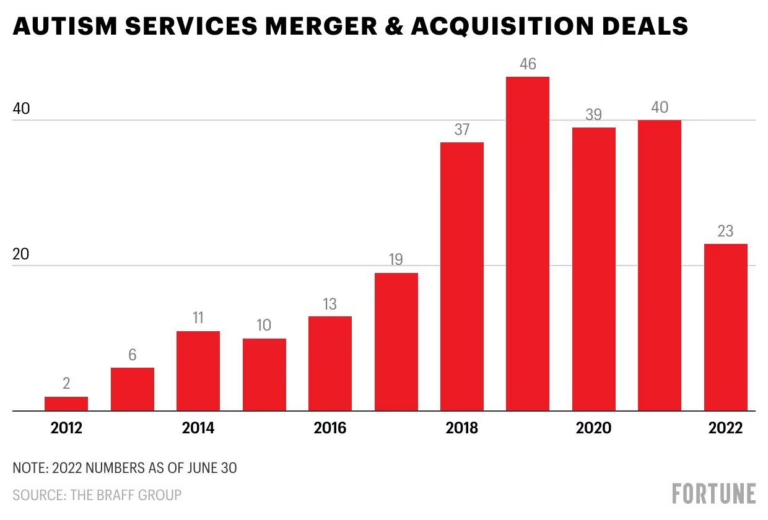
Private equity firms are increasingly investing in clinics that provide assessments and treatment for neurodevelopmental conditions like ADHD and autism across the United Kingdom. This investment has transformed the sector into a multimillion-pound industry, largely driven by the National Health Service’s (NHS) growing reliance on these privately-run services. The Times has reported that this dependence has led to an ‘exponential’ increase in ADHD-related spending, which is significantly impacting NHS budgets.
A key factor in this market expansion is the ‘Right to Choose’ initiative. This policy grants over half a million individuals in England, currently on NHS waiting lists for ADHD assessments, the legal right to seek private evaluations, with the NHS covering the associated costs. This mechanism has directly contributed to a proliferation of private healthcare providers, many of whom have attracted substantial investment from private equity firms seeking rapid financial returns.
Market Impact
The influx of private equity into neurodevelopmental services has profound implications for the UK healthcare landscape. While it addresses the immediate need for assessments due to long NHS waiting lists, it also creates significant financial pressures on the public health system. Rebecca Gray, mental health director representing NHS Providers and the NHS Confederation, articulated the challenges faced by NHS leaders. She noted that severe financial constraints necessitate a strategic prioritization of resources, focusing on individuals with the most critical needs for ADHD assessments.
Gray emphasized that NHS leaders must deploy resources as efficiently as possible, directing attention to high-risk demographics. These groups include children and young people, individuals presenting with co-occurring mental health conditions, and those with substance use issues. This prioritization suggests that while private providers expand, access for less severe cases within the NHS system may become more challenging, further pushing patients towards the privately funded ‘Right to Choose’ pathway.
What’s Next
The current trajectory indicates a continued expansion of the private sector in neurodevelopmental assessments, sustained by both patient demand and the ‘Right to Choose’ policy. This model, while alleviating some immediate pressure on NHS waiting lists, will likely maintain or increase the financial burden on NHS budgets as it continues to fund private assessments. Industry observers anticipate that private equity interest will persist, given the demonstrated profitability and the structural support provided by government initiatives. The long-term implications for equitable access to care and the sustainability of NHS funding models remain a critical area of focus for policymakers and healthcare leaders.
Fast Facts
| Key Point | Why It Matters for ABA |
|---|---|
| Over 500,000 on NHS ADHD waiting lists | Highlights immense demand for neurodevelopmental assessments, driving growth in private behavioral health services. |
| ‘Right to Choose’ initiative | Empowers patients to access private assessments, with NHS funding, directly fueling the expansion of private ABA-adjacent clinics. |
| Private equity investment in clinics | Indicates significant financial interest and capital flow into the behavioral health sector, influencing service delivery models and market consolidation. |
Expert Perspective
NHS leaders face immense pressure to allocate resources effectively, prioritizing the most vulnerable amidst surging demand for neurodevelopmental assessments.
Source: nhsconfed.org