

The Proposal
WASHINGTON – Some of the nation’s largest health insurers want the federal government to set national rules for who can provide applied behavior analysis.
The Association for Behavioral Health and Wellness (ABHW), a trade group whose members cover about 200 million people, has sent four policy recommendations and a supporting framework to the federal government on how payers should manage autism therapy benefits, according to Behavioral Health Business. Members include Aetna, Optum, Centene, Carelon Behavioral Health, and Kaiser Permanente.
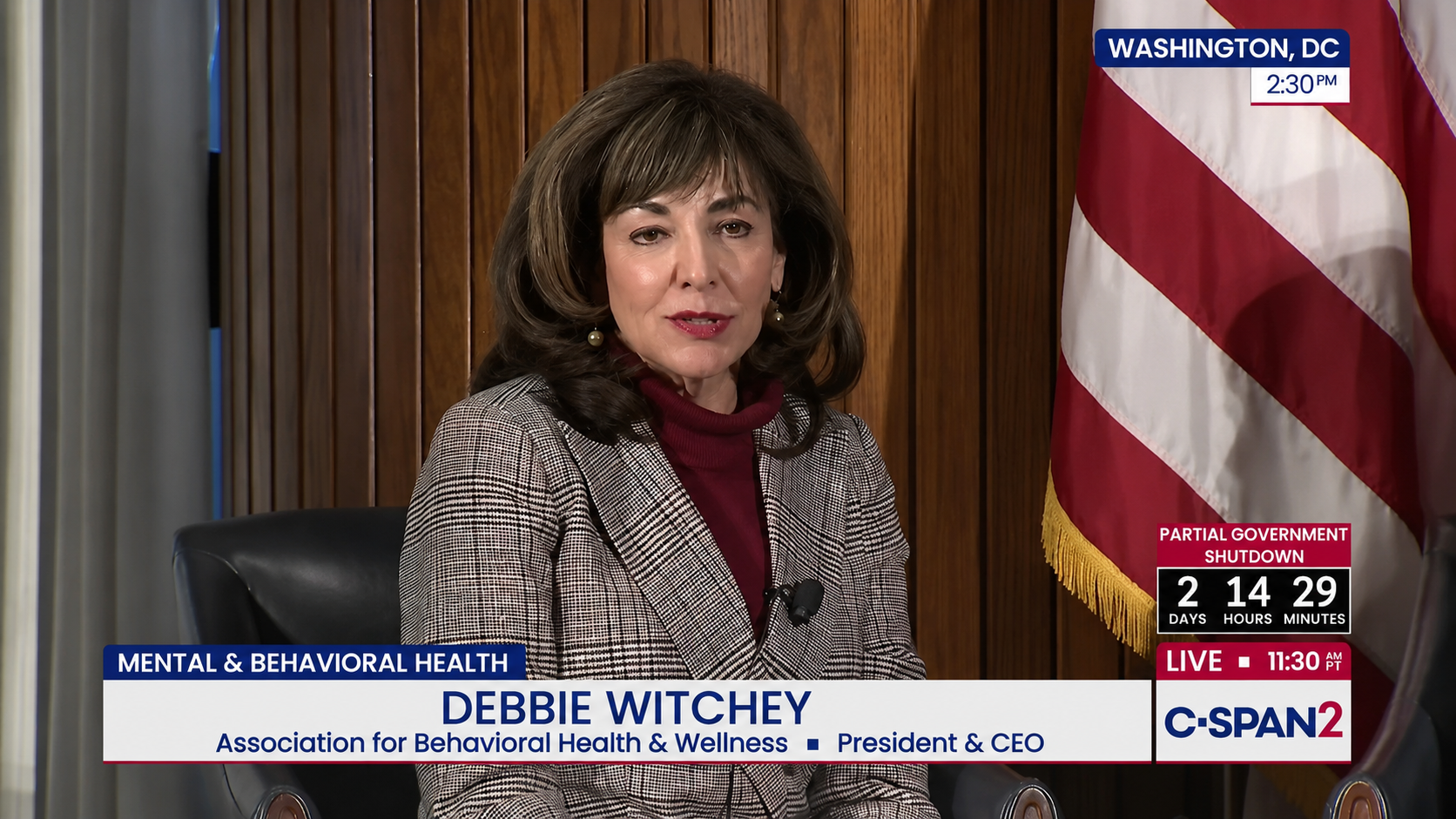
The recommendations focus on ABA, asking Washington to bring more structure to an industry that, according to the plans, has outgrown its current oversight. “There’s been a lot of pressure on health plans to cover everything, and they didn’t, until recently, have a way to evaluate what was good and bad care,” said Debbie Witchey, ABHW’s president and CEO. “I think they have a much better idea of that from the last few years.”
The Four Recommendations
Credentialing is the main focus. ABHW wants CMS to establish a federal credentialing standard that all ABA providers must meet to participate in Medicaid. This would include checking licenses and doing thorough background checks, and would apply to both organizations and individual clinicians.
The second recommendation is about staffing. The association wants CMS to set standard supervision ratios and rules for assigning treatment to registered behavior technicians (RBTs), who are entry-level staff providing most direct ABA hours. They also want RBTs to get their own National Provider Identifiers and enroll as rendering providers so their billed hours can be tracked in claims data.
The third recommendation calls for more oversight when the same group both diagnoses autism and bills for treatment. ABHW says providers and organizations that do both should be watched more closely.
The fourth recommendation is broader. ABHW wants CMS to “work with stakeholders to develop evidence-based, standardized clinical and quality measures.” The group says its framework is based on individualized treatment, proven assessment tools, and the standardization of care and quality outcomes. It also calls for regular checks to ensure therapy remains effective.
“Health plans have been pressured to cover services without asking any questions, and that made more sense because we were still trying to learn what works and what doesn’t.” – Debbie Witchey, President and CEO, ABHW (2026)
What It Would Mean for Operators
A federal credentialing standard would replace a patchwork of systems. Behavior analysts are licensed in over 33 states, each with different requirements, and there is no national credentialing standard, according to the Behavior Analyst Certification Board. A CMS standard linked to Medicaid would set one national bar and, for the first time, formally credential organizations as well as individual clinicians. This would clarify what the proposal means in practice.
The RBT rules would have the biggest impact on daily operations. If technicians must have their own NPIs and enroll as rendering providers, payers could see each person’s billable hours, which many operators do not track now. Standardized supervision ratios would limit the number of technicians that one board-certified analyst can oversee, which would affect clinical models and profit margins.
The industry already has its own quality systems. The Council of Autism Service Providers (CASP) set up the Autism Commission on Quality in 2022 to accredit ABA organizations. CASP has asked CMS, TRICARE, and the Labor Department to accept its clinical practice guidelines as the standard of care. A federal credentialing rule would either add to or replace this voluntary system, showing how the new rules could change current oversight.
ABHW said it will create more detailed policy recommendations and strengthen the ideas behind them. The OIG’s audit series, with four states completed and four more in progress, is set to continue through fiscal 2027, maintaining the push for stronger oversight.
AT A GLANCE
| What was submitted: | Four policy recommendations plus a framework to the federal government on ABA benefits (Behavioral Health Business, May 2026) |
| Who submitted it: | ABHW, whose members (Aetna, Optum, Centene, Carelon, Kaiser Permanente and others) cover roughly 200 million people (ABHW, 2026) |
| Credentialing ask: | Federal standard via CMS as a Medicaid condition; licensure verification, background checks, organization-level credentialing (BHB, May 2026) |
| Staffing ask: | CMS-set supervision ratios; RBTs to obtain individual NPIs and enroll as rendering providers (BHB, May 2026) |
| ABA spending growth: | Claims volume up 267% (2019–2024); up 298% in Medicaid (Trilliant Health, December 2025) |
| OIG audit findings: | Improper Medicaid autism-services payments of at least $56M (IN), $18.5M (WI), $45.6M (ME, community support), $77.8M (CO); all 100 sampled enrollee-months flagged in each (HHS-OIG, 2024–2026) |
| Minnesota fraud case: | Two charged in an alleged $46.6M EIDBI scheme; program claims rose from ~$600K (2018) to ~$400M (2025) (DOJ, May 2026) |
| Licensure today: | Behavior analysts licensed in 33+ states; no federal credentialing standard (BACB, 2026) |
| What is next: | ABHW to detail specific recommendations; CMS contractor building integrity “toolkit”; OIG series set to finish FY2027 (BHB; HHS-OIG) |
SOURCES & REFERENCES
| 1. | Larson, Chris. “Exclusive: ABHW Makes Its Case for Standardizing Autism Therapy Protocols.” Behavioral Health Business. May 26, 2026. bhbusiness.com |
| 2. | Association for Behavioral Health and Wellness. “ABHW Supports CMS Efforts to Ensure Integrity in ABA Programs.” Press release. May 21, 2026. abhw.org |
| 3. | Association for Behavioral Health and Wellness. “About ABHW” and “Members.” abhw.org. Accessed July 2026. |
| 4. | U.S. Department of Justice. “Minnesota Health Care Fraud Takedown Results in Charges Against 15 Defendants for Over $90M in Fraud.” May 21, 2026. justice.gov |
| 5. | Behavioral Health Business. “ABA Volume Skyrocketed by 267% from 2019 to 2024” (Trilliant Health analysis). December 22, 2025. bhbusiness.com |
| 6. | HHS Office of Inspector General. “Indiana Made at Least $56 Million in Improper Fee-for-Service Medicaid Payments for ABA…” A-09-22-02002. December 16, 2024. oig.hhs.gov |
| 7. | HHS Office of Inspector General. “Wisconsin Made at Least $18.5 Million in Improper Fee-for-Service Medicaid Payments for ABA…” A-06-23-01002. July 10, 2025. oig.hhs.gov |
| 8. | HHS Office of Inspector General. “Maine Made at Least $45.6 Million in Improper Fee-for-Service Medicaid Payments for Rehabilitative and Community Support Services…” A-01-24-00006. January 16, 2026. oig.hhs.gov |
| 9. | HHS Office of Inspector General. “Colorado Made at Least $77.8 Million in Improper Fee-for-Service Medicaid Payments for ABA…” A-09-24-02004. February 25, 2026. oig.hhs.gov |
| 10. | HHS Office of Inspector General. Work Plan: “Audits of Medicaid Applied Behavior Analysis for Children Diagnosed With Autism.” Series SRS-A-25-029. Accessed July 2026. oig.hhs.gov |
| 11. | Behavior Analyst Certification Board. “U.S. Licensure of Behavior Analysts.” bacb.com. Updated June 2026. |
| 12. | Council of Autism Service Providers. “The Autism Commission on Quality” and advocacy pages. casproviders.org. Accessed July 2026. |







Join the discussion ▾