New Rules on Top of Cuts
OMAHA, NEBRASKA – Independent ABA providers in Nebraska can no longer bill Medicaid directly for services they deliver at a school, and the number of weekly therapy hours a child can receive before prior authorization is required dropped from 30 to 20, under coverage changes that took effect July 1.
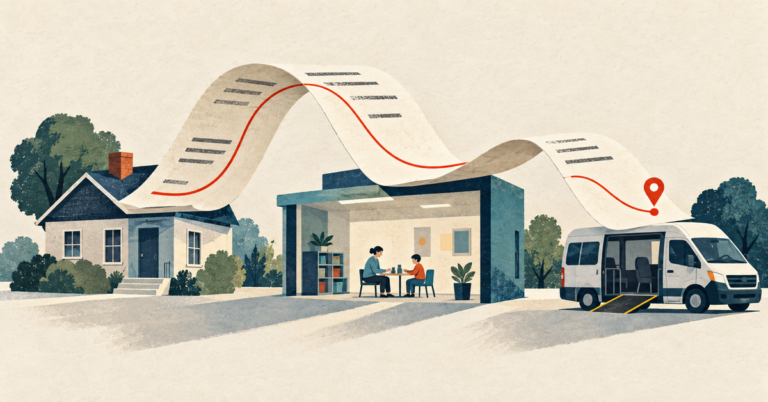
The school billing change arrived in Provider Bulletin 26-06, issued June 1 by Director Drew Gonshorowski. ABA delivered at a school is included in school-based services reimbursement and is the responsibility of the school under Nebraska Administrative Code and the Medicaid State Plan. The lower prior authorization threshold appears in a summary of changes provided by the Department of Health and Human Services, and the bulletin says the state’s updated ABA service definitions carry the same July 1 effective date.
Nebraska began cutting ABA last August to save money, and DHHS said it adjusted rates last year to address what it called out-of-control costs. The largest of the new changes fall on children covered by Medicaid, and providers and parents told the station that a significant portion of children in ABA are covered by Medicaid, at least in part.
What Else Changed July 1
The list of changes DHHS provided runs well past the hour threshold and the school billing rule. Registered behavior technicians (RBTs) must now be supervised in person for at least one hour per month, and the treating licensed behavior analyst or psychologist must provide at least one hour of in-person treatment per month. The treatment plan must now be signed by clinicians involved in its assessment and development.
A few of the changes loosen requirements rather than tighten them. Teacher training can now count toward the required caregiver training hours, according to the department’s summary. Individuals receiving waiver services from the Division of Developmental Disabilities may now receive ABA assessments, regardless of age, and for waiver recipients the assessment may be used for non-ABA purposes, according to the bulletin.
DHHS also thanked providers who submitted feedback on the draft definitions during an open review period, and said the comments informed the final versions.
Families and Providers Adjust
According to WOWT, providers and parents say the changes have left them scrambling, and the effects will not be felt evenly.
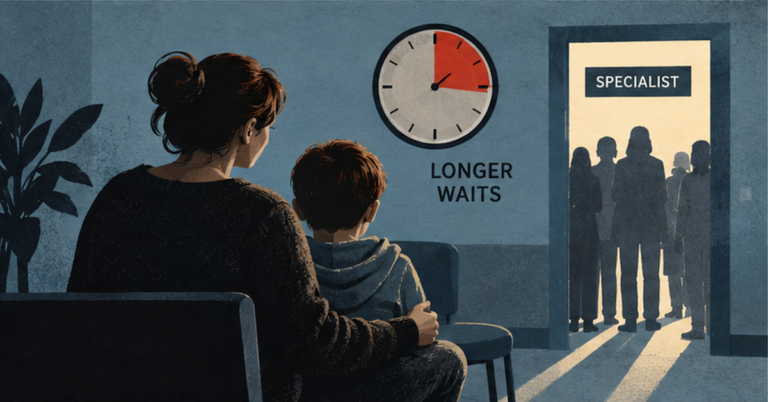
At Behaven Kids, an Omaha ABA clinic, 54 percent of the children it serves need more than 20 hours of services a week, which means more than half of its caseload will now need prior authorization to maintain care at its current level. Owner Themis Gomes described a very challenging year and said the clinic is doing everything within its capacity to maintain access to care for the children it serves.
For families, the school rule may carry the longest-term effects. Meghan Moore is a single parent whose 7-year-old son, Wyatt, has autism and is nonverbal, and she has spent nearly a year trying to get him ABA services after the therapy made a difference for him when he was younger. Her plan was treatment at school, so Wyatt could keep participating in a classroom setting while getting support, and the billing restriction complicates that path. Going forward, families who want ABA during the school day will depend on schools to provide the service themselves, since school-based ABA must now be reimbursed by schools and meet Medicaid’s service definition. Moore said the school restriction is a worry for her.
The State’s Case
DHHS frames the changes as protection for the program’s future rather than a rollback. Nebraska Medicaid spending on ABA grew by more than 2,000 percent since 2020 by the department’s own tracking, growth it says no state or federal program can sustain without putting future access to services at risk.
The department says it remains committed to keeping high-quality ABA available to children and families on Medicaid, and it cites last year’s rate adjustments and this year’s coverage changes as steps toward the same goal: a benefit that remains sustainable. Hence, services continue for Nebraska families for years to come.
The department describes that cost-control effort as ongoing. For providers and families, the more immediate question is how the 20-hour threshold and the school rule work in practice now that the new service definitions are in effect.
AT A GLANCE
| Effective date: | July 1, 2026 (DHHS Provider Bulletin 26-06, June 1, 2026) |
| Prior authorization threshold: | Cut from 30 to 20 hours of ABA per week (DHHS summary to WOWT) |
| School-based services: | Independent providers may not bill Medicaid directly; ABA at school is the school’s responsibility (Bulletin 26-06) |
| New supervision minimums: | At least 1 hour per month of in-person RBT supervision; at least 1 hour per month of in-person treatment by the treating LBA or psychologist (DHHS summary to WOWT) |
| DD waiver recipients: | May receive ABA assessments (HCPCS 97151, 97152) regardless of age (Bulletin 26-06) |
| Medicaid ABA spending: | Up more than 2,000% since 2020 (DHHS spokesperson, July 2026) |
| Provider impact: | 54% of children served by Behaven Kids need more than 20 hours a week (owner Themis Gomes, WOWT) |
| Prior state action: | ABA cuts began August 2025; DHHS adjusted rates last year (WOWT; DHHS statement) |
SOURCES & REFERENCES
| 1. | Taher, Zena. “Nebraska ABA therapy regulations undergo more changes.” WOWT First Alert 6 (Omaha). July 9, 2026. wowt.com/2026/07/10/nebraska-aba-therapy-regulations-undergo-more-changes/ |
| 2. | Nebraska Department of Health and Human Services. Provider Bulletin 26-06: Updated Service Definition and Changes to Billing and Utilization of Applied Behavior Analysis Services. June 1, 2026. dhhs.ne.gov/Medicaid Provider Bulletins/Provider Bulletin 26-06.pdf |