

The Case the Journal Built
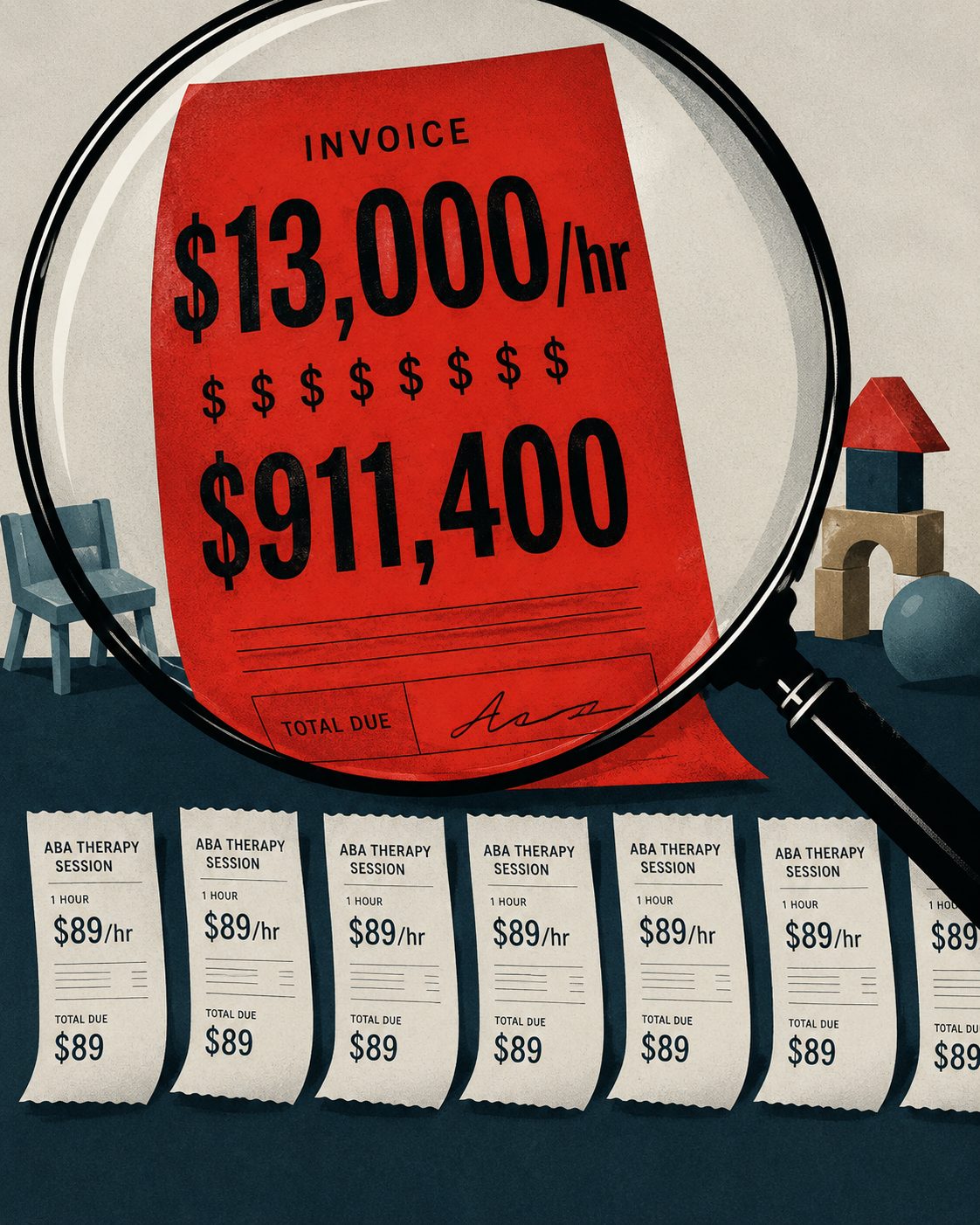
NEW YORK — The numbers in the Journal’s June 1 investigation are damning. According to billing records the Journal reviewed, a Brooklyn-based out-of-network operator sent a New Jersey mother a bill for $911,400 for her three-year-old’s home therapy. On one August day, an affiliate billed $30,500 for 70 minutes of work with a child. The company billed health plans rates as high as $13,000 an hour and has sued at least 19 families and employers to collect.
Things like this should never happen. A provider that bills a bank teller nearly a million dollars, then offers to settled by Zelle, is not practicing medicine. It is running a collections operation. Insurers are right to investigate it, and the families caught in it deserve every protection the law allows.
The problem is not the reporting on this one company. The problem is the headline stretched over it: that the autism-therapy business is booming and so is the billing abuse, as if the second clause followed from the first. The Journal documented one aggressive out-of-network biller and a handful of extreme charges, then presented them as the shape of an entire field.
A daily charge of $30,500 for 70 minutes is not a data point about an industry. It is a data point about one company that the industry, the certifying board, and the payers all want gone.
The Number the Article Skipped
The figure that should anchor the story appears two-thirds of the way down, stated once and never weighed. The national average that major insurers pay an in-network provider for these services is $89 an hour, according to pricing data the health-tech firm Turquoise analyzed for the Journal itself. That matches my own experience, and the experience of hundreds of ABA owners I know.
Set that next to the operator’s $13,000 an hour. The Journal does the math in its own copy: roughly 150 times the average in-network rate. A number that sits 150 times above the norm is, by definition, not the norm. It is the outlier the rest of the distribution is measured against.
An unexpected and improper $9,000 bill to a middle-income family would be outrageous. A $911,400 invoice sent to a bank employee is something else entirely, because no one expects it to be paid. Former employees told the Journal the company’s high prices gave it leverage in negotiations with insurers. The seven-figure bill is a pressure instrument, not a price.
This is the move that runs through the piece. A reader is shown the most extreme bill available, with nothing to indicate how rare or how common it is. What share of the roughly $108 million in annual private spending the article cites actually traces to phantom services or padded hours? How many of the field’s providers bill anything close to $13,000 an hour? The article never says. Presenting a more realistic picture would make the story less sensational, and would not fit the narrative the Journal chose. Aetna’s own figure, a 300 percent rise in investigations that found likely fraud or abuse, counts investigations, not validated dollars, and offers nothing to measure it against.
The honest version of the sentence: a small number of bad actors are billing extraordinary rates, and the average in-network claim is paid at $89 an hour. Both halves are in the Journal’s reporting. Only the first half made the headline.
Fraud and Documentation Are Not the Same
The article also folds three different things into one word. An audit finding of poor documentation, an insurer’s allegation of abusive billing, and proven fraud are distinct categories with distinct burdens of proof. The piece moves among them freely, so that a provider who filed a sloppy session note reads as kin to a company sued for inventing home addresses.
The legitimate side of the field has said as much, on the record. After the Journal’s March Medicaid investigation, the Council of Autism Service Providers, the sector’s nonprofit trade association, agreed that fraud occurs and has to stop, and said it had been working with the HHS Office of Inspector General for months. It also drew the line the Journal will not.
“It’s important to recognize that many compliance issues are simply incorrect documentation of legitimate, preauthorized services.” — Council of Autism Service Providers (March 2026)
That distinction is not a technicality. A preauthorized service, delivered to a real child, recorded on a note that an auditor later finds incomplete, is a paperwork failure to be fixed. It is not a $911,400 invoice mailed to a family that could never pay it. Lumping the two together does not expose abuse. It blurs the line between the providers who need better templates and the ones who need to be removed from the system.
What the Field Actually Looks Like
The lightly regulated charge rests on a category error. Daycare oversight licenses the facility, the building and the people who run it. Healthcare oversight licenses the practitioner. The Journal notes that a daycare faces more licensing scrutiny than an autism-therapy clinic, but that comparison measures the wrong thing. In ABA, the regulation attaches to the clinician, not the storefront. Each behavior analyst holds an individual professional credential, and in most states an individual license to practice, the same model that governs nurses, physical therapists, and psychologists. A clinic is not the unit that gets licensed, so noting that the clinic is not licensed like a daycare misses how the field is actually controlled.
On that clinical side, this is one of the more credentialed corners of pediatric care. More than 81,000 board-certified behavior analysts held certification at the end of 2025, each bound to an enforceable ethics code that the Behavior Analyst Certification Board updated in 2022. Becoming a BCBA requires a master’s degree, up to 2,000 hours of supervised fieldwork, a national exam, and continuing education in ethics to recertify. CASP has also publicly endorsed accreditation requirements at the provider level, the kind of facility-side safeguard the Journal’s own comparison points toward.
Above that sit voluntary accreditation through CASP’s Autism Commission on Quality, practice guidelines built on decades of peer-reviewed evidence, and treatment-intensity recommendations that are explicitly individualized rather than the blanket 40-hour weeks the coverage implies. The evidence base for ABA in early childhood is among the most studied in developmental care. A reader of the Journal’s piece would not learn that any of this exists.
That is the cost of the outlier frame. The Journal reports the company did not join insurer networks, did not follow documentation standards, and billed through more than 100 limited-liability companies, a structure insurers told the Journal makes questionable billers harder to track. It is, in other words, defined by its distance from the field’s own standards. Using it to characterize the field inverts the story.
Why the Framing Matters
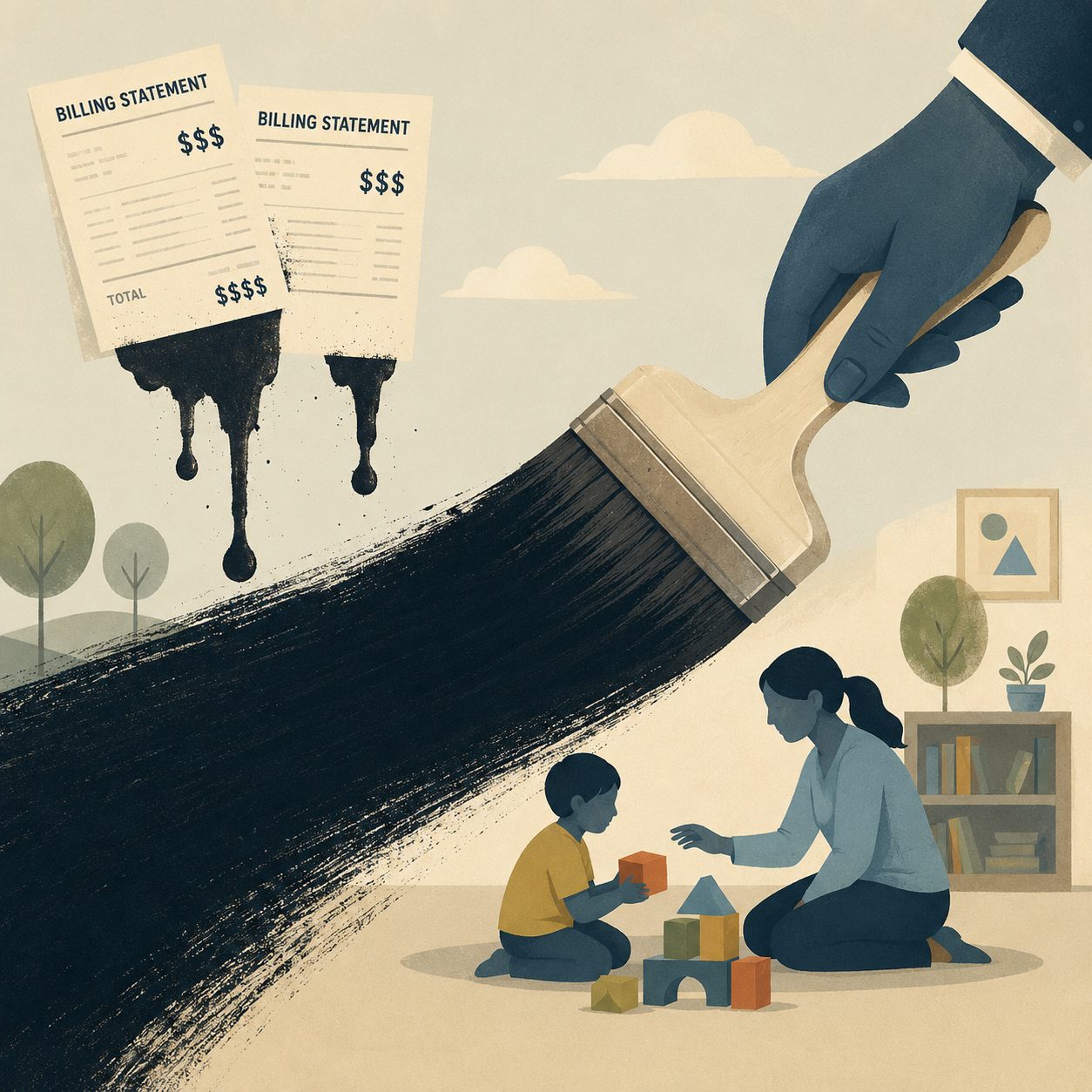
Fraud in ABA is real, and weak state oversight has let bad actors in ABA. That is a legitimate, serious story, and the Journal deserves credit for the document work behind its reporting. None of this commentary asks for less scrutiny of predatory billing. It asks for proportion, for a picture that shows how rare these actors are against the size of the field.
The WSJ article provides political cover to politicians who seek to gut programs, cut costs, and strip autistic children of services that state mandates require insurers to cover. It contributes to a political and regulatory climate that risks reducing access to effective ABA therapy at scale.
When a national publication takes the worst available actor and prints its bills under a headline about the whole business, the families who read it do not come away distrusting one rogue biller. They come away distrusting the in-network BCBA down the street who bills $89 an hour and follows every rule. The New Jersey mother in the Journal’s story has now pulled her son out of therapy altogether. The outlier did that to her. The framing risks doing it to thousands more.
Indiana paused new autism-therapy enrollments in its Medicaid program last week, and CMS is weighing tighter documentation and accreditation requirements that CASP has publicly endorsed. The fix for bad actors is targeted program integrity, not a verdict on a field that 81,000 certified clinicians practice inside the rules. The next federal guidance is the place to watch whether regulators can tell the difference. The Journal, this week, did not.
AT A GLANCE
| Article subject: | Wall Street Journal, “The Autism-Therapy Business Is Booming — and So Is the Billing Abuse,” June 1, 2026 |
| Outlier rate cited: | Up to $13,000 per hour billed by one Brooklyn-based out-of-network operator (WSJ, June 2026) |
| In-network benchmark: | $89 per hour national average paid to in-network providers (Turquoise analysis for WSJ, 2026) |
| Gap between the two: | Roughly 150x the average in-network rate (WSJ, June 2026) |
| Headline surprise bill: | $911,400 sent to one New Jersey family; later grown to $916,000 (WSJ, June 2026) |
| Single-day charge: | $30,500 for 70 minutes of therapy, or $436 per minute (WSJ, June 2026) |
| Certified analysts: | 81,566 board-certified behavior analysts at end of 2025 (BACB, 2025 data) |
| Ethics code: | BACB Ethics Code for Behavior Analysts, in effect January 1, 2022 |
| Industry position: | CASP agrees fraud must stop, but says many flagged issues are documentation errors on legitimate, preauthorized services (March 2026) |
| Regulatory next step: | Indiana pausing new ABA Medicaid enrollments; CMS weighing tighter documentation and accreditation rules |
SOURCES & REFERENCES
| 1. | The Wall Street Journal. “The Autism-Therapy Business Is Booming — and So Is the Billing Abuse.” June 1, 2026. |
| 2. | Turquoise Health pricing analysis performed for The Wall Street Journal, cited in the June 1, 2026 article: $89 per hour national average in-network rate; the profiled out-of-network operator billed roughly 150 times that figure. |
| 3. | Council of Autism Service Providers. “CASP Responds to Wall Street Journal Articles.” March 12, 2026. https://www.casproviders.org/news/casp-responds-to-wall-street-journal-articles |
| 4. | Behavior Analyst Certification Board. BACB Certificant Data / 2025 Data: 81,566 BCBAs certified as of year-end 2025. https://www.bacb.com/bacb-certificant-data/ |
| 5. | Behavior Analyst Certification Board. Ethics Code for Behavior Analysts, effective January 1, 2022. https://www.bacb.com/ethics-information/ethics-codes/ |
| 6. | Council of Autism Service Providers. Applied Behavior Analysis Practice Guidelines for the Treatment of Autism Spectrum Disorder, 3rd ed. April 29, 2024. https://www.casproviders.org/asd-guidelines |
| 7. | The Wall Street Journal. Prior investigation of ABA Medicaid billing (Medicaid claims up to $340,000 per patient per year), March 2026, referenced in the June 1, 2026 article. |