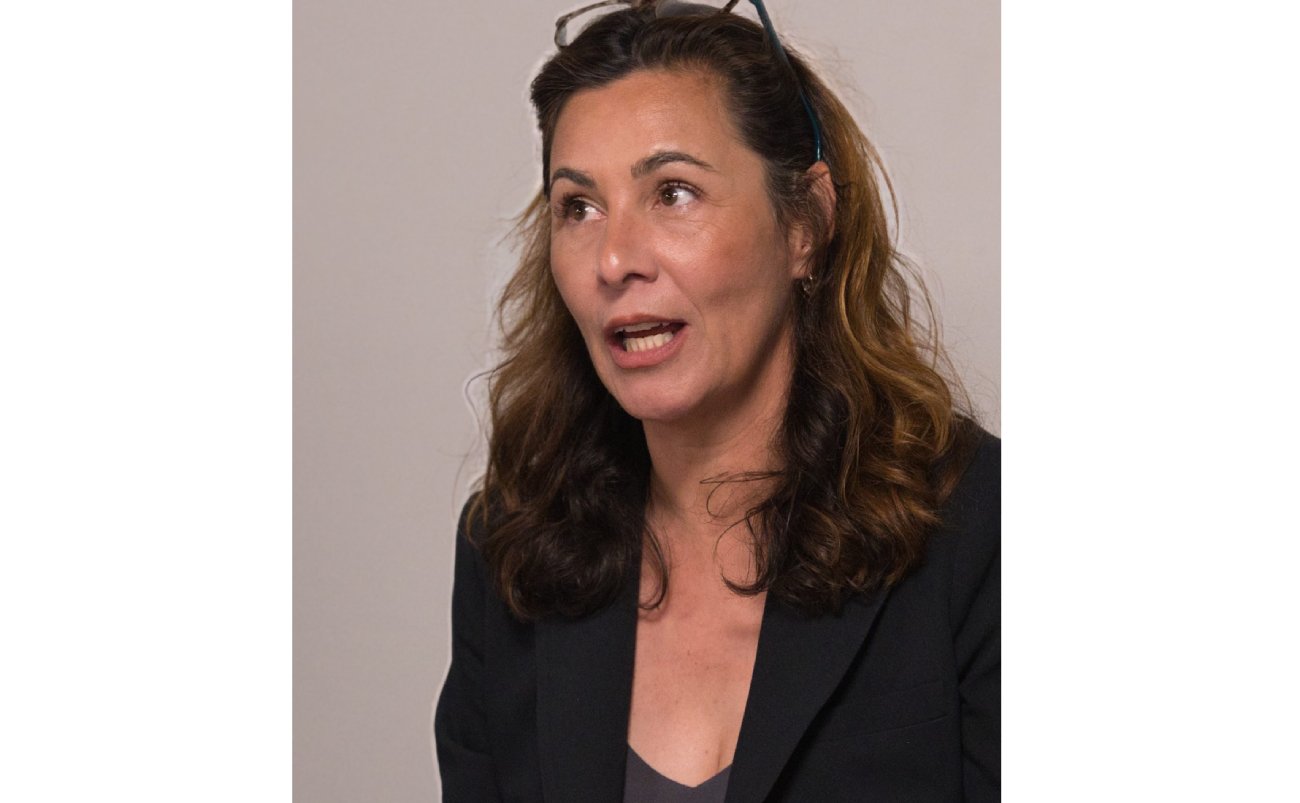
A Boise BCBA, building for the hours between sessions
MERIDIAN, IDAHO. In November 2025, the Idaho Department of Health and Welfare moved to end Medicaid coverage of applied behavior analysis as a managed-care medical benefit, redirecting the service into a state-run developmental program called Children’s Habilitation Intervention Services. Yrenka Lolli-Sunderlin, who has run BCBA-led services in three states since 2011, was on Boise television within weeks calling the change discriminatory and warning that roughly 80 percent of her clients would be affected.
She was also, by then, deep into building a tool for exactly the kind of moment the policy was about to create.
Lolli-Sunderlin is the founder and CEO of Sunderlin Behavioral Interventions, a private agency she opened in Ventura County, California fifteen years ago and has since expanded into the Boise, Portland, and Vancouver, Washington markets. She is also the developer of CareBridge Copilot, a behaviorally structured educational tool that uses narrow AI to give caregivers guidance in the hours when therapists are not in the room. The product is in development with ongoing field input.
The company calls the broader strategy a Hybrid Care Model: clinicians at the center of every service, with AI handling data, reporting, and progress tracking in the background. CareBridge Copilot is the caregiver-facing piece. It is being designed to sit on a parent’s phone between sessions and walk them through a behavioral moment without trying to be therapy.
“If behavioral science only exists inside sessions, we are leaving a lot of impact on the table.” Yrenka Lolli-Sunderlin, Founder and CEO, Sunderlin Behavioral Interventions (2026)
That framing puts Lolli-Sunderlin in an unusual position. The clinical work she has built her career on is being squeezed by Medicaid changes, the federal Medicaid reductions tied to the One Big Beautiful Bill Act signed in July 2025, and the workforce shortages that have shaped the industry for a decade. The software work she is now layering on top is being built into a market where most ABA technology is coming from venture-backed software companies and from founders who are not BCBAs.
A clinician building software inside a category that mostly buys it
Most of the AI showing up in ABA right now is being built by software vendors, not clinicians. CentralReach, the dominant practice-management platform in the field, rolled out its CR Care360 suite and an AI note co-pilot in 2024 and has continued to add AI features through 2025. Catalight, the nonprofit clinical research arm aligned with Easterseals Northern California, has been publishing studies on hour-utilization optimization. A separate consumer product, Autism Copilot, was built by a speech-language pathologist and markets itself directly to families. The clinician-founder building software is the exception, not the pattern.
Lolli-Sunderlin is positioning CareBridge inside that exception. Her training is the long version: a bachelor’s in psychology from the University of La Verne, a master’s in applied behavior analysis from California State University, Los Angeles, where she studied under Henry D. Schlinger Jr., Michele Wallace, and Randy Campbell, and additional training under Kari Berquist in Acceptance and Commitment Therapy, Pivotal Response Treatment, and PECS. She holds the BCBA and the Idaho LBA, served three years as adjunct faculty at National University in Camarillo teaching the BCBA course sequence, and is a UCLA PEERS-certified provider for the social skills curriculum developed by Elizabeth Laugeson.
The company itself remains small relative to the platforms now defining the category. Sunderlin Behavioral is privately held, family-run, and not on the location-count rankings that track Hopebridge, BlueSprig, Caravel, or Action Behavior Centers. Brian Sunderlin, her husband, is her business partner. Operations cover center-based, in-home, school-based, community, and telehealth services across the three states, with English- and Spanish-language delivery in each market.
That last detail matters. Spanish-language parent education has been part of her practice since the California years, when she ran workshops in Ventura County, Los Angeles, and later Boise. The CareBridge tool is being designed to extend that same orientation: lower the activation energy for caregivers who are not native English speakers and not credentialed in behavior analysis, but who are doing the bulk of the day-to-day work between sessions.

The squeeze the whole field is fighting
The market context Lolli-Sunderlin is building into is the most disrupted ABA reimbursement environment in at least a decade. The U.S. ABA market is valued at roughly $7.97 billion in 2025 and projected to reach about $9.96 billion by 2030, with autism diagnosed in roughly 1 in 31 children according to the Centers for Disease Control and Prevention. Demand is up. So is regulatory pushback on how that demand has been billed.
Idaho is the front line. The state’s Medicaid spending on the codes that included ABA grew from $918,000 in fiscal 2021 to $10.3 million in fiscal 2025, a 1,017 percent increase, which the state cited as part of the rationale for moving the benefit out of managed care. Effective December 1, 2025, the Idaho Department of Health and Welfare ended Magellan Healthcare’s authorization to reimburse the relevant CPT codes and shifted the service into the Children’s Habilitation Intervention Services program, where it must be billed under HCPCS codes that, advocates say, were not designed for ABA. Trade press has called Idaho the first state to fully reclassify the benefit.
Other states are cutting differently. Nebraska reduced direct-therapy reimbursement by 48 percent in 2025. North Carolina’s Medicaid ABA spending climbed from $122 million in fiscal 2022 to a projected $639 million in fiscal 2026, a 423 percent increase, and the state attempted a 10 percent rate reduction that providers challenged in court. Indiana spending has grown roughly 2,800 percent in recent years, and a state working group has proposed lifetime hour caps and a temporary moratorium on new ABA sites. The federal layer hardened in July 2025, when the One Big Beautiful Bill Act lowered Medicaid funding mechanisms including provider taxes and state-directed payments, leaving states to absorb the math.
Workforce conditions add the second pressure. The Behavior Analyst Certification Board reported roughly 75,600 active BCBAs in the United States as of mid-2025 against more than 103,000 open BCBA-level postings at the end of 2024. Smaller centers report annual turnover near 80 percent. Larger agencies report 100 percent or more. Roughly 93 percent of behavioral health workers report some level of burnout in industry surveys, with 62 percent in the moderate-to-severe range.
Layered on top, private equity has acquired more than 500 ABA centers in the past decade, with nearly 80 percent of those transactions clustered between 2018 and 2022. The platforms that resulted are now navigating their own sponsor cycles. Behavioral Innovations sold for around $300 million in 2024, GTCR acquired Caravel from Frazier Healthcare Partners in July 2024, and BlueSprig brought in a new chief executive in March 2025. The result is an industry being asked to demonstrate value to payers while its biggest operators are pricing in their next exits.
Caregivers are the residual variable. They wait for authorizations, manage the schedule, and absorb the hours when sessions cannot run. Lolli-Sunderlin has been writing about that residual for the past year, in trade-style essays on the company blog and in a thought piece titled “When Support Is Delayed: Helping Families Navigate Autism Services During Care Gaps.” The argument she makes there is the same one she is making with the product.
“Families aren’t waiting for innovation. They’re already using whatever is available. The question is whether what they’re using is actually built for behavior.” Yrenka Lolli-Sunderlin, Founder and CEO, Sunderlin Behavioral Interventions (2026)
What CareBridge will and will not do, by Lolli-Sunderlin’s telling
In a December 2025 post laying out the project publicly, Lolli-Sunderlin framed CareBridge Copilot in restrictive terms. She wrote that it is not a therapy platform, not a substitute for professional guidance, not an automation layer, and not a diagnostic tool. The description on the company site uses the same language: an educational concept in development with ongoing field input by The Yrenka Method and Sunderlin Behavioral Interventions, designed for reflection prompts, micro-lessons, and behavior-based reminders, built under HIPAA-aligned privacy standards.
The narrow-AI framing is doing two jobs at once. It distinguishes the product from general-purpose large language models, which Lolli-Sunderlin has cautioned against in writing because of their tendency to give caregivers confident answers in a domain where confident answers can do harm. It also keeps the tool inside the educational lane that the field’s ethics codes treat as separate from clinical practice. Caregiver education is something BCBAs already do. Doing it through software, with structure, is the part that is new.
Around CareBridge, Lolli-Sunderlin has been building a set of adjacent assets that share the same posture. The Yrenka Method is her broader behavior-based coaching system, focused on decision-making and self-regulation. With her son Gavin Sunderlin, she launched the Social Skills Projects in 2023, a children’s book series on flexible thinking and perspective-taking aimed at ages 5 to 8, and co-authored a workbook for teens and young adults that combines ACT and ABA methods. UCLA PEERS Certified Provider status anchors the social-skills group programming inside the clinical practice. None of these are AI products. All of them are caregiver-and-client tools designed to function outside scheduled session time.
What Lolli-Sunderlin does not claim. CareBridge Copilot does not diagnose, does not treat, does not generate clinical recommendations, and does not replace a behavior analyst. Sunderlin Behavioral does not market itself as the largest ABA provider in any of its three states, the cheapest, the most academically pedigreed, or the only operator using AI. It is not making a play to compete with CentralReach or any of the platform-management vendors. The argument Lolli-Sunderlin presses publicly is narrower: that behavioral science is most useful when it can be applied in the moment, and that the moments that matter most for families are the ones happening when no clinician is scheduled.
What is next, with the Idaho test running in real time
The immediate work is operational. Sunderlin Behavioral has to move clients through the Idaho transition, recode billing under the CHIS program, and hold the staffing roster in three states through the reimbursement compression. The company has been continuing to recruit BCBAs and behavior therapists for the Boise, Portland, and Vancouver markets through 2026. The structural risk is the one every multi-state operator faces this year: that the floor under Medicaid reimbursement keeps moving.
On the product side, CareBridge Copilot is in development with ongoing field input from clinicians, teachers, and family-support professionals, what Lolli-Sunderlin calls the listening stage. There is no public release date. The economic question that follows once the tool is shipped is whether clinician-built behavioral education software can find a market in front of the generic chatbots that families already have on their phones, and whether organizations and schools will pay for a credentialed version when free LLMs are sitting one tab away.
Lolli-Sunderlin is betting that the credentialing matters. She has spent fifteen years arguing that caregiver education is part of the clinical model rather than an add-on, and the tool is an attempt to put that argument into a product. The Idaho policy change makes the test more concrete than it would have been a year ago. If 80 percent of her clients see reduced reimbursement, the hours between sessions are about to get longer in her own clinic before they get longer anywhere else. The tool was being built for that. It is now arriving into it.
AT A GLANCE
| Founder & CEO | Yrenka Lolli-Sunderlin, MS, BCBA, LBA |
| Company | Sunderlin Behavioral Interventions, LLC |
| Founded | 2011, originally in Ventura County, California |
| Current footprint | Boise, ID; Portland, OR; Vancouver, WA |
| Service modes | Center-based, in-home, school, community, telehealth (English and Spanish) |
| Tool in development | CareBridge Copilot, a behaviorally structured caregiver education tool |
| Related framework | The Yrenka Method, a behavior-based coaching system |
| Founder credentials | BCBA, Idaho LBA, UCLA PEERS Certified Provider |
| Founder education | BA Psychology, U. of La Verne; MS ABA, Cal State LA |
| Industry context (Idaho) | State ended Medicaid ABA managed-care benefit eff. Dec. 1, 2025 |
| Industry context (workforce) | ~75,600 active BCBAs vs. 103,000+ open postings (2024) |
| Industry context (market) | U.S. ABA market ~$7.97B (2025); ASD prevalence 1 in 31 (CDC) |
SOURCES & REFERENCES
| 1. | Sunderlin Behavioral Interventions. Company website and About / Founder pages. Retrieved April 2026. https://www.sunderlinbcba.com |
| 2. | Lolli-Sunderlin, Y. “What’s Missing Between Sessions: Rethinking Caregiver Support in 2025.” Sunderlin Behavioral blog. December 8, 2025. https://www.sunderlinbcba.com/post/what-s-missing-between-sessions-rethinking-caregiver-support-in-2025 |
| 3. | Lolli-Sunderlin, Y. “When Support Is Delayed: Helping Families Navigate Autism Services During Care Gaps.” Author manuscript provided to BreakingNewsABA. 2026. |
| 4. | Idaho News 6 / KIVI-TV. “Idaho kids with Autism on Medicaid to face ‘discriminatory’ changes in treatment, providers say.” November 20, 2025. https://www.kivitv.com/news/idaho-kids-with-autism-on-medicaid-to-face-discriminatory-changes-in-treatment-providers-say |
| 5. | Larson, C. “Idaho’s Reclassification of Autism Therapy Could Rattle ABA Reimbursement.” Behavioral Health Business. November 10, 2025. https://bhbusiness.com/2025/11/10/idahos-reclassification-of-autism-therapy-could-rattle-aba-reimbursement/ |
| 6. | Larson, C. “What Happens When ABA Is Moved Out of Medical Coverage.” Behavioral Health Business. January 12, 2026. https://bhbusiness.com/2026/01/12/what-taking-aba-out-of-medical-benefits-could-mean-for-idaho-and-beyond/ |
| 7. | Becker’s Behavioral Health. “States move to cut ABA therapy payments as Medicaid spending spikes.” March 17, 2026. |
| 8. | American Speech-Language-Hearing Association. “Idaho Medicaid Announces New Prior Authorization Policy as State Budget Proposes to Eliminate Medicaid Coverage of Essential Services.” 2026. https://www.asha.org/news/2026/idaho-medicaid-announces-new-prior-authorization-policy-as-state-budget-proposes-to-eliminate-medicaid-coverage-of-essential-services/ |
| 9. | Centers for Disease Control and Prevention, ADDM Network. Autism Spectrum Disorder prevalence (1 in 31). 2025 update. |
| 10. | Behavior Analyst Certification Board. U.S. Active BCBA and RBT counts, mid-2025. https://www.bacb.com |
| 11. | Global Market Insights / industry market sizing summaries. U.S. ABA market valuation, 2025 and 2030 projection. |
| 12. | CentralReach. “CR Care360 AI-Powered Care Management Platform” announcements. 2024–2025. https://centralreach.com |
| 13. | Lolli-Sunderlin, Y. LinkedIn profile. Retrieved April 2026. https://www.linkedin.com/in/yrenka-lolli-sunderlin-ms-bcba-lba-clc-77a9836 |
| 14. | Healthgrades. “Yrenka Lolli-Sunderlin, BCBA, Behavior Analyst in Boise, ID.” Retrieved April 2026. |