
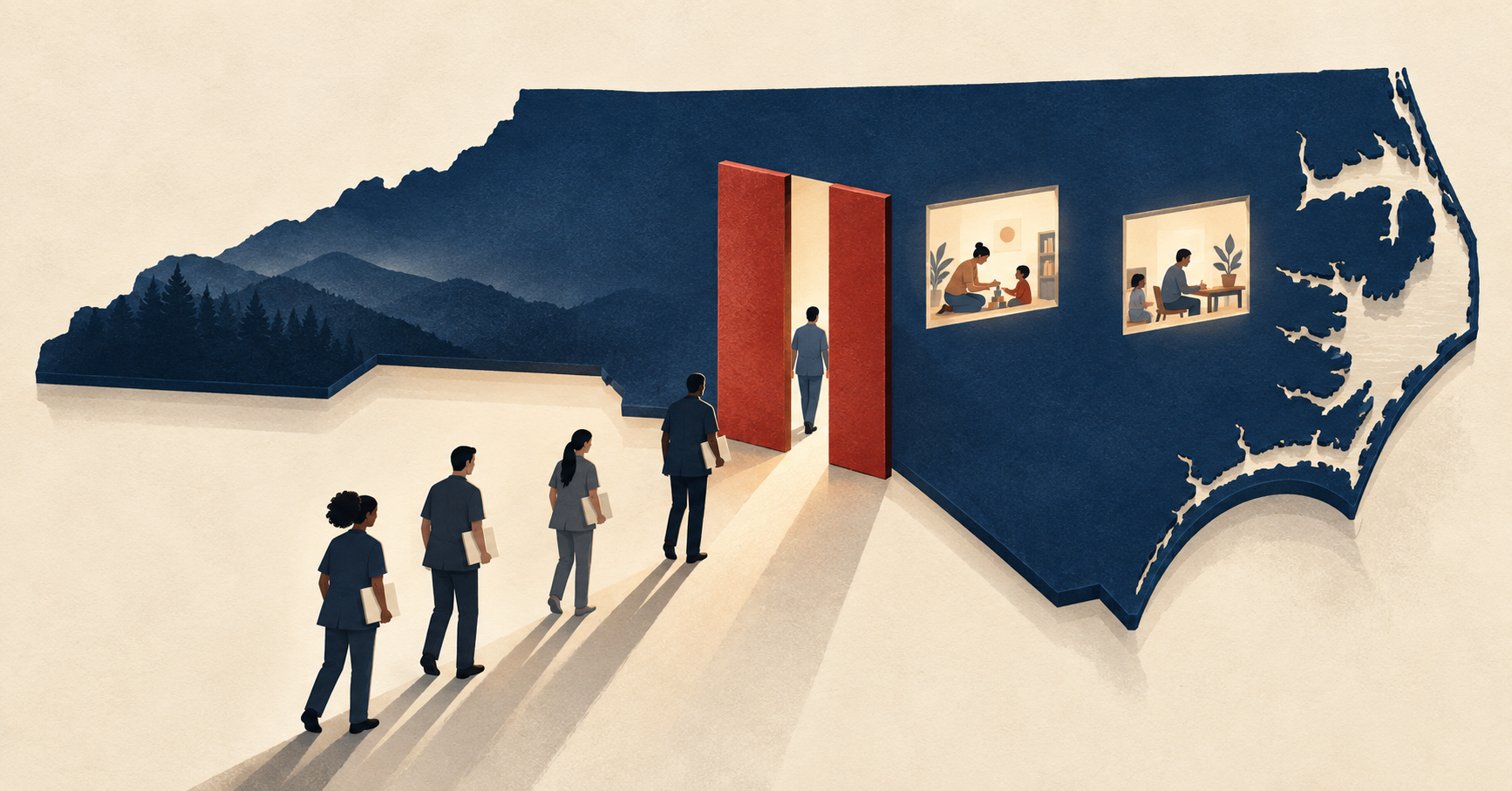
RALEIGH, NORTH CAROLINA – North Carolina’s July budget requires Medicaid managed care plans to operate closed networks for research-based behavioral health treatment (RB-BHT), including applied behavior analysis (ABA). The law Gov. Josh Stein signed July 7 allows plans to exclude providers from those networks, ending the service’s general open-network protection.
An April analysis by North Carolina Health News described more than 200 ABA providers participating in NC Medicaid. In a March presentation, the state Department of Health and Human Services (DHHS) reported that total state and federal RB-BHT spending rose from $121.7 million in fiscal 2022 to $544.4 million in fiscal 2025. It is projected to reach $1.14 billion for fiscal 2027.
Alongside contracting changes, providers face new requirements for technicians delivering treatment. NC Medicaid’s revised coverage policy took effect Aug. 1, starting a 120-day certification grace period for existing staff without a qualifying credential.
What the Budget Changed
The network law passed in April generally required plans to accept providers who met objective quality standards and accepted network rates, with specified exceptions including certain prepayment-review failures. To close an entire service category, a plan had to submit a written request explaining risks to care quality, program integrity, or cost-effective use of Medicaid funds, and show its proposed network would remain adequate. DHHS approval was required, but a request was deemed approved if the department did not respond within 180 days.
The July budget made closed networks mandatory for RB-BHT and peer support. The new subsection does not set provider-selection criteria, minimum network size, or a provider appeal process. Federal rules still require sufficient access to covered care and written provider-selection policies. Sen. Benton Sawrey, the Johnston County Republican who presented similar language in June, said DHHS would be responsible for ensuring adequate services, WRAL reported.
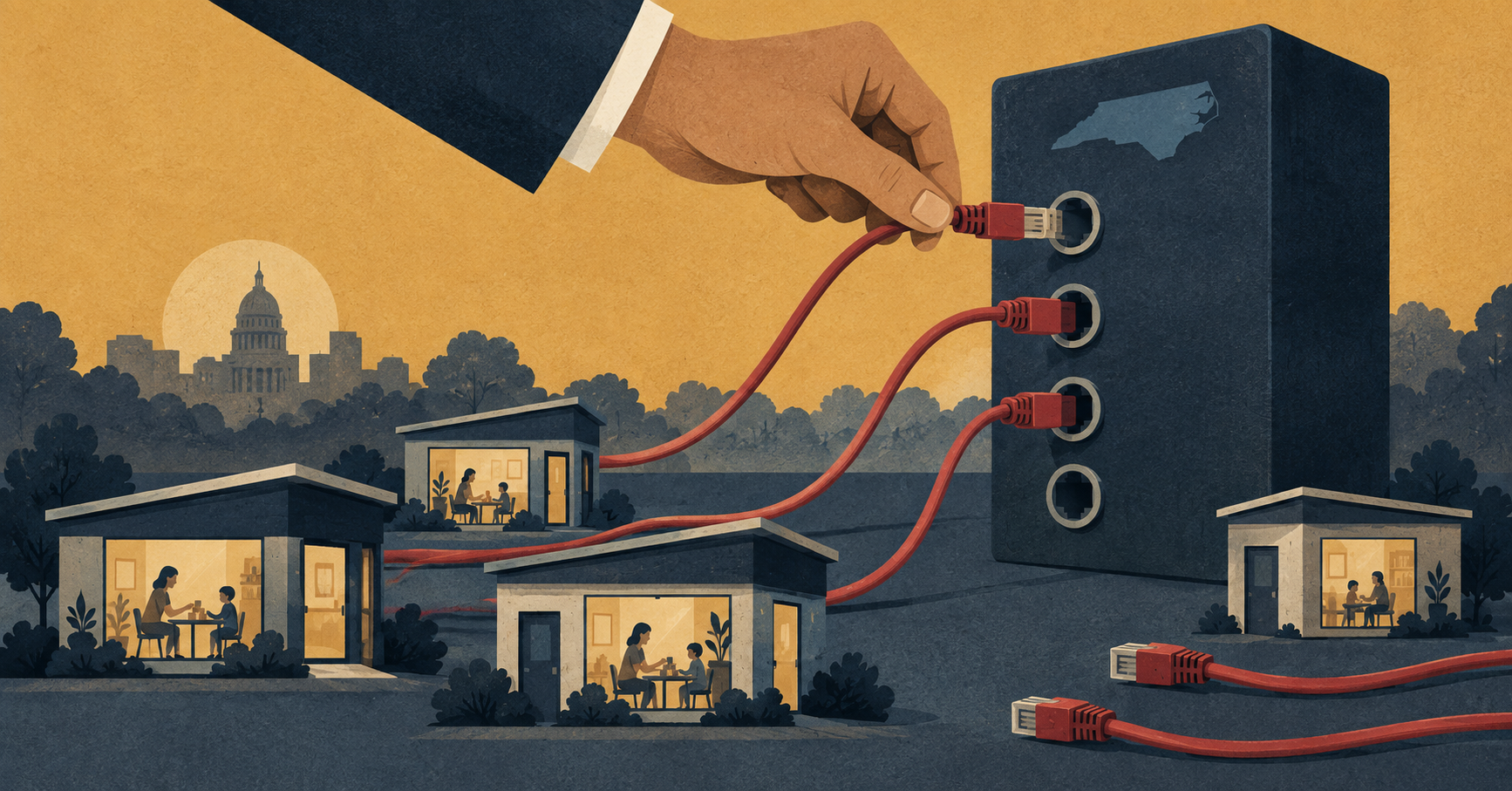
DHHS sought the change in a policy paper released in October 2025. It argued that open networks contributed to an influx of ABA providers and limited plans’ oversight tools and ability to select providers based on quality. The paper said spending and use grew faster than the provider network. Citing a national report by the Center for Economic and Policy Research, it raised concerns about high caseloads, turnover, and excessive treatment hours at some private-equity-backed providers. It said more analysis was needed to determine how ownership affects utilization in North Carolina.
“Closing networks in the best interest of making sure that our local providers get those services to the patients is needed.” – Sen. Benton Sawrey, R-Johnston, presenting House Bill 34 to the Senate Health Care Committee, as reported by NC Newsline, June 17, 2026
The Senate first advanced the mandate in House Bill 34, a Medicaid provider-controls bill, and passed it 45-0 on June 23. The House sent that bill to its Rules Committee June 25; its public history showed no later action as of Sept. 22. Both chambers gave final approval to the budget carrying the mandate July 2, and Stein signed it July 7.
How Plans Are Applying It
Partners Health Management, one of the state’s four regional Behavioral Health and I/DD Tailored Plans, serves 15 counties including Forsyth, Gaston, and Cabarrus. Its July 8 notice said RB-BHT and peer support would move to closed networks. Existing providers should continue under their approved contracts, while new requests would be assessed individually against selection criteria, including network need.
Alliance, Trillium, and Vaya have also posted public notices. Alliance’s July 2 notice advises providers to confirm their contract status before delivering care. Trillium announced its closed network July 9. Both identify July 2 as the mandate’s effective date, although the enacted law took effect July 7. Vaya’s network page uses July 7. NC Medicaid’s July 21, Aug. 5, and Aug. 31 service-delivery bulletins do not discuss the mandate; the two August updates address the certification grace period.
The Technician Certification Deadline
The certification requirement comes from the April law, House Bill 696. Technicians must obtain either the Registered Behavior Technician (RBT) credential from the Behavior Analyst Certification Board or the Applied Behavior Analysis Technician (ABAT) credential from the Qualified Applied Behavior Analysis Credentialing Board. NC Medicaid says the grace period for existing uncertified staff began Aug. 1. Newly hired technicians have 120 calendar days from their hire date or their employer’s first Medicaid enrollment date, whichever is later.
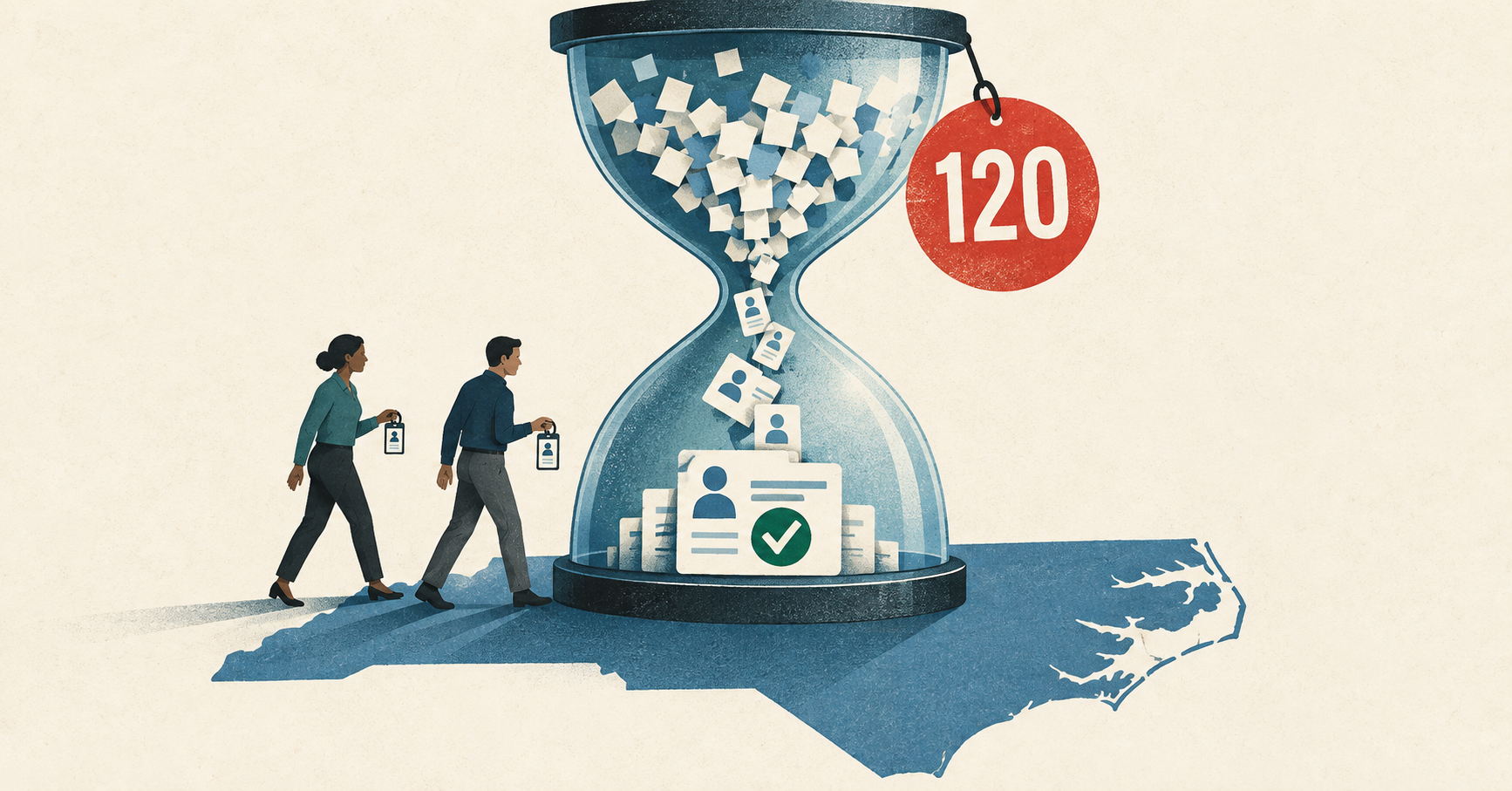
During the grace period, reimbursement for an uncertified technician’s work requires supervision by a Licensed Qualified Autism Service Provider who assumes professional responsibility. Other coverage and billing requirements also apply. The July budget eased April’s monthly reapproval requirement for treatment plans above 16 service hours a week to every three months and required reviews every six months at or below that threshold. The revised policy implements maximum authorization periods of 90 and 180 calendar days, respectively. Existing authorizations are not shortened; the new limits apply at renewal. Providers at a June 19 event in Chapel Hill said a reauthorization report could reach 50 pages and take weeks to prepare, North Carolina Health News reported.
Supporters and Skeptics
The Autism Society of North Carolina supported safeguards against fraud, waste, and abuse. Kerri Erb, its chief program and policy officer, wrote in a July 13 budget summary that billing for undelivered care and prescribing excessive hours could threaten access for everyone. In June, communications director David Laxton told NC Newsline that addressing the service’s financial sustainability would help preserve access.
Autism Speaks did not comment on the bill’s specifics. In a general statement to NC Newsline, David Sitcovsky, its vice president of advocacy, urged states to address improper billing while protecting medically necessary care. Rep. Zack Hawkins, a Durham Democrat, defended families’ use of therapy at a June 19 news conference, WRAL reported. “Families need these services,” he said. “It is not fraud. It’s not a risk.”
After each technician’s grace period expires, NC Medicaid will not reimburse services delivered by that technician if they remain uncertified. For staff covered by the Aug. 1 start date, the grace period ends 120 days later. Its Aug. 31 bulletin does not specify a calendar cutoff for those staff.
AT A GLANCE
| What changed: | Medicaid managed care plans must maintain closed networks for RB-BHT, the benefit that includes ABA, and peer support. Plans may exclude providers, subject to other applicable requirements. |
| Old rule: | Generally open networks for qualified providers accepting plan rates, with specified exceptions. Service-wide closure required a written request to DHHS; approval was deemed after 180 days without a response. |
| Effective: | July 7, 2026, when Gov. Josh Stein signed Senate Bill 257. Final legislative approval came July 2. |
| Plans covered: | Four Standard Plans (AmeriHealth Caritas, Carolina Complete Health, Healthy Blue, and UnitedHealthcare), four Tailored Plans (Alliance, Partners, Trillium, and Vaya), and the Children and Families Specialty Plan, as of Sept. 22. |
| Public plan notices: | Partners, Alliance, Trillium, and Vaya have published information. Partners said existing providers should continue under approved contracts and new requests would be assessed for network need. |
| Technician deadline: | RBT or ABAT certification required. Existing uncertified staff: 120 days beginning Aug. 1. New hires: 120 days from hire or the employer’s first Medicaid enrollment, whichever is later. Services by staff still uncertified after their grace period are not reimbursable; no calendar cutoff is specified in the Aug. 31 bulletin. |
| Reauthorization: | Up to 90 calendar days for plans above 16 service hours a week; up to 180 days at or below 16. New limits apply at renewal; existing authorizations are not shortened. |
| RB-BHT spending: | DHHS reported total state and federal spending of $121.7 million in fiscal 2022 and $544.4 million in fiscal 2025. Its March 2026 forecast projected $1.14 billion for fiscal 2027. |
| Beneficiaries: | DHHS reported 3,844 RB-BHT beneficiaries in fiscal 2022 and 13,447 in fiscal 2025. |
| Senate’s standalone bill: | HB 34 passed the Senate 45-0 on June 23, 2026. Referred to House Rules June 25; no later action listed as of Sept. 22. |
SOURCES & REFERENCES
| 1. | North Carolina General Assembly. Session Law 2026-41 (Senate Bill 257), Current Operations Appropriations Act of 2026, Section 9E.22. Ratified July 2; signed July 7, 2026. https://www.ncleg.gov/Sessions/2025/Bills/Senate/PDF/S257v8.pdf |
| 2. | North Carolina General Assembly. Senate Bill 257, bill history, 2025–2026 Session. Accessed Sept. 22, 2026. https://www.ncleg.gov/BillLookUp/2025/S257 |
| 3. | North Carolina General Assembly. Session Law 2026-1 (House Bill 696), Medicaid & HHS Adjust./Other Critical Needs, Sections 3C.12, 3C.13, and 3C.18. April 30, 2026. https://www.ncleg.gov/EnactedLegislation/SessionLaws/HTML/2025-2026/SL2026-1.html |
| 4. | Code of Federal Regulations. 42 C.F.R. § 438.206, Availability of services. Current text accessed Sept. 22, 2026. https://www.ecfr.gov/current/title-42/chapter-IV/subchapter-C/part-438/subpart-D/section-438.206 |
| 5. | Code of Federal Regulations. 42 C.F.R. § 438.214, Provider selection. Current text accessed Sept. 22, 2026. https://www.ecfr.gov/current/title-42/chapter-IV/subchapter-C/part-438/subpart-D/section-438.214 |
| 6. | Baxley J. “NC moves to rein in soaring autism therapy costs amid fraud concerns.” North Carolina Health News. April 27, 2026; updated April 30. https://www.northcarolinahealthnews.org/2026/04/27/autism-therapy-costs/ |
| 7. | North Carolina Department of Health and Human Services. “NC Department of Health and Human Services Update on Autism Benefits.” Presentation to the Joint Legislative Oversight Committee on Medicaid, March 10, 2026, slides 5–6. https://webservices.ncleg.gov/ViewDocSiteFile/105335 |
| 8. | NC Medicaid. “Updated Reminder: Requirements for Research-Based Behavioral Health Treatment Service Delivery – Aug. 31, 2026.” Aug. 31, 2026. https://medicaid.ncdhhs.gov/blog/2026/08/31/updated-reminder-requirements-research-based-behavioral-health-treatment-service-delivery-aug-31 |
| 9. | NC Medicaid. Clinical Coverage Policy No. 8F, Research-Based Behavioral Health Treatment (RB-BHT) For Autism Spectrum Disorder (ASD). Amended Aug. 1, 2026. Sections 5.1–5.1.1 and Attachment B. https://medicaid.ncdhhs.gov/8f-research-based-behavioral-health-treatment-rb-bht-autism-spectrum-disorder-asd/download?attachment= |
| 10. | North Carolina Department of Health and Human Services. “Ensuring Person-Centered Care for Children with Autism Spectrum Disorder in the NC Medicaid Program.” Policy paper, October 2025; comments due Nov. 27, 2025. https://medicaid.ncdhhs.gov/policy-paper-ensuring-person-centered-care-children-autism-spectrum-disorder-nc-medicaid-program/open |
| 11. | North Carolina General Assembly. House Bill 34, Strengthen Medicaid Provider Controls, bill history and Fourth Edition. June 23, 2026; history accessed Sept. 22. https://www.ncleg.gov/BillLookUp/2025/H34 |
| 12. | Zhu C. “NC lawmakers seek tighter rules for autism therapy in push to eliminate Medicaid fraud.” NC Newsline. June 17, 2026. https://ncnewsline.com/2026/06/17/nc-lawmakers-seek-tighter-rules-for-autism-therapy-in-push-to-eliminate-medicaid-fraud/ |
| 13. | Yaffa C. “As NC lawmakers focus on autism therapy costs, families worry about access to therapy.” WRAL. June 19, 2026. https://www.wral.com/news/local/north-carolina-lawmakers-focus-on-autism-therapy-costs-june-2026/ |
| 14. | Partners Health Management. “Changes to RB-BHT and Peer Support Services.” Issued July 8, 2026; updated July 13. https://providers.partnersbhm.org/changes-to-rb-bht-and-peer-support-services/ |
| 15. | Partners Health Management. “Welcome to Partners Tailored Plan!” Member welcome packet, page 1. Undated; accessed Sept. 22, 2026. https://www.partnersbhm.org/wp-content/uploads/partners-tailored-plan-member-welcome-letter.pdf |
| 16. | Alliance Health. “Mandatory Closed Network for Select Behavioral Health Services Effective July 2, 2026.” July 2, 2026. https://www.alliancehealthplan.org/provider-updates/mandatory-closed-network-for-select-behavioral-health-services-effective-july-2-2026/ |
| 17. | Trillium Health Resources. “Provider Communication 005,” Mandatory Closed Network for Peer Support and RB-BHT Services. July 9, 2026. https://www.trilliumhealthresources.org/article/provider-communication-005 |
| 18. | Vaya Health. “Behavioral Health, I/DD, and TBI Network.” Undated; current page accessed Sept. 22, 2026. https://providers.vayahealth.com/behavioral-health/ |
| 19. | NC Medicaid. “Health Plans.” Updated Aug. 28, 2026; accessed Sept. 22, 2026. https://medicaid.ncdhhs.gov/about-nc-medicaid/health-plans |
| 20. | NC Medicaid. “Updated Reminder: Requirements for Research-Based Behavioral Health Treatment Service Delivery – Aug. 5, 2026.” Aug. 5, 2026; superseded Aug. 31. https://medicaid.ncdhhs.gov/blog/2026/08/05/updated-reminder-requirements-research-based-behavioral-health-treatment-service-delivery-aug-5-2026 |
| 21. | NC Medicaid. “Reminder: Requirements for Research-Based Behavioral Health Treatment Service Delivery.” July 21, 2026; superseded Aug. 5. https://medicaid.ncdhhs.gov/blog/2026/07/21/reminder-requirements-research-based-behavioral-health-treatment-service-delivery |
| 22. | Erb K. “Public Policy Update: What the 2026-27 State Budget Means for North Carolina’s Autism and IDD Community.” Autism Society of North Carolina. July 13, 2026. https://www.autismsociety-nc.org/public-policy-update-what-the-2026-27-state-budget-means-for-north-carolinas-autism-and-idd-community/ |
| 23. | Fernandez J. “NC families fear losing access to autism therapy as new rules take effect.” North Carolina Health News. July 15, 2026; updated July 17. https://www.northcarolinahealthnews.org/2026/07/15/autism-aba-therapy-medicaid-new-rules/ |
| 24. | North Carolina Department of Natural and Cultural Resources. “Capital Area Visitor Services,” NC Legislative Building location. Undated; accessed Sept. 22, 2026. https://dncr.k12.nc.gov/cavs |






Join the discussion ▾