

Effective Nov. 15, Blue Cross and Blue Shield of Nebraska will lower its weekly applied behavior analysis (ABA) limit from 40 to 25 hours under revised autism coverage criteria. The insurer posted the revision Sept. 4 and directed providers to review the changes without listing differences from the current policy.
The revised policy requires a physician referral dated within three years. It also requires structured caregiver interviews, direct observation, social communication and interaction deficits in at least two settings, and repetitive or restricted behaviors to support the diagnosis. Telehealth payment is limited to CPT 97155 and 97156 for treatment with protocol modification and family treatment guidance. The current autism policy does not list these code restrictions. Patients absent from services for more than 60 days will need new assessments and goals.
Supervision requirements also change. The revision requires a licensed behavior analyst or BCBA to document supervision covering at least 25% of direct therapy delivered by a Certified Behavior Analyst Assistant (CBAA) or board-certified assistant behavior analyst (BCaBA). The current policy names board-certified behavior analysts (BCBAs) and line therapists, specifies face-to-face supervision, and calls for two supervision hours per 10 hours of direct treatment. The revised policy lists 6.25 hours per week, equal to 25% of a 25-hour week, but does not explain how that figure applies to shorter schedules. The notice does not specify how the new language applies to technicians.
The revision replaces “adaptive functioning” with “academic functioning” in its eligibility criteria. It also replaces adaptive-skill examples such as toilet training, dressing, and eating with academic examples such as “writing letters or lines,” identifying sight words, and math skills.
Other restrictions remain. A January 2022 revision added the daycare exclusion, the office-or-telehealth requirement, and continuation criteria based on “significant improvement.” The policy defines that as mastery of at least 50% of treatment goals or objectives and also requires evidence of developmental progress. When progress falls short, the treatment plan should address barriers; peer review may deny coverage if insufficient progress persists on subsequent reviews. The policy generally calls for six-month reassessments. These provisions remain in the November version.
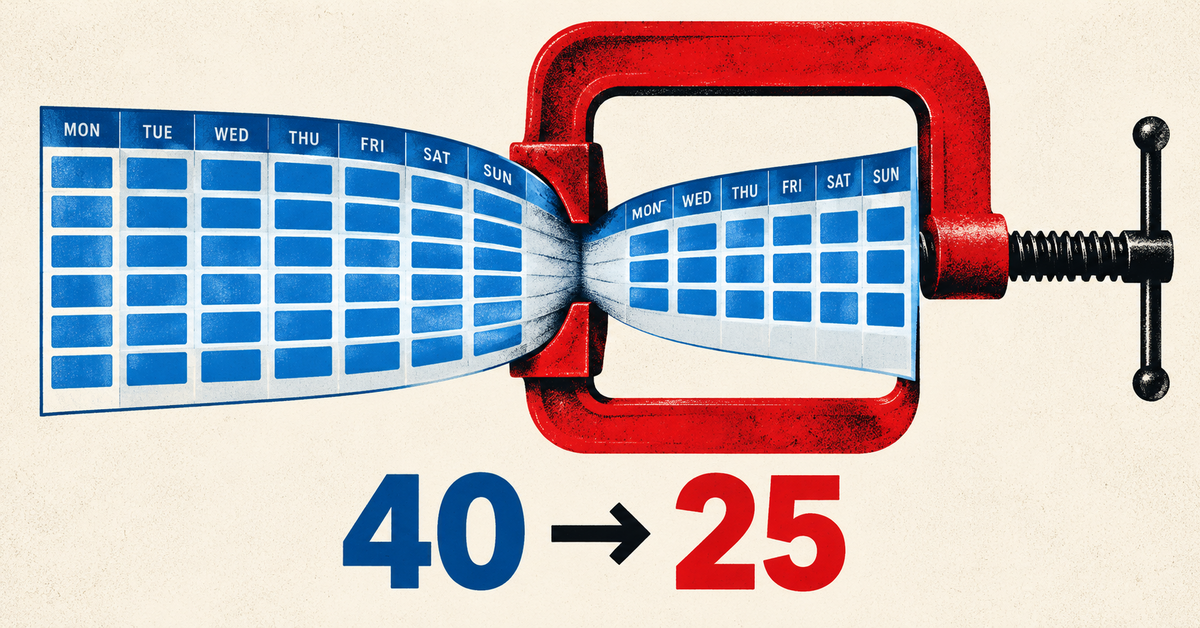
The 25-hour figure appears in Nebraska’s 2014 autism insurance law, which sets that weekly maximum for behavioral health treatment, including ABA, for people under 21 in plans subject to the mandate. Nebraska Blue’s current medical policy lists a higher 40-hour maximum, but benefits depend on the member’s contract. The law also preserves benefits otherwise available under a policy. The November notice does not explain how it will handle existing authorizations exceeding 25 hours.
The change follows Nebraska Medicaid’s July 1 revision, which lowered its standard weekly direct-service limit from 30 to 20 hours while allowing additional hours with clinical justification and prior approval. The state also barred independent providers from billing Medicaid directly for school-based ABA and added monthly in-person supervision and treatment requirements.
What Other Blue Plans Changed in 2026
Nebraska Blue is among several Blue insurers changing ABA authorization rules or processes this year. Three others also moved reviews in-house. Blue Shield of California took over behavioral health management from Magellan for 1.8 million members on Jan. 1, including ABA, and honored existing authorizations for their duration. Its revised ABA criteria for initial assessment, care initiation, and continuation took effect May 1. The insurer said the update complied with California’s SB 855. In August, it added an Availity portal route for eligible PPO outpatient ABA authorizations, extending it Sept. 9 to out-of-state federal employee and Postal Service PPO members.
Louisiana Blue took behavioral health authorizations over from Lucet on Jan. 1 and updated its ABA policy effective May 1. The policy says school-based ABA should generally not exceed 6 hours per day unless documentation supports more. It retains the insurer’s classification of ABA for adults 21 and older as investigational. Independence Blue Cross moved ABA reviews from Magellan to its care-management team April 1, with a new authorization form. Existing Magellan authorizations remain valid; subsequent requests go to the plan.
“Consecutive authorizations at the highest level of service intensity (e.g., repeated 35-hour authorizations for CPT 97153) are not routinely approved without clear clinical justification, and ongoing treatment plans must demonstrate active efforts toward transition and reduction of services.” – Louisiana Blue, Medical Policy 00816, Applied Behavior Analysis for Autism Spectrum Disorder (effective May 1, 2026)
Highmark added 10 ABA codes to its prior-authorization list on March 1, among 19 behavioral health additions. Its current provider manual excludes the Federal Employee Program (FEP) and Medicare from those requirements. The insurer attributed the additions to managing costs and reducing potential fraud, waste, and abuse. In its November 2025 notice, it said average authorization turnaround had fallen from about five days to one. On Aug. 17, Highmark announced new rates for technician-delivered treatment (CPT 97153) under applicable commercial products in Delaware, Pennsylvania, and West Virginia, effective Oct. 16. Highmark said technician reimbursement in several markets was higher relative to clinician reimbursement than prevailing market relationships would suggest. The rate notice leaves authorization requirements unchanged.
Health Care Service Corporation’s Blue plans in Illinois, Texas, Oklahoma, New Mexico, and Montana made phone intake the primary way to start commercial ABA preservice requests in April. Providers call the number on the member’s ID card, complete intake with a representative, and receive a clinician’s follow-up call for review. The plans said the change is intended to streamline intake requests and support consistent, timely processing.

Blue Cross Blue Shield of Michigan eased several requirements Jan. 1. It stopped requiring full treatment plans with authorization requests, removed a rule requiring caregivers to be involved in treatment every week (ideally at least 2 hours per month), and deleted a test that ABA be no more costly than an alternative service expected to produce equivalent therapeutic results. Caregiver participation remains strongly encouraged, with an alternate home-management plan documented when caregivers cannot participate.
Regence’s posted ABA policy also announces a revision effective Nov. 1. Nebraska Blue’s revision is scheduled for Nov. 15, and its current policy lists Feb. 11, 2027, as the next review date.
AT A GLANCE
| Nebraska Blue policy: | I.178 Autism Spectrum Disorders; posted Sept. 4, 2026; effective Nov. 15, 2026; preauthorization required. |
| Weekly ABA maximum: | 25 hours under the revised criteria, down from 40; notice does not explain the transition for existing authorizations. |
| Supervision: | At least 25% of CBAA/BCaBA direct hours; notice also says “6.25 hours per week.” Current policy calls for 2 per 10. Technician application is unclear. |
| Telehealth: | Payable only for CPT 97155 and 97156 under the revised policy. |
| New prerequisites: | Physician referral within 3 years; diagnostic evidence including social deficits in at least 2 settings; new assessments and goals after more than 60 days away. |
| Unchanged: | Office or telehealth only; daycare excluded; 50% goal mastery and developmental progress, with barriers addressed and peer review for persistent insufficient progress. |
| State mandate: | 25-hour weekly behavioral health benefit, including ABA, under age 21 in applicable plans; otherwise available benefits preserved. |
| Other 2026 Blue plan changes: | California and Louisiana (in-house reviews Jan. 1; criteria changes May 1); Independence (in-house April 1); Highmark (10 ABA codes added March 1; FEP/Medicare excluded); HCSC (phone intake from April); Michigan (full treatment-plan submission no longer required Jan. 1). |
| Dates to watch: | Oct. 16 (Highmark commercial 97153 rates); Nov. 1 (Regence revision); Nov. 15 (Nebraska Blue revision); Feb. 11, 2027 (Nebraska Blue’s listed next review). |
SOURCES & REFERENCES
| 1. | Blue Cross and Blue Shield of Nebraska. “MPC November 2026,” revised Medical Policy I.178 Autism Spectrum Disorders. Effective Nov. 15, 2026; posted Sept. 4, 2026. Provider notice. |
| 2. | Blue Cross and Blue Shield of Nebraska. Medical Policy I.178, Autism Spectrum Disorders. Current version; last review Feb. 4, 2026; next review Feb. 11, 2027; revision history through Aug. 8, 2025. Policy and revision history. Accessed Sept. 16, 2026. |
| 3. | Blue Cross and Blue Shield of Nebraska. Alerts and Updates. Lists “Medical Policy Updates Effective 11/15/2026” as posted Sept. 4, 2026. Accessed Sept. 16, 2026. |
| 4. | ABA Coding Coalition. Frequently Asked Questions. Sections on CPT 97155, CPT 97156 and the distinction between treatment direction and supervision. Accessed Sept. 16, 2026. |
| 5. | Nebraska Legislature. Nebraska Revised Statute 44-7,106, Coverage for screening, diagnosis, and treatment of autism spectrum disorder; requirements. Laws 2014, LB254, § 2; especially subsections (2), (4) and (6). |
| 6. | Nebraska Department of Health and Human Services. Provider Bulletin 26-06, Updated Service Definition and Changes to Billing and Utilization of Applied Behavior Analysis Services (June 1, 2026); Applied Behavior Analysis service definition, pp. 1, 3–4, 9–10 (accessed Sept. 16, 2026); Provider Bulletin 25-02, Behavioral Health Providers: Applied Behavior Analysis Service Definitions (Jan. 31, 2025). |
| 7. | Blue Shield of California. Transition to Blue Shield Behavioral Health Services—Effective January 1, 2026. Frequently asked questions, T16651 (3/26), pp. 2 and 9. |
| 8. | Blue Shield of California. News and announcements: “Updates to Three Blue Shield of California Behavioral Health Medical Policies” (May 26, 2026); “Availity Essentials now available for eligible Blue Shield of California PPO outpatient authorizations” (Aug. 18, 2026); “Availity Essentials now includes outpatient PPO authorizations for out-of-state FEP PPO and USPS PPO members” (Sept. 9, 2026). Full notices on linked page; accessed Sept. 16, 2026. |
| 9. | Louisiana Blue. Behavioral Health Webinar—Facility Providers. November 2025, p. 4. |
| 10. | Louisiana Blue. Medical Policy 00816, Applied Behavior Analysis for Autism Spectrum Disorder. Effective May 1, 2026; committee approval April 10, 2026; pp. 2–3 and 9. |
| 11. | Independence Blue Cross. “Reminder: ABA services transitioned to IBX on April 1, 2026”. Provider notice, ref. 26-0101. Accessed Sept. 16, 2026. |
| 12. | Highmark. “Behavioral Health: Upcoming Prior Authorization Changes” (Nov. 24, 2025); Provider Manual, Unit 4: Behavioral Health, section 5.4 Authorization Requests (accessed Sept. 16, 2026). |
| 13. | Highmark. “Reimbursement Update: CPT Code 97153 for ABA Therapy in DE, PA, and WV”. Aug. 17, 2026; effective Oct. 16, 2026. |
| 14. | Blue Cross and Blue Shield plans. “Call for Preservice Requests for Applied Behavior Analysis for Commercial Members.” Jan. 15, 2026: Illinois, Texas, Oklahoma, New Mexico; Jan. 14, 2026: Montana. |
| 15. | Blue Cross Blue Shield of Michigan / Blue Care Network. “We’ll use updated ABA supplemental policy starting Jan. 1”. Provider alert, Oct. 3, 2025; effective Jan. 1, 2026. |
| 16. | Blue Cross Blue Shield of Michigan. Applied Behavior Analysis (ABA) Supplemental Clinical Criteria: April 2025 version (annual review May 21, 2024; historical wording, pp. 6–7); January 2026 version (annual review July 2025; current caregiver criteria, pp. 3 and 7). |
| 17. | Regence. Behavioral Health Policy No. 18, Applied Behavior Analysis for the Treatment of Autism Spectrum Disorder. Effective Aug. 1, 2025; posted notice of a revision effective Nov. 1, 2026. Accessed Sept. 16, 2026. |





Join the discussion ▾