




What the Reshaped Committee Recommended
A federal advisory committee, restructured this year under the direction of Robert F. Kennedy Jr., voted to recommend the government adopt a standardized “profound autism” designation and issue new Medicaid guidance on autism care. These recommendations could affect how services for people with the highest support needs, including children who receive applied behavior analysis, are prioritized.
The Interagency Autism Coordinating Committee advises the health secretary and helps set the federal agenda for autism research and services. According to Autism Speaks, the Autism CARES Act of 2024 reauthorized the committee through 2029 and provides nearly $2 billion for federal autism programs over five years.
In January, Kennedy overhauled the committee by declining to reappoint eligible members and appointing new public members. Several of the new members have promoted the discredited idea that autism is linked to vaccines, according to STAT News. Longtime participants, including the Simons Foundation, Autism Speaks, and the Autistic Self Advocacy Network, lost their seats. The panel met on April 28 at the NIMH Neuroscience Center in Rockville, Maryland, for its first meeting in more than a year; STAT News described it as the committee’s first meeting in 19 months, while the Autism Science Foundation characterized the gap as roughly two years.
The Profound Autism Definition Fight
At the April meeting, members voted to recommend that HHS adopt a standardized functional research and policy designation for profound autism. In its recommendation to the secretary, the committee said the designation would be used for research, federal policy, reporting, training, technical assistance, and program planning.
The proposed definition covers people aged 8 or older with an autism diagnosis who have little or no functional speech and need continuous or near-continuous supervision to stay safe and substantial help with daily activities. It does not set an IQ threshold or require a diagnosis of intellectual disability. This differs from a Lancet Commission report, dated to 2021 by the Autism Science Foundation and Disability Scoop though sometimes cited to 2022, which paired minimal speech with an IQ below 50. The CDC’s definition counts children who are nonverbal, are minimally verbal, or have an IQ below 50. In 2023, the CDC estimated that profound autism affects more than one in four children with autism.
Removing the cognitive requirement drew criticism, even from some who support the profound autism label. Jill Escher, president of the National Council on Severe Autism, told Disability Scoop she was “concerned … with the proposal that profound autism need not entail intellectual disability” and pointed out the committee did not cite any studies to support this change.
A federal scientist warned this change could hurt research. Andrea Beckel-Mitchener of the National Institute of Mental Health said, “If we too narrowly define profound autism, we will end up excluding, unintentionally, a number of individuals from studies,” so it “can potentially backfire and have the opposite effect on our research portfolios.”
The Medicaid Guidance Proposal
The proposal most directly related to ABA received less attention than the profound autism vote. Alongside the profound autism designation, the committee advanced proposals on the dangers of wandering and elopement and on challenging medical comorbidities, according to The Transmitter, a neuroscience publication. STAT News reported members also voted to encourage Medicaid to set guidelines for autism diagnosis and possible health risks.
For ABA providers, the impact is indirect but significant. Medicaid pays for much of the ABA children with autism receive. A new designation for program planning, along with new Medicaid clinical guidance, could affect which patients are considered highest-need and how their services, including ABA, are approved. None of these decisions are final. The committee’s recommendations are advisory, and HHS has not said if it will act on them.
Questions Over the Committee’s Process
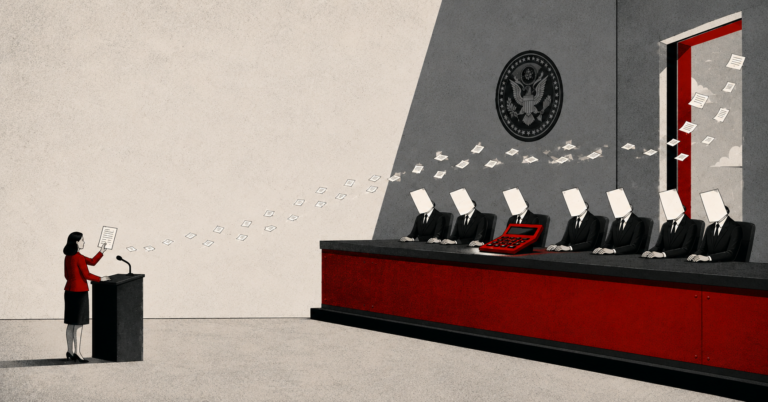
The process for making these recommendations drew objections. According to Disability Scoop, materials marked “final” were released just days before the meeting, after the public comment period ended, and did not say who wrote them. Dena Gassner, a former committee member who is autistic and now a senior research scientist at Drexel University, cited “an astronomical number of procedural violations,” including the unclear authorship and the lack of public input before the vote, she told The Transmitter.
Several members representing federal agencies said the process violated the Federal Advisory Committee Act, the law governing such panels, and abstained from the vote. The Autism Science Foundation and the Autistic Self Advocacy Network raised the same objection.
Former members also faulted the committee for skipping its core legal task. The Autism CARES Act requires the panel to produce a strategic plan for autism research, but the April meeting yielded none. Alycia Halladay, chief science officer of the Autism Science Foundation, warned that without such a plan “there can be no budgetary requirements, and therefore, there may be a lapse in funding,” she told The Transmitter.
“This undercuts the very purpose of having an advisory committee.” – Alison Singer, President, Autism Science Foundation (2026)
Colin Killick, executive director of the Autistic Self Advocacy Network, which opposes a separate profound autism classification, said the stakes remain real. He told Disability Scoop that the committee is “making policy when they issue recommendations to the secretary,” and that federal agencies are expected to align their work with these recommendations. The chair, Sylvia Fogel, disagreed with the criticism, saying members had “ample time for deliberation in a public setting” and had received the materials the previous Thursday.
According to the original Federal Register notice (91 FR 41645), the public comment period for the next meeting was set to end at 5 p.m. Eastern on July 17; an amended notice subsequently extended the deadline to July 24. According to that notice, the restructured panel is set to meet again on July 31 at the NIMH Neuroscience Center, 6001 Executive Boulevard, Rockville, Maryland. HHS did not answer Disability Scoop’s questions about whether the April recommendations had been formally sent to Kennedy or what will happen next.
AT A GLANCE
| Committee: | Interagency Autism Coordinating Committee (IACC), advises the HHS secretary on autism research and services |
| April 28, 2026 meeting: | First in more than a year following Kennedy’s overhaul of the panel, held at the NIMH Neuroscience Center in Rockville, Maryland (STAT News reported 19 months; Autism Science Foundation described the gap as about two years) |
| Proposed profound autism definition: | Age 8 or older, minimal or no functional speech, near-continuous supervision; no IQ threshold (Disability Scoop, May 2026) |
| Diverges from: | Lancet Commission report (minimal speech plus IQ below 50), dated to 2021 by the Autism Science Foundation; CDC put profound autism at about 1 in 4 children with autism, 2023 (STAT News; Disability Scoop; Public Health Reports) |
| Proposals approved: | Profound autism designation; wandering safety; Medicaid and clinical guidance on autism (Disability Scoop, May 2026) |
| Federal funding reauthorized: | Autism CARES Act of 2024: $306 million a year for core NIH programs (Congress); nearly $2 billion across federal autism efforts through 2029 (Autism Speaks) |
| Next meeting: | July 31, 2026, hybrid and open to the public, NIMH Neuroscience Center, 6001 Executive Boulevard, Rockville, Maryland; public comment closed July 17 under the original notice and was later extended to July 24 by amended notice (91 FR 41645; FR Doc 2026-14599) |
SOURCES & REFERENCES
| 1. | Federal Register. “Office of the Secretary; Notice of Meeting.” National Institutes of Health, HHS. 91 FR 41645. July 7, 2026. federalregister.gov/d/2026-13714 |
| 2. | Federal Register. “Office of the Secretary; Amended Notice of Meeting.” FR Doc. 2026-14599. July 20, 2026. |
| 3. | Diament, Michelle. “Government Panel Recommends Adopting ‘Profound Autism’ Label.” Disability Scoop. May 4, 2026. |
| 4. | Broderick, O. Rose. “In First Meeting, Federal Autism Committee Focuses on ‘Profound Autism.’” STAT News. April 28, 2026. |
| 5. | Diament, Michelle. “RFK Jr. Overhauls Federal Autism Panel.” Disability Scoop. January 29, 2026. |
| 6. | Congress.gov. “H.R.7213, Autism CARES Act of 2024.” Public Law 118-180. Signed December 23, 2024. |
| 7. | Autism Speaks. “Securing the Future: The Autism CARES Act of 2024 Passes the U.S. House.” 2024. |
| 8. | Hughes MM, Shaw KA, DiRienzo M, et al. “The Prevalence and Characteristics of Children With Profound Autism, 15 Sites, United States, 2000–2016.” Public Health Reports. 2023;138(6):971–980. doi:10.1177/00333549231163551 |
| 9. | Yuhas D. “‘Slightly Unhinged’ Federal Autism Meeting Portends Unclear Research Priorities.” The Transmitter. May 7, 2026. thetransmitter.org/spectrum/slightly-unhinged-federal-autism-meeting-portends-unclear-research-priorities/ |
| 10. | Interagency Autism Coordinating Committee. “Topic 2, Attachment C: Profound Autism” (final recommendation to the HHS secretary). April 28, 2026. iacc.hhs.gov |
| 11. | Autism Science Foundation. “Post-IACC Meeting Statement” (Alison Singer). 2026. autismsciencefoundation.org/press_releases/post-iacc-meeting-statement/ |



Join the discussion ▾