

A Two-Week Window on a Deep Rewrite
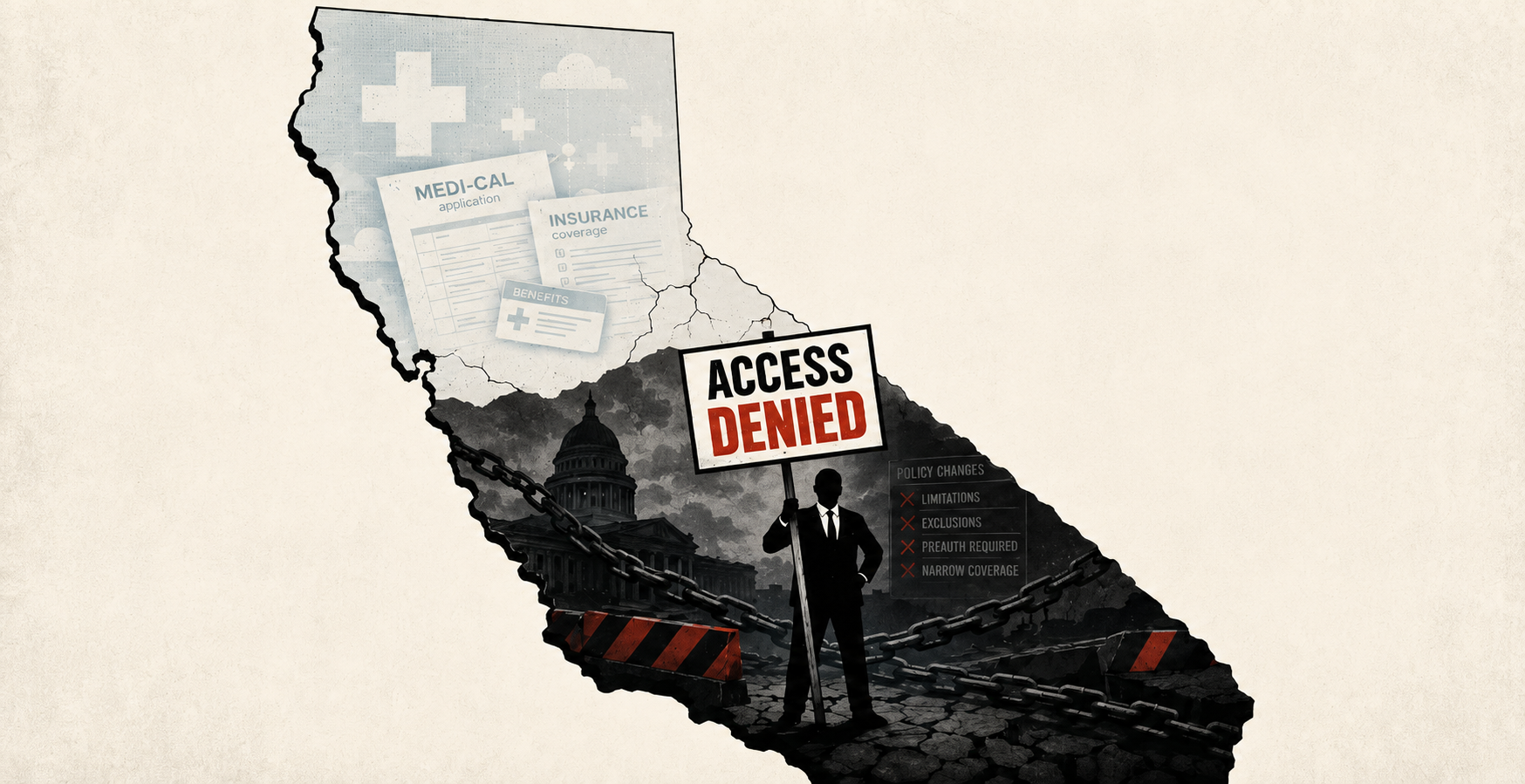
SACRAMENTO – California has proposed a sweeping rewrite of its Medi-Cal rules for children’s autism therapy and gave the people affected less than two weeks to weigh in. On June 22, the Department of Health Care Services (DHCS) sent managed care plans a draft All Plan Letter (APL) that would replace current policy, tighten utilization management for applied behavior analysis (ABA), and delete the operative requirement that plans comply with mental health parity. Comment closed July 3.
An All Plan Letter is California’s main instrument for directing Medi-Cal managed care plans (MCPs), which cover most children who receive ABA. The draft, numbered 26-XXX, circulated with tracked changes against APL 23-010, the November 2023 policy on behavioral health treatment (BHT) for members under 21. DHCS has not published the draft. Its contents are known from a copy the trade outlet Acuity News reviewed and from advocates who received it; unless otherwise noted, the draft provisions, advocate reactions, and quotes in this article are drawn from that review.
The proposal follows a utilization management plan DHCS floated in the May Revision of the 2026-27 budget, where the department proposed controls for ABA and transportation services, stating that utilization patterns for the two are “consistent with overuse and misuse,” according to the Legislative Analyst’s Office review of the May Revision. The administration booked $68 million in General Fund savings from the controls in 2026-27, rising to about $107 million a year ongoing, per the same analysis, inside a budget absorbing federal Medicaid reductions under H.R. 1 and the scheduled expiration of the state’s managed care organization tax at the end of 2026.
Julie Kornack, chief government and payor relations officer at the Center for Autism and Related Disorders (CARD), told Acuity the proposal “is directing the managed care plans to violate federal law and to disregard the patient protections that have been in place for decades.”
New Limits on Hours and Intensity
Much of the draft reads as a new utilization management framework. It would let plans set tiered documentation requirements based on total weekly hours and require those tiers once a request exceeds 25 direct treatment hours per week. Plans could ask for additional documentation whenever a provider recommends more than 4 hours of service per day and, for higher-intensity requests, could require a specific justification explaining why a lower-intensity level would be clinically insufficient.
The draft would also formalize a split between “active treatment” and “maintenance status” and allow plans to authorize less service once a member is deemed to be in maintenance. Treatment plans would need defined mastery criteria, step-down milestones, discharge criteria, and a projected timeline, with progress documented at each reauthorization. Where documentation shows no progress toward step-down across two or more consecutive authorization periods, a plan could determine that continued clinical benefit is not expected and reduce services. Advocates say those requirements conflict with federal law, including the Mental Health Parity and Addiction Equity Act and the Early and Periodic Screening, Diagnostic, and Treatment (EPSDT) mandate for Medicaid enrollees under 21.
The published APL 23-010 flatly prohibits caps on hours and bars limiting services based on school attendance. The draft strikes both prohibitions, replacing them with service-intensity thresholds that trigger enhanced clinical review but, the draft says, must not operate as a hard cap. It aligns plans with the Council of Autism Service Providers guidelines, which it cites for a range of 10 to 25 hours per week of focused ABA, alongside commercial tools such as InterQual and Milliman Care Guidelines, conditioned on compliance with SB 855. Advocates say that range disregards research showing better outcomes at 40 hours per week, and that the soft thresholds are something “the managed care plans will always treat as hard caps,” in Kornack’s words.
One plan tightened on its own first. Health Net told providers in February that, effective April 20, 2026, it adopted its own ABA medical-necessity policy for Medi-Cal members, replacing the CASP criteria for Medi-Cal only while keeping them for its commercial lines.
The Parity Language DHCS Would Delete
The provision drawing the loudest objection is what the draft removes. APL 23-010 directs plans to comply with parity and bars BHT limits that are more restrictive than the predominant limits on medical or surgical benefits. By Acuity’s account, the deletion runs deeper than that paragraph: the draft also strikes the parallel directive in the policy section and a parity reference in the purpose statement. What survives is the background recital that federal parity law applies to BHT, rather than an operative command that plans comply.
The struck language has a documented history. DHCS told plans in APL 19-014, issued in 2019, that the federal parity act protects Medi-Cal children receiving BHT; guidance CARD said it had pursued with Autism Speaks and the Autism Legal Resource Center since the benefit began in 2014. CARD’s 2020 announcement of that guidance listed hour and visit limits, parent participation requirements, and location exclusions among the practices parity prohibits when they are not applied to substantially all medical and surgical services; the current draft revisits all three areas.
Kristin Jacobson, a longtime advocate associated with the Autism Deserves Equal Coverage (ADEC) Foundation, circulated the redline to more than 100 stakeholders, urging comments and arguing that the change would reverse access protections built over decades through federal parity law and California’s SB 855. SB 855, the state’s 2020 parity statute, still requires, independently of this APL, that medical necessity and utilization review track generally accepted standards of care, a backstop the draft references when it conditions the use of commercial tools on SB 855 compliance.
“This APL is directing the managed care plans to violate federal law and to disregard the patient protections that have been in place for decades.” – Julie Kornack, Chief Government and Payor Relations Officer, Center for Autism and Related Disorders (2026)
Diagnosis and Guardian Participation
Two other changes drew objections. The draft would require that an autism diagnosis be made by a Medi-Cal-enrolled licensed physician, surgeon, or psychologist, where current policy does not, and would allow plans to seek independent confirmation of the diagnosis when the diagnosing clinician is affiliated with the treatment provider. Advocates describe the combination as a path to de facto re-diagnosis. The requirement runs counter to AB 951, the law Governor Gavin Newsom signed on July 30, 2025, effective January 1, 2026, which bars state-regulated commercial plans from requiring a previously diagnosed enrollee to be re-diagnosed to maintain coverage. AB 951 does not reach Medi-Cal managed care: according to the bill text on leginfo.legislature.ca.gov, its provisions expressly do not apply to “a health care service plan contract in the Medi-Cal program.”
The draft would also require a guardian participation plan with documented training and home generalization strategies, reversing APL 23-010, which bars plans from requiring guardian participation. Conditioning treatment on a parent’s involvement, Kornack told Acuity, “violates mental health parity law, violates EPSDT, and it’s just impractical,” because some families cannot take part owing to work, other children, or their own health. A separate provision would bar denials based solely on artificial intelligence and require review by a licensed professional. However, because California does not license behavior analysts, a board-certified behavior analyst could not serve as that reviewer without a separate license.
A School-First Sequence, and a Cost Question
The draft also redraws the line between plans and schools. When a member needs BHT at a school, the provider or guardian would first request the services through the Local Educational Agency, then submit the member’s Individualized Education Program, along with any plan authorization so that the plan can check for duplication. If a district fails to initiate an IEP amendment within 45 business days, services could be paused or reduced. The draft retains a sentence from current policy that bars plans from cutting a member’s medically necessary hours based on the time the member spends at school.
Critics read the sequence as a cost shift onto school districts and Regional Centers with no matching cut to the capitation the state pays plans. The concern echoes in the Legislature’s own analysis: the LAO asked the administration whether utilization controls on ABA could affect utilization of other state-funded services, such as the developmental services that the Regional Centers coordinate. DHCS frames the same language as coordination and the avoidance of duplicative services, consistent with its position that plans hold primary responsibility for medically necessary BHT. Restricting where services can be delivered, Kornack countered, undercuts generalization, because “you have to go where the children are.”
What’s Next
Comment closed at the end of business July 3, submitted on a DHCS Feedback Matrix. If the department finalizes the APL, plans would have 90 calendar days to update their policies and procedures or attest that no changes are needed. Kornack said CARD also challenged the vehicle, arguing DHCS should change plan obligations through the Administrative Procedures Act rather than an All Plan Letter. Her test for the final version is narrow. CARD’s top priority, she said, is “to restore the mental health parity language.” Whether DHCS revises the draft before finalizing it will turn on the comments now being weighed.
AT A GLANCE
| Draft: | APL 26-XXX, BHT coverage including ABA for members under 21; circulated to plans June 22, 2026 (Acuity News review) |
| Replaces: | APL 23-010, effective Nov. 22, 2023 (DHCS) |
| Comment deadline: | Close of business July 3, 2026, via DHCS Feedback Matrix |
| Budget driver: | May Revision UM controls for ABA/BHT and transportation; $68M General Fund savings in 2026-27, ~$107M ongoing (LAO, May 2026) |
| Documentation tiers: | Required above 25 direct treatment hours/week; added documentation above 4 hours/day (draft, per Acuity) |
| New concept: | “Active treatment” vs “maintenance status,” with step-down and discharge criteria (draft, per Acuity) |
| Parity: | Draft strikes the operative directive that plans comply with mental health parity; background recital remains (per Acuity; APL 23-010) |
| Parity history: | DHCS first directed plan parity compliance for BHT in APL 19-014 (2019), after advocacy dating to 2014 (CARD, 2020) |
| Diagnosis: | Would require a Medi-Cal enrolled physician or psychologist; independent confirmation on conflict of interest (draft, per Acuity) |
| AB 951: | Bars re-diagnosis for commercial coverage; signed July 30, 2025, effective Jan. 1, 2026; expressly does not apply to Medi-Cal managed care contracts (CA AB 951) |
| Plan criteria shift: | Health Net replaced CASP criteria with its own ABA medical-necessity policy for Medi-Cal, effective April 20, 2026 (Health Net 26-196) |
| If finalized: | Plans get 90 calendar days to update policies or attest none are needed |
SOURCES & REFERENCES
| 1. | Webb, Ethan. “Medi-Cal ABA Coverage Faces a Sweeping Rewrite Under California’s Draft All Plan Letter.” Acuity News. June 30, 2026. Draft APL 26-XXX contents and the Julie Kornack and Kristin Jacobson quotes are drawn from this report. https://acuity.news/regulation/medi-cal-aba-coverage-apl-rewrite-dhcs-2026/ |
| 2. | California Department of Health Care Services. All Plan Letter 23-010, “Responsibilities for Behavioral Health Treatment Coverage, Including Applied Behavior Analysis, for Members Under 21.” November 22, 2023. https://www.dhcs.ca.gov/formsandpubs/Documents/MMCDAPLsandPolicyLetters/APL2023/APL23-010.pdf |
| 3. | California Legislative Analyst’s Office. “The 2026-27 Budget: Medi-Cal at the May Revision.” May 2026. https://abgt.assembly.ca.gov/system/files/2026-05/initial-lao-analysis-of-medi-cal-at-may-revision.pdf |
| 4. | California Department of Health Care Services. All Plan Letter 19-014, mental health parity requirements for Medi-Cal managed care plans. 2019. https://www.dhcs.ca.gov/formsandpubs/Documents/MMCDAPLsandPolicyLetters/APL2019/APL19-014.pdf |
| 5. | Center for Autism and Related Disorders. “CARD Secures Updated Guidance Ensuring Mental Health Parity for Medi-Cal Children.” Press release. January 22, 2020. https://centerforautism.com/card-secures-updated-guidance-ensuring-mental-health-parity-for-medi-cal-children/ |
| 6. | Health Net of California. Provider update 26-196, “Updated ABA Medical Necessity Criteria for Medi-Cal, Effective April 20, 2026.” February 13, 2026. https://providerlibrary.healthnetcalifornia.com/news/26-196-updated-aba-medical-necessity-criteria-for-medi-cal–effe.html |
| 7. | California Legislature. AB 951 (Ta), Health care coverage: behavioral diagnoses. Signed July 30, 2025; effective for plans issued or renewed on or after January 1, 2026. https://leginfo.legislature.ca.gov/faces/billNavClient.xhtml?bill_id=202520260AB951 |
| 8. | California Legislature. SB 855 (2020), mental health and substance use disorder parity. https://leginfo.legislature.ca.gov/faces/billTextClient.xhtml?bill_id=201920200SB855 |
| 9. | California Department of Health Care Services. FY 2026-27 May Revision, utilization management proposal for ABA/BHT and transportation services. https://www.dhcs.ca.gov/Budget/Pages/Budget-Information.aspx |


Join the discussion ▾