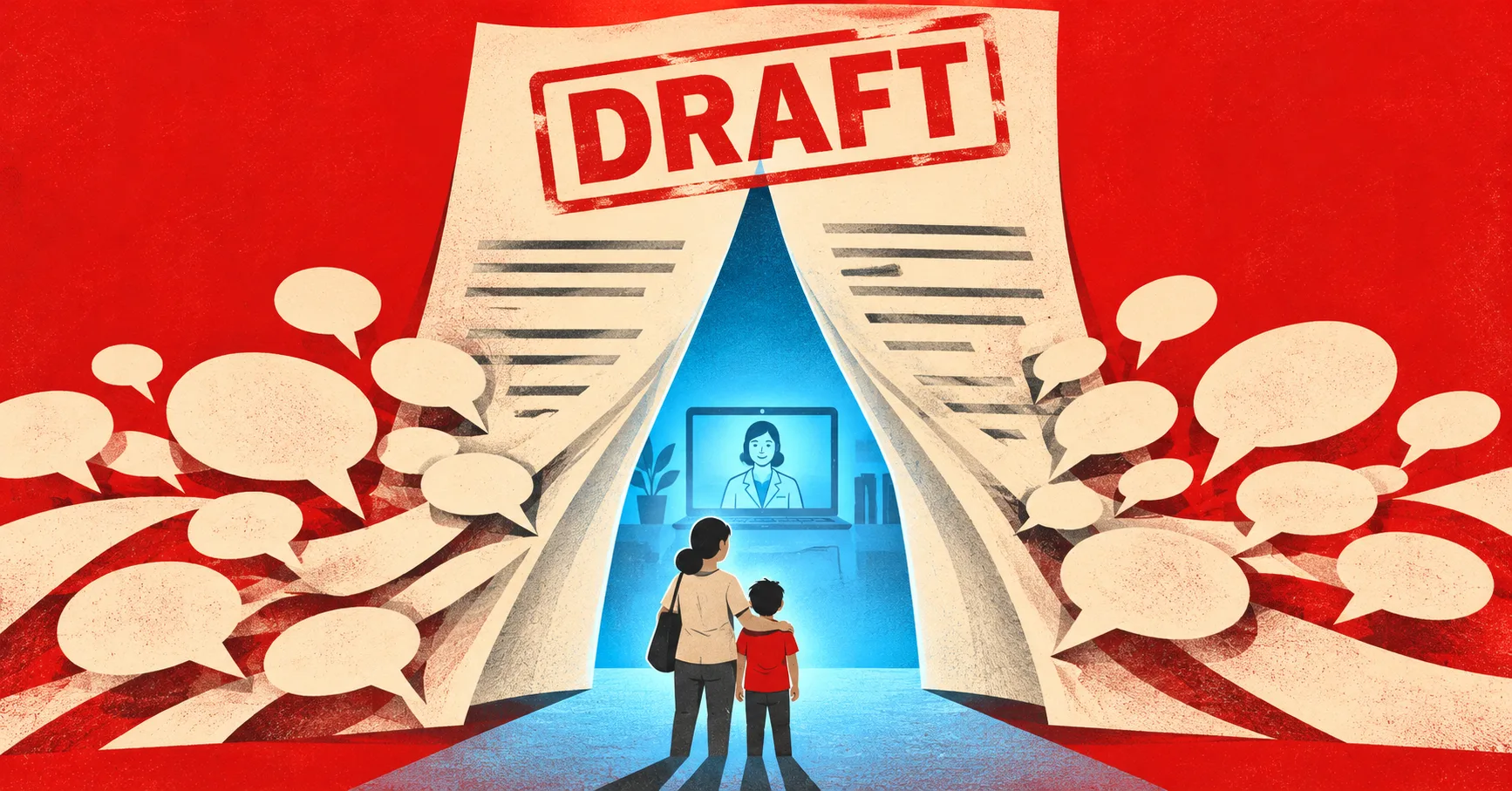



AUSTIN, TEXAS – Before a Texas behavior analyst could use a client’s confidential or personal information to draft a treatment report with artificial intelligence, the analyst would need the client’s written consent. Even with consent, the analyst would have to review the report personally and verify the evidence behind any decision that relied on AI.
The Texas Department of Licensing and Regulation (TDLR) published the proposal on June 19. Its Behavior Analyst Advisory Board recommended adoption on Sept. 9, after agency staff agreed to narrow the wording on reports. The Texas Commission on Licensing and Regulation has authority to adopt the rules. The filing deadline is Dec. 21.
The proposal would apply to licensed behavior analysts and licensed assistant behavior analysts. The Texas Dispatch, citing TDLR’s third-quarter fiscal 2026 figures, reported 7,474 analysts and 261 assistants. The Behavior Analyst Certification Board’s ethics code does not mention AI by name, but the board told certificants in 2024 that the code applies when they use it.
Kansas regulators have also considered consent. In March, the state’s Behavioral Sciences Regulatory Board heard its behavior analyst advisory committee’s recommendations on disclosure, informed consent, confidentiality, and a client’s ability to opt out. The board deferred action at that meeting.
What the Draft Would Require
Under the June draft, an analyst would need written consent to use a client’s confidential or personal information with AI to design, carry out, or evaluate treatment, assess the client, generate reports, or produce marketing materials. Providing the data for AI training or using it for research would also require written consent. If the employer controls the AI system, the analyst would have to record in the client’s file the date the employer received a copy of the consent.
Report writing is already one use of AI in applied behavior analysis (ABA). In September, CentralReach released a tool that drafts ABA reauthorization reports. It assembles information for the report a practice submits to a payer. The clinician reviews the draft, documents medical necessity, and adds recommendations.
Since Jan. 1, 2026, Texas law has required providers to disclose AI use in connection with covered health care services or treatment. Under House Bill 149, providers must give clear, conspicuous notice in plain language to the person receiving care or their personal representative by the date the service is first provided. In an emergency, notice is due as soon as reasonably possible. The law covers health-related services provided by an individual licensed, registered, or certified under state or federal law to provide them. The statute does not specifically name behavior analysts.
Proposed section 121.100 would bar license holders from relying on AI alone to design, carry out, or evaluate treatment, assess a client, or generate a client report. An analyst would have to review any AI-generated work, even in part. Each use would have to fall within the analyst’s training, competence, and scope of practice.
If AI-assisted work recommends a restrictive or punishment-based procedure, the analyst would have to establish that less intrusive methods could not achieve the desired result and that the benefit outweighs the risk of harm. The analyst would have to document that reasoning in the client’s file.
For AI-derived changes to treatment or assessment, the analyst would have to verify the evidence personally, explain it to the client in understandable language, and document both the explanation and the verification in the client’s file.
A separate provision would require an analyst who knows a client’s protected health information was disclosed without authorization to record who received it, notify the client, and retain proof of notification in the client’s record.
TDLR estimated that compliance with the AI ethics and unauthorized-disclosure provisions would cost license holders little, if anything, during the first five years.
Which Reports Would Require Consent?
The wording drew a question from ATA Action, the American Telemedicine Association’s advocacy arm. In a July 7 letter to TDLR, Hunter Young, its head of state government relations, said the group understood why an analyst would seek consent for AI use that could affect a client’s treatment.
Young asked how far the words “report generation” would reach. A treatment progress report can guide a client’s care. Young warned that the same wording could also cover internal reports a practice uses to check billing or compliance. Under the federal HIPAA Privacy Rule, covered providers may generally use protected health information for their own payment and health care operations without a patient’s authorization.
“It is unclear in the proposed rule what ‘report generation’ refers to.” – Hunter Young, head of state government relations, ATA Action, July 7, 2026
TDLR’s assistant general counsel told the advisory board that staff would narrow the consent language to reports directly affecting client treatment and assessment, The Texas Dispatch reported. The proposed duty to review AI-assisted client reports appears in a separate section.
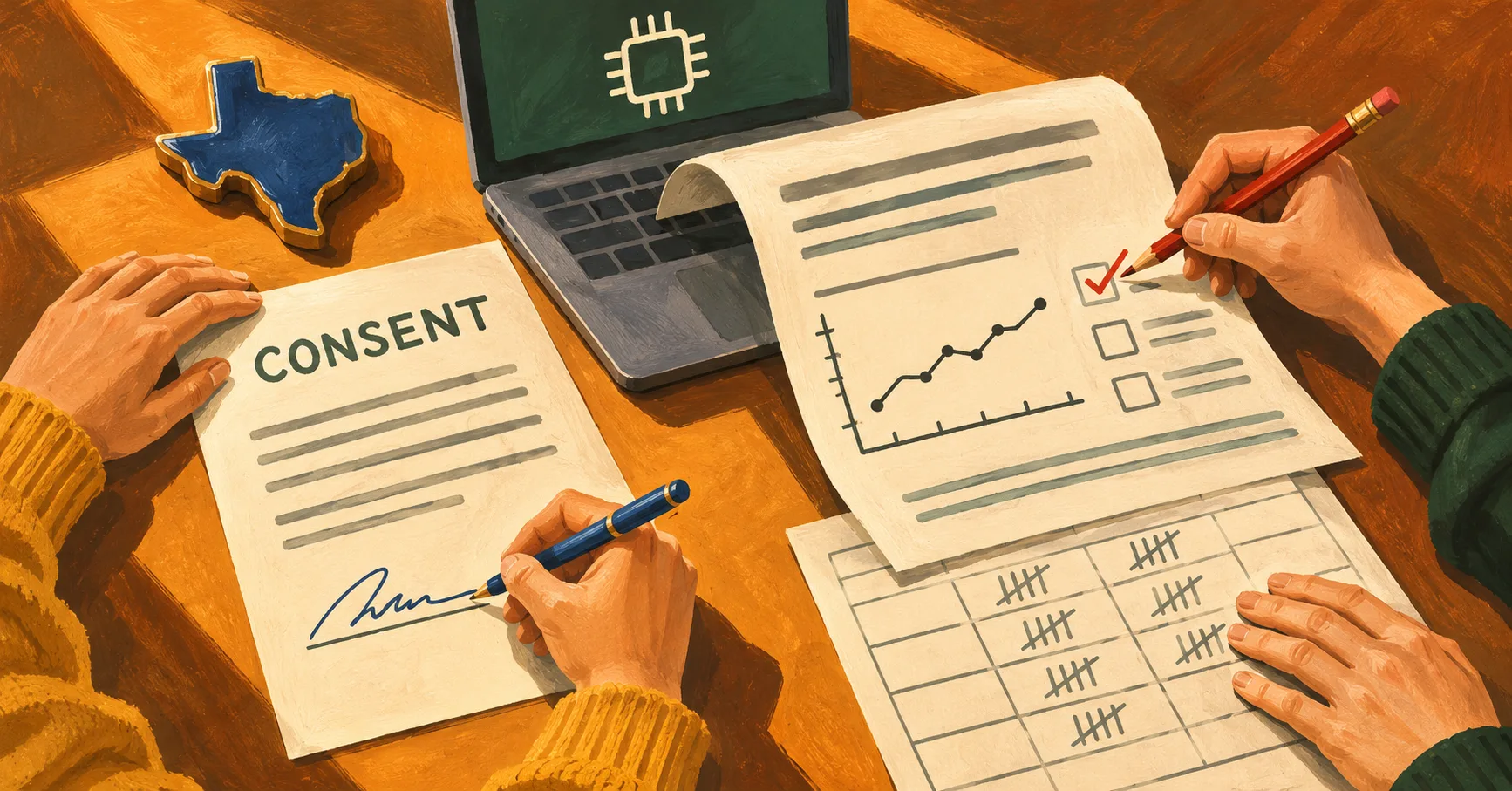
Another commenter suggested allowing practices to post a general AI notice. TDLR staff rejected that suggestion, saying a blanket notice would give clients less control over their health information, according to the Dispatch.
The December Filing Deadline
The commission met on Oct. 28 in Austin. As of Nov. 11, TDLR’s public notices for behavior analysts identified the June package as a proposal. BreakingNewsABA found no public notice that the commission had adopted it.
Texas law gives an agency six months from publication to adopt a proposed rule, adopt it with changes, or withdraw it. The six-month mark for the June 19 package falls on Saturday, Dec. 19. Texas Register rules allow the agency to file an adopted rule on the next business day, Monday, Dec. 21. If the agency takes no action within the permitted period, the Register publishes a notice of automatic withdrawal.
Dec. 8 is the next commission meeting date identified in public meeting materials. As of Nov. 11, those materials did not confirm a vote on the behavior analyst rules.
AT A GLANCE
| The proposal: | Changes to Texas’s behavior analyst licensing rules, published June 19, 2026 (16 Texas Administrative Code, Chapter 121). |
| Who it covers: | Licensed behavior analysts and licensed assistant behavior analysts. |
| Consent: | Written consent for specified uses of confidential or personal client data, including AI-assisted treatment and assessment, marketing, AI training, and research. Staff recommended narrowing the language on reports. |
| Limits on AI: | Individual review of AI-assisted client work, evidence checks, and a documented rationale for any AI-recommended restrictive or punishment-based procedure. AI alone could not determine the listed clinical work. |
| Status: | The advisory board recommended adoption Sept. 9. No commission adoption notice was found as of Nov. 11. |
| Deadline: | The six-month mark is Saturday, Dec. 19. The deadline to file an adopted rule is Monday, Dec. 21, 2026. |
| Next commission meeting: | Dec. 8 is the next identified meeting date. A vote on these rules had not been confirmed as of Nov. 11. |
| Already in force: | HB 149 requires disclosure of AI use in covered health care services and treatment. It took effect Jan. 1, 2026. |
SOURCES & REFERENCES
| 1. | Texas Department of Licensing and Regulation. Proposed changes to 16 TAC Chapter 121, Behavior Analysts, including §§121.75 and 121.100. Texas Register, June 19, 2026, 51 TexReg 3997–4006. https://www.sos.state.tx.us/texreg/pdf/backview/0619/0619is.pdf |
| 2. | Texas Department of Licensing and Regulation. “Summary of Proposed Rule Changes and Request for Comments and Information.” June 9, 2026. https://www.tdlr.texas.gov/news/rulemaking/2026/06/09/summary-of-proposed-rule-changes-and-request-for-comments-and-information-11/ |
| 3. | Hunter Young, ATA Action. Letter to Deanne Rienstra, TDLR general counsel, on proposed amendments to 16 TAC §§121.70–121.75. July 7, 2026. https://www.americantelemed.org/wp-content/uploads/2026/07/ATA-Action-Comments-on-TX-BA-AI-Rules.pdf |
| 4. | The Texas Dispatch. “Texas Would Make Behavior Analysts Get a Family’s Written Consent Before Using AI.” Sept. 16, 2026. https://thetexasdispatch.com/tdlr-behavior-analyst-advisory-board-september-9-2026-ai-written-consent-rule/ |
| 5. | U.S. Department of Health and Human Services, Office for Civil Rights. “Uses and Disclosures for Treatment, Payment, and Health Care Operations.” 45 CFR §164.506. https://www.hhs.gov/hipaa/for-professionals/privacy/guidance/disclosures-treatment-payment-health-care-operations/index.html |
| 6. | Texas Legislature. House Bill 149, 89th Legislature, enrolled text. §4 (Business & Commerce Code §552.051) and §10 (effective date). https://capitol.texas.gov/tlodocs/89R/billtext/html/HB00149F.htm |
| 7. | Texas Government Code. §2001.027, Withdrawal of Proposed Rule; §311.014, Computation of Time. https://texas.public.law/statutes/tex._gov%27t_code_section_2001.027 and https://tcss.legis.texas.gov/resources/GV/htm/GV.311.htm#311.014 |
| 8. | Texas Secretary of State. 1 TAC §§91.36(a) and 91.38(d), filing and automatic withdrawal of proposed rules. https://www.law.cornell.edu/regulations/texas/1-Tex-Admin-Code-SS-91-36 and https://www.law.cornell.edu/regulations/texas/1-Tex-Admin-Code-SS-91-38 |
| 9. | Texas Commission of Licensing and Regulation. March 24, 2026, meeting agenda, item Q, and public meeting calendar. https://www.tdlr.texas.gov/agendas/commagendas/agenda-2026-03-24.pdf and https://www.tdlr.texas.gov/commissioners.htm |
| 10. | The Texas Dispatch. “Commission That Inherited the Texas Lottery Takes Up Its Bingo Audit Plan Oct. 28.” Oct. 27, 2026. https://thetexasdispatch.com/commission-licensing-regulation-october-28-2026-bingo-audit-plan/ |
| 11. | Texas Department of Licensing and Regulation. Behavior Analysts News Articles. Reviewed Nov. 11, 2026. https://www.tdlr.texas.gov/news/category/behavior-analysts/ |
| 12. | Kansas Behavioral Sciences Regulatory Board. March 9, 2026, draft minutes, item XII.B, behavior analyst recommendations. https://www.ksbsrb.ks.gov/home/showpublisheddocument/5666/639138501159070000 |
| 13. | Behavior Analyst Certification Board. Ethics Code for Behavior Analysts (updated August 2024) and “Considerations for Using Artificial Intelligence in ABA Practice,” July 2024 newsletter, p. 3. https://www.bacb.com/wp-content/ethics-code-for-behavior-analysts/ and https://www.bacb.com/wp-content/uploads/2024/07/BACB_July2024_Newsletter-241021-a.pdf#page=3 |
| 14. | Breaking News ABA Editorial Team. “The Session Note Came First. CentralReach’s AI Now Drafts the ABA Reauthorization Report.” Oct. 12, 2026. https://breakingnewsaba.com/technology/session-note-came-first-centralreach-s |
| 15. | CentralReach. ReportDraftAI general availability announcement, Sept. 22, 2026. https://centralreach.com/blog/centralreach-launches-reportdraftai-to-cut-the-manual-work-behind-aba-reports/ |