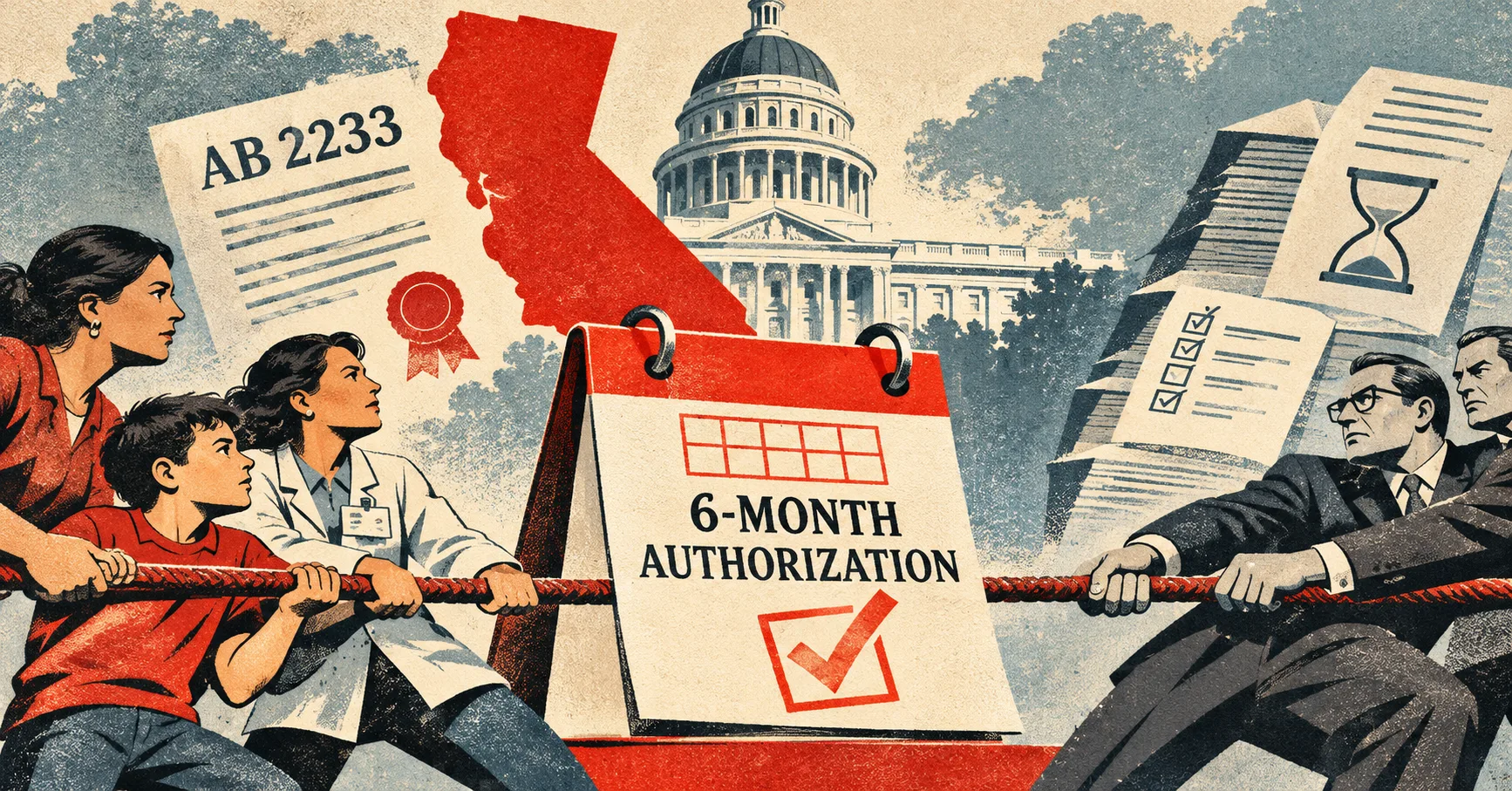



SACRAMENTO, CALIFORNIA – California health plans can no longer let approved autism therapy hours expire week by week. Assembly Bill 2233, signed by Governor Gavin Newsom in September, bars plans and insurers from placing weekly caps on hours they have already authorized. The law takes effect January 1, 2027.
The Autism Business Association, the provider group that sponsored the bill, says it lets families make up missed ABA sessions. The law itself is narrower. It never mentions make-up sessions or illness. It protects authorized hours, and only when the treatment plan and progress notes support how they are used.
What the New Law Actually Says
California already requires plans to cover autism treatment under a plan that a qualified autism service provider reviews every six months. Plans typically authorize hours for that six-month block.
AB 2233 says a plan “shall not impose restrictions on the utilization of authorized treatment hours within the six-month authorization period, including weekly caps or limitations” that cause unused hours to be forfeited. Insurers face the same rule. Approved hours must stay available for the whole period.
In practice, a session missed in one week can be delivered later in the same authorization instead of disappearing.

The Fine Print Providers Need
The protection has two conditions. How the hours are used must be “reasonably consistent with the treatment plan and clinical guidelines.” It must also be “documented in the treatment plan and progress reports.” The statute says both documents, not either one.
Plans keep utilization review, the process they use to check whether care is medically necessary. What they lose is the blanket weekly ceiling. To deny hours, a plan must now show that a specific pattern of use does not fit the treatment plan.
That moves the fight to the paperwork. Hours backed by the record are protected. Hours without it are not.
The law covers commercial plans regulated by the Department of Managed Health Care and insurers regulated by the Department of Insurance. According to the Senate Health Committee analysis, it does not apply to Medi-Cal.
Why Insurers Pushed Back
The sponsor told lawmakers that plans had started imposing weekly caps even while authorizing care in six-month blocks. The group said a patient who missed a session because of illness, a family emergency, or an unavailable provider could not make up those hours later in the authorization period.
The California Association of Health Plans and the Association of California Life and Health Insurance Companies opposed the bill. They said it “removes their ability to conduct utilization management on applied behavioral analysis therapy” and “could incentivize fraudulent billing and undermine clinical safety,” according to the Senate Health Committee analysis.
“This bill simply ensures that once care is prescribed and approved, patients are actually able to use it.” – Assembly member Tri Ta (R-Westminster), author of AB 2233
Senate committee staff warned the bill “may need amendments to maintain appropriate utilization management by health plans.” Ta, a Westminster Republican, agreed to them. That is where the two conditions came from. A proposal to limit the protection to “unavoidable circumstances, including patient illness, family travel, or provider unavailability” did not survive into the final law.
With those changes, the bill passed both houses without a single no vote.

What Changes on January 1
Regulators expect light lifting. The Department of Insurance projected costs of $6,000 to $18,000 a year for form review and enforcement in the law’s first two budget years. The Department of Managed Health Care called its costs minor.
For providers, the work starts now: treatment plans and progress reports that explain why hours shift across an authorization. Regulators can begin enforcing the rule, and families can begin relying on it, on January 1.
AT A GLANCE
| Law: | AB 2233 (Ta), Chapter 591, Statutes of 2026 |
| Takes effect: | January 1, 2027 |
| What it bans: | Weekly caps or other limits that make authorized hours expire within the six-month authorization |
| Conditions: | Use must fit the treatment plan and clinical guidelines and be documented in the treatment plan and progress reports |
| Still allowed: | Utilization review by plans and insurers |
| Who it covers: | State-regulated commercial plans and insurers; not Medi-Cal |
| Sponsor: | Autism Business Association |
| Opposed by: | California Association of Health Plans; Association of California Life and Health Insurance Companies |
SOURCES & REFERENCES