


The BACB ethics code gives us great guardrails. It tells us the bare minimum: don’t exploit people, protect private information, and stay within your skill set. But real life doesn’t happen inside a neat checklist. Real ethics lives in the messy moments:
• What do you do when an insurance company cuts therapy hours in half?
• What do you do when your company expects you to bill 30 hours a week just to keep your salary?
• What do you do when a child has mastered 50 flashcard goals, but mom is crying because she still can’t take her kid to the grocery store?
On our latest episode of Rad N Bad, Mike Carrero and I sat down with Dr. Jon Bailey and Zachary Stevens to discuss their new book, The Ethical Behavior Analyst. The big takeaway was clear: following a checklist is just compliance. Thinking ethically is a completely different skill.
The Trap of the Billable Hour
If we want to understand why clinicians feel burned out, we have to look at the money rules. When a company tells a BCBA, “You must bill 120 hours a month, or we will cut your pay,” they create a huge conflict of interest. Suddenly, clinicians are forced to look for reasons to bill more hours instead of asking what the client actually needs.
Following a checklist is just compliance. Thinking ethically is a completely different skill.
The same thing happens when clinics have a blanket rule that every child must attend 25 to 40 hours of therapy every week. That isn’t individualized therapy—that’s turning ABA into expensive daycare. As Dr. Bailey pointed out on the show, our science was never created to be a corporate profit engine. It was created to help people build better lives. When corporate spreadsheets decide clinical hours, the vulnerable client is the one who pays the price.
Real Supervision Isn’t Checking Boxes
Somewhere along the way, clinical supervision turned into a hotel check-in desk: “Did you get your 2,000 hours? Did you finish your unrestricted work? Did you sign the monthly paper? Great, here’s your certification. Good luck!” We are teaching future BCBAs how to complete fieldwork paperwork instead of teaching them how to be real professionals.
Growing up, a baseball coach used to tell me: “More is caught than taught.” People learn far more from watching our actions than from listening to our lectures. If we want ethical clinicians, we have to model what it looks like to:
• Admit when a treatment plan isn’t working.
• Push back against unfair business pressures.
• Handle insurance denials with honesty.
• Treat families with real empathy instead of clinical distance.
Confusing Therapy with Living
You can do everything “right” on paper. You can write perfect session notes. You can provide 20% supervision. You can show beautiful line graphs with scores going up. You can still fail a family if they end up completely dependent on you to get through the day. That is like teaching a child how to ride a bike, but you never let go of the seat. You’re just running alongside them holding the bike forever.
Families don’t wake up in the morning hoping for another 6-month authorization. They wake up hoping breakfast isn’t a battle. They hope their child makes a friend. They hope they can finally go out on a dinner date because the grandparents feel comfortable watching their kid. Those are the outcomes that change lives.
Our Profession’s Mirror Moment
Our field is standing at a major crossroads. We are facing tough feedback from critics, parents, and other healthcare workers. As behavior analysts, we make our living teaching people that feedback changes behavior. But when someone gives our own profession feedback, we get defensive. We act like defense attorneys trying to protect an identity instead of scientists looking at data.
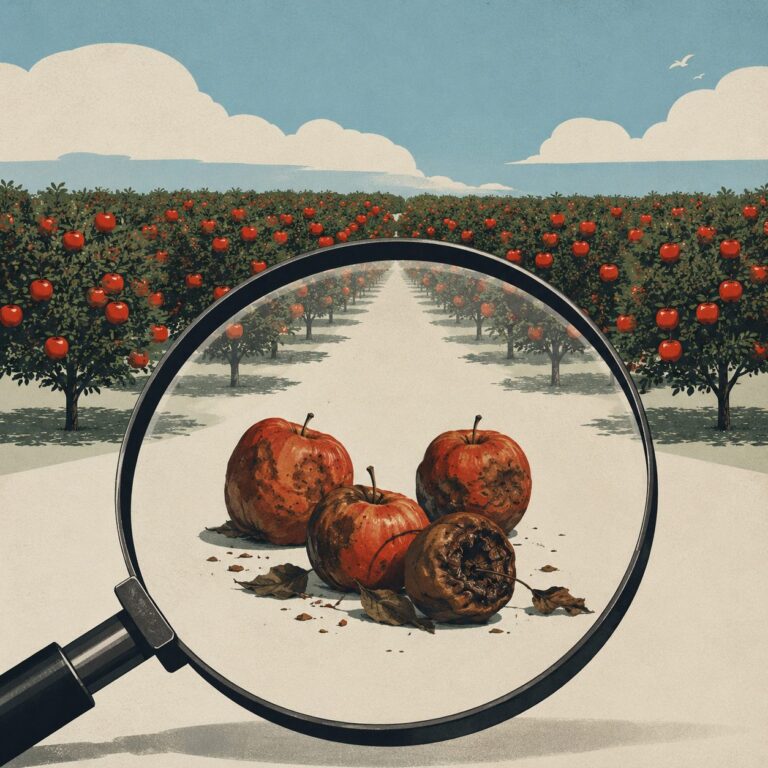
We need to take a hard look in the mirror. Growth doesn’t come from pretending everything is perfect. It comes from having the humility to learn, shape our practices, and get better. The future of behavior analysis won’t be won by whoever has the fanciest software or the highest billing numbers.
It will be won by the clinicians who remember that the ultimate goal of ABA isn’t to create great therapy. It’s to make therapy unnecessary.
AT A GLANCE
| Category: | Opinion • Ethics |
| Book discussed: | The Ethical Behavior Analyst, by Zachary A. Stevens, Jon S. Bailey and Mary R. Burch. Routledge, 1st edition, 2026. |
| Podcast: | Rad N Bad Podcast, hosted by Sean Yocum and Michael Carrero of Hickory Learning Group. 61 episodes as of August 2026. |
| Episode guests: | Dr. Jon Bailey and Zachary Stevens. |
| Ethics code referenced: | BACB Ethics Code for Behavior Analysts, effective January 1, 2022. |
| Billing quota cited: | 120 billable hours a month, or 30 hours a week, tied to salary. Figure cited in this column. |
| Blanket hours cited: | 25 to 40 therapy hours a week required of every child. Figure cited in this column. |
| Fieldwork hours cited: | 2,000 supervised fieldwork hours toward BCBA certification. Figure cited in this column. |
SOURCES & REFERENCES
| 1. | Stevens ZA, Bailey JS, Burch MR. The Ethical Behavior Analyst. 1st ed. New York: Routledge; 2026. ISBN 9781032988849. https://www.routledge.com/The-Ethical-Behavior-Analyst/Stevens-Bailey-Burch/p/book/9781032988849 |
| 2. | Rad N Bad Podcast. Hosted by Sean Yocum and Michael Carrero, Hickory Learning Group. Apple Podcasts. https://podcasts.apple.com/us/podcast/rad-n-bad-podcast/id1818091909 |
| 3. | Behavior Analyst Certification Board. Ethics Code for Behavior Analysts. Effective January 1, 2022. https://www.bacb.com/ethics-information/ethics-codes/ |





Join the discussion ▾