
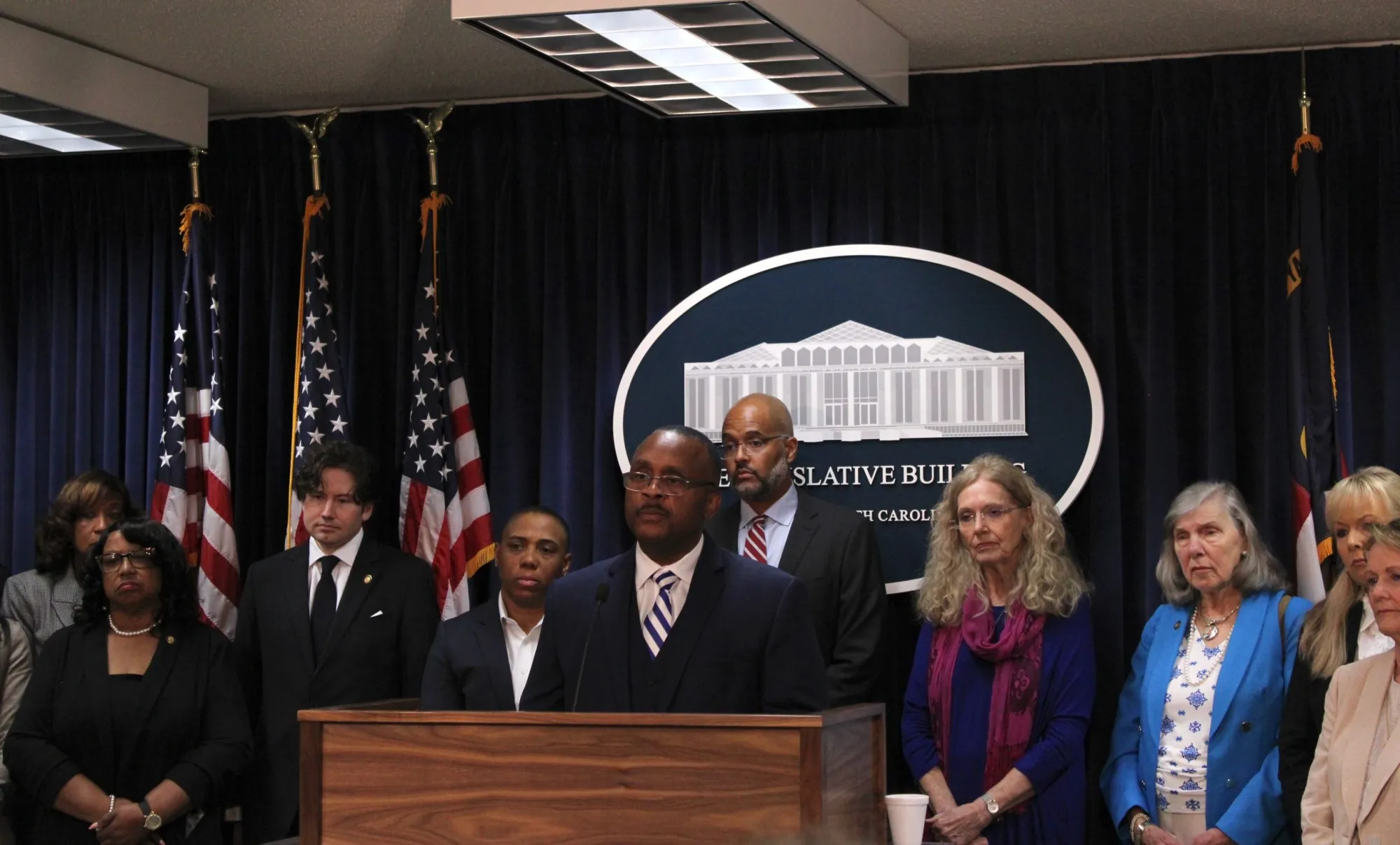
North Carolina is no longer only studying its ABA spending problem. It is changing the conditions under which Medicaid-funded ABA can be delivered.
Gov. Josh Stein signed House Bill 696 on April 30. The law directs the state to tighten its rules for out-of-state clinicians, telehealth, technician credentialing, supervision and treatment authorization. Some changes are expected to begin affecting providers around Aug. 1.
The important distinction is that the law has been signed, but not all implementation details are final.
North Carolina’s Department of Health and Human Services still has to translate portions of the law into Clinical Coverage Policy. Some changes also require formal rulemaking or federal approval. At least one major provision has already been revised since HB 696 passed.
For providers, that creates an uncomfortable combination: a short preparation window and a policy that is still moving.
Spending Growth Drove the Crackdown
North Carolina Medicaid spending on ABA increased from approximately $1.9 million in 2020 to more than $505 million in fiscal year 2025. State officials project that annual spending could exceed $1 billion by 2027.
The number of Medicaid beneficiaries receiving ABA also increased, but state officials said the spending growth cannot be explained by increased access or autism diagnoses alone. North Carolina Attorney General Jeff Jackson confirmed that his office is investigating possible improper payments and phantom billing.
That does not mean large payments prove misconduct. They do not. It means the state is no longer willing to operate the benefit under the same level of oversight.
HB 696 is the result. Instead of reducing ABA reimbursement rates directly, North Carolina is tightening the rules that determine who can provide care, how clinicians supervise it, and how frequently treatment must be justified.
The Monthly Authorization Rule Has Already Changed
One of the most controversial sections of HB 696 originally required monthly reauthorization for children receiving more than 16 hours of ABA per week.
That would have replaced the existing six-month authorization schedule with up to 12 reviews each year. Providers said a single reauthorization report can reach 50 pages and take weeks to prepare. Monthly reviews would have required clinicians to spend substantially more time producing reports while showing very little measurable change between reporting periods.
Lawmakers changed the requirement in the budget signed July 7. Under the revised approach, treatment plans exceeding 16 hours per week will be reviewed every three months instead of every month.
The change matters. It does not remove the administrative risk.
Quarterly authorization still doubles the number of annual reviews for affected clients. Providers will need to prepare four authorization packages per year instead of two. Managed care organizations and state reviewers will also receive twice as many submissions.
If those systems cannot process the additional volume on time, providers will face a difficult choice: continue delivering services without a valid authorization or pause treatment until the approval arrives. Neither option is clinically or financially neutral.
The Out-of-State Restriction Could Remove Clinical Capacity
The most immediate workforce concern is North Carolina’s restriction on out-of-state BCBAs and Qualified Autism Services Practitioner Supervisors enrolling in Medicaid.
The rule was partly driven by a statistic presented to lawmakers in March: 47% of supervising BCBAs licensed in North Carolina did not live in the state. More recent licensing data reviewed by NC Health News showed an even wider residency gap. Of 4,010 behavior analysts certified by North Carolina’s licensing board, only 1,917 had North Carolina addresses.
Out-of-state clinicians located within approximately 40 miles of a North Carolina patient may still qualify under the reported exception. For clinicians living farther away, the path is much less certain.
The legal restriction concerns Medicaid enrollment. It is not a general cancellation of a clinician’s certification. That distinction can disappear quickly inside an ABA organization, however. A BCBA who remains licensed but cannot participate in North Carolina Medicaid may no longer be able to supervise the same caseload.
One provider reported that four of its supervising BCBAs live outside North Carolina and work remotely. The organization estimated that half of its children could lose access if those clinicians can no longer supervise their care.
The source packet also identifies an unresolved implementation question. The enrollment ban applies to new out-of-state applications submitted on or after enactment. At the same time, July reporting describes providers preparing for broader workforce effects around Aug. 1. Agencies should not assume that every existing enrollment will be treated the same way.
They need written confirmation from NC Medicaid or the appropriate managed care plan for each affected clinician.
Remote Supervision Is Being Reduced
HB 696 also limits how often supervising clinicians can oversee treatment remotely.
The law places a 50% ceiling on remote supervision. The DHHS policy would go further, limiting remote supervision to 20% of therapy time. The proposed changes also call for in-person assessments and prohibit paraprofessionals from delivering certain ABA services through telehealth.
For providers, these rules change more than the location of a video call.
Organizations relying on remote BCBAs will need more local clinical coverage, more travel time, and different scheduling models. Supervisors may need smaller geographic territories or lower caseloads to complete in-person responsibilities. Agencies may also need to reconsider whether some rural cases remain operationally sustainable.
As remote supervision is not appropriate in every clinical situation, reducing remote care may improve oversight in some cases. Reducing it faster than providers can replace the workforce may reduce oversight altogether.
Technician Credentialing Will Change Hiring and Onboarding
The policy changes also affect the frontline technicians delivering most direct ABA services.
Technicians will need an RBT or ABAT credential after a 120-day grace period. Providers will therefore need to monitor certification timelines more closely and make sure new employees can complete training, competency requirements, and examinations before the grace period ends.
A 120-day deadline may look manageable on paper. It becomes more complicated when an agency is also replacing out-of-state supervisors, increasing in-person oversight and preparing twice as many authorization reports.
The April analysis also described a required 10% to 20% relationship between supervising-clinician services and paraprofessional services. If that requirement appears in the final policy as described, agencies will need to model whether their current BCBA capacity can support their existing technician hours.
The state is not only asking providers to document care differently. It is changing the staffing model required to deliver it.
Compliance Failures Will Carry Larger Consequences
North Carolina’s policy response is also moving beyond ordinary claims review.
The source packet describes enforcement that can escalate from payment recoupment to a one- or two-year Medicaid billing suspension for material and systematic noncompliance.
That increases the importance of documentation across the entire clinical operation. Providers will need records showing who delivered each service, where the clinician was located, whether supervision occurred in person or remotely, whether the technician held the required credential, and whether the treatment plan had a current authorization.
The difference between a clinically appropriate service and a payable Medicaid service will increasingly depend on whether the organization can prove that every new condition was satisfied.
What North Carolina Providers Should Prepare for Now
Providers should begin by identifying every Medicaid client receiving more than 16 hours per week and mapping the new quarterly authorization schedule. Clinical teams will need protected time for the additional reports, while billing teams should monitor approval dates before services are delivered.
Organizations should also review every supervising clinician’s residence, Medicaid enrollment category, and proximity to the North Carolina border. Existing enrollment should not be assumed to guarantee continued eligibility.
Remote-supervision models need to be recalculated using the stricter limits, not only the 50% ceiling contained in HB 696. Technician credentialing deadlines, in-person assessment requirements, and supervisor-to-technician capacity should be included in the same review.
Most importantly, providers need continuity plans for children whose current clinicians may no longer qualify. Finding a replacement BCBA after a rule takes effect is not a continuity plan.
At the same time, agencies should avoid treating every number in an earlier draft as final. The monthly authorization provision already became a quarterly requirement after providers and families raised concerns. Other implementation details may continue to change as DHHS revises Clinical Coverage Policy 8F and completes the required approval process. The Autism Society of North Carolina has said it is continuing to watch the treatment-hours and authorization provisions while advocating for individualized, medically necessary care.
North Carolina has a legitimate reason to examine a Medicaid benefit that grew from $1.9 million to more than $505 million in five years. Accountability is necessary.
The question is not simply whether North Carolina should oversee ABA spending more closely. It should.
The better question is whether the state can target improper billing without removing the clinicians, supervision, and administrative capacity that legitimate providers need to keep children in treatment.
AT A GLANCE
| HB 696 signed: | April 30, 2026 |
| Authorization for plans over 16 hours/week: | Original monthly rule changed to every three months (budget signed July 7) |
| Out-of-state enrollment: | Restrictions could affect a large share of NC’s supervising workforce (1,917 of 4,010 certified analysts have NC addresses) |
| Remote supervision: | DHHS policy may limit to 20% of therapy time, stricter than the statute’s 50% ceiling |
| Technician credentialing: | RBT or ABAT required after a 120-day grace period; higher staffing and compliance demands |
| Enforcement: | Can escalate from payment recoupment to a one- or two-year Medicaid billing suspension |
| Key date to watch: | Aug. 1, 2026, though not every provision follows the same approval timeline |
SOURCES & REFERENCES
| 1. | NC Health News. “NC families fear losing access to autism therapy as new rules take effect.” July 15, 2026. https://www.northcarolinahealthnews.org/2026/07/15/autism-aba-therapy-medicaid-new-rules/ |
| 2. | NC Health News. “NC moves to rein in soaring autism therapy costs.” April 27, 2026. https://www.northcarolinahealthnews.org/2026/04/27/autism-therapy-costs/ |
| 3. | StreamABA. “NC Just Answered the 47% Question: HB 696 Bans Out-of-State BCBAs and Rewrites ABA Medicaid Coverage.” April 22, 2026. https://streamaba.com/blog/nc-hb-696-aba-medicaid-overhaul |
| 4. | Carolina Journal. “Consent order would end lawsuit over NC Medicaid autism services.” July 1, 2026. https://www.carolinajournal.com/consent-order-would-end-lawsuit-over-nc-medicaid-autism-services/ |
| 5. | Autism Society of North Carolina. “Policy/Legislative Update – May 19, 2026 | Why ABA Treatment Is in the News in North Carolina.” May 19, 2026. https://www.autismsociety-nc.org/policy-legislative-update-may-19-2026-why-aba-treatment-is-in-the-news-in-north-carolina/ |