

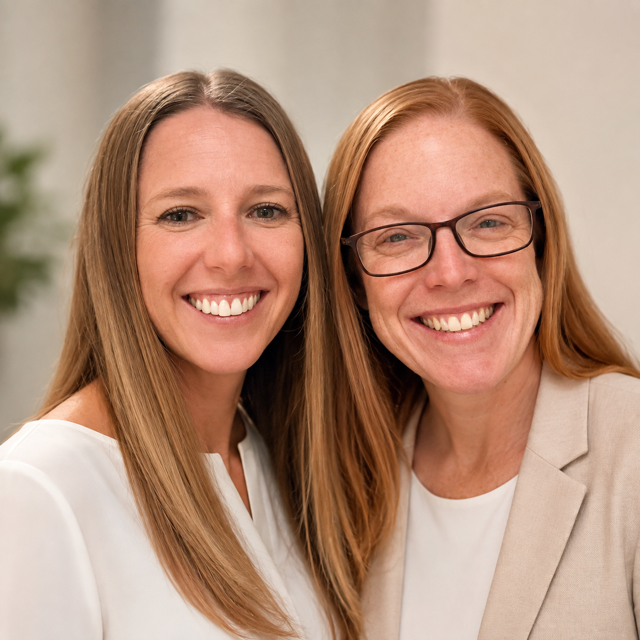
From Classrooms to Clinic Ownership
NEW MEXICO – Mary Wynn and Shannon Schum know nearly every seat in autism care. They spent their careers in early childhood education. They are parents of children with autism. For the past couple of years, they have co-owned an Essential Speech and ABA clinic, their first business, and at the end of this year both expect to finish their BCBA training. The clinic they run reflects all of it.
Start with the naps. The children at their clinic take naps, even though nap time is generally not billable and many ABA centers skip it for that reason, the owners said. They kept it because they came to ABA from early childhood education, where the day is built around what a developing child needs. “It’s not just, you know, billable hours,” as one of them put it in a joint interview with BreakingNewsABA. “It’s about the quality of care for each client and what they need.”
The two have known each other for about 15 years. Wynn has spent 17 of her own in early childhood education; Schum entered the field shortly after her, then left for a stretch to work at an ABA clinic. Both kept folding ABA methods into the childcare centers where they worked. “[W]e came up with this bright idea to partner with Essential Speech and ABA,” Wynn said. “And that was a couple years ago. And it’s been challenging and rewarding and all those things.”
The parent seat shapes many of those choices. Wynn’s child is now an adult, and she remembers fighting for public school supports 15 years ago, when far fewer existed. “I know a lot of the ins and outs of the IEP process in New Mexico, so I feel like I’m able to help with that from a parent perspective,” she said, referring to the individualized education program process that governs school-based services. That matters during tours, they said, when interested parents can hear from owners who went down the same avenues and hit the same hurdles.
Their child development training also surfaces in clinical conversation. One of the field’s growth areas, one of the owners said, is recognizing what is actually developmentally appropriate for a child. In New Mexico, they said, most clinics do not operate the way theirs does.
Learning the Clinical Side of the Business
Both women expect to finish their BCBA certifications at the end of this year. The push started with wanting to speak their clinicians’ language: they wanted the terminology and background “to be able to communicate effectively with the BCBAs that we have,” Schum said. “We’re pretty involved as owners. So we wanted to have even more involvement outside of operations.”
There is a succession logic to it as well. “As a business owner, it’s always good to have those backups,” Schum said. If the clinic ever hit a transition period with its BCBAs, she said, the owners would not rely solely on others to keep it operating.
Certification as an owner comes with a complication. The owners said they were told early on that working as RBTs (registered behavior technicians) in a clinic they own would pose a conflict of interest, so each completes her supervised fieldwork through her university and pays for an outside supervisor rather than logging hours under the clinic’s own BCBAs. They still draw on the clinic’s clients for one-on-one training opportunities, they said, but the supervision itself stays external.
The workaround has an upside. An outside supervisor brings a perspective beyond their own clinic, one of them said, and a weekly supervision group connects them with people from California, Florida, and elsewhere, including one who owns a school and another who applies ABA in a detention center.
Schum’s understanding of the field also comes from working at other ABA companies before owning one. Wynn’s runs through her own family. “I was apprehensive when I first discovered ABA. I didn’t like a lot of what I saw … and that was 15 years ago,” she said. “[L]ooking at it now, I’m like, oh, it’s leaps and bounds different than what it was. And I think it’s going to continue changing.”
What the two of them keep working at is the common divide between clinical and operations teams that runs through most ABA organizations. “It can be such a divide between the two in this industry,” Schum said, a divide she argues does not have to exist. Clinical staff does not need to run operations, she said, but they should understand the reasoning behind operational decisions, because “one can’t work without the other.”
“I think if you kind of bridge that gap even within your company of the clinical and operations, then overall it operates more efficiently as well as clinically sound.” – Shannon Schum, co-owner, Essential Speech and ABA (2026)
The owners run the clinic with as much transparency as they can manage between the two sides, Schum said. “If we don’t have our operations tight, we’re not going to have clients for the clinical side of things to work on. So you have to have both.”
Work with vulnerable populations tends to be underpaid and underappreciated, the owners said, and they want their clinic to push the industry in a better direction. “It’s not new, but it is new [in some ways], and it’s growing,” Wynn said of ABA. “And I think we’re going to be part of the change.”
Insurance and the Diagnosis Bottleneck
Wynn names insurance as the field’s biggest challenge, along with the state-by-state variation that comes with it. The complaint is not abstract. ABA is generally covered only for children who have an autism diagnosis, the owners said, and even a diagnosed child can be denied if the plan decides the requested volume of services is not necessary.
Getting the diagnosis is its own bottleneck. Insurers have narrowed which diagnosticians they will accept, the owners said, which has made the process especially difficult in New Mexico and stretched waitlists for the youngest children. Families who can afford a private diagnosis get through faster than families waiting on a diagnosis that insurance will pay for. Early intervention windows close while parents wait, advocate, and push. Some families call the clinic ready to start, they said, and never get services in place before the child leaves for kindergarten.
Their wish list starts with making the insurance process easier for parents and providers alike. They would like ABA eligibility to reach beyond an autism diagnosis, arguing the therapy can help many children who will never receive one. They want more cross-disciplinary collaboration; the clinic already brings speech partners into its building, and they would like to add occupational therapy as well. School-based work appeals to them too, though the clinic is clinic-only today and they do not see that changing in the near future.
Inside the Essential Speech and ABA Franchise
Wynn and Schum operated at a high level in their previous job, Schum said, but this is their first business, and the franchise made the leap workable. “We got really lucky when we found Essentials, because they have made it very easy for us to collaborate with them,” she said. “It very much feels like a family where we can call them at any time and ask them for advice, ask them for questions …”
The franchise also supplies a billing department, a marketing team, operations support, and clinical BCBA resources, Wynn said. She contrasts her experience with that of a friend who owns a business franchise outside ABA and chafes at how much is dictated to her.
“While we do have those parameters set, never once have I felt like this isn’t our business.” – Mary Wynn, co-owner, Essential Speech and ABA (2026)
The franchisor listens, Wynn said. It has incorporated the pair’s suggestions when it judged them useful to other locations, and it gives her somewhere to bounce ideas off before testing them in her own clinic. The next change is already on the calendar: both owners expect to complete their BCBA certifications at the end of 2026.
AT A GLANCE
| Owners: | Mary Wynn and Shannon Schum, co-owners of an Essential Speech and ABA franchise clinic in New Mexico |
| Backgrounds: | Early childhood education; Wynn has 17 years in the field, and the two have known each other about 15 years (author interview, August 2026) |
| Personal stake: | Both have children with autism; Wynn’s child is now an adult |
| Franchise partnership: | Began about two years ago, per the owners (August 2026) |
| BCBA status: | Both expect to complete certification at the end of 2026; supervision hours are completed through their university programs with external supervisors. |
| Service model: | Clinic-based only; speech partners come on site, with occupational therapy a goal |
| Biggest challenge cited: | State-by-state insurance processes and coverage limited to children with an autism diagnosis |
SOURCES & REFERENCES
| 1. | Author interview with Mary Wynn and Shannon Schum, co-owners of an Essential Speech and ABA clinic in New Mexico. Conducted by video, August 2026. Recording and transcript on file with BreakingNewsABA. |
| 2. | Interview notes and summary prepared by the author, August 2026. |


Join the discussion ▾