78%: The Number That Defines This Program’s Market Position
BOSTON, MASSACHUSETTS — when Simmons University reports a 78 percent first-attempt BCBA exam pass rate for its online MS in Behavior Analysis in 2024, it is making one of the most specific and verifiable claims available in graduate ABA education. Pass rates are the closest thing the field has to an objective outcome metric for program quality, and 78 percent — 24 percentage points above the 54 percent national first-attempt average reported by the Behavior Analyst Certification Board — places Simmons well into the upper tier of programs that report this figure publicly.
The national context matters for interpreting that number accurately. The Behavior Analyst Certification Board publishes aggregate first-attempt pass rate data annually, and for the 2024 examination cycle the overall first-attempt rate across all BCBA candidates was 54 percent. A program-reported rate of 78 percent, calculated from a cohort that actually sat for the exam in the reporting year, represents a genuine and substantial positive deviation from the field norm — not a rounding artifact, not a selection-bias product of a tiny cohort.
As with any program-reported pass rate figure, prospective students should ask Simmons directly about cohort size and timing windows: how many students are in the 2024 cohort on which the figure is based, and whether it counts only students who sat within a defined post-graduation window. Simmons sources the 78 percent directly from the 2024 BACB pass rate report, which is the correct primary source and is cited verbatim on the program page. That is the right kind of provenance, and it is the kind of sourcing that distinguishes a real outcome claim from a marketing one.
78% is not a rounding error above the national average. It is 24 points above. For a prospective student or a hiring manager, that differential is the most concrete quality signal available in online ABA education.
The 20-Month Timeline: Structured for Completion
Simmons’ online MS in Behavior Analysis is designed to be completed in 20 months, a timeline that positions it between the fastest options in the market (some programs under 15 months) and the more traditional 24-month programs. For most working professionals, 20 months represents a manageable commitment that does not require either the all-in acceleration of a compressed sprint or the extended opportunity cost of a two-year program.
The 20-month structure also reflects a deliberate sequencing of coursework that Simmons has refined over time. Programs that attempt to compress too aggressively often sacrifice the depth of conceptual development that translates into strong exam performance — the tension between speed and preparation is a real one, and Simmons’ 2024 pass rate data suggests its 20-month structure has resolved that tension more effectively than most competitors. The program is not the fastest available, but it appears to be among the most effective at the specific goal of producing graduates who pass the BCBA exam on the first attempt.
Fieldwork structure: Simmons requires students to work at a University-approved practicum site under a University-approved supervisor for a minimum of 5 hours per week and 45 hours per semester, and to complete 90 supervised experiential learning hours as a condition of graduation. On the BACB side, students can accrue up to 2,000 experience hours by the end of the fourth term — meaning students who time it right can complete their BACB fieldwork inside the program rather than after it. Unlike programs that leave fieldwork sourcing entirely to the student, Simmons provides placement support to help students identify an appropriate worksite.
The program draws students from a range of professional backgrounds. ABA technicians and registered behavior technicians (RBTs) seeking to credential up, special educators pursuing a clinical credential, and career-changers from adjacent health and human services fields are all represented in Simmons’ applicant pool. The 20-month timeline serves each of these groups differently: for RBTs who are already accumulating fieldwork hours in their current positions, the timeline aligns naturally with their career trajectory. For career-changers who need a placement from scratch, the program’s placement support is the piece that makes the 20-month pace realistic rather than aspirational.

Simmons as an Institution: What the University Brings to the Program
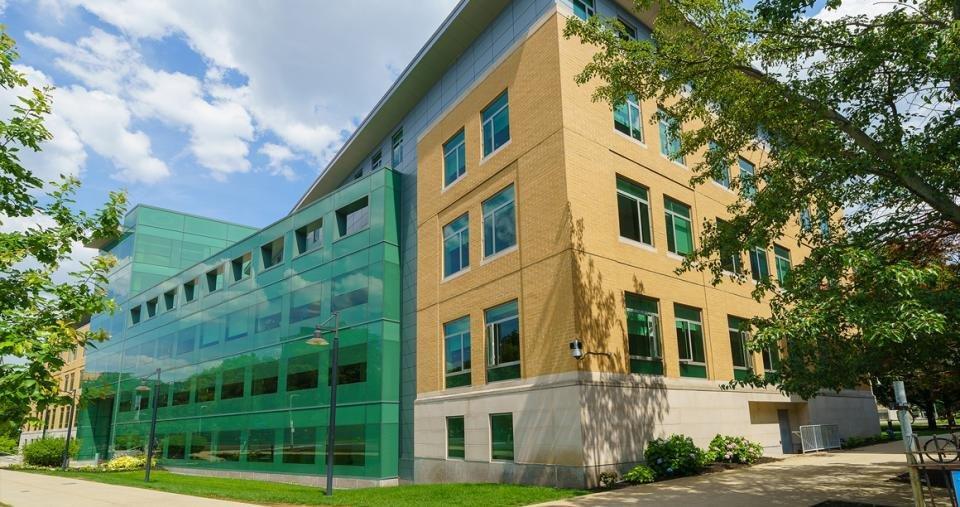
Simmons University has a distinct institutional identity that shapes how its ABA program is perceived in the market. Founded in 1899 as a women’s college and now a co-educational university at the graduate level, Simmons has built its reputation around professional graduate programs in health sciences, social work, library science, and education. Its graduate programs have consistently ranked among the stronger professional master’s offerings in New England, and the university’s Boston location places it in close proximity to a dense healthcare and academic ecosystem that informs both faculty hiring and alumni career placement.
The Behavior Analysis program benefits from Simmons’ established infrastructure for professional graduate education, including academic support services, career counseling, and alumni networks in healthcare and education that extend well beyond the ABA sector. For students who anticipate working in school-based or multidisciplinary clinical settings — where behavior analysts collaborate routinely with educators, occupational therapists, speech-language pathologists, and social workers — Simmons’ cross-disciplinary professional network has practical value that single-discipline ABA programs do not provide.
The university is regionally accredited by the New England Commission of Higher Education (NECHE), which is the relevant standard for graduate degree recognition by employers, licensing boards, and financial aid programs. More specifically to the field, the online MS in Behavior Analysis is accredited by the Association for Behavior Analysis International Accreditation Board through 2030 — not simply ABAI-verified, but fully accredited, which is the stronger of the two designations and the closest thing the discipline has to a program-quality seal of approval from its primary professional body.
Who Simmons Is Built For
Simmons’ online MS occupies a specific position in the landscape of online ABA graduate education: a mid-sized, professionally-oriented university offering a nationally-available online program with strong exam outcomes and full ABAI accreditation. Where large online education platforms treat graduate programs as a revenue extension of an undergraduate research university, Simmons offers the intimacy of an institution where professional graduate programs are the institutional core rather than a side channel.
For students who value smaller cohort sizes, more direct access to faculty, and a program culture that reflects the norms of a professional graduate school rather than a large online education platform, Simmons offers a distinct experience. Whether that experience translates into meaningfully different outcomes beyond the pass rate advantage is difficult to measure objectively, but it is a real differentiator for students for whom program culture and faculty relationship are decision-relevant factors.
For employers and practice owners, Simmons graduates represent a candidate pool with a first-attempt BCBA pass rate 24 points above the national average and a training foundation backed by full ABAI accreditation. That is the most useful single-number filter available when evaluating candidates from multiple programs, and it is a data point worth factoring into hiring criteria alongside fieldwork quality, supervision history, and post-hire performance indicators.
AT A GLANCE
Institution: Simmons University — Boston, MA (fully online delivery)
Degree: MS in Behavior Analysis
First-attempt BCBA pass rate (2024): 78% — 24 percentage points above the 54% national average (2024 BACB report)
National average (BCBA exam, 2024): 54% first-attempt pass rate (BACB aggregate data)
Completion timeline: 20 months
Delivery format: Fully online; designed for working professionals
Program accreditation: Association for Behavior Analysis International Accreditation Board, 2026–2030
Regional accreditation: New England Commission of Higher Education (NECHE)
Institutional profile: Private university; Boston, MA; historically professional graduate education focus
Fieldwork model: University-approved practicum site under a University-approved supervisor; minimum 5 hours/week, 45 hours/semester; 90 supervised experiential learning hours required to graduate; up to 2,000 BACB experience hours accruable by end of 4th term; placement support provided by the program
Best fit for: RBTs credential-tracking up; working professionals seeking a high pass-rate online program with ABAI-accredited pedigree
Website: simmons.edu/academics/programs/behavior-analysis-online
SOURCES & REFERENCES
1. Simmons University. “Behavior Analysis: Online.” simmons.edu/academics/programs/behavior-analysis-online (accessed April 2026; cites 78% 2024 first-attempt pass rate, 20-month completion, ABAI accreditation 2026–2030, fieldwork structure)
2. Behavior Analyst Certification Board. “BCBA Examination Pass Rates for University Training Programs (2024).” bacb.com (primary source for Simmons’ 78% and the 54% national first-attempt pass rate)
3. Behavior Analyst Certification Board. “University Examination Pass Rates.” bacb.com/university-examination-pass-rates
4. Behavior Analyst Certification Board. BCBA/BCaBA Task List, Fifth Edition. 2017. bacb.com
5. Association for Behavior Analysis International. ABAI Accreditation and Verification Program. abainternational.org/accreditation
6. New England Commission of Higher Education (NECHE). Simmons University institutional accreditation. neche.org