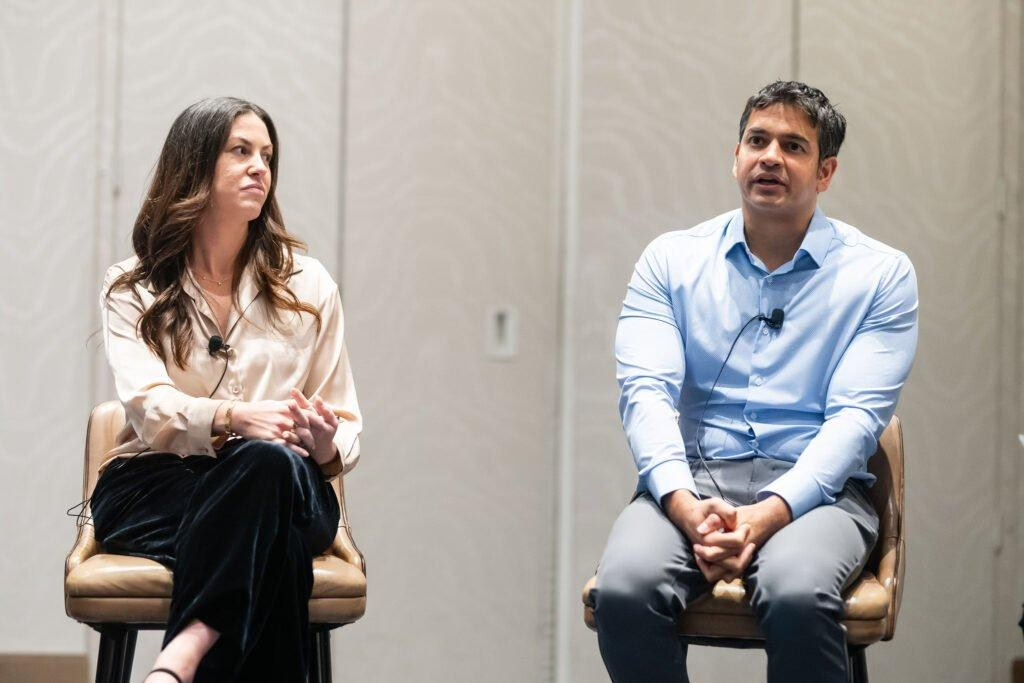
SAN DIEGO, CALIFORNIA — Cortica did not begin as a startup. It began as a clinic. In 2013, Suzanne Goh — a board-certified pediatric behavioral neurologist, behavioral analyst, and neuroscience researcher who had trained at UCSF and Harvard Medical School — opened a practice in San Diego with a simple but sweeping premise: that treating autism by routing children through a series of disconnected specialists was not just inefficient, it was clinically suboptimal. The fragmentation itself was the pathology.
Goh’s model integrated behavioral therapy with medical care from the start — neurologists, behavior analysts, speech pathologists, and occupational therapists functioning as a single coordinated team around each child, sharing data, aligning treatment goals, and adjusting plans in real time as new information emerged from across disciplines. In the siloed world of autism care, where families routinely managed separate relationships with ABA providers, neurologists, gastroenterologists, and school specialists out of a binder they carried between offices, this was not incremental improvement. It was a different philosophy.
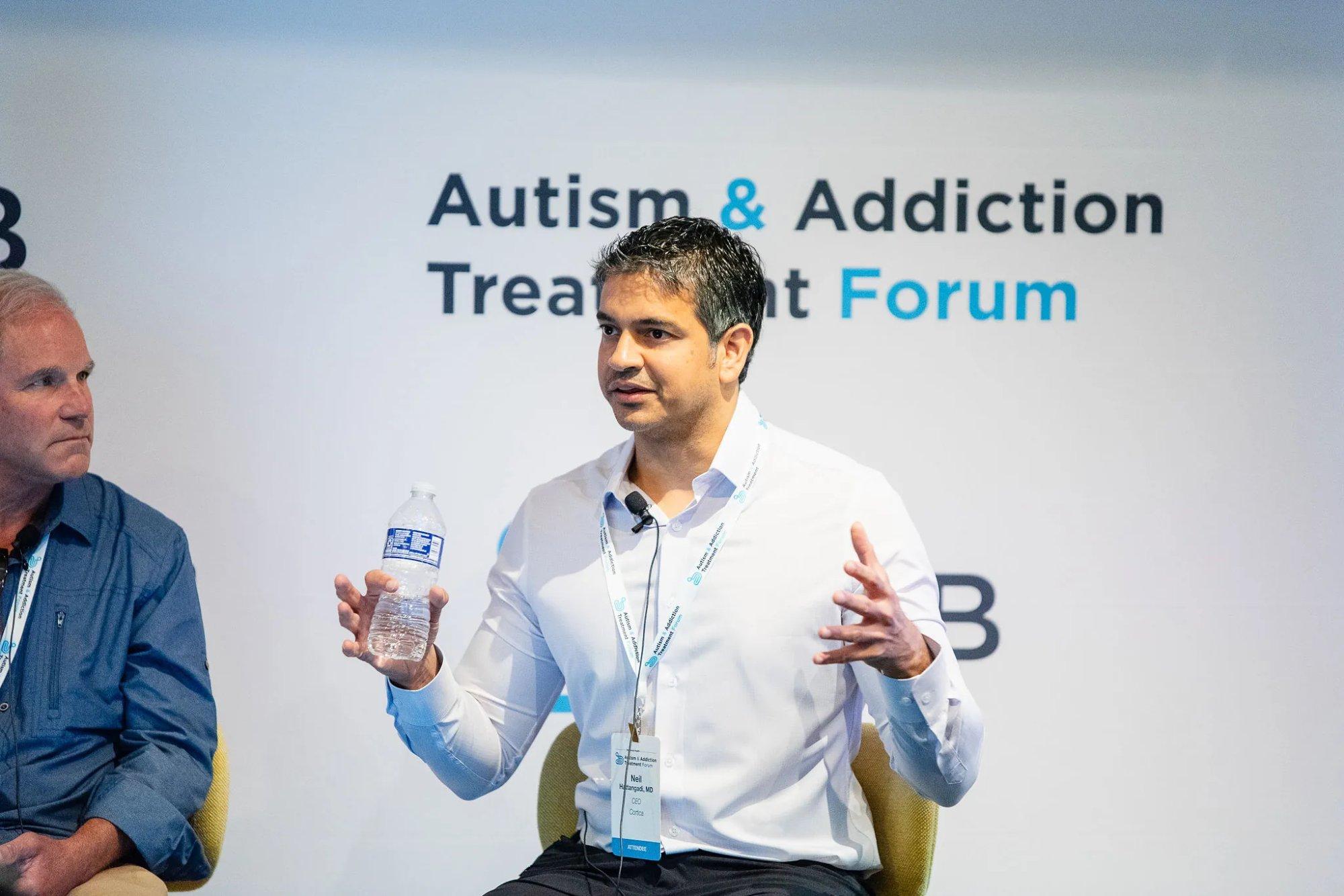
Within three months of opening, the clinic had 25 employees. By 2017, it had grown to approximately 150. That year, Goh brought in her husband, Neil Hattangadi, to scale what she had built. Hattangadi was not a stranger to ambitious healthcare ventures. After graduating summa cum laude from Duke with degrees in biomedical engineering, economics, and chemistry, he had gone to Oxford as a Rhodes Scholar to study computer science, then to Harvard Medical School for his MD. He had worked at McKinsey, invested in healthcare equities at Citadel Asset Management and SAC Capital, and helped lead three medical device companies — FoxHollow Technologies, Volcano Corporation, and Spirox — through successful exits totaling more than $1 billion in aggregate value. What he had never done was build a care delivery company.
Goh, for her part, had done the clinical work. A Toledo, Ohio native who completed her undergraduate degree at Harvard summa cum laude, earned her Rhodes Scholarship in 1997, graduated from Harvard Medical School cum laude in 2004, and completed her pediatric neurology residency at UCSF, she had also pursued her board certification as a behavior analyst — making her, in the relatively small world of physicians who hold dual clinical credentials spanning medicine and behavior analysis, a genuinely unusual practitioner. The Cortica Care Model was hers. The question of whether it could scale nationally was Hattangadi’s to answer.
THE MODEL: LESS ABA, NOT MORE
Cortica’s clinical differentiation rests on a claim that runs directly counter to the dominant commercial logic of the ABA industry: that intensive behavioral therapy — the 25-to-40-hour-per-week ABA protocols that define the standard of care for young children with autism — is, in many cases, more than children need to achieve good outcomes. Cortica’s model delivers approximately 15 to 20 hours of ABA per week, embedded within a coordinated multidisciplinary program, and argues that this lower-intensity, integrated approach produces outcomes equal to or better than the standard model at significantly lower cost.
The discipline mix reflects the model’s medical grounding. In addition to ABA, Cortica’s centers offer speech-language therapy, occupational therapy, physical therapy, and music therapy. Each center maintains on-staff pediatric neurologists, developmental pediatricians, pediatric nurse practitioners, and epileptologists. Specialty services extend to genetics, gastroenterology, and nutrition — the co-occurring conditions that affect the majority of autistic children but that pure ABA clinics are structurally unable to address. Family counseling is embedded in the care model, not referred out. Diagnostic services, including autism evaluations, are provided in-house.
The rationale is biological as much as it is operational. Goh’s research and clinical work focused on the neurological underpinnings of autism — sleep disorders, seizures, psychiatric comorbidities, gastrointestinal conditions — that can significantly affect a child’s behavior and development but that conventional ABA-only care treats symptomatically at best. The Cortica model starts from the premise that improving a child’s medical status — treating a sleep disorder that was preventing consolidated learning, addressing a GI condition that was driving challenging behavior — can accelerate behavioral progress in ways that additional ABA hours cannot.
“Often in a two working parent household, one of the two parents leaves their job to coordinate care for their child. The fragmentation is the number one issue we set out to solve, and our solution is bringing all these providers together as a common team.”
Published clinical outcomes data from Cortica’s model show improved results across conditions that co-occur with autism — including reduced seizure frequency, better sleep, fewer psychiatric hospitalizations, and lower emergency department utilization — while using less than half the standard ABA volume. The company reports 34 percent in annual savings per patient compared to traditional care, a figure that has become central to its commercial argument to payers.
THE CAPITAL STACK: $255 MILLION AND WHO WROTE THE CHECKS
Cortica’s funding history is itself a statement about how the company has been received across different investor categories — and how its value-based care thesis has landed with strategic backers who have direct financial exposure to healthcare cost.
2021 · $60 million · Series C — Longitude Capital, .406 Ventures, Adam Boehler
2023 · $115 million · Series D — CVS Health Ventures, LRVHealth, Ascension Investment Management
2024 · $80 million · Strategic — Morgan Health (JPMorganChase), Nexus NeuroTech Ventures
The 2021 Series C brought in Adam Boehler — former director of the Center for Medicare and Medicaid Innovation (CMMI) under the Trump administration and founder of Landmark Health — and Martha Temple, former CEO of Optum Behavioral Health and market president at Aetna, to Cortica’s board. The practical significance was not just capital: it was Cortica acquiring board members whose professional networks and policy credibility could open doors to the value-based care contracts the model requires.
The 2023 Series D, led by CVS Health Ventures, brought a major payer-affiliated strategic investor directly into the company at scale. CVS Health’s rationale was explicit — it saw Cortica’s integrated model as addressing a care coordination failure that was generating avoidable costs across the employer-sponsored and Medicaid populations it served. Ascension Investment Management and the University of Wisconsin Foundation also participated.
The November 2024 round brought the most strategically significant investor yet: Morgan Health, the JPMorganChase business unit focused on improving employer-sponsored healthcare. Morgan Health co-led the $80 million raise alongside Nexus NeuroTech Ventures, with participation from the Autism Impact Fund. The Morgan Health investment came with a commercial commitment: JPMorganChase would offer Cortica to its own employees, moving from fee-for-service toward value-based contracts. For a company whose model is fundamentally a bet on value-based care, having the employer of roughly 300,000 people in the United States as both an investor and a customer is not a small thing.
THE SCALE: 24 LOCATIONS, 2,000 CLINICIANS, 20,000 FAMILIES
By the close of 2024, Cortica operated 24 medical home clinics across eight states — California, Arizona, Texas, Illinois, New Jersey, Connecticut, Massachusetts, and Washington — and employed more than 2,000 clinicians spanning every discipline in its care model. The company expected to serve more than 20,000 children and families in 2024, working with 35 payers through a mix of fee-for-service and value-based contracts.
The clinical workforce is deliberately structured differently from a conventional ABA company. Cortica’s headcount includes pediatric neurologists, epileptologists, developmental pediatricians, pediatric nurse practitioners, speech-language pathologists, occupational therapists, physical therapists, music therapists, board-certified behavior analysts, marriage and family therapists, and geneticists. Recruiting and retaining this breadth of clinical talent — across specialties that often command higher market wages than behavioral technicians — is a cost structure that the standard ABA billing model cannot support. It requires either higher reimbursement rates, value-based contracts that share in the savings the model generates, or both.
Cortica’s Innovation Network conducts outcomes research across its patient population and supports clinical trial recruitment, with what the company describes as the largest longitudinal and comprehensive dataset in autism and neurodevelopment. Floreo VR, a virtual reality platform for social skills training, is incorporated into certain care protocols. The proprietary clinical data system Hattangadi has been building is intended to make the model both more replicable and more defensible as the company enters new markets.
THE VALUE-BASED CARE BET: THE MODEL THAT HASN’T SCALED YET
The single largest strategic risk in Cortica’s model is not clinical — it is commercial. The company’s entire cost structure and competitive positioning depends on payers being willing to move from fee-for-service ABA billing to value-based arrangements that compensate Cortica for outcomes and savings rather than service volumes. Without value-based contracts, the integrated model is expensive to operate and difficult to explain to health plans accustomed to authorizing discrete therapy units.
As of late 2024, Cortica had executed seven whole-child value-based care contracts with health plans, with more in development. By early 2026, the company reports 17 value-based arrangements across its 35 payer relationships — meaning nearly half of Cortica’s payer contracts now include some form of outcomes-based reimbursement. Seventeen contracts across 35 payer relationships is no longer a proof of concept. It is a commercial trajectory — though whether the pace of conversion can outrun the cost structure of the integrated model remains the central tension of Cortica’s next chapter. The fee-for-service market is what actually pays most of the bills, and fee-for-service ABA billing — which Hattangadi has described as actively incentivizing overutilization — is the same reimbursement structure Cortica is trying to replace.
The tension is real and Hattangadi has not been shy about naming it. In multiple investor conversations, he has described the legacy ABA reimbursement model as inadequate to support the whole-child care needs of autistic children — a pointed critique from a CEO whose company depends on those same payers authorizing its services. The Morgan Health investment, with its explicit commitment to evolve fee-for-service arrangements toward value-based models for JPMorgan employees, is Cortica’s best current proof point that the commercial transition is possible. It is not yet evidence that it is happening at the pace the business plan requires.
Cortica’s counterparts in the academic medical center world — the Lurie Center at Mass General, the Thompson Autism Center in Long Beach — operate similar integrated models at limited scale, subsidized by research funding and institutional endowments. Cortica has chosen to build the same clinical model at venture-backed growth company speed, in a market that has not yet reorganized its reimbursement infrastructure to reward integration. Whether the capital can outlast the transition is the central question of the company’s next phase.
AT A GLANCE
Company: Cortica, Inc.
CEO: Neil Hattangadi, MD, MSc (Co-Founder)
CMO: Suzanne Goh, MD, BCBA (Co-Founder)
Headquarters: San Diego, California
Founded: 2013 (clinic by Suzanne Goh); 2017 (Cortica formalized with Neil Hattangadi)
Hattangadi Education: B.S. summa cum laude, Biomedical Engineering / Economics / Chemistry, Duke University; Rhodes Scholar, M.Sc. Computer Science, University of Oxford; MD, Harvard Medical School
Goh Education: B.A. summa cum laude, Harvard University; Rhodes Scholar (1997); MD cum laude, Harvard Medical School (2004); Pediatric Neurology Residency, UCSF; Postdoctoral Autism Research Fellowship, Columbia University
Total Funding: $255M+ (Series C through Strategic rounds, 2021–2024)
Series C (2021): $60M — Longitude Capital, .406 Ventures, Adam Boehler
Series D (2023): $115M — CVS Health Ventures, LRVHealth, Ascension Investment Management
Strategic (2024): $80M — Morgan Health (JPMorganChase), Nexus NeuroTech Ventures, Autism Impact Fund
Locations: 24 medical home clinics across 8 states (CA, AZ, TX, IL, NJ, CT, MA, WA)
Clinicians: 2,000+ (multidisciplinary: neurologists, BCBAs, SLPs, OTs, PTs, music therapists, counselors, geneticists, developmental pediatricians, NPs, epileptologists)
Patients: 20,000+ children & families annually (2024 est.)
Payer Relationships: 35 payers; 17 whole-child value-based care contracts out of 35 payer relationships (as of March 2026)
Clinical Model: Cortica Care Model — integrated multidisciplinary; ~15–20 hrs ABA/week (vs. industry standard 25–40); medical + behavioral under one roof
Reported Savings: 34% annual savings per patient vs. traditional care model
Key Outcomes: Reduced seizure frequency, improved sleep, fewer psychiatric hospitalizations, lower ED utilization — at less than half standard ABA volume
Technology: Axon (proprietary clinical data platform); Floreo VR (social skills training); Innovation Network for outcomes research & clinical trial recruitment
Board Members: Adam Boehler (fmr. CMMI Director, Landmark Health founder); Martha Temple (fmr. CEO, Optum Behavioral Health; fmr. Market President, Aetna)
Hattangadi Prior Career: McKinsey; Citadel Asset Management; SAC Capital; led FoxHollow Technologies, Volcano Corporation & Spirox through exits totaling $1B+
Recognition: Inc. Female Founders 200 (Suzanne Goh); San Diego Business Journal CEO of the Year (Neil Hattangadi); SD 500 Most Influential
CONTACT & LINKS
Company: Cortica, Inc.
CEO: Neil Hattangadi, MD (Co-Founder)
CMO: Suzanne Goh, MD, BCBA (Co-Founder)
Headquarters: San Diego, California
Founded: 2013 (clinic); 2017 (Cortica formalized)
Funding: $255M+ total (Series C–Strategic, 2021–2024)
Locations: 24 centers, 8 states
Patients: 20,000+ annually (2024 est.)
Website: corticacare.com