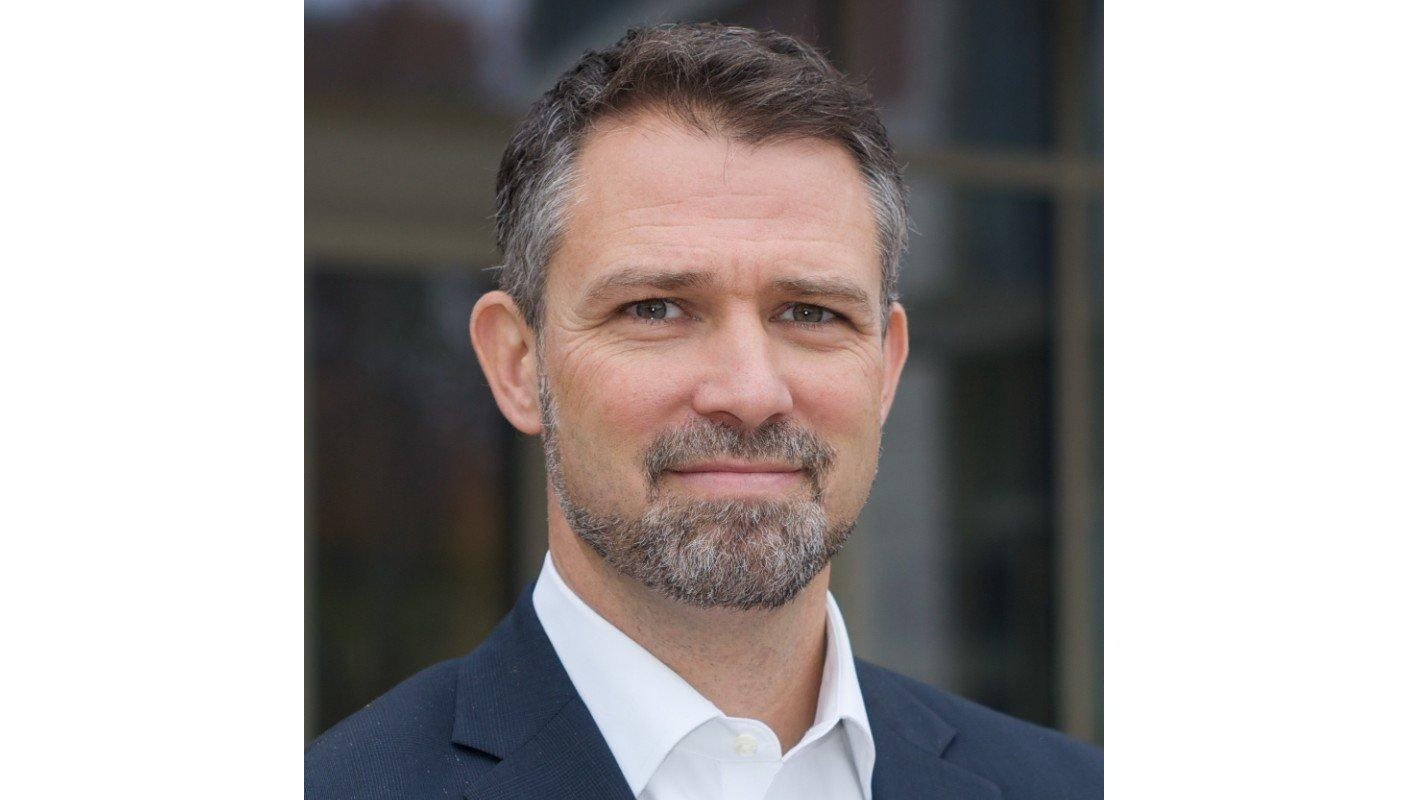
THE CHILD WHO DIDN’T WANT TO BE THERE
WORCESTER, MASSACHUSETTS — The standard functional analysis had been the field’s workhorse for thirty years. A behavior analyst observes a child, systematically manipulates environmental conditions, and identifies which contingency — attention, escape from demands, access to preferred items, automatic reinforcement — is maintaining the problem behavior. It is rigorous. It is evidence-based. And, in Greg Hanley’s view, it had one significant problem: it often required putting a child through distress to get the information it was designed to collect.
Hanley spent the better part of two decades thinking about this. Not rejecting the fundamental science — applied behavior analysis is built on principles he regards as sound — but asking a different question. What if you could identify why a child was hitting or screaming or injuring themselves without manufacturing the conditions that provoke those behaviors in the first place? What if the first thing a child experienced in an assessment wasn’t a demand, but a therapist trying to figure out what they loved?
The answer became Practical Functional Assessment and Skill-Based Treatment — PFA/SBT — and it is now the most widely replicated behavior-analytic treatment protocol developed in the past twenty years. Since the seminal 2014 paper in the Journal of Applied Behavior Analysis, more than 16 independent replication studies have been published. Hanley’s Google Scholar citation count exceeds 15,000. The training courses he built around the methodology have been delivered in the United States, Canada, Brazil, Australia, Egypt, Guatemala, Kazakhstan, and more than a dozen other countries.
In August 2024, Action Behavior Centers brought Hanley — and two of his closest research collaborators — fully inside the organization. The question the ABA industry is now watching: can a methodology forged in academic clinics and small-group trainings survive translation to hundreds of locations serving thousands of children?
35 YEARS IN THE MAKING
Hanley’s career began not in a research laboratory but on the floor of an intermediate care facility for people with intellectual disabilities, where he worked in direct care and management roles from 1990 to 1994. It is an origin that matters. Most behavior analysts who eventually publish in JABA arrive via the academic pipeline — undergraduate research assistants who stay on for graduate school, whose entire professional formation occurs within university settings. Hanley’s first four years were spent with adults who had severe problem behavior and no research infrastructure around them, which gave him an unusually practical frame of reference for the questions that would define his career.
He moved to the Neurobehavioral Unit at the Kennedy Krieger Institute in 1994, one of the country’s most rigorous inpatient environments for the assessment and treatment of severe problem behavior in people with developmental disabilities. He completed his doctoral degree at the University of Florida in 2001 and was tenured at the University of Kansas in 2006. In 2007, he moved to Western New England University in Springfield, Massachusetts, where he built the institution’s Behavior Analysis Doctoral Program and directed its Life Skills Clinic until 2019.
During those twelve years at WNEU, the clinic became something unusual: a research setting where the clients were real community members, not recruited subjects, and where the question was never whether a procedure worked under ideal laboratory conditions but whether it could work when implemented by real therapists with real families in real time. That distinction — efficacy versus effectiveness — would become a throughline of his entire body of work.
“Lasting freedom from meltdowns and aggression is attainable. You teach the child how to communicate, how to tolerate disappointment, and how to be engaged in the world.”
BUILDING PFA/SBT: STARTING WITH WHAT THE CHILD LOVES
The standard functional analysis, developed by Brian Iwata and colleagues at the University of Florida in the early 1980s, is one of the most important methodological contributions in the history of applied behavior analysis. It works by exposing a child to a series of conditions — attention, escape, alone, play — and measuring whether problem behavior is more or less frequent under each. The logic is sound: behavior maintained by escape from demands should increase when demands are present; behavior maintained by attention should increase when attention is withheld.
Hanley’s critique was not of the logic. It was of the practice. In a traditional functional analysis, a child may be exposed to ten, twenty, or more sessions in conditions specifically designed to evoke the behaviors that brought them into treatment. For a child who hits when denied a preferred toy, that means repeated toy removal. For a child who self-injures under instructional demand, that means repeated instructional demand. The information produced is valid. The experience, Hanley argued, is not acceptable if there is a better way.
The Practical Functional Assessment begins differently. The clinician first conducts a structured interview with the family and caregivers — not a standardized checklist, but an open conversation designed to identify what the child loves, what situations reliably produce distress, and what the child appears to be communicating with their problem behavior. That information is then used to design a brief analysis under conditions likely to be both informative and manageable. Before any analysis begins, the clinician establishes the HRE state — Happy, Relaxed, and Engaged — by making the child’s most preferred reinforcers freely and continuously available. Zero problem behavior is established as a baseline before any evocative condition is introduced.
The Skill-Based Treatment that follows teaches not just a communication response to replace the problem behavior, but a broader repertoire: how to ask for what you need, how to tolerate not getting it immediately, and how to participate in contextually appropriate activities — completing academic tasks, transitioning between settings, following multi-step routines. The reinforcement schedule is deliberately unpredictable, because a child who has only ever been reinforced on a fixed schedule has not learned to manage the ambiguity of ordinary life.
FTF BEHAVIORAL: TAKING THE METHOD TO THE WORLD
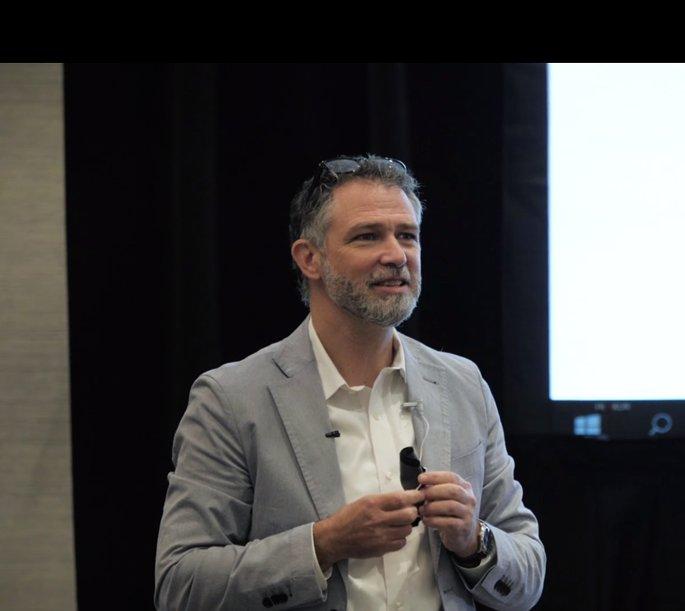
In early 2019, after twelve years at WNEU, Hanley left his full-time academic post to found FTF Behavioral Consulting, a Worcester-based training and consulting group built specifically to disseminate PFA/SBT to practitioners who needed it in the field, not in a doctoral program. The name reflects the treatment’s central premise: that children who engage in severe problem behavior can achieve lasting freedom from it when the right skills are systematically taught.
FTF grew quickly. By 2023, Hanley was running training tours across North America, Australia, South America, the Middle East, and Central Asia — Charlotte, Austin, Melbourne, Sydney, Cairo, Guatemala City, São Paulo, Astana. The demand came not just from private ABA providers but from public school districts, hospitals, and international service organizations facing the same problem: behavior analysts trained to implement standard functional analysis procedures who ran out of options when those procedures didn’t produce workable treatments. FTF built a three-step model — online training course, in-person implementation support, follow-up video conferencing — designed to build organizational capacity rather than just certify individual clinicians.
The business was expanding when ABC came calling. ABC’s clinical leadership had been watching Hanley’s work for years. The evidence base for PFA/SBT was substantial. The demand from families dealing with severe problem behavior was real. And the reputational value of having the methodology’s creator inside the organization, training its clinical workforce, was not lost on anyone.
THE ABC PARTNERSHIP: SCALE AS BOTH ASSET AND RISK
The announcement on August 12, 2024 was notable for what it included beyond Hanley himself. Dr. Mahshid Ghaemmaghami, who specializes in maximizing the practicality and real-world generalizability of behavioral treatments, joined as a Clinical Vice President. So did Dr. Anthony Cammilleri, whose work focuses on individualized curriculum design and the staff training required to implement it. Both had been Hanley’s collaborators at FTF. The move was not a single researcher joining a company; it was a methodology transferring its core team.
Hanley’s mandate as Executive Director of Compassionate Care carries a specific scope: lead the systematic, organization-wide adoption of evidence-based assessment and treatment for children whose problem behavior is preventing them from accessing learning environments, social interactions, and family life that treatment is supposed to enable. ABC operates hundreds of centers across Texas, Arizona, Colorado, Illinois, Minnesota, and North Carolina, with more than 1,000 BCBAs and more than 7,000 paraprofessional staff. Training that workforce in the values and procedures of PFA/SBT — not just the mechanics, but the underlying philosophy about what a child’s experience of therapy should feel like — is a different project than running a workshop in Worcester.
“Thrilled to be part of the ABC team dedicated to scaling compassionate ABA services in an unprecedented way.”
THE DEBATE BEHIND THE LABEL
The term ‘compassionate ABA’ has generated genuine discussion within the behavior analysis field, and Hanley has addressed it directly in several podcast appearances and public writings. The concern, voiced by some experienced practitioners, is that labeling a clinical approach ‘compassionate’ implies that traditional ABA — including procedures their own patients have benefited from — is by comparison uncompassionate. It is a branding tension the field has not fully resolved.
Hanley’s position has been consistent: the word describes a specific set of values embedded in practice, not a disparagement of practitioners who use other approaches. PFA/SBT retains core behavior-analytic principles — reinforcement, extinction, systematic skill-building — but applies them within a framework that prioritizes the child’s moment-to-moment emotional state and the therapeutic relationship as preconditions for treatment, not afterthoughts. Whether that distinction justifies a new label or represents a natural evolution of existing practice remains a matter on which the field continues to disagree.
What is not seriously disputed is that the methodology produces outcomes. The 2014 JABA study, and the 16-plus replications that followed, document meaningful and lasting reductions in severe problem behavior across diverse populations and settings. The question now at Action Behavior Centers is whether those outcomes can be replicated at commercial scale, by a workforce trained in months rather than years, serving children whose needs range from mild to complex.
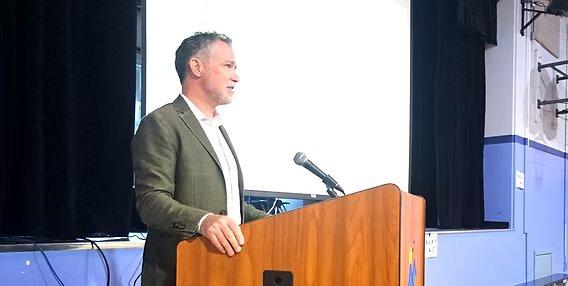
The answer will take time to emerge. But the experiment is running at a scale that makes it one of the most consequential clinical deployments in the history of applied behavior analysis.
Full Name: Gregory P. Hanley, Ph.D., BCBA-D, LABA
Current Titles: Executive Director of Compassionate Care, Action Behavior Centers; CEO, FTF Behavioral Consulting
Location: Worcester, Massachusetts
Education: Ph.D., University of Florida (2001)
Credentials: Board Certified Behavior Analyst – Doctoral (BCBA-D); Licensed Applied Behavior Analyst (LABA)
Joined ABC: August 2024 (with Dr. Mahshid Ghaemmaghami and Dr. Anthony Cammilleri from FTF)
Career Path: Direct care & management, ICFs/MR (1990–1994); Neurobehavioral Unit, Kennedy Krieger Institute (1994–1997); tenured, University of Kansas (2006); Western New England University (2007–2019); founded FTF Behavioral Consulting (2019)
WNEU Legacy: Founded the Behavior Analysis Doctoral Program & Life Skills Clinic; directed both 2007–2019; continues as Research Professor
Publications: 100+ peer-reviewed articles and book chapters
Google Scholar: 15,000+ citations
Signature Method: Practical Functional Assessment & Skill-Based Treatment (PFA/SBT) — seminal paper published in JABA (2014); 16+ independent replications
Global Reach: PFA/SBT training delivered across six continents — U.S., Canada, Brazil, Australia, Egypt, Guatemala, Kazakhstan, and others
Journal Editorships: Editor, Journal of Applied Behavior Analysis; Editor, Behavior Analysis in Practice; Associate Editor, The Behavior Analyst
Awards & Honors: Fellow, American Psychological Association (Division 25)
Research Focus: Assessment, treatment & prevention of problem behavior and sleep problems; life skills development; empirically derived values for practitioners
FTF Model: Three-step organizational training: online course → in-person implementation support → follow-up video conferencing
ABC Scale: 1,000+ BCBAs; 7,000+ paraprofessionals; hundreds of centers across TX, AZ, CO, IL, MN, NC
Key Collaborators at ABC: Dr. Mahshid Ghaemmaghami (Clinical VP); Dr. Anthony Cammilleri (Clinical VP)
CONTACT & LINKS
Organization: Action Behavior Centers / FTF Behavioral Consulting
Title: Executive Director, Compassionate Care (ABC); CEO, FTF Behavioral
Location: Worcester, Massachusetts
FTF Web: ftfbc.com
ABC Profile: actionbehavior.com/team/gregory-hanley-ph-d-bcba-d-laba
LinkedIn: linkedin.com/in/gregory-hanley-8a6767165
PFA/SBT: practicalfunctionalassessment.com