Three Sponsors, Three Strategies
ACROSS THE UNITED STATES — When an applied behavior analysis provider gets the call from a PE-backed national ABA company who wants to talk, the logo on the letterhead is only half the story. Behind almost every large ABA platform sits a private equity sponsor, and the sponsor’s strategy, far more than the platform’s brand, will determine the path forward once the deal closes. Three firms illustrate the range. General Atlantic, GTCR, and Gryphon Investors each control a national ABA platform, and each has built that platform on a different theory of how to create value in autism services.
The distinction matters because private equity now defines the segment. Researchers at Brown University, in a study published in JAMA Pediatrics in January 2026, identified 574 autism therapy centers under private equity ownership across 42 states as of 2024, with roughly 80 percent of those deals concentrated between 2018 and 2022. The Center for Economic and Policy Research found that between 2017 and 2022, private equity firms completed 85 percent of all mergers and acquisitions in autism services, a concentration the authors did not find in any other health segment. For an ABA owner, the practical question is no longer whether a buyer will be backed by PE. It is which PE firm, and what that firm wants.
The three firms profiled here are not interchangeable. One absorbs the companies it buys into a single, standardized ABA model. One builds dense regional clusters around proprietary clinical tools. One assembles a federation of brands that keep their own names and cultures. Each approach implies a different diligence process, a different post-close experience, and a different kind of seller it is looking for. Reading those differences correctly is the closest thing an ABA owner has to knowing the buyer before the buyer knows them.
General Atlantic and ACES: Absorb and Standardize
General Atlantic, a global growth equity firm, has backed ACES, formally Comprehensive Educational Services, since a strategic investment in 2020. Founder Kristin Farmer, who built ACES organically beginning in 1996, retained a significant ownership stake at the time of the partnership, and the firm placed members of its healthcare team on the board. The thesis General Atlantic articulated then has held: take a clinically led, evidence-based ABA provider and scale it nationally while standardizing the clinical model across every location. Today ACES operates roughly 92 locations across seven states following its most recent acquisitions.
What makes the ACES approach distinctive is what happens to a company after it is acquired. When ACES purchased Ally Pediatric Therapy, a Phoenix multispecialty provider, in January 2026, it moved to wind down Ally’s in-house speech, occupational therapy, and feeding services and bring the business in line with what the company described as its ABA-centric care model, consistent with its process across all existing locations. The acquisition of the Center for Language and Autism Support Services in Tulsa followed the same logic, folding two clinics and in-home services into the ACES network. This is an absorb-and-standardize model: the acquired brand is integrated, the service mix is simplified to core ABA, and the platform optimizes for consistency at scale.
For a seller, that implies a specific kind of transaction. A provider that prizes a multidisciplinary identity, or that has built its reputation on bundled speech and occupational therapy, should understand that those lines may not survive integration. A provider whose value lies in a strong, scalable ABA core and clean payer relationships fits the model well. The General Atlantic playbook rewards clinical quality and standardizable operations, and it asks the seller to accept becoming part of a larger, uniform whole rather than remaining a distinct boutique.
GTCR and Caravel: Regional Density and Proprietary Tools
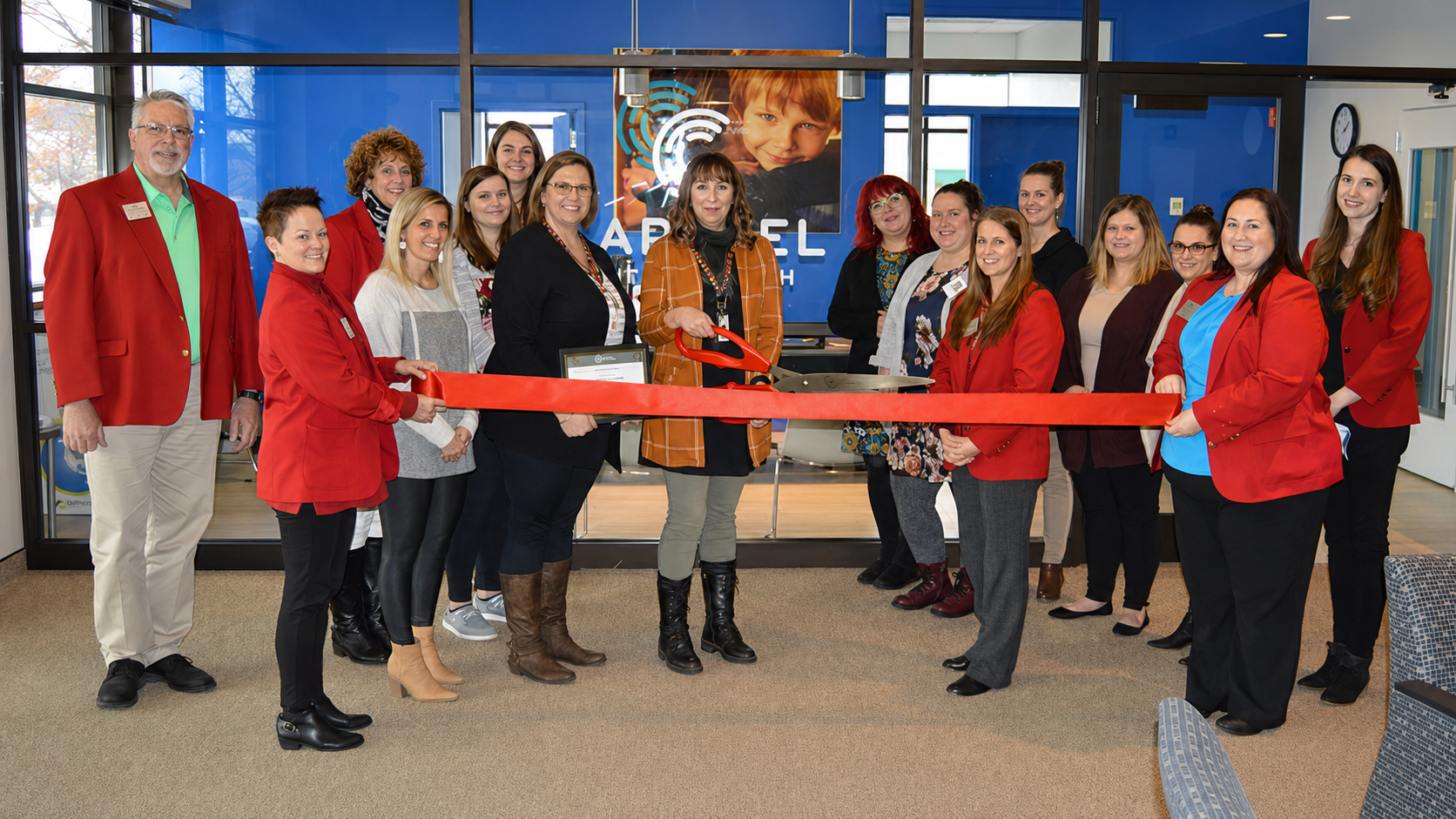
GTCR, a Chicago private equity firm founded in 1980 and known for larger-dollar investments, acquired Caravel Autism Health from Frazier Healthcare Partners in July 2024, in one of the few large platform trades to clear an otherwise slow autism deal market that year. Caravel, founded in Wisconsin in 2009 and led by chief executive Mike Miller, operates roughly 60 locations across about eight states, with a footprint concentrated in the Upper Midwest. Where General Atlantic standardizes nationally, the Caravel model under GTCR is built on regional density and a proprietary clinical approach.
Caravel’s differentiation is geographic and clinical at once. The company has historically clustered its centers in and around Wisconsin and contiguous states rather than spreading thin across the map, and it has invested in proprietary software to support diagnosis and to track clinical outcomes. Its expansion tends to deepen existing markets, as with new centers in Wisconsin and a move into the St. Louis area, rather than plant isolated flags in distant geographies. The strategic logic is that density lowers cost, strengthens payer leverage in a defined region, and lets a consistent clinical method compound on a shared data backbone.
Behind almost every large ABA platform sits a private equity sponsor, and the sponsor’s strategy, far more than the platform’s brand, will determine the path forward once the deal closes.
A seller reading the GTCR and Caravel playbook should think about geography first. A provider that strengthens an existing regional cluster, or that opens a logical adjacent market, fits the density thesis cleanly. A strong outcomes-tracking culture and a willingness to adopt a common clinical and data model are assets here, because the platform is built around exactly that kind of measurable, repeatable practice. The trade-off for the seller is methodological: this is a buyer that will expect its acquisitions to converge on a shared clinical system rather than preserve idiosyncratic local approaches.
Gryphon Investors and LEARN: A Federation of Brands
Gryphon Investors, a San Francisco private equity firm, acquired a majority stake in LEARN Behavioral from LLR Partners in 2019, with LLR and management retaining minority stakes. It was Gryphon’s first investment in behavioral health. LEARN, founded by chief executive Michael Maloney and headquartered in Baltimore, is one of the largest ABA networks in the country, serving thousands of families across more than 20 states through home, center, and school-based services. The strategy Gryphon has pursued with LEARN is markedly different from the other two: rather than fold acquisitions into a single brand, LEARN operates as a federation of distinct, locally recognized providers.
The pattern is visible in how LEARN integrates what it buys. When LEARN acquired the Behavior Analysis Center for Autism, a respected Indiana provider known for its verbal-behavior specialization, the company stated that BACA would continue to operate under its own brand while LEARN invested in its clinical staff and training. Earlier additions, including Wisconsin Early Autism Project and a string of regional providers, followed the same approach of preserving local identity while connecting each to a national infrastructure for quality, recruitment, and professional development. LEARN’s public emphasis has consistently been on being an employer of choice for clinicians and on investing in quality infrastructure rather than on rapid rebranding.
For a seller, the Gryphon and LEARN model is the one most likely to preserve what a founder built. A provider with a strong local brand, a distinctive clinical specialization, and a loyal clinician base can expect that identity to continue, backed by national resources. The implicit ask is different too: the federation model values clinical reputation and staff loyalty as durable assets worth keeping intact, which makes it attractive to founders who care as much about legacy and team as about price. The trade-off is that a seller seeking the cost advantages of full national standardization will find a looser, more decentralized structure.

The Common Screen: What All Three Want
For all their differences in integration philosophy, the three sponsors converge on what makes an ABA provider worth buying in the first place. Each is looking for clinical quality that can be documented, not merely asserted, because outcomes and compliance now sit at the center of healthcare diligence. Each wants clean, defensible payer relationships and billing practices, in a segment where regulators and journalists have scrutinized whether private equity ownership pressures providers toward volume over appropriate care. And each wants a business that can absorb investment and grow, whether by standardizing, by deepening a region, or by joining a federation.
Just as telling is the shared list of what makes a target unattractive. Weak or improvised compliance is disqualifying across all three models, because a roll-up inherits the regulatory exposure of everything it buys. So is a business that cannot scale or integrate in some form, since the entire premise of platform investing is that acquisitions add durable value rather than one-time revenue. And thin or undocumented clinical outcomes are a growing problem in an environment where payers are moving, slowly, toward paying for results. The convergence reflects a wider repricing of risk in behavioral health dealmaking, in which the quality of a provider’s record now drives its value as much as the size of its earnings.
Why It Matters for ABA Owners
For an autism services provider weighing whether and when to sell, the lesson is that the sponsor is the strategy. The same headline, that a national platform wants to acquire you, can mean three very different futures depending on the firm behind it. A founder who wants a clean exit and is comfortable with full integration may be well matched to an absorb-and-standardize buyer. A regional operator with strong outcomes data may find the most value with a density-focused sponsor. A founder who wants the brand and team to endure may fit a federation model best. None of these is inherently better; they are different, and the fit between a seller’s priorities and a sponsor’s playbook is what determines whether the deal feels like a partnership or a dismantling.
The market backdrop favors sellers who understand this. M&A advisers have reported renewed competition for high-quality ABA assets, with well-run platforms of scale commanding premium valuations while smaller, single-site providers without documented compliance or outcomes struggle to attract the same interest. The result is a visibly bifurcated market, in which the providers that have built clean compliance, clear payer visibility, strong clinician retention, and integration-ready operations can choose among suitors, and choose the playbook that fits them, while those that have not are left taking whatever terms they can get.
AT A GLANCE
| The frame: | Three PE firms each own a national ABA platform and each buys differently; the sponsor, not the brand, signals what a deal will demand |
| General Atlantic / ACES: | Growth equity firm; backed ACES (Comprehensive Educational Services) since 2020; founder Kristin Farmer retained a stake; ~92 locations across 7 states |
| ACES playbook: | Absorb and standardize; integrates acquisitions onto a core ABA model (ended Ally Pediatric’s speech, OT, and feeding lines in Jan. 2026); CLASS Oklahoma tuck-in |
| GTCR / Caravel: | Chicago firm (founded 1980); acquired Caravel Autism Health from Frazier in July 2024; ~60 locations across ~8 states; CEO Mike Miller; founded 2009 in Wisconsin |
| Caravel playbook: | Regional density (Upper Midwest concentration) plus proprietary diagnostic and outcomes-tracking software; deepens existing markets (e.g., St. Louis) |
| Gryphon / LEARN: | San Francisco firm; majority stake in LEARN Behavioral from LLR in 2019; Baltimore-based; 20+ states; CEO Michael Maloney |
| LEARN playbook: | Federation of brands; acquired providers keep their names and operate semi-independently (e.g., BACA, Wisconsin Early Autism Project); quality and clinician-development focus |
| What all three want: | Documented clinical quality and outcomes; clean payer relationships and billing; a business that can absorb investment and grow |
| Shared disqualifiers: | Weak or improvised compliance; inability to scale or integrate; thin or undocumented clinical outcomes |
| PE footprint in ABA: | 574 PE-owned autism therapy centers across 42 states as of 2024; ~80% of deals in 2018 to 2022 (Brown University / JAMA Pediatrics, Jan. 2026) |
| Deal concentration: | PE completed 85% of all autism-services M&A from 2017 to 2022, a rate not seen in any other health segment (CEPR) |
| Owner takeaway: | Identify the sponsor’s playbook before the call; match it to your priorities (clean exit, regional fit, or brand preservation); build clean compliance, payer visibility, and outcomes data |
SOURCES & REFERENCES
| 1. | General Atlantic. “ACES and General Atlantic Announce Strategic Partnership” (2020 investment; founder Kristin Farmer retains stake; ABA and ancillary services; six states at time of deal). January 15, 2020. https://www.generalatlantic.com/media-article/aces-and-general-atlantic-announce-strategic-partnership/ |
| 2. | Private Equity Stakeholder Project. “Private Equity Health Care Acquisitions, January 2026” (General Atlantic’s ACES acquired Ally Pediatric Therapy and ended its speech, OT, and feeding services; 92 locations across 7 states; General Atlantic acquired ACES in 2020). January 2026. https://pestakeholder.org/news/private-equity-health-care-acquisitions-january-2026/ |
| 3. | General Atlantic. “ACES” (portfolio page; applied behavioral analysis and ancillary services). Accessed June 2026. https://www.generalatlantic.com/investment/aces/ |
| 4. | Hall Render. “Private Equity Deals Spotlight” (GTCR to acquire Caravel Autism Health from Frazier Healthcare Partners; 50+ Midwest and Washington locations; proprietary software). July 25, 2024. https://hallrender.com/2024/07/25/private-equity-deals-spotlight-072524/ |
| 5. | GTCR. “Caravel Autism Health” (portfolio company page). Accessed June 2026. https://www.gtcr.com/portfolio-company/caravel-autism-health/ |
| 6. | Caravel Autism Health. “Caravel Centers Expand in Wisconsin” (founded 2009 in Wisconsin; CEO Mike Miller; regional expansion). December 2024. https://caravelautism.com/media-press/press-releases/autism-specialists-expanding-wisconsin-presence/ |
| 7. | Gryphon Investors. “Gryphon Investors Announces Majority Investment in LEARN Behavioral” (majority stake from LLR Partners in 2019; first behavioral health investment; 23 states; CEO Michael Maloney). March 19, 2019. https://www.gryphon-inv.com/news/gryphon-investorsannounces-majority-investment-in-learn-behavioral/ |
| 8. | Gryphon Investors. “LEARN Behavioral Partners with Indiana-Based Behavior Analysis Center for Autism” (BACA continues under its own brand; verbal-behavior specialization; LEARN invests in clinical staff). 2024. https://www.gryphon-inv.com/news/learn-behavioral-partners-with-indiana-based-behavior-analysis-center-for-autism/ |
| 9. | Brown University. “Private equity firms acquired more than 500 autism centers in past decade, study shows” (574 PE-owned centers across 42 states as of 2024; ~80% of deals 2018 to 2022; JAMA Pediatrics, Jan. 5, 2026). January 7, 2026. https://www.brown.edu/news/2026-01-07/private-equity-autism-centers |
| 10. | Batt, Rosemary; Appelbaum, Eileen; and Nguyen, Quynh Trang. “Pocketing Money Meant for Kids: Private Equity in Autism Services” (85% of autism-services M&A, 2017 to 2022; 12 PE-owned chains; 30,000 employees; 1,300 locations). Center for Economic and Policy Research, June 2023. https://cepr.net/publications/pocketing-money-meant-for-kids-private-equity-in-autism-services/ |
| 11. | Acuity News. “ABA M&A Market Update 2026: Platforms Prepare for Sale” (renewed competition for quality ABA assets; bifurcated market; Mertz Taggart commentary). March 2026. https://acuity.news/m-and-a/aba-ma-market-update-2026-platforms-for-sale/ |