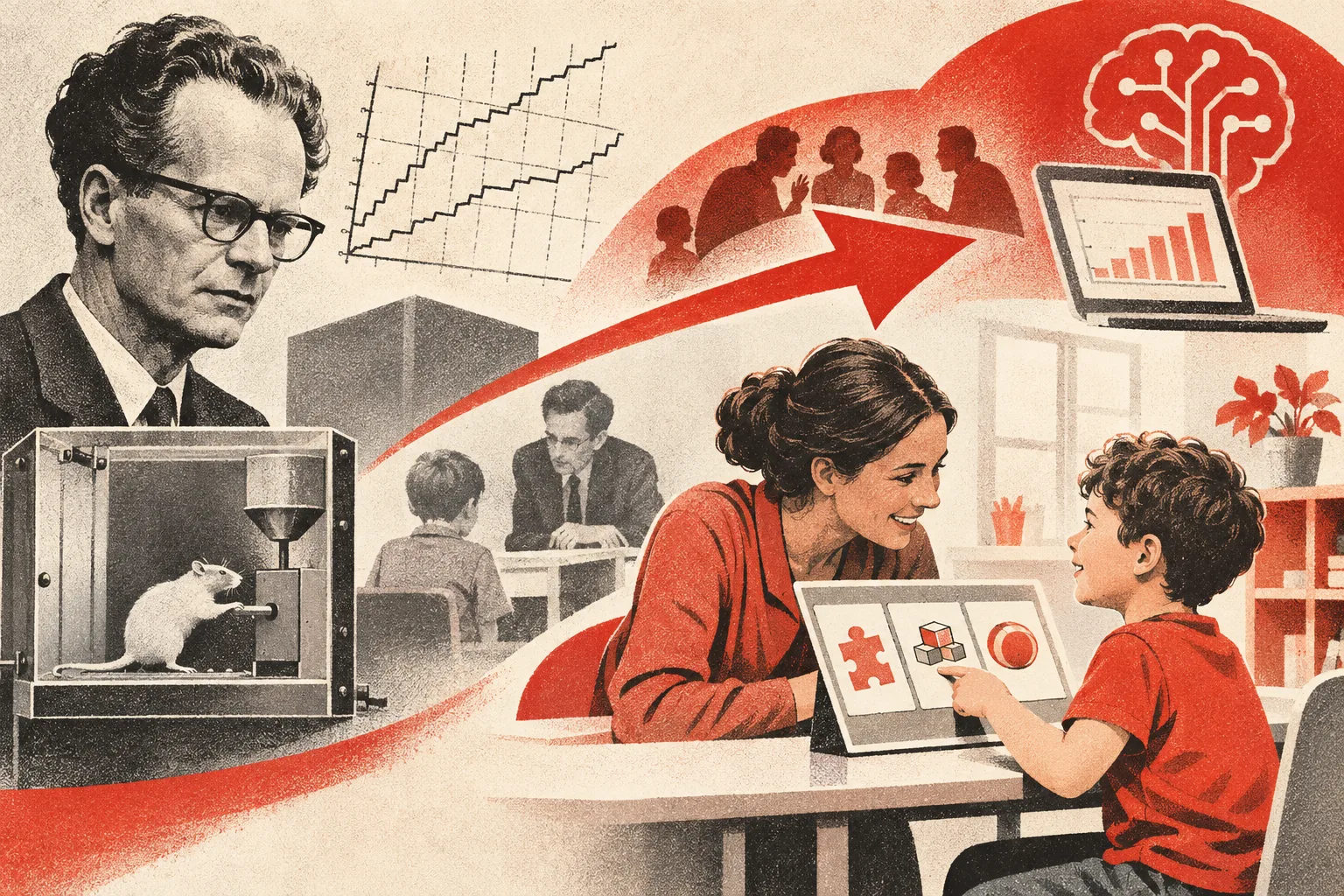


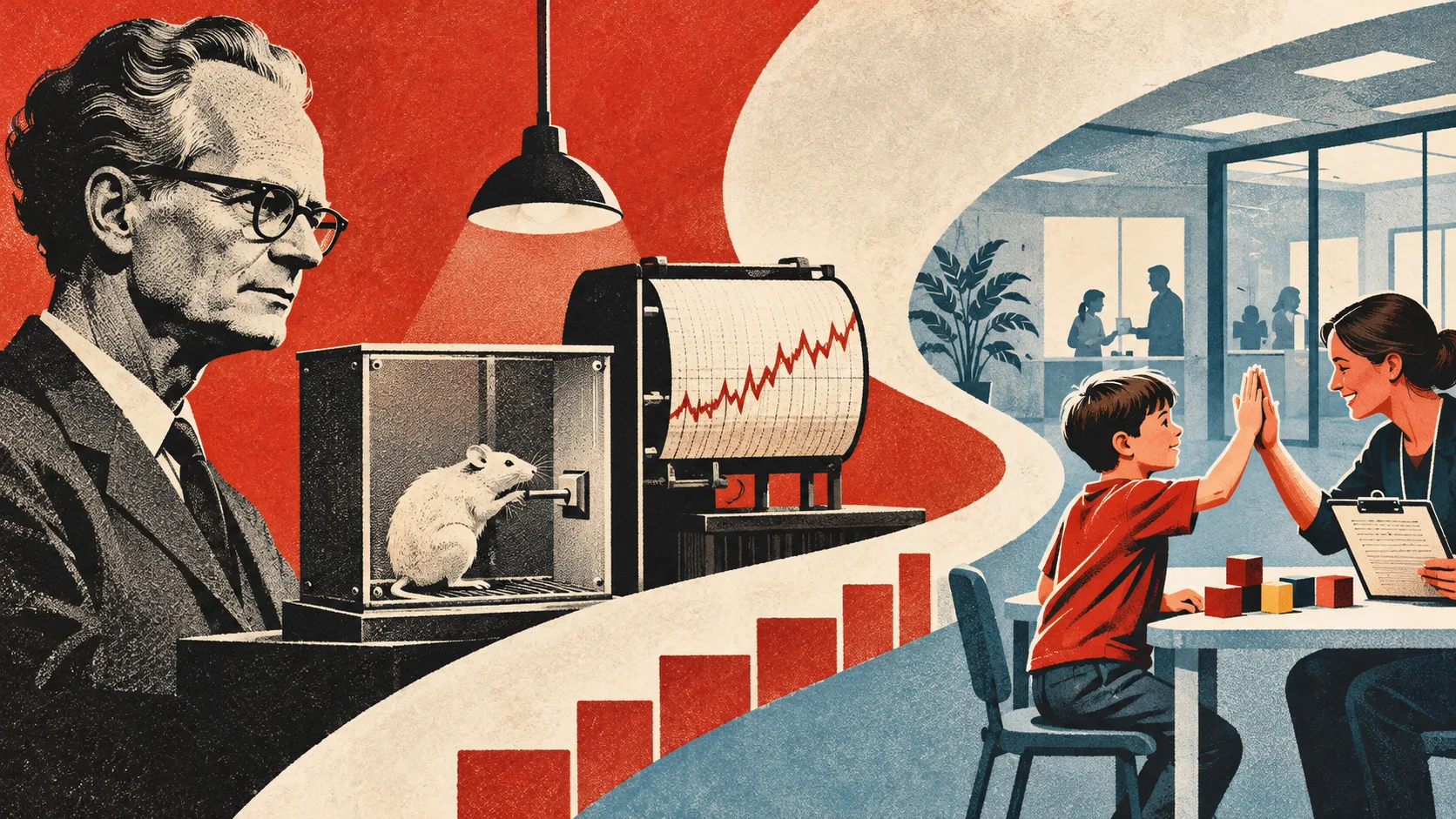
Applied behavior analysis did not start in an autism clinic. It started in a laboratory, with B. F. Skinner’s 1938 book The Behavior of Organisms, which defined the operant as a basic unit of behavior. Skinner extended that work to people in the 1950s, according to a 2025 National Academies report on autism care for military families.
Nearly 90 years later, the field debates topics such as compassion and artificial intelligence. How it got from one to the other explains much of what payers, providers, and families debate today.
Seven Rules That Defined a Field
The field got its charter in 1968. Donald Baer, Montrose Wolf, and Todd Risley published “Some Current Dimensions of Applied Behavior Analysis” in the first issue of the Journal of Applied Behavior Analysis. They set out seven dimensions: applied, behavioral, analytic, technological, conceptually systematic, effective, and generality.
The National Academies report says those dimensions “have guided the field for most of its history.” In plain terms, ABA had to target behavior that matters to the person, measure it, and show that the intervention caused the change.
Early Autism Work Relied on Punishment
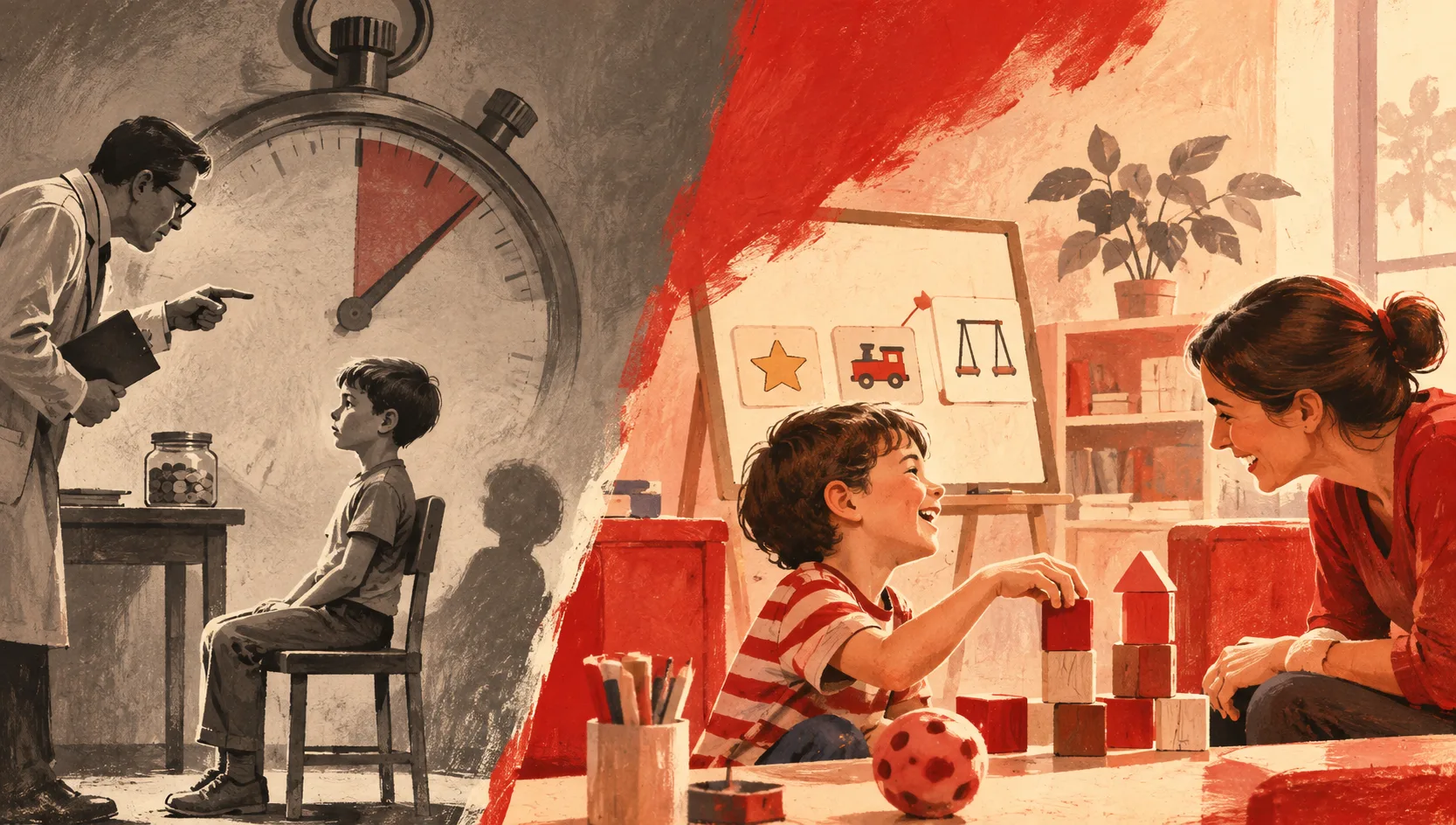
Autism became ABA’s best-known application early. In a 1964 case study, Wolf, Risley, and Hortense Mees described treating a young boy, referred to as an autistic child, for tantrums, refusal to wear his glasses, and mealtime problems. Their methods included “mild punishment and extinction,” time-out, and reinforcement.
The landmark outcome study came from Ivar Lovaas at UCLA. In a 1987 paper in the Journal of Consulting and Clinical Psychology, he reported that 47% of 19 children who received more than 40 hours of one-to-one treatment a week reached normal intellectual and educational functioning, compared with 2% of control children. The National Academies calls his program “the catalyst” for the early intensive behavioral intervention (EIBI) models in use today, while noting that “valid concerns arise” about parts of his approach.
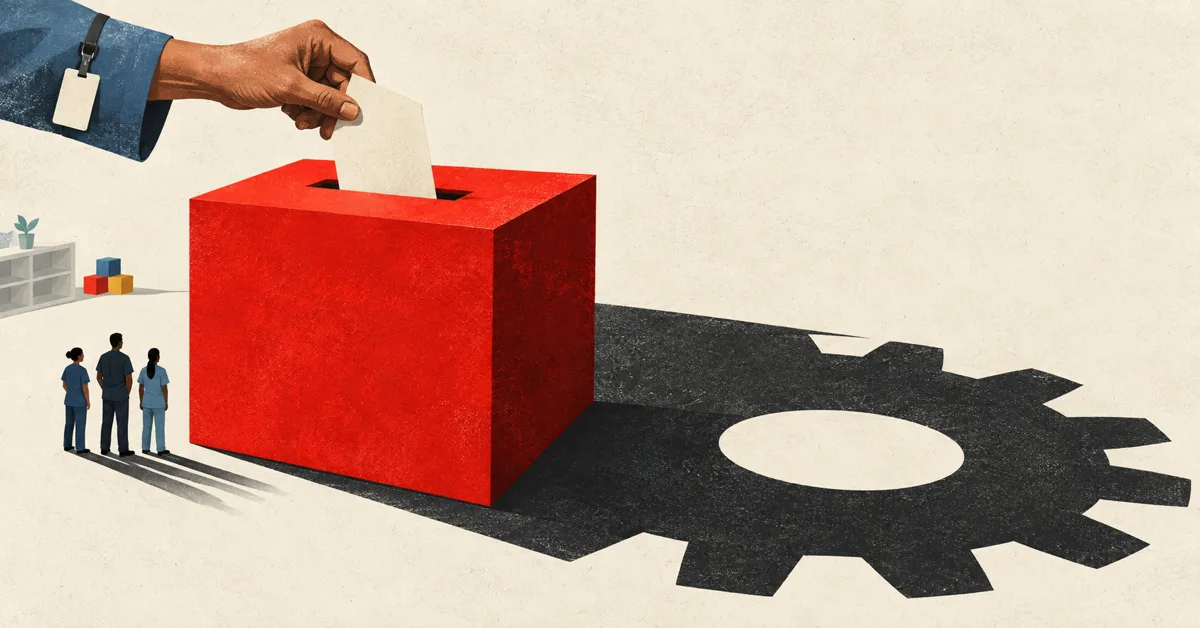
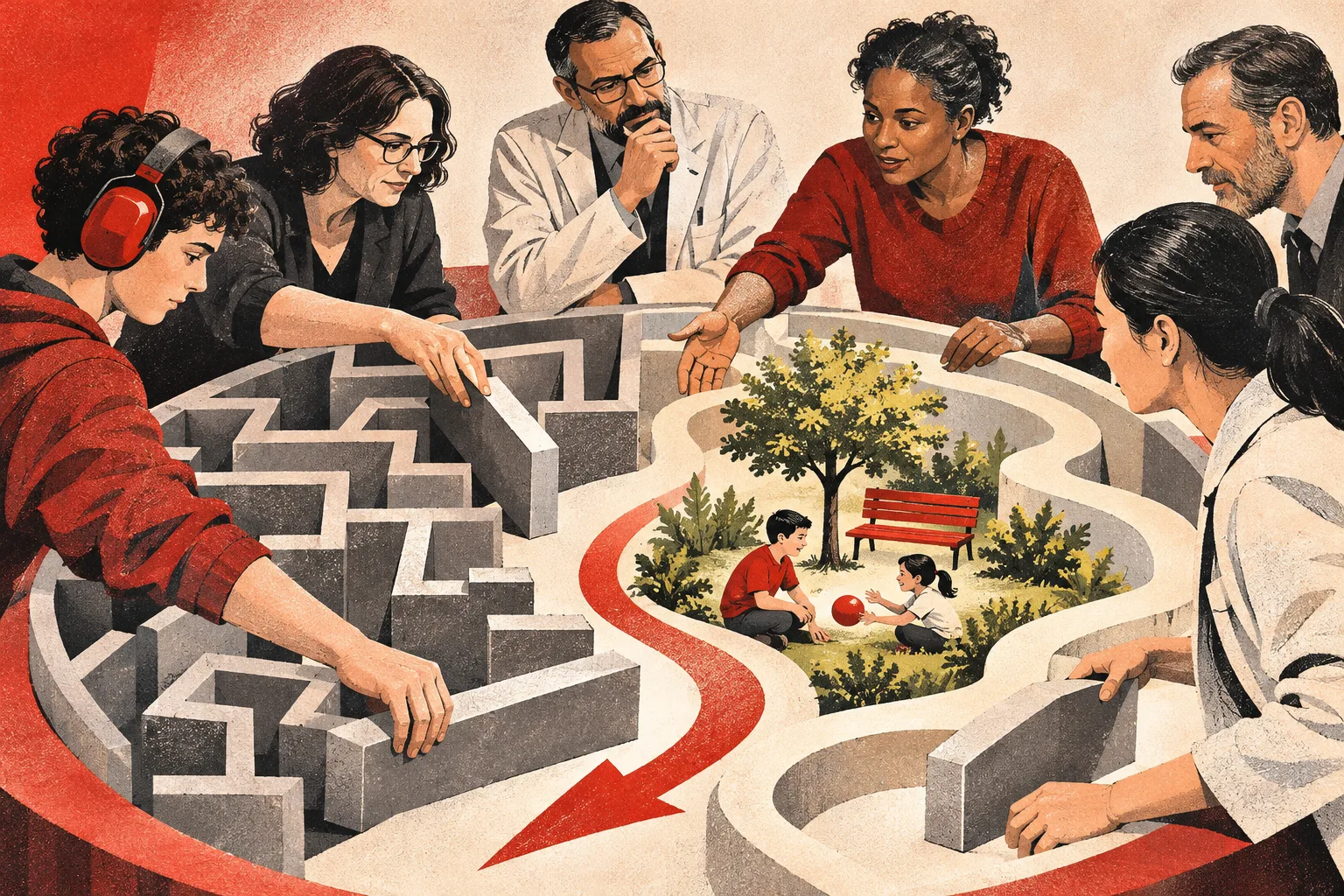
ABA’s founding paper asked for socially important change. Six decades later, the field is still debating who gets to define it.
Those concerns are specific. Early practice relied heavily on physical punishment, which drew criticism from autistic self-advocates, according to a 2024 National Academies workshop summary. Modern ABA has dropped physical punishment, the summary says.
Certification, Ethics, and Assent
The profession was formalized in 1998, when the Behavior Analyst Certification Board was established as a nonprofit to set credentialing standards.
Its current Ethics Code for Behavior Analysts, in force since January 2022, lists “Treat Others with Compassion, Dignity, and Respect” as one of four core principles. Standard 2.11 makes behavior analysts “responsible for obtaining assent from clients when applicable.” The code defines assent as vocal or nonvocal verbal behavior indicating willingness to participate from people who cannot give informed consent.
Critics Pushed the Field to Change
The sharpest internal review came from Justin Leaf and colleagues in the Journal of Autism and Developmental Disorders. They evaluated objections from autism rights and neurodiversity advocates, including the Lovaas project’s use of shock, default 40-hour intensity, punishment and extinction procedures, responses to stimming, and claims that ABA is abusive or causes PTSD.
Their recommendations: set intensity individually, include clients and caregivers in choosing goals, measure social validity and quality of life, and study long-term and undesired outcomes. “Our field is not infallible, and we should continue to improve and progress our interventions,” the authors wrote.
In late 2023, Ashley Penney and colleagues proposed in Behavior Analysis in Practice that compassion be treated as “an eighth current and essential dimension of ABA.” It remains the authors' proposal, not a change to the original framework.
AI Arrives With Guardrails
In a 2020 proof-of-concept study in Perspectives on Behavior Science, Marc Lanovaz and colleagues trained machine-learning models on simulated single-case graphs. The models produced fewer false positives and more statistical power than the dual-criteria method, a structured aid for visual analysis. The data were simulated, not drawn from clinic records.
Virtual reality has a thinner record. A 2024 systematic review abstract in BJPsych Open compared 25 studies of VR and standard social skills training for autistic children and found no consistently significant differences between the two.
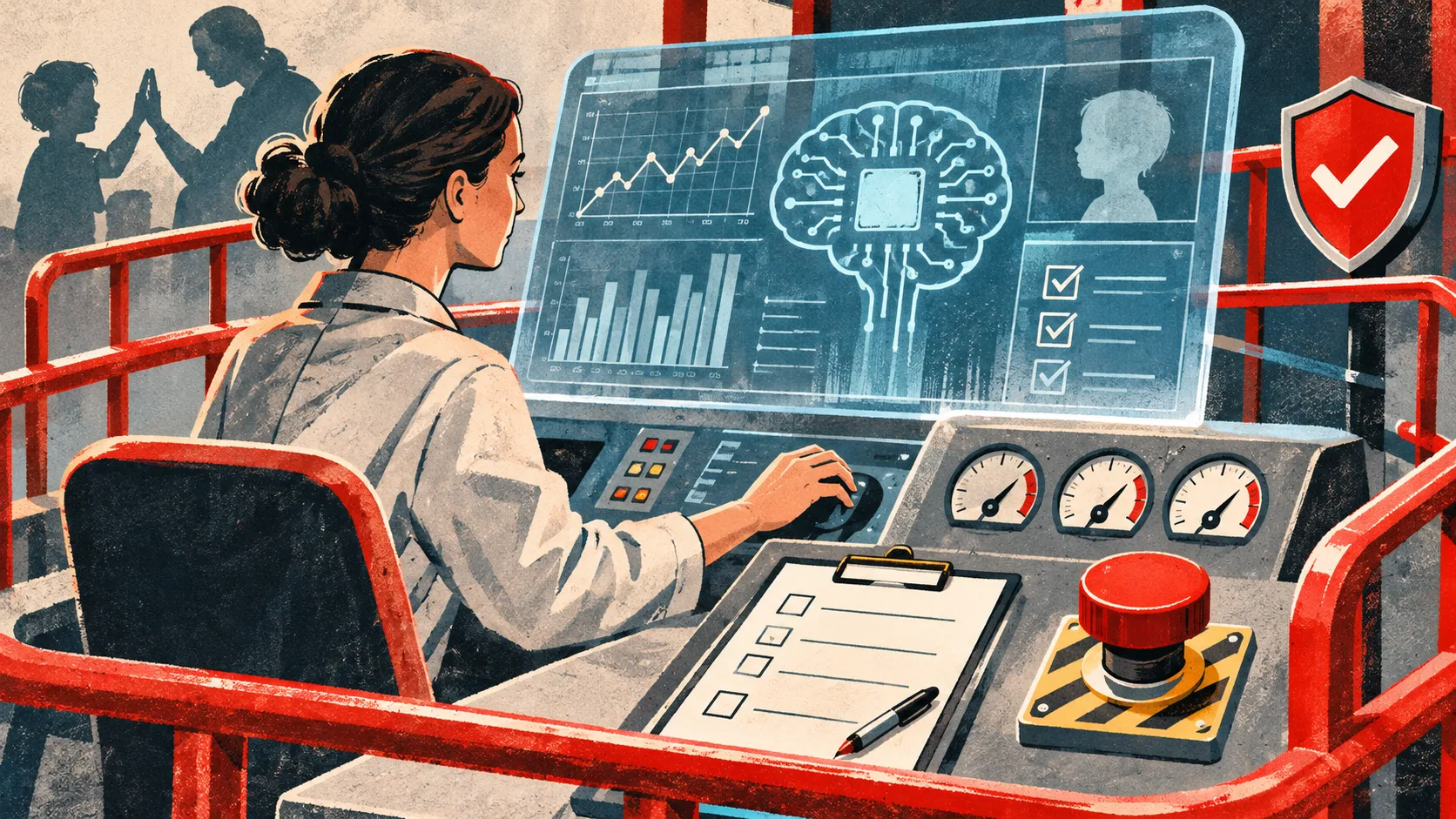
The Council of Autism Service Providers (CASP) has published practice parameters for AI use in ABA covering selection, transparency, consent, monitoring, error reporting, and retirement of AI systems. A review of the parameters notes that clinicians remain responsible for clinical decisions under BACB codes and that providers should not assume payers will allow or reimburse AI-assisted services.
For providers, that leaves a familiar test. Any new tool, like any old procedure, has to show it produces socially significant change for the person receiving services.
AT A GLANCE
| 1938: | Skinner publishes The Behavior of Organisms |
| 1964: | Wolf, Risley, and Mees case study uses reinforcement, time-out, and mild punishment with an autistic child |
| 1968: | Baer, Wolf, and Risley define the seven dimensions of ABA |
| 1987: | Lovaas reports 47% of 19 children reached normal functioning with 40+ weekly hours |
| 1998: | BACB established |
| 2022: | BACB Ethics Code takes effect, requiring assent when applicable |
| 2023: | Penney et al. propose compassion as an eighth dimension |
| Now: | CASP practice parameters set guardrails for AI in ABA |
SOURCES & REFERENCES
| 1. | Skinner BF. The Behavior of Organisms: An Experimental Analysis. 1938. B. F. Skinner Foundation book page. https://www.bfskinner.org/books/the-behavior-of-organisms/ |
| 2. | National Academies of Sciences, Engineering, and Medicine. The Comprehensive Autism Care Demonstration: Solutions for Military Families. Chapter 5, Evidence Base for Applied Behavior Analysis. 2025. https://www.nationalacademies.org/read/29139/chapter/7 |
| 3. | Baer DM, Wolf MM, Risley TR. Some current dimensions of applied behavior analysis. Journal of Applied Behavior Analysis. 1968;1(1):91-97. doi:10.1901/jaba.1968.1-91 https://pmc.ncbi.nlm.nih.gov/articles/PMC1310980 |
| 4. | Wolf MM, Risley T, Mees H. Application of operant conditioning procedures to the behaviour problems of an autistic child. Behaviour Research and Therapy. 1964;1:305-312. Archived text. https://neurodiversity.net/library_wolf_1964.html |
| 5. | Lovaas OI. Behavioral treatment and normal educational and intellectual functioning in young autistic children. Journal of Consulting and Clinical Psychology. 1987;55(1):3-9. https://pubmed.ncbi.nlm.nih.gov/3571656/ |
| 6. | National Academies of Sciences, Engineering, and Medicine. Programs and Frameworks for Autism Interventions: Proceedings of a Workshop, in Brief. 2024. https://www.nationalacademies.org/read/28030 |
| 7. | Behavior Analyst Certification Board. About the BACB. https://www.bacb.com/about/ |
| 8. | Behavior Analyst Certification Board. Ethics Code for Behavior Analysts. Effective January 1, 2022. https://bacb.com/wp-content/ethics-code-for-behavior-analysts/ |
| 9. | Leaf JB, Cihon JH, Leaf R, et al. Concerns about ABA-based intervention: An evaluation and recommendations. Journal of Autism and Developmental Disorders. 2022. doi:10.1007/s10803-021-05137-y https://link.springer.com/article/10.1007/s10803-021-05137-y |
| 10. | Penney AM, Bateman KJ, Veverka Y, Luna A, Schwartz IS. Compassion: The eighth dimension of applied behavior analysis. Behavior Analysis in Practice. Published online December 7, 2023. doi:10.1007/s40617-023-00888-9 https://pmc.ncbi.nlm.nih.gov/articles/PMC13083567/ |
| 11. | Lanovaz MJ, Giannakakos AR, Destras O. Machine learning to analyze single-case data: A proof of concept. Perspectives on Behavior Science. 2020;43(1):21-38. https://doi.org/10.1007/s40614-020-00244-0 |
| 12. | Idowu O, Aderinto N, Olatunji G, Kokori E. A systematic review of virtual reality vs. standard social skills training for improving social interaction skills and reducing social anxiety in children with ASD. BJPsych Open. 2024;10(Suppl):S46-S47 (abstract). https://doaj.org/article/35708f387f7f46cd921a37154ca840ba |
| 13. | Council of Autism Service Providers. Practice Parameters for Artificial Intelligence Use in Applied Behavior Analysis. https://www.casproviders.org/practice-parameters-for-ai |
| 14. | Celiberti D, Sasikumar P. Review of Practice Parameters for Artificial Intelligence. Science in Autism Treatment (ASAT). 2025. https://asatonline.org/research-treatment/book-reviews/review-of-practice-parameters-for-artificial-intelligence/ |
(more pictures)