From the Nursing Floor to the ABA Field
ACROSS THE UNITED STATES – Dr. Mary Lynch Barbera’s path into applied behavior analysis began not in a graduate program but in a pediatric hospital. A registered nurse by training, Barbera’s professional trajectory shifted permanently when her son Lucas was diagnosed with autism in the late 1990s. That diagnosis set her on a course that would eventually lead to a doctoral-level Board Certified Behavior Analyst (BCBA-D) credential, two bestselling books, and one of the most widely followed ABA-focused platforms on the internet.
The personal dimension of Barbera’s story is central to her brand and her credibility. She does not approach ABA as a detached clinician; she approaches it as a parent who spent years navigating the system, learning the science, and applying it at home before formalizing her expertise through certification and academic work. This dual identity — clinician and parent — is the foundation of the Turn Autism Around brand and the reason it resonates with a specific, underserved audience: parents of young children who have recently received an autism diagnosis and do not yet know how to translate clinical recommendations into daily practice.
Barbera’s platform occupies a distinctive niche: she speaks to parents not as a clinician delivering instructions from above, but as a mother who has implemented those same strategies in her own home, with her own child, for over two decades.
Two Books, One Framework
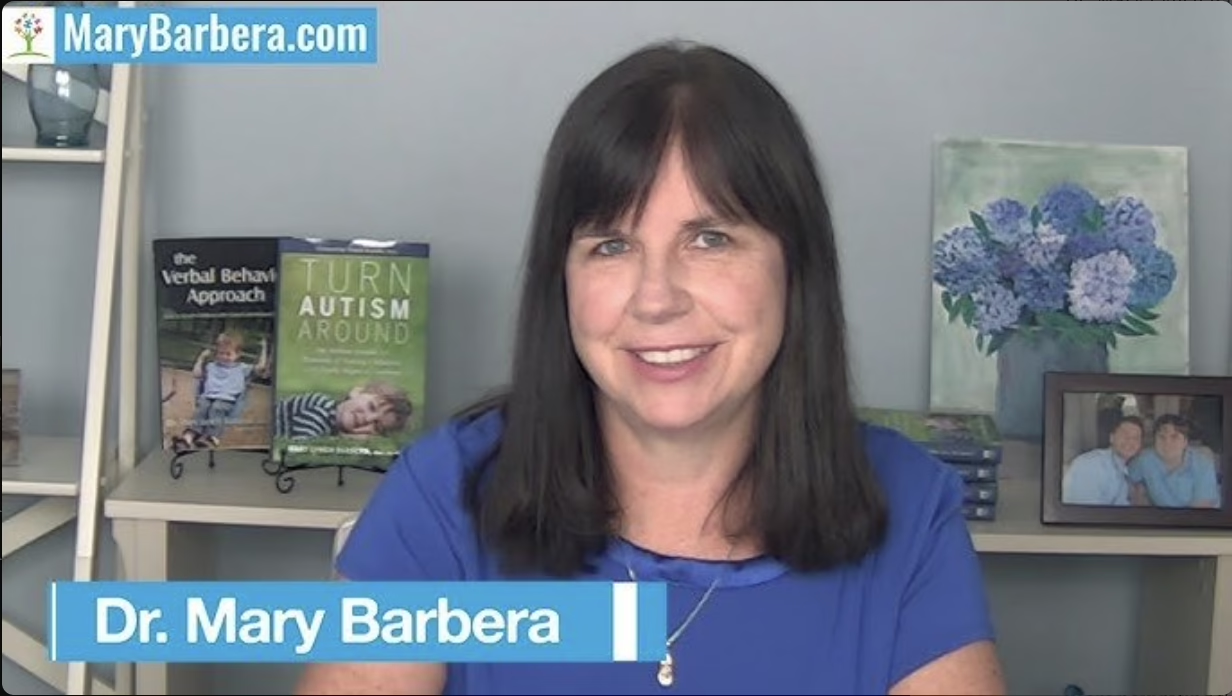
Barbera is the author of two bestselling books that together form the core of her professional framework. The first, The Verbal Behavior Approach: How to Teach Children with Autism and Related Disorders, introduced her interpretation of B.F. Skinner’s verbal behavior analysis to a parent audience. The book became a widely recommended resource for families and early-career professionals seeking an accessible entry point into verbal behavior methodology.
Her second book, Turn Autism Around: An Action Guide for Parents of Young Children with Early Signs of Autism, published in 2021, expanded her framework into a four-step approach designed for parents and caregivers of children under age five. The book focuses on language development, feeding challenges, sleeping difficulties, and problem behaviors — the four domains that dominate early parenting concerns following an autism diagnosis. It became a bestseller and the anchor for her broader course and coaching ecosystem.
The Turn Autism Around methodology does not position itself as a replacement for professional ABA services. Instead, it frames parent-implemented strategies as a complement to clinic-based and in-home therapy — a model that aligns with an increasing body of evidence supporting caregiver-mediated intervention as a key component of early autism treatment.
The Podcast and Digital Ecosystem
The Turn Autism Around podcast, hosted by Barbera, has become one of the most popular ABA-adjacent podcasts available. Rated 4.3 out of 5 on Apple Podcasts with over 300 reviews, the show features weekly episodes that cover topics ranging from toilet training and manding to insurance navigation and BCBA career advice. Guests include BCBAs, speech-language pathologists, occupational therapists, and parents sharing implementation stories.
The podcast functions as the top of a content funnel that leads to Barbera’s online courses, which have enrolled parents and professionals from over 100 countries. Her course offerings range from free introductory workshops to comprehensive paid programs that walk parents through assessment, planning, and implementation of behavioral strategies at home.
Instagram (@turnautismaround): Approximately 50,000 followers. Content includes short video tips, carousel posts on common parent questions, and podcast episode promotions.
YouTube: Active channel with instructional videos, podcast clips, and live Q&A sessions. Recent live broadcasts have drawn consistent engagement.
Facebook: Active community presence with regular live sessions and group discussions.
Podcast: Turn Autism Around podcast, available on Apple Podcasts, Spotify, and all major platforms.
“You don’t need to wait for a diagnosis to start helping your child. You can start today.” — Dr. Mary Barbera, as expressed across multiple podcast episodes and public presentations
The Parent-Professional Bridge
Barbera’s platform addresses a gap that the ABA industry has historically struggled to close: the distance between what happens in a therapy session and what happens at home. BCBA-supervised sessions typically occupy a fraction of a child’s waking hours. The remaining time — meals, bedtime routines, outings, play — is where parents operate largely without structured guidance, particularly in the early months after diagnosis when waitlists for services can stretch six months or longer.
The Turn Autism Around courses and books are designed to fill that gap with parent-friendly language, step-by-step instructions, and visual supports that do not require a background in behavioral science to understand. Barbera’s four-step approach — assess, make a plan, teach, and turn it around — is deliberately simplified, drawing on ABA principles without requiring parents to learn ABA terminology or navigate technical concepts like discrete trial training or verbal operants.
This accessibility has made the brand popular among parents but has also drawn occasional critique from practitioners who argue that oversimplification risks misapplication. Barbera has addressed this directly, noting that her materials are designed to empower parents while consistently recommending professional assessment and supervision for children with more complex needs.
What Barbera’s Platform Reveals About the Market
The commercial success of the Turn Autism Around brand is a market signal about unmet demand. Parents want actionable, immediately implementable strategies. They want them in formats they can consume on their own schedule — podcasts during commutes, course modules after bedtime, Instagram carousels in waiting rooms. And they want them from someone who understands both the science and the lived experience of raising an autistic child.
For ABA providers, Barbera’s model suggests an opportunity and a warning. The opportunity is in developing parent-facing content and coaching programs that extend a practice’s reach beyond billable hours. The warning is that if established providers do not fill this gap, independent creators will — and some of those creators may not hold the same credentials or adhere to the same evidence standards that Barbera maintains.
Barbera’s platform, built on a nursing background, a doctoral-level BCBA credential, decades of personal experience, and a clear content strategy, represents the most fully realized version of the clinician-influencer model in the ABA parent market. Whether the broader industry can replicate or scale that model remains an open question.
AT A GLANCE
Name: Dr. Mary Lynch Barbera
Credentials: BCBA-D (doctoral level), RN, PhD
Based in: United States
Type: BCBA-D / Author / Podcast Influencer
Books: The Verbal Behavior Approach (bestseller); Turn Autism Around (2021, bestseller)
Podcast: Turn Autism Around — rated 4.3/5 on Apple Podcasts, 300+ reviews
Instagram: Approximately 50,000 followers (@turnautismaround)
Course reach: Parents and professionals in 100+ countries
Personal connection: Mother of a son diagnosed with autism in the late 1990s
Core methodology: Four-step approach: Assess, Plan, Teach, Turn It Around
ABA relevance: Most recognized parent-facing ABA brand online; bridges clinic-based ABA with caregiver-mediated intervention
SOURCES & REFERENCES
1. – Dr. Mary Barbera. Official website. https://marybarbera.com. Accessed March 2026.
2. – Barbera, M.L. The Verbal Behavior Approach: How to Teach Children with Autism and Related Disorders. Jessica Kingsley Publishers.
3. – Barbera, M.L. Turn Autism Around: An Action Guide for Parents of Young Children with Early Signs of Autism. Hay House. 2021.
4. – Turn Autism Around Podcast. Apple Podcasts listing. Accessed March 2026. 4.3/5 rating, 338 reviews.
5. – Instagram profile (@turnautismaround). Accessed March 2026. https://www.instagram.com/turnautismaround
6. – Autism Live. “Turn Autism Around Author — Dr. Mary Lynch Barbera.” YouTube. June 2022.
7. – Bearss, K. et al. Effect of Parent Training vs Parent Education on Behavioral Problems in Children with Autism Spectrum Disorder: A Randomized Clinical Trial. JAMA. 2015;313(15):1524–1533.
8. – Ingersoll, B., Dvortcsak, A. Teaching Social Communication to Children with Autism and Other Developmental Delays. Guilford Press. 2019.