
The Gap Between What We Can Do and What We Actually Do
PHILADELPHIA – In April 2025, the CDC released its latest autism prevalence data from the Autism and Developmental Disabilities Monitoring Network. The headline number — 1 in 31 eight-year-old children identified with autism spectrum disorder, up from 1 in 36 in 2020 — received most of the attention. Buried in the same report was a number that matters just as much for the ABA industry: the median age at first autism diagnosis in 2022 was 47 months. Just under four years old. Nearly half of all children with autism are not diagnosed until after their third birthday.
That 47-month median is not a scientific limit. It is a systems failure. The research has been clear for more than a decade that autism can be reliably identified in children as young as 12 to 14 months. The M-CHAT-R/F, the most widely used autism screening tool in the United States, shows 83 percent sensitivity and 94 percent specificity when administered correctly. NIMH-funded studies have demonstrated that autism can be flagged at 12 to 14 months through standardized screening at well-child visits. The Early Start Denver Model — an evidence-based behavioral intervention designed for children as young as 12 months — has produced significant improvements in IQ and language in children who started before 30 months. The science is not the bottleneck.
The bottleneck is implementation. And a landmark randomized controlled trial published in November 2024 in the Journal of the American Academy of Child and Adolescent Psychiatry put the size of that gap on paper for the first time at scale.
The Connecting the Dots Trial: What Standardized Screening Actually Produces
The study — led by Giacomo Vivanti, Ph.D., of Drexel University’s A.J. Drexel Autism Institute, with principal investigator Diana Robins, Ph.D., creator of the M-CHAT-R/F — was the first large-scale, cluster-randomized controlled trial to directly test what happens when pediatric practices actually use standardized autism screening versus what happens in usual care.
Thirty-one pediatric practices across three sites — near Philadelphia, Pennsylvania; Storrs, Connecticut; and Sacramento, California — were randomly assigned to one of two conditions. The experimental group received training and supervision in the universal, standardized, high-fidelity implementation of the M-CHAT-R/F at 18-month well-child visits, administered and scored the same way for every child. The usual care group continued their standard practices, which typically involved either no standardized screening or inconsistent administration.
The results were not close. Practices using standardized screening referred 186 children for diagnostic evaluation. Practices in the usual care group referred 39. The average age of children referred by the standardized screening group was 20.65 months. In the usual care group, it was 23.58 months. Nearly three months younger, across an entire practice population. And the children referred by standardized practices had milder clinical presentations — including subtler language and cognitive profiles — than those referred through usual care. Meaning standardized screening caught the kids who would otherwise have been missed.
Although the American Academy of Pediatrics has been recommending universal, standardized autism screening at 18- and 24-month well-child visits for nearly 20 years, it is clear that community implementation lags behind best practices.” — Giacomo Vivanti and Diana Robins, Drexel Autism Institute (2024)
The AAP has recommended universal, standardized autism screening at 18- and 24-month well-child visits since 2007. The Connecting the Dots trial demonstrated that even in 2024, that recommendation is largely not being followed in the way it was designed. Practices are administering the tool inconsistently, not administering it at all, relying on clinical judgment rather than the screener, or failing to follow up with referrals when the screen is positive.
What 14 Months Actually Means: The Biomarker and Screening Research
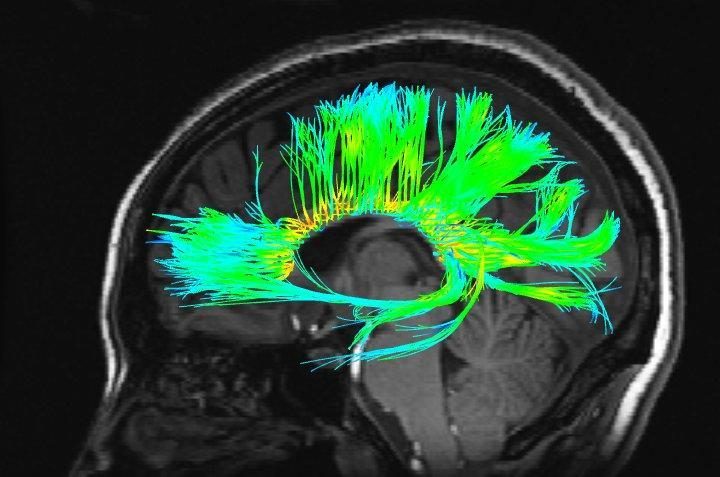
The Connecting the Dots trial focused on behavioral screening at 18 months. But the research frontier has moved earlier. NIMH-funded studies, documented in a 2024 review from the agency, have shown that early signs of autism can be identified as young as 12 to 14 months through standardized screening. A separate body of research using EEG biomarkers, eye-tracking technology, and analysis of infant-caregiver interaction patterns has pushed identification windows to 3 to 6 months in high-risk infant siblings — though these tools remain in research settings rather than clinical practice.
A 2022 review published in The Lancet Neurology by Geraldine Dawson of Duke University and colleagues synthesized the biomarker literature: EEG power trajectories from 3 to 12 months predicted autism in infant siblings with sensitivity of 0.82 and specificity of 0.86. Auditory brainstem response data from neonatal hearing screenings — collected routinely at birth — showed distinctive patterns in infants later diagnosed with autism. Increased EEG connectivity in the alpha band at 14 months was associated with later autism diagnosis. The Lancet review authors noted that while the research on individual biomarkers is promising, translating findings from high-risk sibling cohorts to general population screening remains a significant challenge.
The more immediately actionable finding is that the M-CHAT-R/F — a parent-completed questionnaire already in widespread use — performs reliably enough to identify most children at risk by 18 months when administered correctly. The 14-month window is clinically important because it is the age at which a 12-month well-child visit flag could trigger early referral, and because Connecting the Dots showed referrals averaging 20.65 months are achievable at scale through standardized practice. The biology is not the bottleneck. The tool is not the bottleneck. The implementation is the bottleneck.

What Earlier Diagnosis Means for the ABA Intervention Window
The clinical significance of a 14-to-20-month identification window versus a 47-month median diagnosis age is not abstract. It is approximately two and a half years of brain development — a period during which the neural plasticity that makes early ABA intervention most effective is at its peak, and during which untreated autistic children may develop maladaptive compensatory behaviors that are harder to address later.
The foundational randomized controlled trial of the Early Start Denver Model, published in Pediatrics by Sally Rogers and Geraldine Dawson in 2010, enrolled 48 children diagnosed between 18 and 30 months. Children in the ESDM group improved 17.6 standard score points on cognitive assessments over two years, versus 7.0 points in the community comparison group. Two years after entering intervention, diagnostic status had shifted: a significantly higher proportion of ESDM children moved from a more severe autism diagnosis to a less severe one. The researchers specifically noted that the study was designed for toddlers precisely because of the AAP’s 18-month screening recommendation — they were building for an intervention window that the screening system was supposed to unlock.
A mega-analysis published in April 2025 by Veronica Mandelli and colleagues — drawing on 645 children across early intervention datasets from the United States, Switzerland, Italy, Israel, and Australia — confirmed what the Rogers-Dawson study showed at smaller scale: earlier intervention start was independently associated with better outcomes on cognitive, language, and autism severity measures, regardless of intervention type. The ESDM showed advantages in language and nonverbal cognition specifically. And age of entry was a significant predictor of outcome after controlling for pre-intervention developmental level.
The practical implication for ABA providers: a child referred at 20 months rather than 47 months has approximately 27 additional months of intervention during peak neural plasticity. For a child receiving 20 hours per week of ABA, that translates to roughly 2,340 additional treatment hours before the window narrows. The research on early intensive behavioral intervention consistently shows that intensity and early entry are among the strongest predictors of outcome.

The Waitlist Problem: Earlier Diagnosis Without Earlier Access
There is a dangerous assumption embedded in the early screening research: that diagnosis leads to services. In the current ABA market, it frequently does not — at least not quickly. The average wait from autism diagnosis to the start of ABA services ranges from 6 to 18 months in most markets, driven by the BCBA shortage, RBT turnover, and provider credentialing timelines that can run 120 to 180 days per Medicaid managed care organization.
The implication is uncomfortable. If the AAP’s recommendation for 18-month universal screening were fully implemented nationally, the number of children flagged and referred for diagnostic evaluation would increase dramatically — by a factor of nearly five times, based on the Connecting the Dots trial’s referral ratio. Those children would then enter a diagnostic evaluation pipeline that already has 12-to-24-month wait times in most major markets. Many of them would receive a diagnosis at 20 to 24 months and then wait another year or more for ABA services to begin. They would still be ahead of the 47-month median diagnosis group, but the gap between identification and meaningful intervention would remain significant.
The CDC’s April 2025 ADDM data showed that the 4-year-old cohort born in 2018 had 1.7 times higher cumulative incidence of diagnosis by 48 months than the 8-year-old cohort born in 2014 during the same age range — a meaningful improvement in early identification. But the report also noted that nearly half of children with autism are still not evaluated until after age 3, and that upstream disparities at the primary care level remain a significant barrier. The American Academy of Pediatrics, in October 2024, released a national payer advocacy letter calling on insurers to allow general pediatricians to diagnose autism and lift requirements for specialist-only evaluations — a structural change that, if adopted, could compress the screening-to-diagnosis timeline substantially.
What This Means for ABA Providers
For ABA clinic operators and BCBAs, the early screening research has three direct implications. First, the pipeline of early referrals is expanding. Practices that implement the Drexel trial’s standardized screening model will refer five times as many children as those using usual care. Not all of those children will receive a diagnosis, and not all who are diagnosed will immediately begin ABA — but the volume of young, newly identified children entering the system is going to increase as the AAP guidelines are more consistently followed.
Second, the clinical model for under-24-month intervention is meaningfully different from the typical ABA clinic’s core product. The Early Start Denver Model — the best-validated intervention for children under 30 months — integrates ABA with developmental and relationship-based approaches in naturalistic settings. It is parent-mediated, play-based, and delivered in the child’s home or childcare environment as much as in clinic. Providers who expect to serve 14-to-24-month-old children will need to invest in ESDM training and adapt clinical models accordingly.
Third, the waitlist problem is the limiting factor, not the science. The research is clear that earlier is better, and that identification at 14 to 20 months is achievable with existing tools. What is not clear is whether the ABA provider ecosystem — stretched thin by the BCBA shortage, rate cuts, and credentialing delays — can absorb a five-fold increase in early referrals while maintaining the clinical quality that makes early intervention worth anything. That is the question the research has not yet answered, and the one the industry needs to start answering now.
AT A GLANCE
Current Median Dx Age: 47 months (just under 4 years) — CDC ADDM Network, 2022 data (April 2025)
Earliest Reliable ID: 12–14 months via standardized behavioral screening (NIMH; multiple studies)
M-CHAT-R/F Accuracy: 83% sensitivity, 94% specificity when used correctly (Wieckowski et al., JAMA Pediatrics 2022)
Drexel RCT Result: Standardized screening referred 186 children (avg 20.65 mo) vs. 39 in usual care (avg 23.58 mo)
AAP Recommendation: Universal autism screening at 18- and 24-month well visits since 2007; widely underfollowed
ESDM Outcome Data: +17.6 SD pts vs. +7.0 in community comparison over 2 years (Rogers & Dawson, Pediatrics 2010)
Age Benefit: Earlier intervention start → better language, cognition, and autism severity outcomes (Mandelli et al., 2025 mega-analysis, n=645)
Early Dx Progress: Children born in 2018 had 1.7x higher cumulative incidence of diagnosis by 48 months vs. 2014 cohort (CDC 2025)
Prevalence (2022): 1 in 31 eight-year-olds identified with ASD — up from 1 in 36 in 2020
Screening Gap: Nearly half of ASD children still not evaluated until after age 3; primary care remains the bottleneck
AAP Advocacy (2024): Letter calling on payers to allow general pediatricians to diagnose ASD without specialist-only requirements
EHR Biomarker Research: EEG at 3 months predicts autism with sensitivity 0.82, specificity 0.99 in sibling cohorts — not yet clinical-grade at population scale
SOURCES & REFERENCES
1. – Vivanti G, Algur Y, Ryan V, et al. The Impact of Using Standardized Autism Screening on Referral to Specialist Evaluation for Young Children on the Autism Spectrum: A Cluster-Randomized Controlled Trial. J Am Acad Child Adolesc Psychiatry. 2025;64(6):686–698. doi:10.1016/j.jaac.2024.08.502
2. – Drexel University A.J. Drexel Autism Institute. Standardized Autism Screening During Pediatric Well Visits Identified More, Younger Children with High Likelihood for Autism Diagnosis. Press release. November 14, 2024. drexel.edu
3. – National Institute of Mental Health (NIMH). Accelerating Science to Improve Early Autism Screening. Science News. 2024. nimh.nih.gov
4. – Shaw KA, Williams S, Patrick ME, et al. Prevalence and Early Identification of Autism Spectrum Disorder Among Children Aged 4 and 8 Years — ADDM Network, 16 Sites, United States, 2022. MMWR Surveill Summ. 2025;74(No. SS-2):1–22. doi:10.15585/mmwr.ss7402a1
5. – Autism Society of America. Autism Society of America Responds to New CDC Report on Updated Autism Prevalence Rates. autismsociety.org. April 15, 2025
6. – Wieckowski AT, Williams ZJ, Rando J, Lyall K, Robins DL. Sensitivity and Specificity of the Modified Checklist for Autism in Toddlers (Original and Revised): A Systematic Review and Meta-analysis. JAMA Pediatrics. 2023. PMC9941975
7. – Dawson G, Rieder AD, et al. Prediction of autism in infants: progress and challenges. Lancet Neurol. 2023;22(3):244–254. doi:10.1016/S1474-4422(22)00407-0. PMC10100853
8. – Rogers SJ, Dawson G, et al. Randomized, Controlled Trial of an Intervention for Toddlers With Autism: The Early Start Denver Model. Pediatrics. 2010;125(1):e17–e23. doi:10.1542/peds.2009-0958. PMC4951085
9. – Mandelli V, Busuoli EM, Godel M, et al. Mega-analytic support for Early Start Denver Model, age at intervention start, and pre-intervention developmental level as factors differentiating early intervention outcomes in autism. medRxiv. April 16, 2025. doi:10.1101/2025.04.14.25325786
10. – Fuller EA, Oliver K, Vejnoska SF, Rogers SJ. The Effects of the Early Start Denver Model for Children with Autism Spectrum Disorder: A Meta-Analysis. Brain Sciences. 2020;10(6):368. doi:10.3390/brainsci10060368
11. – American Academy of Pediatrics. National payer advocacy letter: allowing general pediatricians to diagnose ASD. October 2024. aap.org
12. – Drexel University. A.J. Drexel Autism Institute Finds Strong Performance of Autism Screener When Used as Intended. February 2023. drexel.edu
13. – Geoffray M-M, et al. Early Start Denver Model effectiveness in young autistic children: a large multicentric randomised controlled trial in two European countries. BMJ Mental Health. 2025;28(1):e301424. doi:10.1136/bmjment-2024-301424
14. – CDC. Data and Statistics on Autism Spectrum Disorder. Updated 2025. cdc.gov/autism
15. – BreakingNewsABA.com — March 2026