The Practice/Tool
The landscape of Applied Behavior Analysis (ABA) is continuously evolving, with a significant focus on Naturalistic Developmental Behavioral Interventions (NDBIs) and their integration with emerging technologies and early identification strategies. NDBIs emphasize child-led interactions within natural environments, fostering skill acquisition through motivation and engagement. Research is actively exploring how to adapt these approaches for very young infants, particularly those identified with a heightened likelihood for autism due to genetic or perinatal factors. This includes examining early differences in attention, autonomic regulation, and motor behavior to identify developmental variations before autism symptoms fully emerge, ultimately aiming for biomarker-informed interventions.
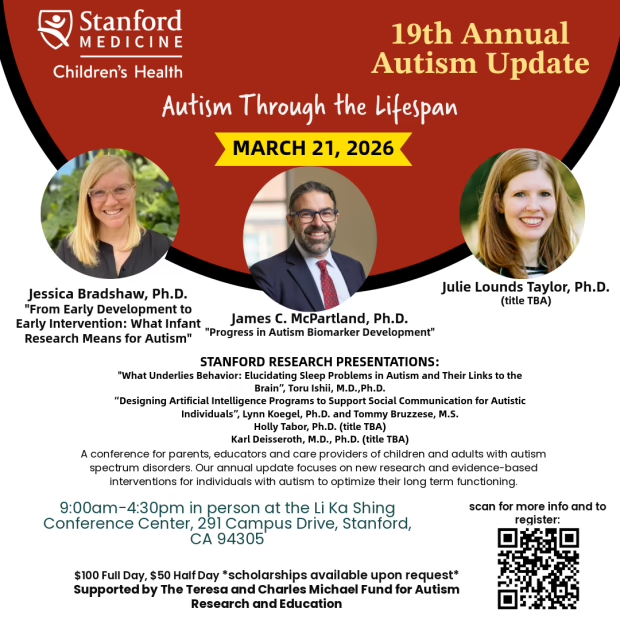
A cornerstone of NDBI is Pivotal Response Treatment (PRT), developed by Dr. Lynn Koegel and her husband. PRT focuses on pivotal areas such as motivation, self-initiation, and self-management, which can lead to widespread improvements in other behaviors. Dr. Koegel’s current work extends into the realm of artificial intelligence (AI), collaborating with software engineer Tommy Bruzzese and Professor Monica Lam to create AI programs designed to improve verbal communication in individuals with autism spectrum disorder (ASD). This pioneering effort has already yielded what is believed to be the first randomized clinical trial of an AI/Large Language Model (LLM)-based therapeutic intervention specifically targeting verbal expressions of empathy in individuals with ASD.
Beyond direct intervention, foundational research by Dr. James C. McPartland at Yale investigates the brain bases of neurodevelopmental conditions. His work aims to develop biologically-based tools for improved detection and treatment, serving as the Principal Investigator for the Autism Biomarkers Consortium for Clinical Trials. This research is critical for understanding the underlying mechanisms of autism and developing more targeted, effective interventions. Additionally, Dr. Ishii at Stanford is exploring the bidirectional relationship between sleep and cognitive function in autism, using advanced neuroimaging and physiological measures to address prevalent sleep problems that significantly impact daily functioning and intervention efficacy.
Key Benefits
The integration of early identification with NDBIs offers the potential for significantly improved developmental trajectories. By identifying biomarkers and initiating interventions in the first months of life, clinicians can support infant development proactively, potentially mitigating the severity of later symptoms. PRT’s emphasis on motivation and child choice has consistently shown positive outcomes, enhancing generalization of skills across various settings and people. The advent of AI/LLM-based interventions represents a transformative benefit, offering scalable and personalized tools to address complex social communication challenges, such as empathy, which are often difficult to target with traditional methods. The initial randomized clinical trial for AI-assisted empathy training suggests a promising new avenue for therapeutic support.
Addressing co-occurring conditions like sleep disturbances, as highlighted by Dr. Ishii’s research, is crucial for overall well-being and maximizing the effectiveness of behavioral interventions. Improved sleep can lead to better attention, mood regulation, and learning capacity. Furthermore, Dr. Julie Lounds Taylor’s research on promoting positive transitions into adulthood underscores the importance of a lifespan perspective in ABA, ensuring that interventions are not only effective in childhood but also prepare individuals for successful independent living and community integration. Finally, Dr. Holly Tabor’s expertise in biomedical ethics ensures that these advancements are pursued responsibly, safeguarding the rights and well-being of individuals with disabilities in both research and clinical practice.
Practical Applications
For practicing BCBAs and clinic owners, these developments signal several key areas for future focus. Firstly, staying informed about early identification research and potential biomarkers will be crucial for collaborating with medical professionals and implementing very early interventions. Secondly, a deep understanding and skillful application of NDBI principles, particularly PRT, remains paramount, emphasizing naturalistic teaching opportunities and child motivation. Thirdly, exploring and integrating emerging technologies, such as AI-powered communication tools, into clinical practice will become increasingly important. BCBAs should seek training and resources to effectively utilize these innovations, understanding their potential and limitations.
Clinic owners should consider investing in professional development for their staff in these areas and explore partnerships with technology developers or research institutions. Furthermore, a holistic approach that addresses co-occurring conditions like sleep, and a commitment to supporting individuals across their lifespan, from early childhood through adulthood, will define leading ABA practices. Finally, maintaining a strong ethical framework, guided by experts like Dr. Tabor, is essential as the field navigates complex issues related to data privacy, informed consent, and equitable access to advanced interventions.
Fast Facts
| Key Point | Why It Matters for ABA |
|---|---|
| Early biomarker identification for infants | Enables proactive, potentially preventative, intervention strategies. |
| Pivotal Response Treatment (PRT) focus | Emphasizes motivation and child-led learning, a core NDBI. |
| AI/LLM for empathy in ASD | Pioneering technology for complex social communication skills. |
| Research on sleep in autism | Addresses a common co-occurring condition impacting intervention efficacy. |
| Focus on transition to adulthood | Highlights the need for lifespan support and long-term outcomes. |
| Biomedical ethics expertise | Ensures responsible and ethical implementation of new research and technology. |
Expert Perspective
The convergence of early detection, NDBIs, and advanced AI tools is poised to redefine intervention strategies and outcomes for individuals with autism.
Source: med.stanford.edu