
The Argument
The field of Applied Behavior Analysis (ABA) is grappling with an escalating public relations challenge, driven by intensified concerns from the neurodiversity movement and testimonials from autistic individuals describing adverse experiences with past ABA practices. This has prompted a critical examination of the discipline, leading to three primary responses from behavior analysts: ignoring the concerns, refuting their validity, or actively pursuing reform. The authors contend that foundational ABA principles, specifically philosophic doubt and social validity, necessitate a reform-oriented approach, urging practitioners to critically evaluate and refine their methods in response to new information, especially reports of harm.
In response to these criticisms, a wave of reform efforts has emerged, focusing on key areas such as eliminating aversive control and adopting assent-based practices, explicitly centering empathy and compassion, minimizing risks of emotional and psychological harm (including trauma-informed care), and actively empowering clients through neurodiversity-positive approaches. These reformist movements have, in turn, led to the development of distinct ‘brands’ within ABA, including ‘Trauma-informed behavior analysis,’ ‘Compassion-focused ABA,’ ‘Assent-based ABA,’ ‘Progressive ABA,’ and ‘Today’s ABA.’ This branding extends beyond mere terminology, manifesting in new conferences, professional affiliations, and even independent credentialing processes offered by organizations like the Do Better Collective, Progressive Behavior Analyst Autism Council (PBAAC), and FTF Behavioral Consulting.
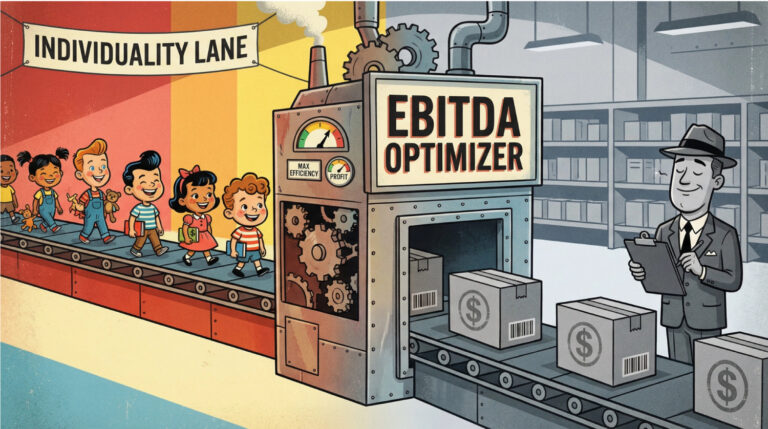
A central concern raised by the authors is the potential for these proliferating brands and their associated infrastructures to create significant confusion among clients, practitioners, and policymakers. For instance, the PBAAC offers three credentials and FTF Behavioral Consulting offers seven, none of which require a credential from the well-established Behavior Analyst Certification Board (BACB). This raises questions about what these alternative credentials signify, how clients should navigate care options, and the implications for state-licensed BCBAs who hold only BACB certification. The authors argue that while these efforts signal a commitment to ethical progress, they risk siloing advancements and dividing the field rather than fostering collective improvement.
The Counter-View
The article acknowledges that the emergence of distinct brands within ABA might be an inevitable and, in some respects, benign response to evolving ethical and practical norms. Branding can serve to differentiate emerging trends from traditional practices, signaling a commitment to specific values that resonate with certain practitioners and clients. For example, the Association for Behavior Analysis International’s (ABAI) eventual condemnation of Contingent Electric Skin Shock (CESS), following initial resistance, demonstrated how value misalignment between the broader ‘ABA’ brand and its members could lead to schisms and the search for alternative affiliations. Similarly, the BACB’s decision to remove Diversity, Equity, and Inclusion (DEI) requirements from coursework has sparked fierce opposition, with groups like Black Applied Behavior Analysts (BABA) advocating for leveraging alternative certification bodies, further illustrating how value discordance can drive brand proliferation.
However, the authors caution against viewing this fragmentation as a purely positive development. They cite research indicating that occupational licensure and certification show a positive effect on quality in only 16% of instances, a negative effect in 21%, and no effect in 63%, while also increasing entry barriers and consumer prices. The historical example of Naturalistic Developmental Behavioral Interventions (NDBI) highlights existing confusion, where NDBI is often touted as distinct from, rather than a form of, ABA. This confusion, the authors argue, foreshadows a future where new ABA brands might continue to diverge rather than converge into a unified understanding of best practice, forcing clients and providers to choose among competing systems without clear, unbiased information.
Impact on the Field
The proliferation of distinct ‘brands’ within ABA, while born from a desire for ethical reform, poses a significant threat to the field’s coherence and collective advancement. Instead of integrating improved practices into a universally recognized ‘better ABA,’ the current trajectory risks creating disparate, competing factions, each with a potentially myopic focus on only a part of what constitutes comprehensive behavior-analytic best practice. This fragmentation could hinder research collaboration, complicate regulatory oversight, and ultimately dilute the public’s understanding and trust in ABA services.
The authors advocate for an integrated approach, where reformist insights are synthesized into a cohesive framework that benefits the entire field. They suggest that practices like ‘kind extinction’ or ‘assent-based ABA’ should not be seen as separate brands, but rather as examples of ‘extinction done better’ or ‘ABA done better’ by incorporating ethical considerations and new evidence. This requires intentionality from practitioners, researchers, and organizational leaders to view reform as continuous improvement rather than the creation of entirely new disciplines. Journal editors and reviewers also play a crucial role in encouraging cross-pollination and constructive engagement among diverse, progress-oriented approaches within the peer-reviewed literature and at professional conferences.
Career Takeaway
For BCBAs and clinic owners, the current landscape demands heightened awareness and a commitment to integrating ethical advancements into their core practice rather than simply adopting a new ‘brand.’ Professionals should prioritize the foundational principles of philosophic doubt and social validity, actively seeking to incorporate client feedback, trauma-informed care, assent-based practices, and compassionate approaches into their service delivery. Instead of aligning exclusively with a specific ‘branded’ version of ABA, practitioners are encouraged to view these reforms as essential components of a continuously improving, unified ABA. This approach will help mitigate client and payer confusion, strengthen the field’s overall social validity, and ensure that all behavior analysts collectively strive towards providing the highest quality, most ethical services.
Fast Facts
| Key Point | Why It Matters for ABA |
|---|---|
| 10 new credentials offered by PBAAC and FTF | Indicates growing fragmentation and potential confusion outside BACB standards. |
| Licensure/certification improves quality in only 16% of cases | Challenges the assumption that new credentials automatically enhance care quality. |
| Reform efforts driven by philosophic doubt and social validity | Highlights the ethical imperative for ABA to evolve in response to public concerns. |
Expert Perspective
The field must integrate reformist insights into a unified understanding of best practice, ensuring that all advancements contribute to a collectively ‘better ABA.’
Source: pmc.ncbi.nlm.nih.gov