
The Policy Change
State Medicaid programs across the nation are facing significant financial strain due to the surging costs of Applied Behavior Analysis (ABA) therapy for children with autism spectrum disorder. This comes nearly a decade after the federal Centers for Medicare & Medicaid Services (CMS) mandated coverage for comprehensive autism services for children in 2014, leading all states to cover ABA by 2022. Concurrently, increased screenings have resulted in more children being diagnosed with autism, with approximately 5% of children aged 3 to 17 on public insurance having an autism diagnosis, compared to 2% on private insurance.
The combination of mandated coverage and rising diagnoses has caused state spending on ABA to skyrocket. For instance, Indiana’s Medicaid spending on ABA therapy dramatically increased from $21 million in 2017 to $611 million in 2023. This sharp escalation, coupled with federal auditors examining states’ ABA coverage for potential fraud and abuse, has compelled states to implement cost-saving measures. Further pressure stems from the federal One Big Beautiful Bill Act, signed by President Donald Trump, which includes over $900 billion in federal Medicaid spending cuts over the next decade. Health and Human Services Secretary Robert F. Kennedy Jr. has also publicly highlighted autism as a rapidly growing “epidemic,” though he has promoted debunked theories linking vaccines to autism.
In response to these financial pressures, several states have considered or enacted policies to curb ABA costs. These measures include capping therapy hours, tightening provider enrollment rules, reducing reimbursement rates, and altering patient eligibility criteria. New York, for example, has proposed a bill to establish a 680-hour annual cap on ABA services. Indiana, after an HHS inspector general report identified at least $56 million in “improper” payments to ABA providers in 2019 and 2020, lowered its reimbursement rate to approximately $68 per hour in 2024. Governor Mike Braun established a working group that recommended creating a new ABA office for increased oversight and further rate adjustments, projecting Indiana’s spending to reach $825 million by 2029 without changes.
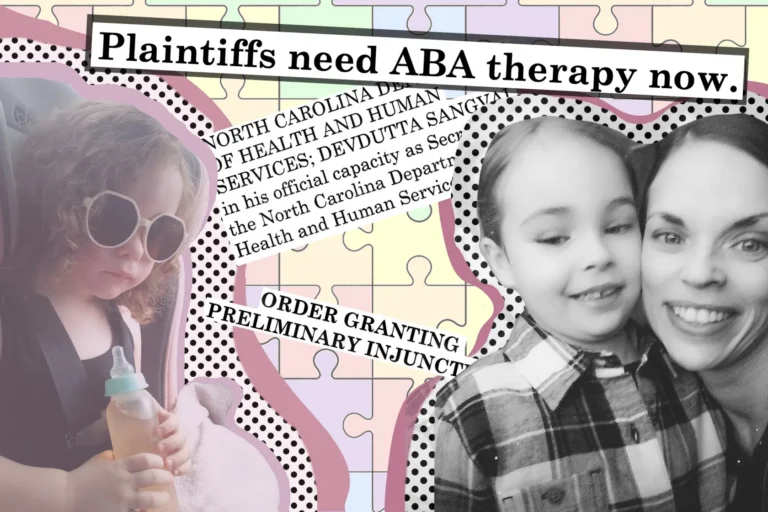
Nebraska also experienced a significant increase in ABA spending, from $4.6 million in 2020 to over $85 million last year. In response, the state cut its Medicaid reimbursement rates in July, including a 48% reduction for direct therapy provided by behavior technicians (from about $144 to $74.80 per hour) and a 37% reduction for services by board-certified professionals. North Carolina, projecting autism service costs to reach $639 million in fiscal year 2026—a 425% increase from 2022—implemented a 10% cut to autism services reimbursement rates effective October 1. However, families of 21 children immediately sued the state, arguing discrimination, and secured a preliminary injunction to temporarily halt the rate reduction for autism treatment.
Impact on ABA
These state-level policy changes have significant repercussions for the ABA industry, providers, and the families they serve. The previous reimbursement model in Indiana, which paid providers 40% regardless of their charges, created “strange incentives” that led some providers to charge exorbitant amounts, as noted by Jason McManus, president of Indiana Providers of Effective Autism Treatment (InPEAT). The subsequent rate reduction to $68 per hour caused disruption, with many smaller clinics closing or consolidating.
In Nebraska, while some industry leaders like Sam Wallach, president of Attain, view the rate cuts as a necessary “correction” to ensure sustainability, the abrupt implementation with only 30 days’ notice caused hardship. Leila Allen, vice president of external affairs at Lighthouse Autism Center, highlighted that providers had to inform staff of salary cuts on short notice and criticized the state for not conducting a cost survey to determine appropriate rates, especially given the difficulty of recruiting therapists in sparsely populated areas. This has made it particularly challenging for families with older children, like Angela Gleason, whose 13-year-old son struggles to find companies that serve his age group.
In North Carolina, the 10% rate cut, though temporarily halted by a lawsuit, has created immense stress. David Laxton, communications director for the Autism Society of North Carolina, warned that many providers might not be able to absorb the reductions and continue operating, stating, “At some point, the math is not going to math.” The uncertainty leaves families on edge, as many children with autism rely on multiple providers whose rates may still be subject to cuts.
Next Steps
The ongoing scrutiny of ABA therapy costs signals a critical juncture for the industry. States are actively seeking sustainable reimbursement models that balance fiscal responsibility with the need to ensure access to quality care. Indiana’s creation of a new ABA office and its working group recommendations indicate a move towards increased oversight and a more structured approach to rate setting. The legal challenge in North Carolina underscores the potential for families and advocacy groups to push back against policies perceived as discriminatory or detrimental to service access.
For ABA providers, adapting to evolving state policies, advocating for fair reimbursement rates based on actual service costs, and demonstrating treatment efficacy will be crucial. The dialogue between state agencies, providers, and families will continue to shape the future landscape of ABA therapy coverage under Medicaid, emphasizing the need for collaborative solutions that prioritize both financial sustainability and the well-being of individuals with autism.
Fast Facts
| Key Point | Why It Matters for ABA |
|---|---|
| Indiana’s ABA Medicaid spending grew from $21M (2017) to $611M (2023) | Illustrates the rapid escalation of costs driving state scrutiny and policy changes. |
| Nebraska cut behavior technician reimbursement by 48% (from $144 to $74.80/hour) | Directly impacts RBT salaries, provider viability, and access to direct care services. |
| North Carolina’s 10% rate cut for autism services led to a successful preliminary injunction | Highlights the legal avenues families and providers may pursue to challenge adverse policy changes. |
Expert Perspective
For such a costly and intensive service, states must explore how to best reimburse ABA to ensure both sustainability and quality of care.
Source: stateline.org