The Study
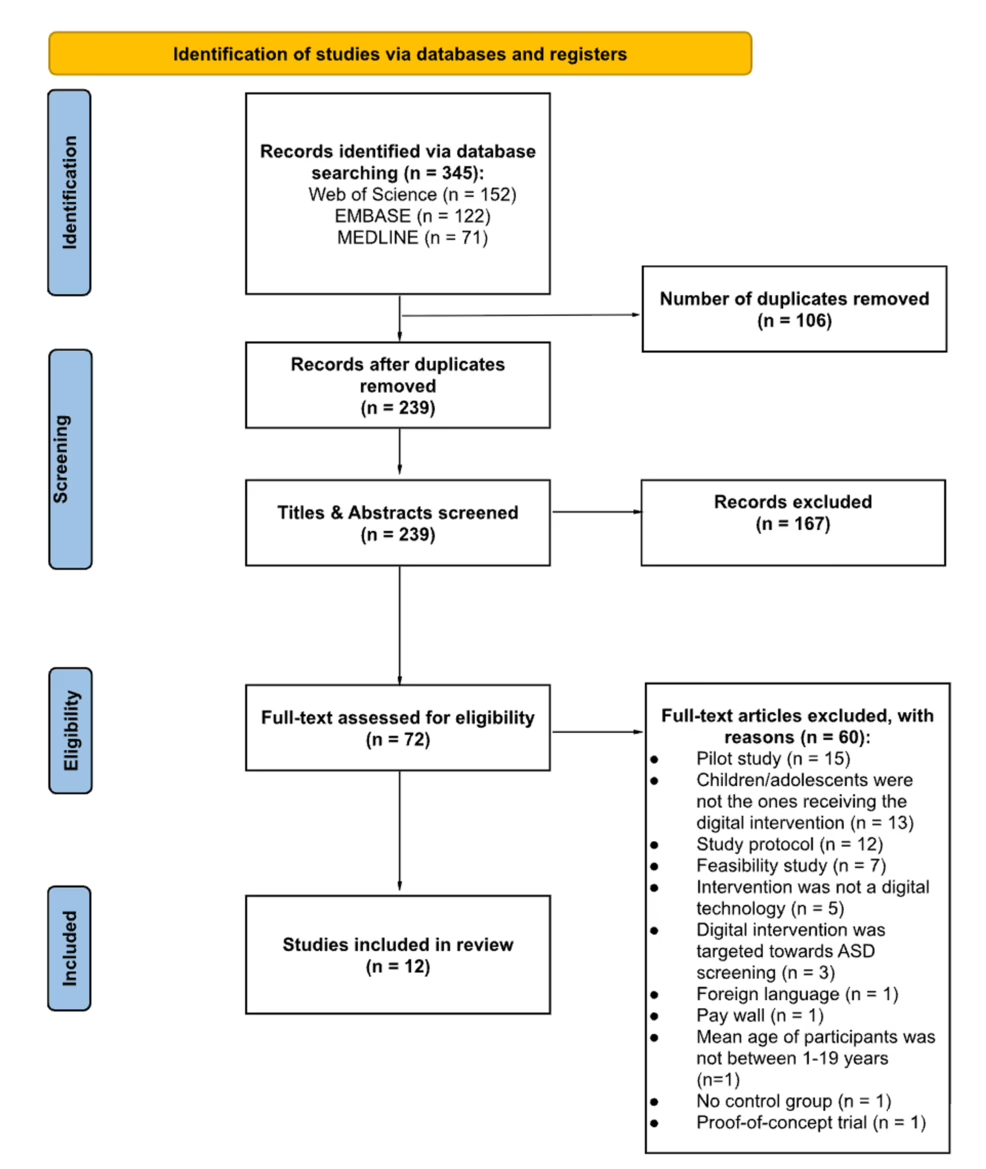
A systematic review published in Cureus investigated the effectiveness of various digital health technologies (DHTs) in managing autism spectrum disorder (ASD) among children and adolescents. The review aimed to synthesize existing research to understand how these innovative tools contribute to therapeutic outcomes, particularly when integrated with established interventions like Applied Behavior Analysis (ABA). Researchers conducted a thorough search across prominent databases including PubMed, Scopus, Web of Science, and the Cochrane Library, utilizing a combination of keywords such as “digital health technologies,” “autism spectrum disorder,” “children,” “adolescents,” and specific technology types. The inclusion criteria focused on studies published between 2013 and 2023 that explored the use of DHTs in individuals aged 2 to 18 years with an ASD diagnosis. After a rigorous screening process, the review ultimately included 20 studies that met the predefined criteria for quality and relevance. These studies encompassed a diverse range of digital interventions, providing a broad perspective on their applications and efficacy in addressing various challenges associated with ASD.
The methodology of this systematic review involved a critical appraisal of each selected study, assessing their design, sample characteristics, intervention protocols, and reported outcomes. This structured approach allowed the reviewers to identify consistent patterns of effectiveness, as well as areas requiring further research. The review specifically categorized DHTs into several types: virtual reality (VR), serious games, mobile applications, social robots, wearable devices, and telehealth platforms, examining their individual contributions to skill development and behavioral management in the ASD population.
Key Findings
The systematic review revealed that digital health technologies offer promising avenues for enhancing the management of ASD, often serving as valuable complements to traditional ABA therapy. Across the 20 studies, several key areas of effectiveness emerged:
- Virtual Reality (VR): VR interventions were consistently found to be effective in improving social skills, emotional regulation, and daily living skills. The immersive and controlled environments provided by VR allowed children and adolescents with ASD to practice social interactions, manage anxiety, and develop coping strategies in a safe, simulated setting. Studies indicated that VR could significantly reduce social anxiety and enhance communication abilities.
- Serious Games: These engaging, purpose-driven games demonstrated efficacy in improving cognitive functions, social interaction, and problem-solving skills. Their interactive nature motivated participants, making learning enjoyable and fostering skill acquisition through repeated practice and immediate feedback.
- Mobile Applications: Mobile apps proved highly accessible and customizable, supporting a wide range of needs. They were particularly effective for augmentative and alternative communication (AAC), visual scheduling, and behavior management. Their portability and user-friendly interfaces made them practical tools for both clinical and home-based interventions, aiding in the generalization of skills.
- Social Robots: Robots designed for social interaction were shown to promote communication, imitation, and joint attention. Their predictable responses and non-judgmental nature often made them less intimidating for individuals with ASD, facilitating engagement and skill development in social contexts.
- Wearable Devices: While less frequently studied, wearable devices showed potential in monitoring physiological data related to stress and anxiety, providing real-time feedback that could inform behavioral interventions and help individuals develop self-regulation strategies.
- Telehealth: Telehealth platforms significantly increased access to care, particularly for families in remote or underserved areas. They facilitated remote therapy delivery, parent training, and consultation, ensuring continuity of care and empowering caregivers to implement strategies effectively at home.
Overall, the review underscored that DHTs are not replacements for traditional therapies but rather powerful tools that can augment and personalize interventions. They enhance engagement, provide structured learning opportunities, and offer objective data collection, which can inform treatment planning and progress monitoring in ABA programs. The findings suggest a collective positive impact on various domains, including social communication, adaptive behavior, and emotional well-being, with many studies reporting statistically significant improvements.
Clinical Implications
For BCBAs, RBTs, and clinic owners, the findings of this systematic review present compelling opportunities to integrate digital health technologies into current ABA practices. These tools can serve as innovative adjuncts, enhancing the effectiveness and reach of behavior intervention plans. For instance, BCBAs can leverage VR to create realistic yet controlled environments for social skills training, allowing clients to practice interactions without the overwhelming stimuli of real-world situations. Serious games can be incorporated into therapy sessions to target cognitive flexibility, problem-solving, and attention, making learning more engaging and reinforcing.
Mobile applications offer practical solutions for daily living skills, visual schedules, and communication support, which can be easily implemented by RBTs during sessions and by families at home, promoting generalization of skills. Social robots can be utilized to facilitate initial social engagement and teach foundational social cues in a predictable manner, potentially easing the transition to human-to-human interactions. Telehealth services, already widely adopted, can be further optimized to deliver parent training, supervision, and direct therapy, expanding access to high-quality ABA services, especially for those in rural areas or with mobility challenges.
However, practitioners must consider several factors for successful integration. These include the initial cost of technology, ensuring accessibility for all clients, and providing adequate training for both staff and families on how to effectively use these tools. Personalization remains key; not every technology will suit every individual, necessitating careful assessment and individualized treatment planning. While promising, the review also highlighted the need for more long-term studies to fully understand the sustained impact of DHTs and to address ethical considerations related to data privacy and security. BCBAs should stay informed about emerging technologies and best practices to thoughtfully incorporate them, ensuring they align with evidence-based ABA principles and client-centered goals.
Fast Facts
| Key Point | Why It Matters for ABA |
|---|---|
| 20 studies included in review | Highlights growing evidence base for digital tools in ASD |
| VR, serious games, mobile apps, social robots, wearables, telehealth | Diverse range of technologies applicable to ABA interventions |
| Improved social skills, communication, emotional regulation | Directly addresses core deficits targeted by ABA therapy |
| Complementary to traditional therapy | DHTs enhance, not replace, existing ABA practices |
| Increased access to care via telehealth | Expands reach of ABA services, especially in underserved areas |
Expert Perspective
Digital health technologies offer a transformative pathway to augment ABA interventions, providing personalized, engaging, and accessible support for individuals with autism spectrum disorder.
Source: cureus.com